I notice that LinkedIn still wont allow @RobertKennedyJr Bobby to be tagged. Instead I have to use Robert F. Kennedy Human Rights. When I try to tag @amaryllisfox I get a popup that says Amaryllis Fox Kennedy “can’t be mentioned”.
There’s nothing so popular as a banned book.
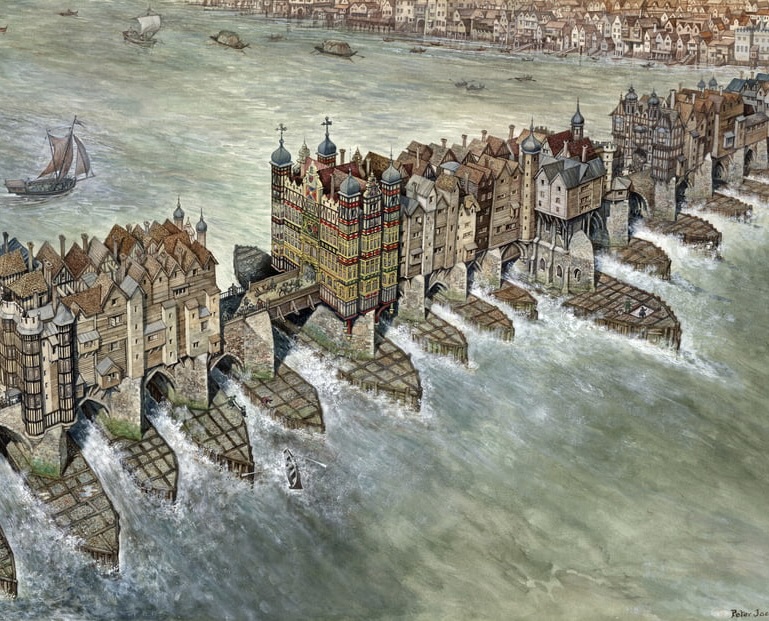
A thread of lesser-known architectural wonders that we lost over the ages (and what happened to them)... 🧵
1. Old London Bridge - the longest inhabited bridge in Europe
It's also worth considering how many things we now consider normal *aren't* present in these photographs.
Whether materials like concrete, steel, and plate glass, or infrastructure like pylons and highways.
This was how the world looked for most of human history.
Just look at how they soar above the urban landscapes.
A reminder of how much more important religion was in those days; you learn a lot from a society's biggest buildings.
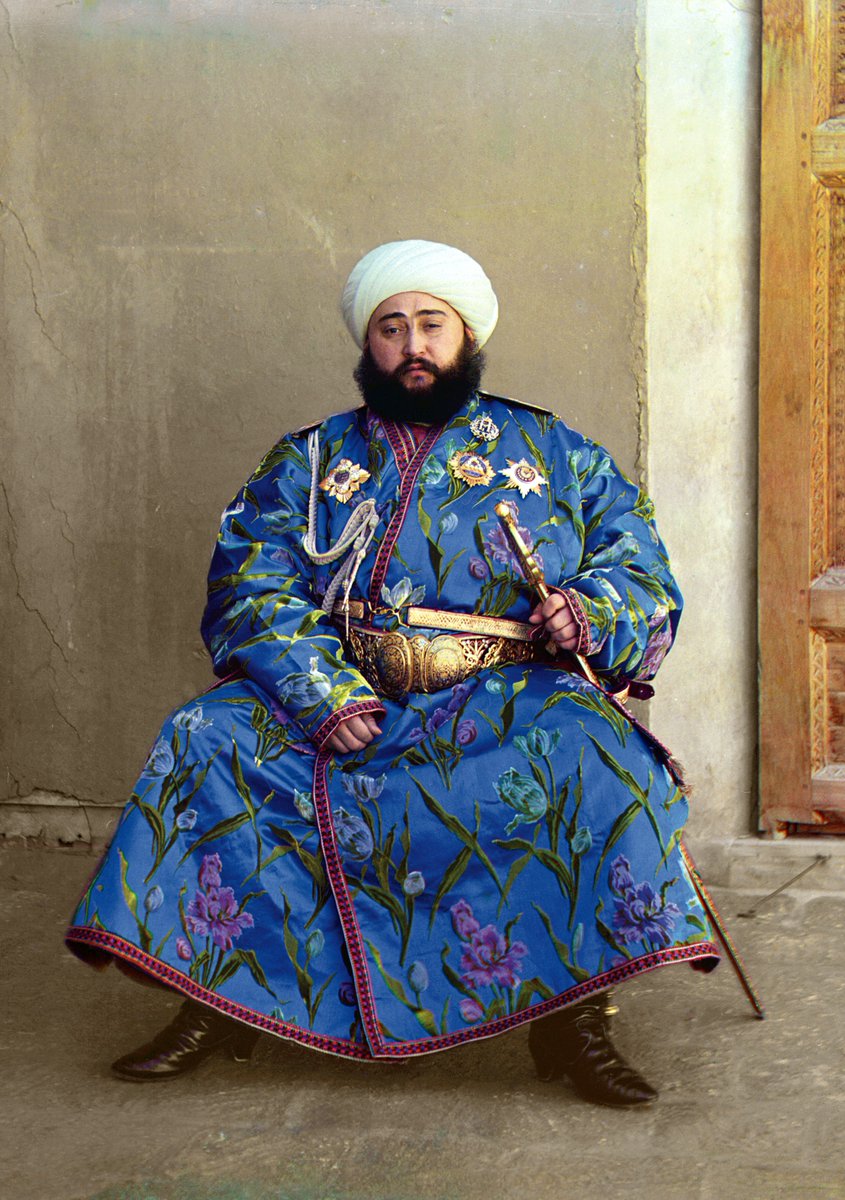
This photo is 113 years old.
It was taken by Sergey Prokudin-Gorsky, an early pioneer of colour photography.
If you've ever wondered what the world used to look like, Prokudin-Gorsky's photos will show you...
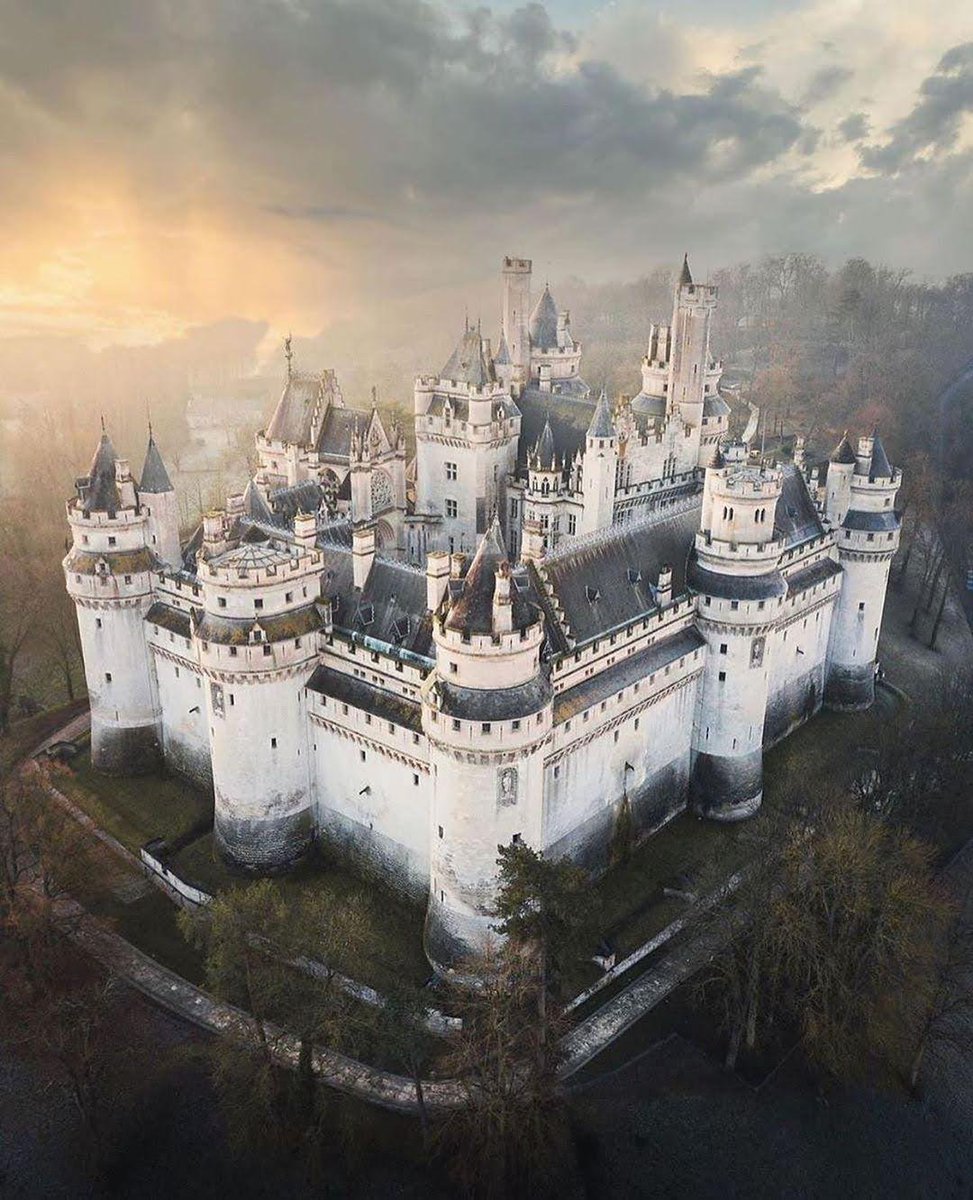
France has over 40,000 castles (and châteaus) - more than any other country.
These are the most breathtaking 🧵
1. Château de Pierrefonds, Oise (14th century)
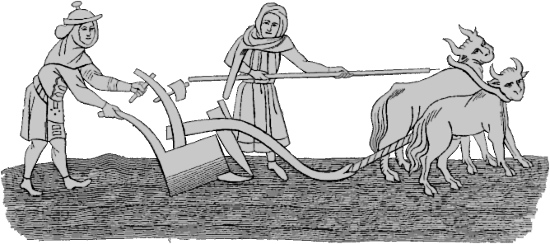
Those who attempt to understand the Industrial Revolution often travel down a dead end. Every old economy is mostly agrarian, so European agriculture must have been unusually good, right? But European grain yields were actually awful and they somehow succeeded in spite of them.
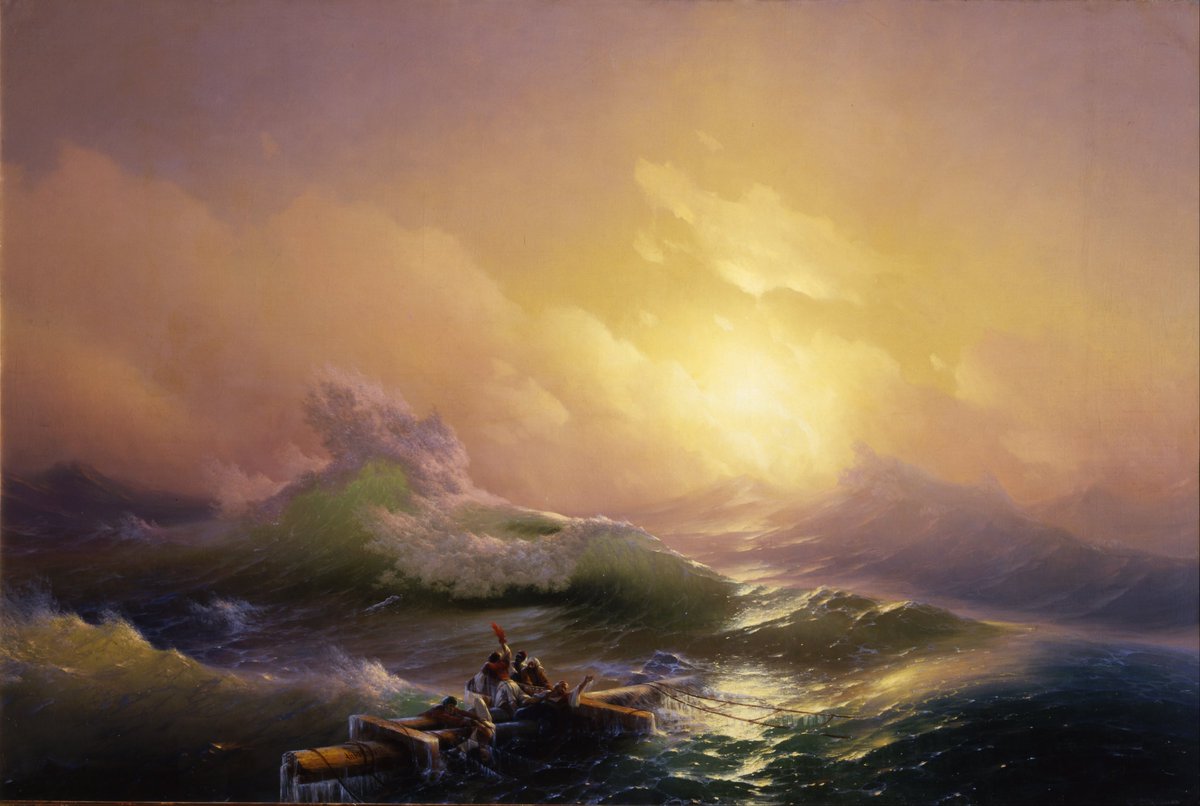
That is, in brief, the story of Ivan Aivazovsky, regarded during his lifetime and ever since as one of the greatest ever painters of the sea — if not the greatest.
Why? Above all because he worshipped the sea, and in his art we can share that enduring love, fear, and awe...
But it was when painting the sea that Aivazovsky's talent and skill shone most brightly — and that helped him remain a succesful and popular artist until the end of his life.
He went to the Chicago World Fair in 1892, at the age of 75, where his paintings were exhibited.
For he was a prolific artist who worked all the time and worked at pace — Aivazovsky made over five thousand paintings in his lifetime.
They weren't all of the sea: there were portraits, group portraits, historical scenes, Biblical scenes, and landscapes.
Whereas the Academies favouried highly precise and smooth finishes, Aivazovsky's technique slowly became *less* precise.
The key that unlocked the secret to painting the eternal movement of the oceans.
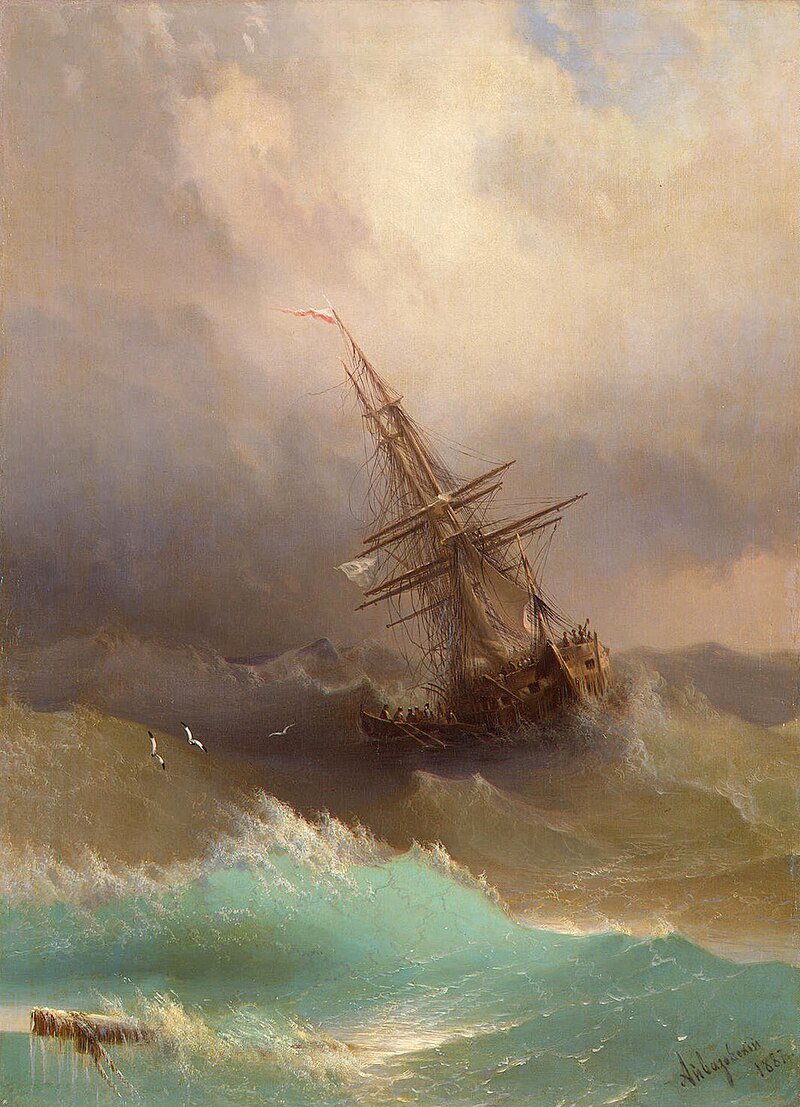
Compare two of his paintings, 40 years apart, to see the difference.
There was a tendency with the maritime painters of European Academies to paint the sea in a sculptural way, such that the waves looked stiff and frozen.
But Aivazovsky gave them life — we sense the waves flowing and crashing, or even just lapping the shore.
And therein lies the key to Aivazovsky's seascapes.
He realised that the full power, beauty, and scale of the sea was best brought out not by the waves themselves so much as what surrounded them.
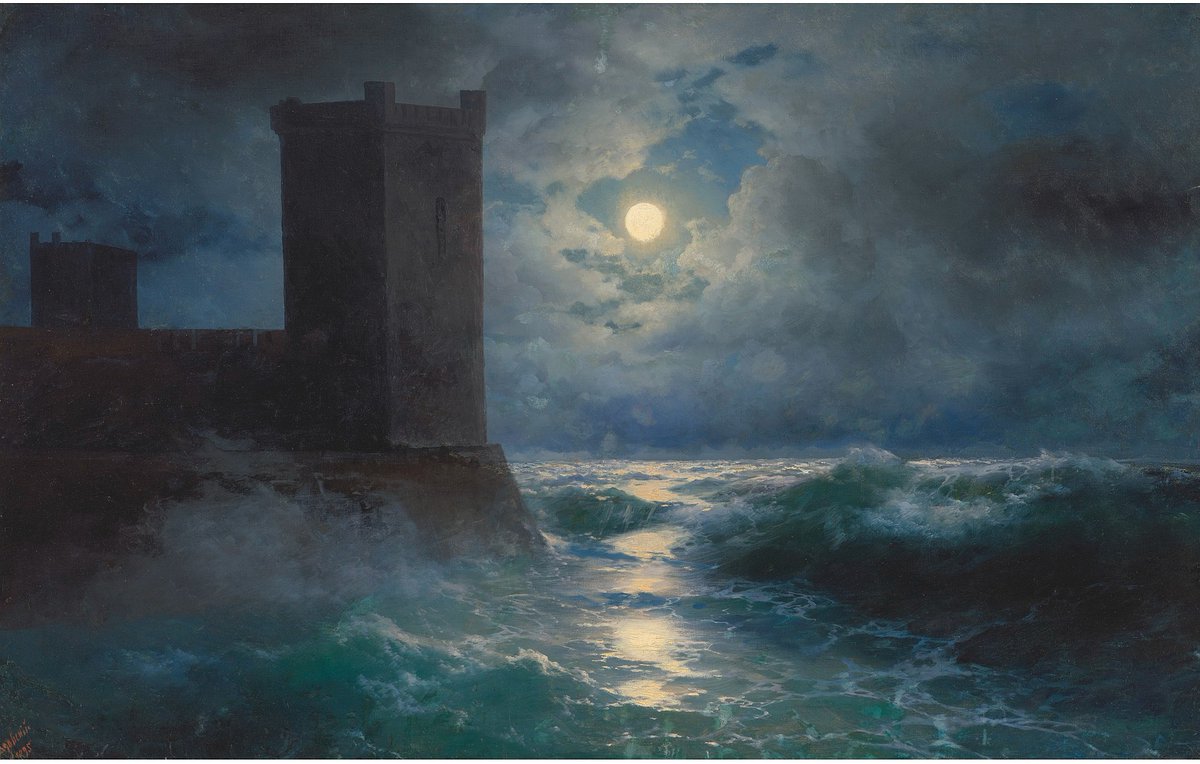
And, above all, by light — on, in, around, through, reflected, refracted by water.
What made Aivazovsky so successful? Well, his paintings speak for themselves — they are thrilling, dramatic, mysterious, and beautiful.
Because, even though he was part of the international network of "Academic" European artists, Aivazovsky forever remained a Romantic at heart.
Aivazovsky's paintings were popular and critically acclaimed all around Europe. He exhibited them, won prizes, and received official honours as far afield as France, the Ottoman Empire, and Greece.
Little wonder...
Soon enough Aivazovsky fell in with the Russian cultural elite, even travelling alongside the Imperial Family.
In 1845 he went with them to Constantinople, where his passions for the sea, travel, and history were all united.
Atmospheric, sumptuous, emotional, magical.
He also loved — and was commissioned — to paint historical scenes of naval battles, whether defeats or victories or disasters.
These were among his best work: dramatic, chaotic, and frightening, filled with flames and smoke.
A terrifying vision of naval warfare.
Theodosia was a thriving, historic, multicultural port filled with traders and migrants and soldiers travelling from far away.
Thus the sea cast a lifelong spell over Aivazovsky, both for its natural beauty and because it was a romantic symbol of adventure, history, and culture.