AJR showed that it is possible to win a Nobel Prize using Mickey Mouse Numbers. In my new blog post, I show how their results depend on choice made in data construction, in both "The Colonial Origins of Comparative Development" (2001) and "Reversal of Fortune" (2002). 1/9
The mental gymnastics here are incredible. Children acquire socioeconomic competence from fathers who died when they were young, therefore it must be via some mysterious transmission of "financial culture" when they are toddlers. Is the financial culture in the room with us now?
A journalist who does not dare mention genetics, thus misunderstands the findings: a dead father contributes as much to your future status as a live one. Why inherited wealth rarely survives the grandchildren
https://t.co/mOKBwTwnwj
Are you a PhD student interested in economic history?
Our summer school at the University of Southern Denmark in the beautiful town of Odense will be on theme of “Populism, uncertainty, and the globalized economy”
We will also have a focus on big data and ML tools
17-21 of Aug
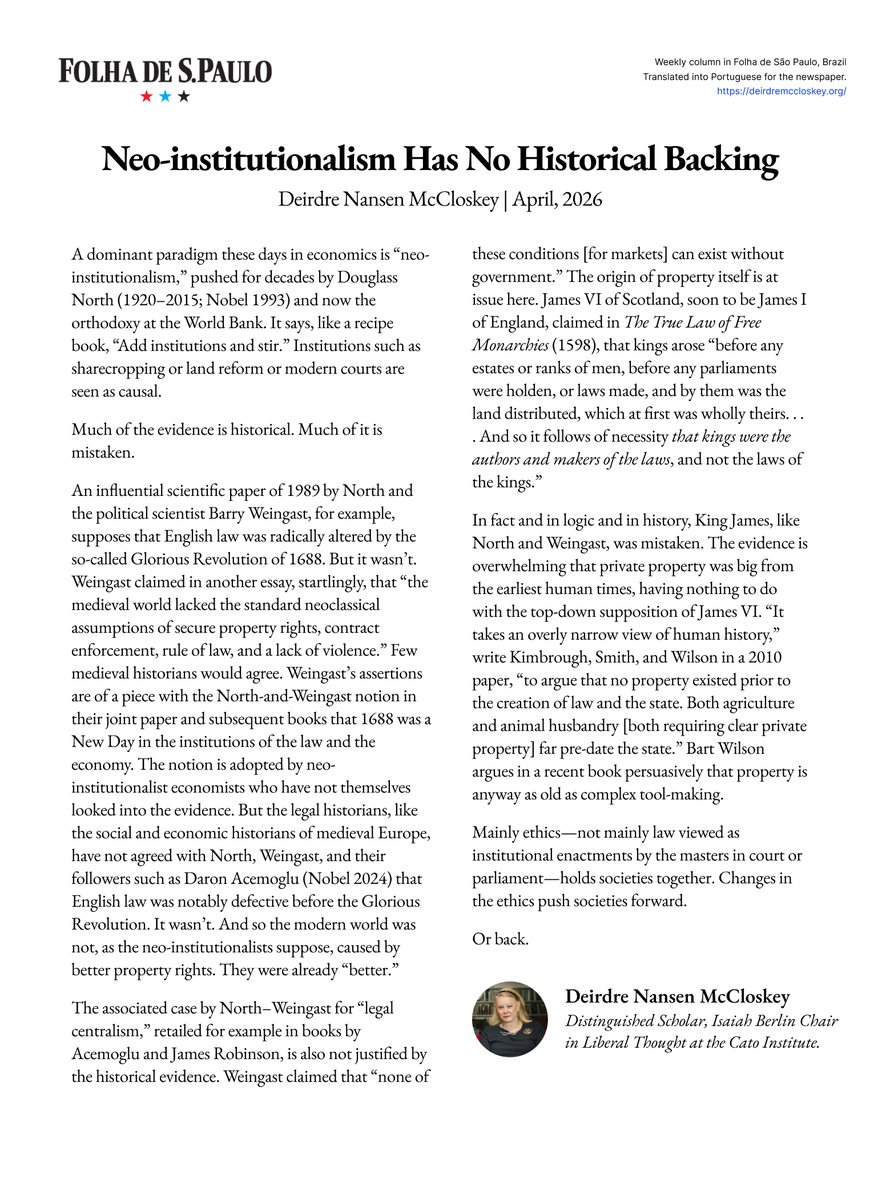
A dominant paradigm these days in economics is “neo-institutionalism.”
Pushed for decades by Douglass North (1920–2015; Nobel 1993) and now the orthodoxy at the World Bank.
It says, like a recipe book, “Add institutions and stir.” Institutions such as sharecropping or land reform or modern courts are seen as causal.
Much of the evidence is historical. Much of it is mistaken.
My latest column for @folha....
Why was Japan so poor before industrialisation?
Last week on VoxDev, @YuzuruKumon (@ManUniEconomics) discussed how equal land distribution in pre-industrial Japan, paradoxically, drove poverty: https://t.co/FdERTfSQTg
Soon available after three years of refining the works, adding stuff and improving the paper. Matt Curtis and I might provide resolution to a big debate in economic history
Finally out! The classical story of the Danish Economic take-off is that Denmark became an agricultural giant. Denmark was among the poorest in Europe. But suddenly incomes rose. Why? And how does it relate to the ratio of milk to butter? 🧵1/
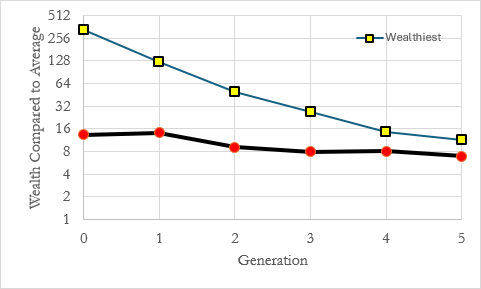
The wealthiest wealthy families substantially converge to the mean across generations, but nevertheless remain very wealthy relative to merely rich families and the population at large.
They can be expected to remain above-average for ~10-12 generations.
The very fine British economist @GregoryClarkUCD found that Norman Conquest surnames are still overrepresented at elite British universities 950 years after Hastings.
The result holds at Columbia! Battle Abbey Roll surnames like Mortimer, Percy, Neville and Darcy have an admit rate of 12.7%, vs 7.2% for White applicants overall. Higher test scores too—though the sample's pretty small.
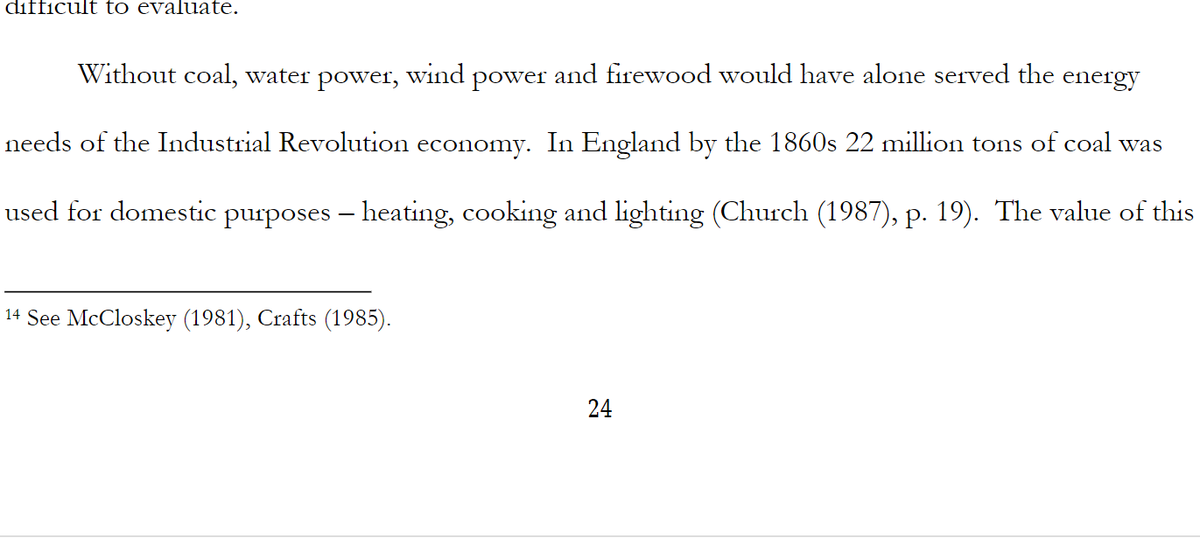
In "Coal and the Industrial Revolution, 1700-1869" economists Gregory Clark and David jacks calculated that even without coal the early industrial revolution in England could have been powered on waterwheels wood and wind power.
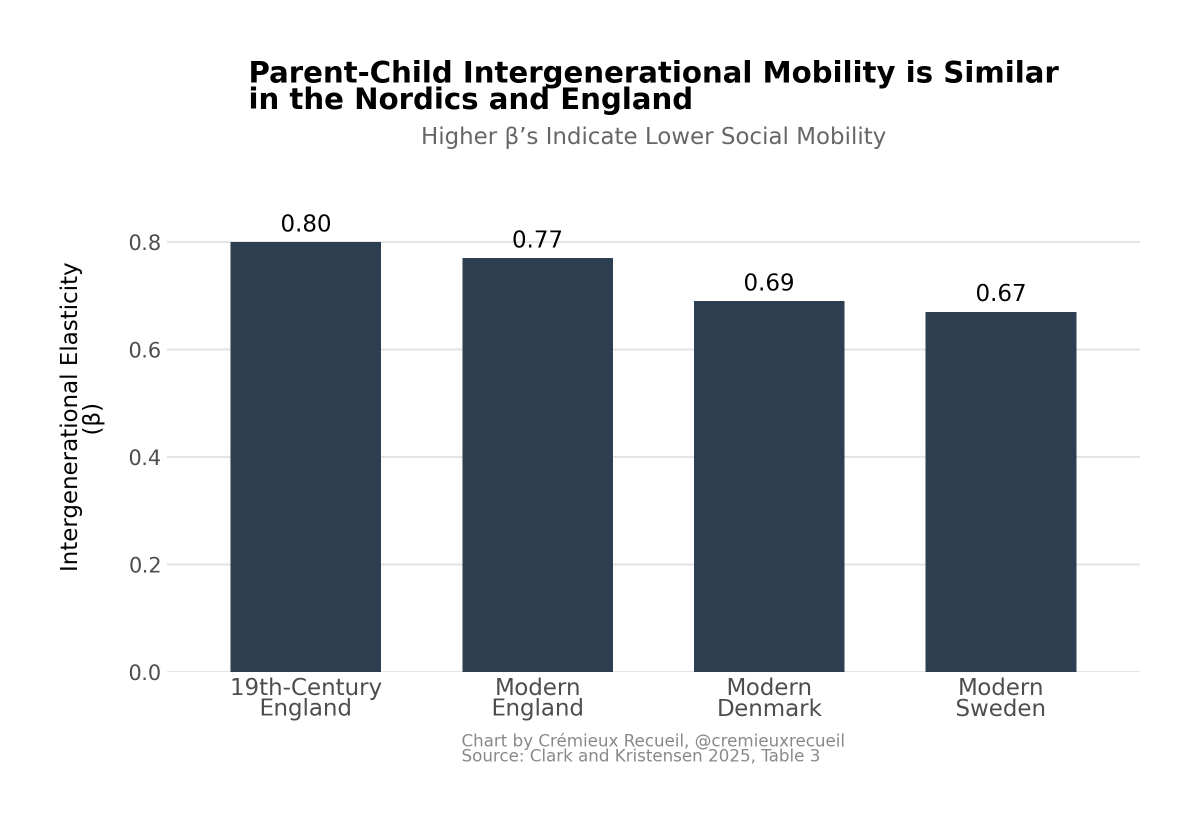
When you measure it well, both the Nordic countries and England have fairly low rates of social mobility.
Moreover, the transition to modernity hasn't changed social mobility, and the Nordics have only modestly higher mobility than England.
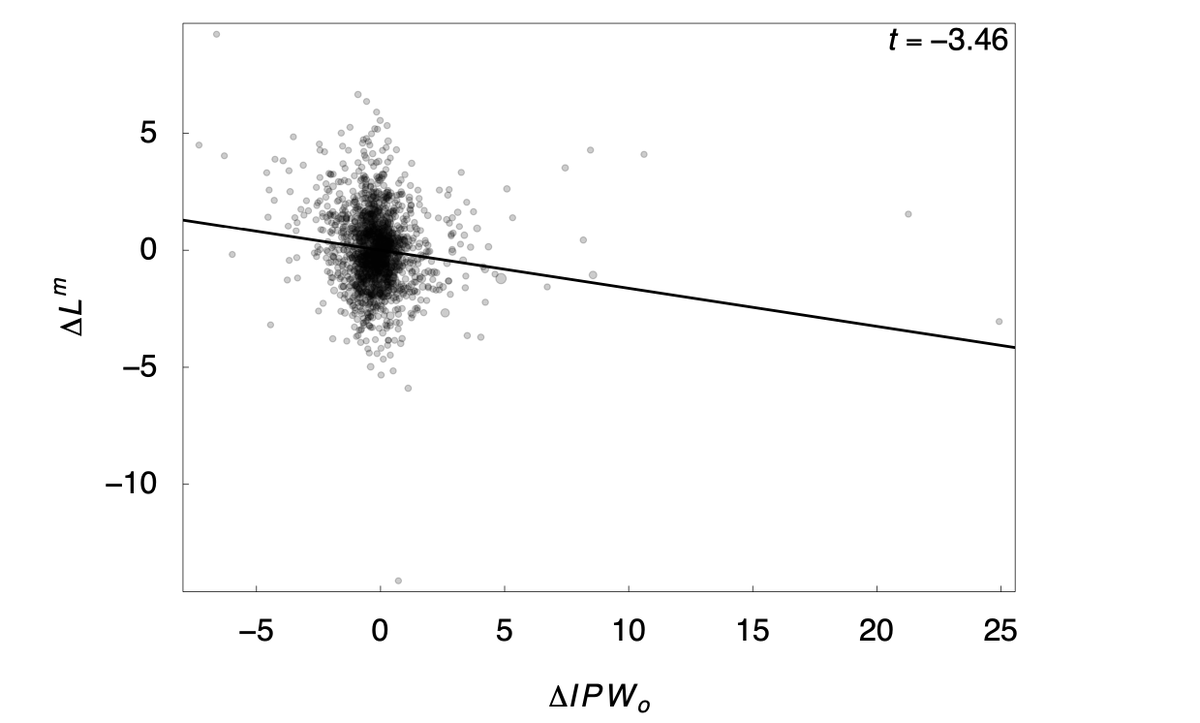
I think this is supposed to be the state of the art for measuring human capital:
https://t.co/olCa8M6ryo
They find a correlation between human capital and growth, but the econometrics is like something from the cross-country growth regressions literature in the 1980s.
When I put a regional dummy in, the correlation disappeared. Effectively, they just found that East Asia grew rapidly and had high human capital.
I suppose that power becomes an issue, though, when you control for region.
New paper by Gregory Clark argues that social mobility is much lower in the Nordic countries than often believed.
After correcting for measurement error, intergenerational persistence is strong – only slightly lower than in England.
🔔In case you missed it, @GregoryClarkUCD recently published another thought-provoking article: "The Myth of Nordic Mobility: Social Mobility Rates in Modern Denmark and Sweden" along with @martinhorlyk!
👉Read it here: https://t.co/EsikPyhD70
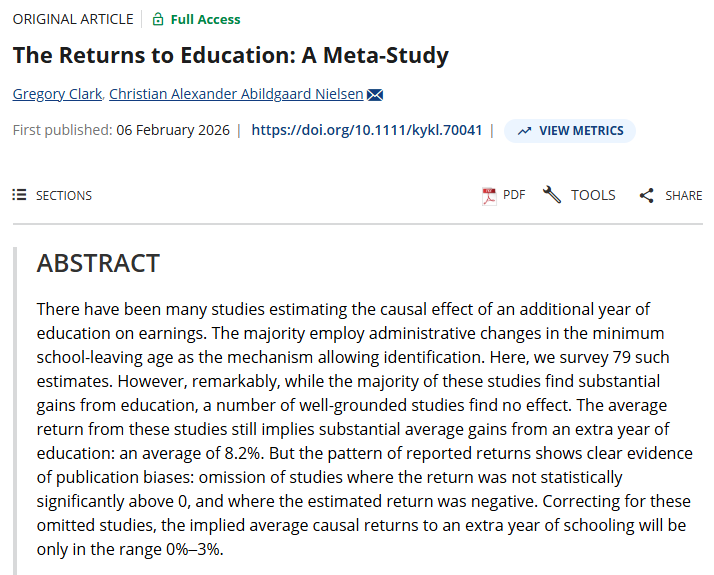
Check out this interesting new article titled: "The Returns to Education: A Meta-Study" by @GregoryClarkUCD & @CAANielsen 🎓
👉Read it here: https://t.co/lFPCpqAPy5
Gregory Clark and Bryan Caplan (the latter in separate work) are challenging the claim that human capital has huge returns. They find returns closer to 0%-3%.
This is something I have disagreements with (for reasons of interpretation, causal mechanisms etc.) but I have not seen this "big question" get the attention it deserves by economists.
This is a topic that should be debated thoroughly rather than simply waived away.
Link here: https://t.co/SrY01CCK8m