Fix #21 of 31: pull load factor for your worst site: average demand divided by peak demand. A low number means paying for capacity you use only briefly.
#EnergyAwarenessMonth
Customers rarely tell you the temperature was perfect. They only tell you when it wasn't.
Good energy management is invisible. The upside is silence; the downside is a permanent review. You manage to never give them a reason.
Fix #20 of 31: give site staff three things to report: a warm case, an uncomfortable room, and equipment that sounds wrong. Early reports beat emergency calls.
#EnergyAwarenessMonth
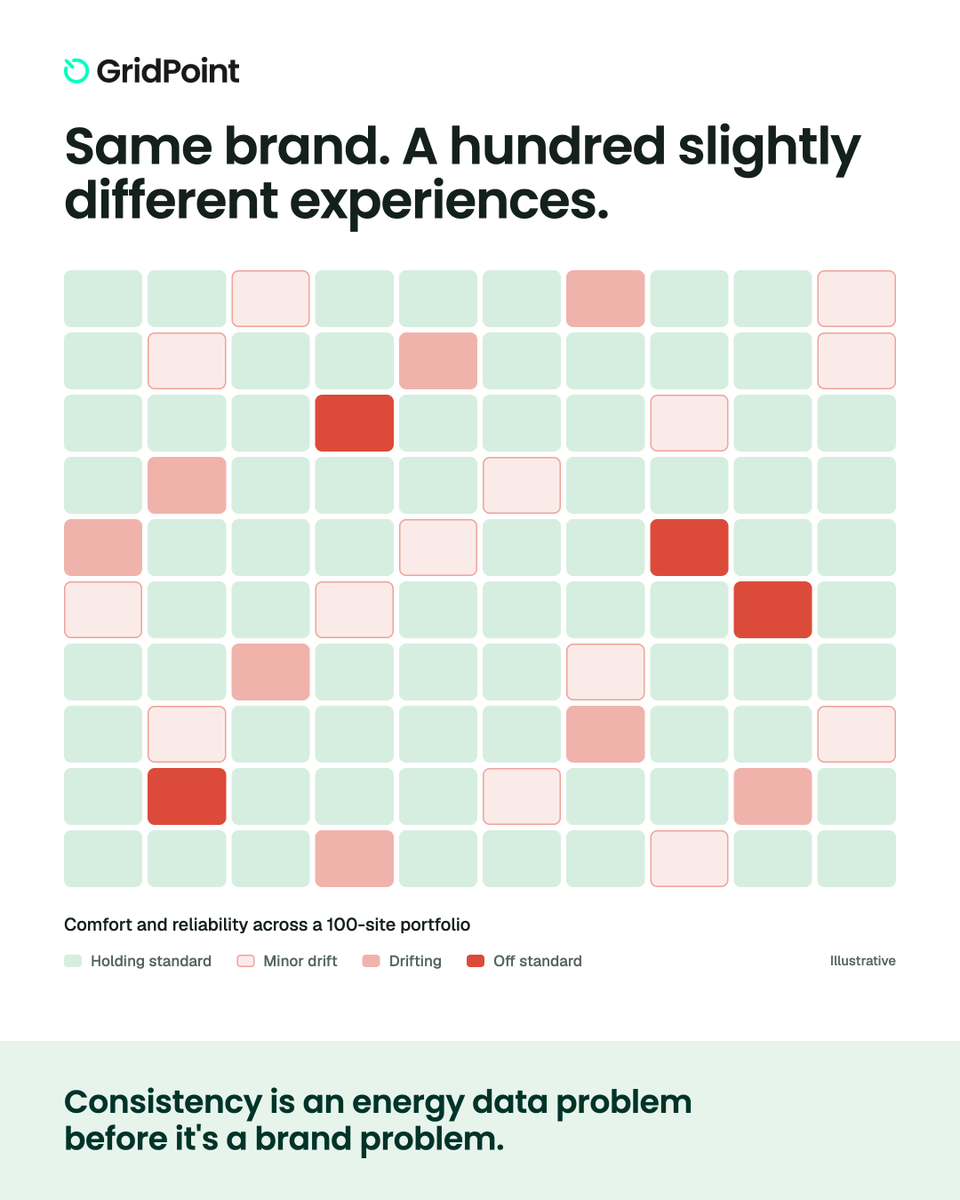
The hard part of multi-site isn't running one location well. It's running the hundredth exactly like the first.
Energy drifts site by site until a portfolio is a hundred slightly different experiences. Consistency is a data problem first.
Refrigeration is where energy, food safety, and customer trust meet. Five checks for the season: energy to hold temp, gaskets, clean coils, tuned defrost, and alarms someone actually monitors.
Fix #18 of 31: inspect case door gaskets. A torn or flattened gasket leaks cold air around the clock and makes the compressor run longer to keep up.
#EnergyAwarenessMonth
Fix #17 of 31: check case temperatures against setpoint. Cases running colder than they need to are spending energy with no food safety benefit.
#EnergyAwarenessMonth
Fix #16 of 31: clear space around condensing units. Boxes, pallets, and overgrowth block airflow, raise operating pressure, and shorten equipment life.
#EnergyAwarenessMonth
The efficiency work that protects customer experience is the same work that cuts carbon.
Every over-run compressor is both an emissions line and a reliability risk. Fix it once, improve both.
Fix #15 of 31: set night setbacks for unoccupied hours. Holding daytime setpoints in an empty building pays for comfort nobody is there to feel.
#EnergyAwarenessMonth
The cheapest efficiency upgrade is a team that notices. Most site-level waste isn't a system failure. It's a propped door, a forgotten override, a light left on in a back room.
Fix #14 of 31: make sure refrigeration alarms reach a person who acts. An alarm in an empty back room, or on a muted panel, protects nothing.
#EnergyAwarenessMonth
Reliability problems quietly cost you customers. Step one: know what the exposure is worth.
Our ROI tool estimates what's recoverable across your portfolio in a few minutes.
https://t.co/8EQhzosX9E
Fix #13 of 31: review refrigeration defrost schedules. Defaults are often more conservative than the equipment needs, and every extra cycle adds heat the system has to remove.
#EnergyAwarenessMonth
The best time to catch an equipment problem is before a customer feels it. The data knows first.
A failing fridge shows longer cycles, more starts, rising draw, weeks before the case goes warm. The warning exists. Is anyone watching?
Fix #12 of 31: stop conditioning empty space. Closed dining sections, back rooms, and unused offices don't need the sales floor's schedule.
#EnergyAwarenessMonth
Five customer-experience problems you can see in energy data before anyone complains: climbing runtime, short-cycling, a cold case pulling more energy, drifting setpoints, and overnight load that never drops.
Fix #11 of 31: confirm economizers actually open. On cool fall days, outside air can do the cooling for free, but only if the damper isn't stuck shut.
#EnergyAwarenessMonth
Fix #10 of 31: check the exterior lights at noon. Lights burning in daylight usually mean a failed photocell or a schedule that never got updated.
#EnergyAwarenessMonth