India's Weakening Rupee and its Expected Impact on the Indian Stock Market and on Companies with Large USD Borrowings -- Reliance, Tata, Adani, Vedanta, SBI, Bajaj Finance and Others
A SIMPLIFIED EXPLANATION OF WHAT THE ECONOMISTS ARE SAYING
Three days ago, Dr. Arvind Subramaniam, former Chief Economic Advisor (GOI) and currently Senior Fellow at the Peterson Institute, along with two other economists (Josh Felman - former IMF Representative in India; and Abhishek Anand, Founder of Insignia Policy Research), published an important article in the Business Standard, and followed it up with a series of posts on X.
Here is a simplified explanation of what these economists are saying:
1. RBI's new governor Sanjay Malhotra is a "victim" rather than the "perpetrator" of the currency situation he has been handed over.
2. Rupee's further decline cannot be avoided. The only question is: how much more decline?
3. RBI's own calculations indicate a large over-valuation of the rupee, so a lot more decline of the rupee against the dollar must happen, especially if US imposes tariffs.
4. RBI only has two choices before it: (a) Allow gradual decline of the rupee; or (b) Accept large and rapid decline
5. In case of gradual rupee decline, the currency market speculators will know the trend, and will keep shorting the rupee. That can lead to intense exchange rate volatility, and there is a risk with speculative activity that the rupee may lose even more value than it should.
6. In case of large and rapid rupee decline, the economy and stock markets could be disrupted.
7. Both above choices (point 5 and 6) are equally painful. There is no third choice. Therefore, economic turbulence is unavoidable, going forward.
8. Large Indian companies (top names are mentioned in the headline of this post, but there are several more) have huge US Dollar debt (external commercial borrowings or ECBs).
9. Indian companies' external commercial borrowings (ECBs) almost doubled from $26.6 billion in FY2023 to $49.2 billion in FY2024. (For example, just two weeks ago, Reliance raised a new, additional ECB debt of $3 billion from global financiers.)
10. PROBLEM # 1: If the rupee becomes significantly weaker against the dollar, the debt and interest repayment burden of these Indian companies will go up. (As the dollar debt has to be repaid in dollars only.)
11. PROBLEM # 2: If the rupee becomes significantly weaker against the dollar, the FIIs' large holdings of Indian stocks will lose their value. (FIIs count their holdings in dollars, not in rupees.) FIIs are already selling, but a significant weakening of rupee can cause a major "flight of capital" from the Indian stock markets.
12. How did this terrible situation for the rupee happen, and why did large Indian companies increase (double) their foreign debt so fast?
This question is more of academic interest. Please read on for a simplified explanation only if you are interested in knowing "HOW" did we reach this situation.
13. This terrible position for the Indian rupee, according to the article these economists have published, happened because in 2022, the RBI reversed the nation's three-decade long policy of flexible exchange rate, and brought back "de facto peg against dollar".
It means, the RBI started making interventions and started "managing" the rupee exchange rate. This resulted in a loss of India's export competitiveness (not allowing the rupee to find its true value at a natural pace) as well as depletion of India's foreign currency reserves (which were utilized to artificially keep the rupee strong.)
14. These economists have said in their article that nobody knows WHY the RBI made this costly pivot 3 years ago. However, Arvind Subramaniam says in his post on X that it was done mostly to subsidize foreign borrowings by the Indian companies.
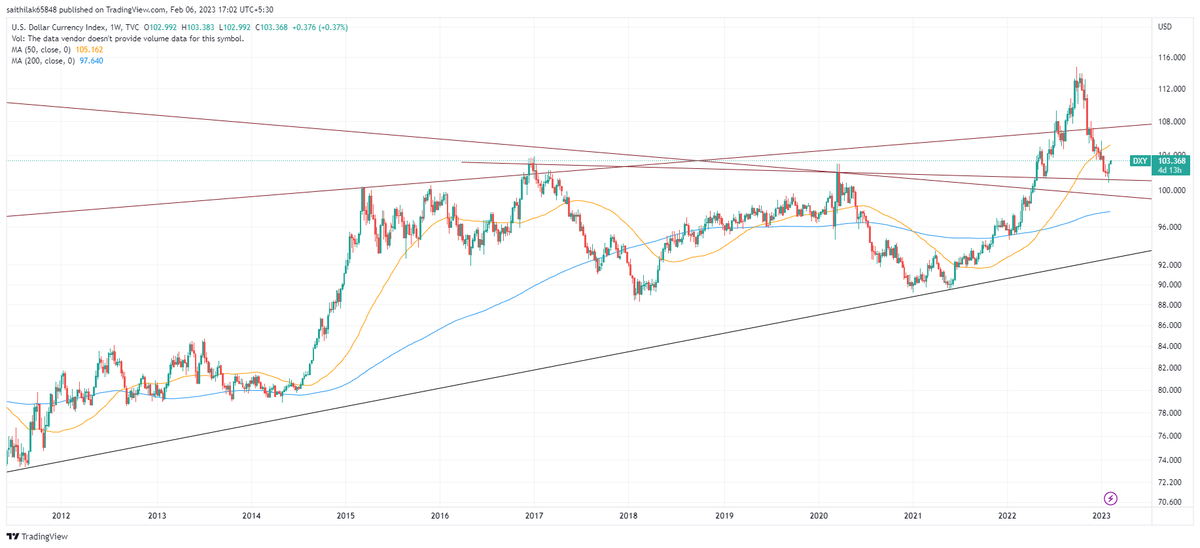
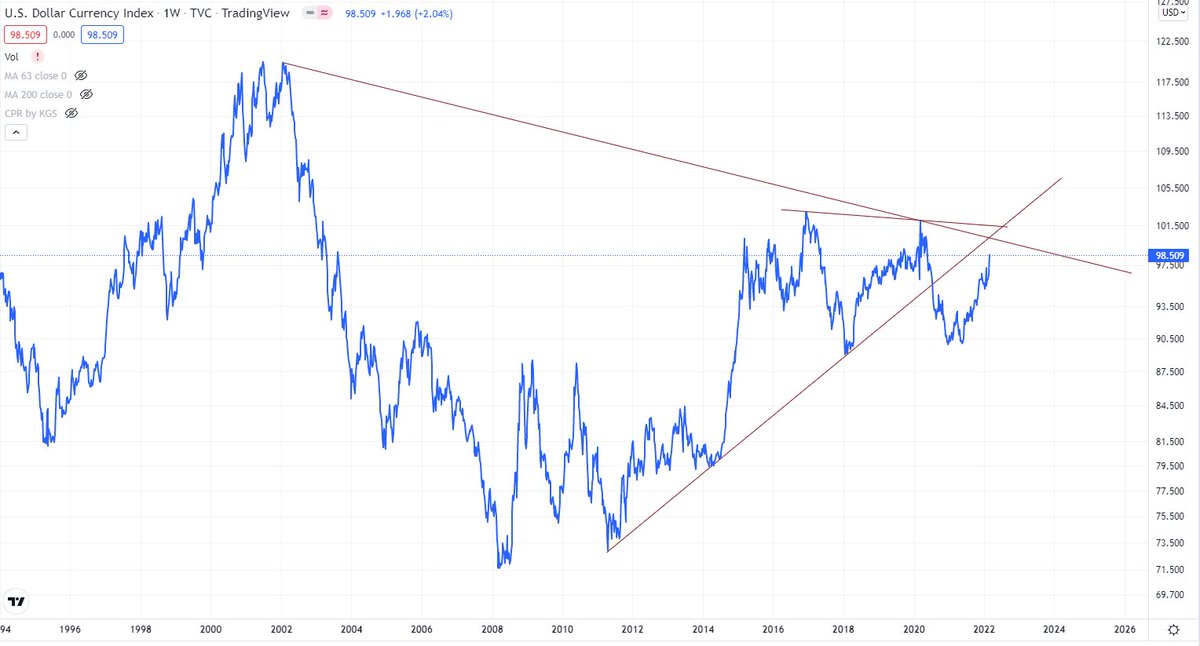
#DXY dollar index heading for series of resistances. Will it hit and turn down?
Given current set of global events, this may not be ruled out completely.
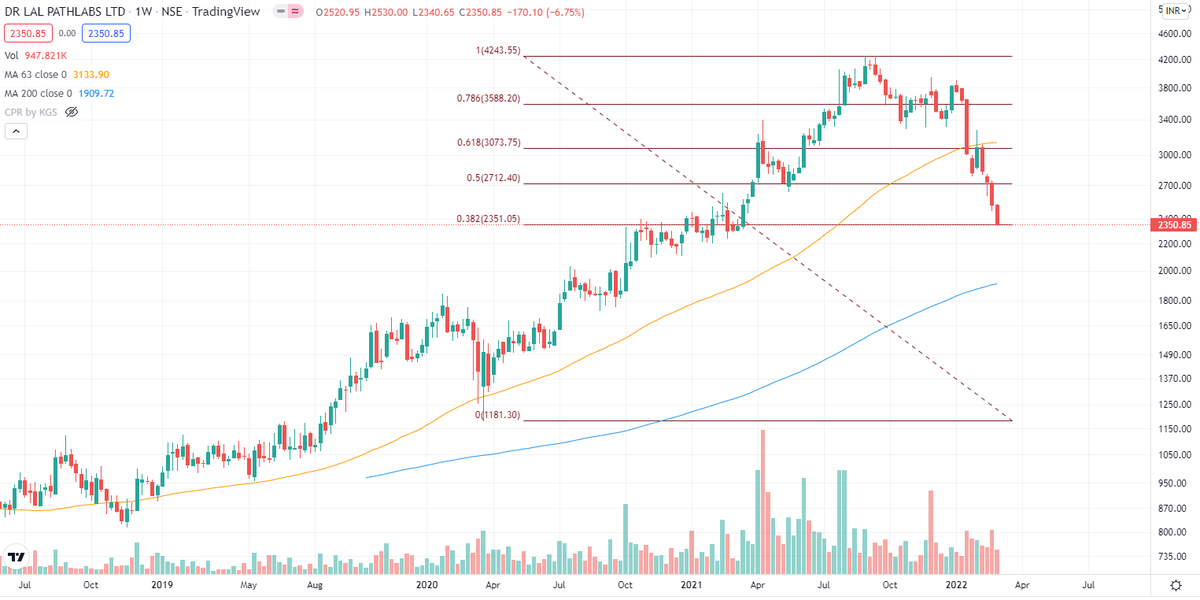
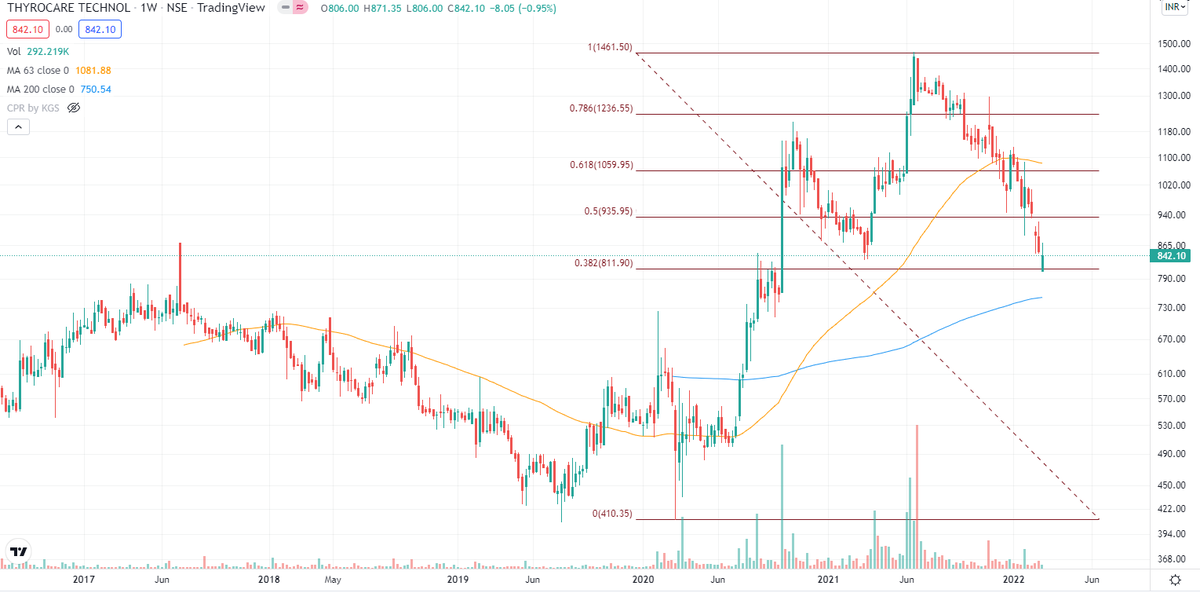
In addition to it, increased competition from hospitals and the nature of business is going to be super competitive with low entry barriers.
Listen to this interview with MD of Dr Lal PathLabs
https://t.co/Jey0MHMtYe