Ten years after GDPR was adopted, its impact reaches far beyond Europe. GDPR helped make privacy a global business priority. The next phase is about data intelligence: insight through discovery, posture analysis and exposure management. Read more: https://t.co/ebabjVFswu
Updated APP 3 guidance from @OAICgov reinforces that the collection personal information is broader than many teams realize. Data intelligence is essential for identifying personal information across systems, applications and services. https://t.co/B6WW5s0IR4
Recent reports of a data breach at a high-profile retailer highlights a familiar challenge: personal information and internal corporate data are spread across platforms and environments. Proactive data intelligence and visibility can lower breach likelihood. Source: @TechRadar
AI can accelerate phishing, credential attacks, vulnerability exploitation and data theft. It's crucial organizations know what personal data they have and whether AI systems are processing it. https://t.co/vtStOTXmgF
@Groundlabs@CISAgov@Groundlabs CISA’s guidance on secure agentic AI adoption is important. Most organizations are rushing in without understanding data access and privileges. The winners will be the ones building multiagent systems + Physical AI with strong governance from day one.
@CISAgov and its international partners have issued guidance for the secure adoption of agentic AI. Key takeaway: agentic AI should only be deployed after organizations understand the data, tools, privileges and systems the agent can reach 🔗 https://t.co/juJqtWKN5M
Agentic AI makes data access decisions crucial. Before organizations connect agents to enterprise systems, they need to understand what sensitive data they hold, where it resides, who can access it and whether it should be available to AI workflows at all. https://t.co/4WTYAoJj3Q
Privacy programs need to reflect what systems actually do with data, rather than relying on policies for compliance. Data discovery provides that evidence, supporting more accurate disclosures, stronger governance and more defensible privacy operations. https://t.co/r8HDZKyGMp
Last week's reports of another major healthcare breach highlights why healthcare data discovery needs to account for all sensitive data types. Some can be replaced or reissued, but health information follows an individual for life. Source: @TechCrunch (article link below)
The Verizon 2026 DBIR reports that vulnerability exploitation is the leading initial access vector in data breach incidents. Meanwhile, internal data, personal information and access credentials remain the most frequently targeted. Read the full report: https://t.co/KtZFf4IK8V
Analyst firm @Gartner_inc has reported that US states issued over $3.4bn in privacy-related fines in 2025 – more than the previous five years combined. Data discovery helps establish the evidence base organizations need for demonstrable compliance. 🔗
https://t.co/NN7z12WT3Y
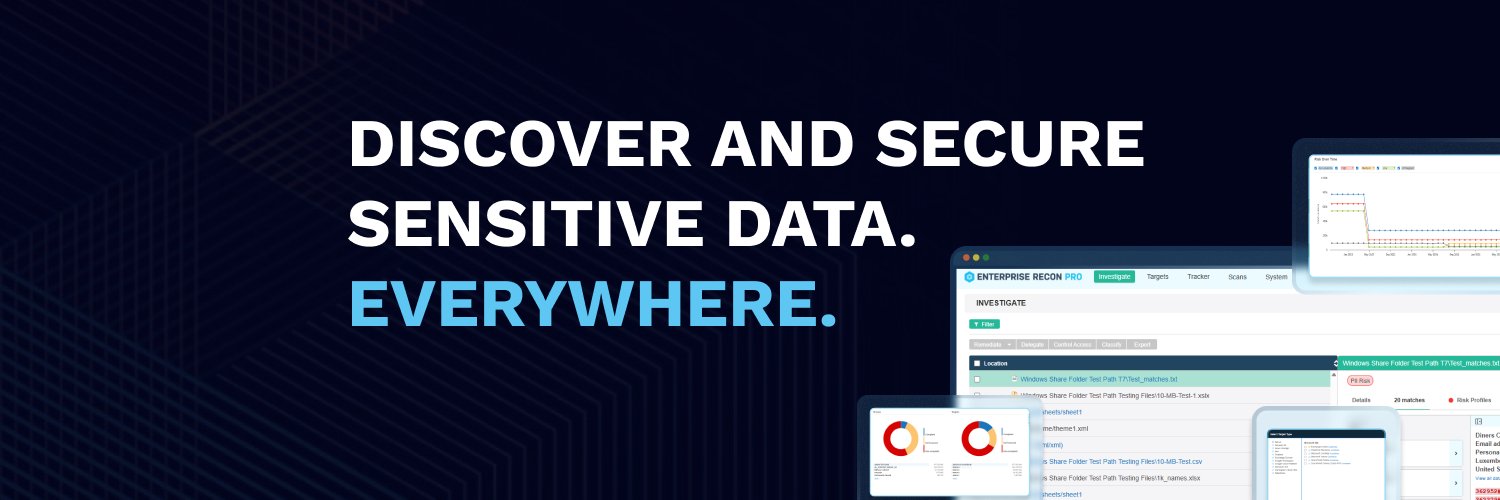
Security programs depend on visibility. Learn how Ground Labs Enterprise Recon helps make sure your security programs are set up for success by providing visibility into your sensitive data wherever it is stored. Read more: https://t.co/hbV25iYeEN
AI can amplify existing data exposure as data in AI tools can move faster and further than traditional business processes. Safe AI adoption starts with visibility before sensitive data becomes part of the AI data flow. Learn more: https://t.co/kPF2RZlZIP
AI tools introduce sovereignty risks but there remains little global consensus on how to balance innovation, data sovereignty demands and individuals' privacy rights. Read more: https://t.co/BWSg8uyDun
Research by Harbr Data found that 61% of large UK firms can't explain how sensitive data is used once it's processed by AI systems overseas, highlighting compliance risks of AI-related cross-border data transfers. Source: https://t.co/lw1EUXfleE
Cloud storage, SaaS and AI create opportunities, but also bring new data blind spots and hidden sources of data risk. Ground Labs helps uncover the data you cannot see. Find out how: https://t.co/1uYD5sXg8s
The biggest AI data risk often sits in the data AI systems can already reach. By discovering and treating sensitive data before AI tools access it, organizations can significantly reduce their leakage risk and build safer AI workflows. Learn more: https://t.co/rCzhSlFQ6C
The ransomware landscape has shifted from encryption to exfiltration, driven by the value of the data attackers can steal, according to @QuorumCyber. https://t.co/Lu25SVWkvA