1. The origin of the radio was in 1895 when G. Marconi invented what he called at the moment the "wireless telegraph" using radio waves to transmit Morse code.
One of the things we have really liked is the Evgeny Morozov's thought. Technologies aren't bad in their own but they are the way in which the economic system expresses itself.
#unit1wevelearned
Redundancy: refers to messages which convey highly predictable information to the
receiver. It’s almost the opposite to entropy. In this case the amount of information
can repeat itself many times or just be plain irrelevant, not contributing anything to
the communication process
#Unit1we'velearned @Teoriainfocomu Bauman's theory about liquid society is very relevant not only for technological side of society but also to the understanding why we communicate the way we communicate with others. It explains why for us technology is necessary, but older
#Unit1we'velearned @Teoriainfocomu. Infoxication or information overload is a large amount of information that is very difficult to process due to its volume, and prevents us from going deeper into the topics we are dealing with.
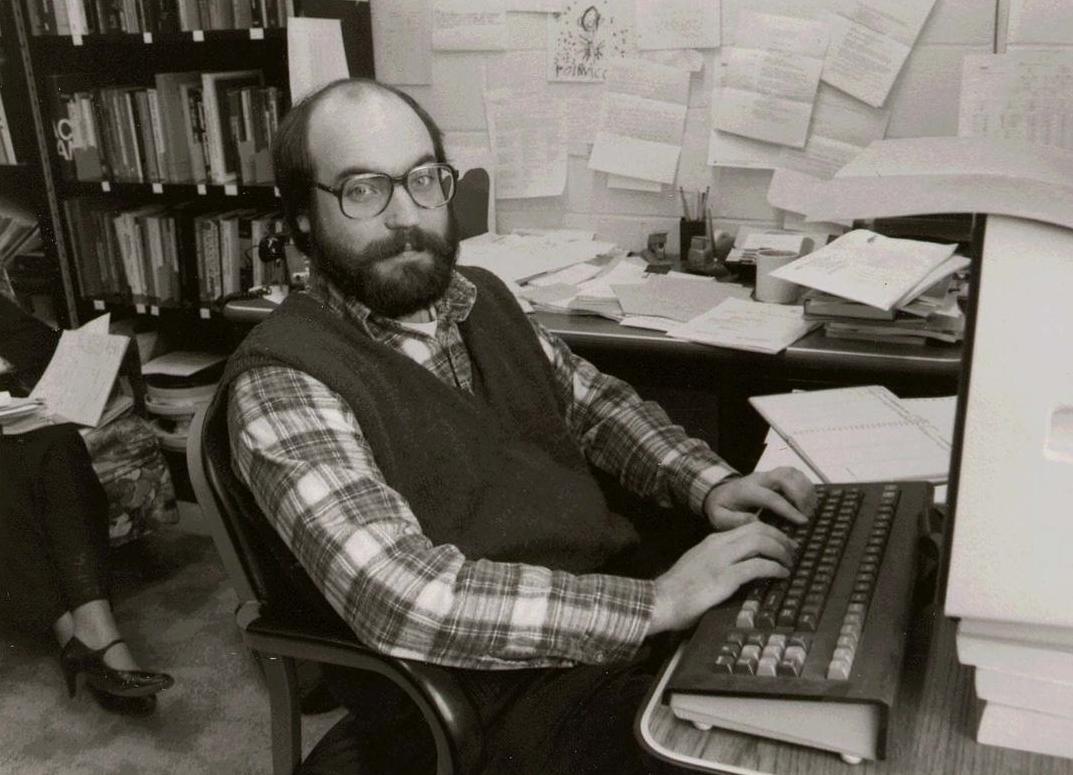
Mark Weiser was a computer scientist and chief technology officer (CTO) at Xerox PARC. Weiser is widely considered to be the father of ubiquitous computing, a term he coined in 1988.
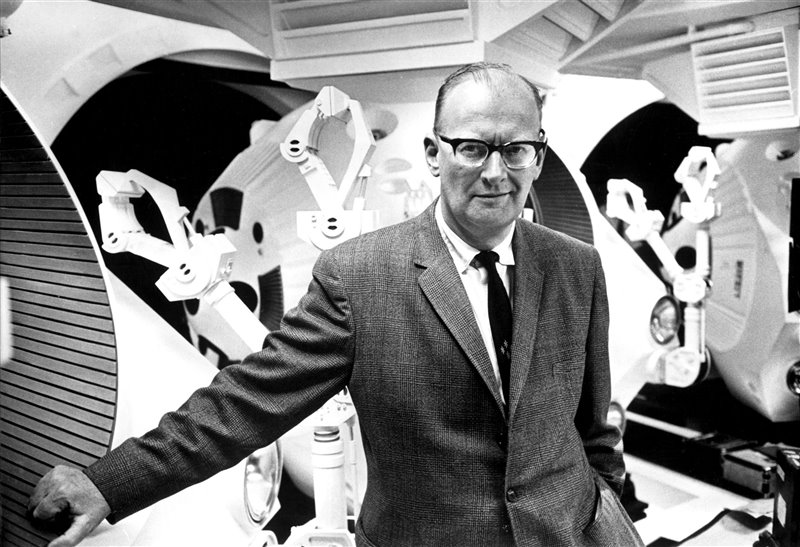
Sir Arthur Charles Clarke was an English science-fiction writer, science writer, futurist, inventor, undersea explorer, and television series host.He co-wrote the screenplay for the 1968 film 2001: A Space Odyssey, widely regarded as one of the most influential films of all time.
https://t.co/GvgSgOnzS0 growth and innovation is not linear but exponential, mainly because the current innovations lead to an easier and more effective use of technologies, making innovation processes faster, so innovations lead to more innovations.
@Teoriainfocomu#practica3
1. ARPANET (Advanced Research Projects Agency Network) was an experimental computer network that was
the forerunner of the Internet. It was first used in 1969 and finally decommissioned in 1989. Its main use was
for academic and research purposes.
@Teoriainfocomu#practica3
1.Vannevar Bush was and American electrical engineer and administrator who developed the Differential
Analyzer and oversaw government mobilization of scientific research during World War II.
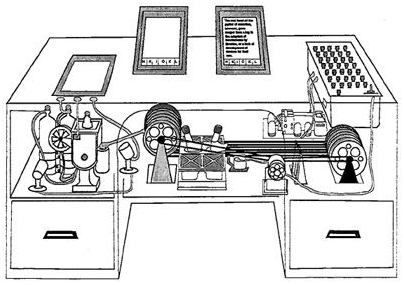
3.The Memex was a conceptual system outlined by Vannevar Bush for storing data and retrieving it in an easy
and organized manner. It was intended to help people enhance their lives by providing access to the massive
amount of knowledge already recorded.