Dr. Anup Naik provides three steps to achieve net zero embodied emissions.
1. Reuse existing buildings and materials.
2. Reduce through material optimization and specifications of low to zero carbon materials.
3. Use of carbon sequestering materials.
How to build climate resileint cities at Bengaluru:
Dr. @vijaychandru spoke about IIScs research on modeling risks and designing interventions for a warming world.
How to build heat resileint cities: Bengaluru.
We are here at Bengaluru for 'how to design for climate resilient cities.' Mr. Rajneesh Sareen set the agenda of the conference introducing CSEs research and highlighting the role that urban designers, planners and architects will play in designing for climate resilence.
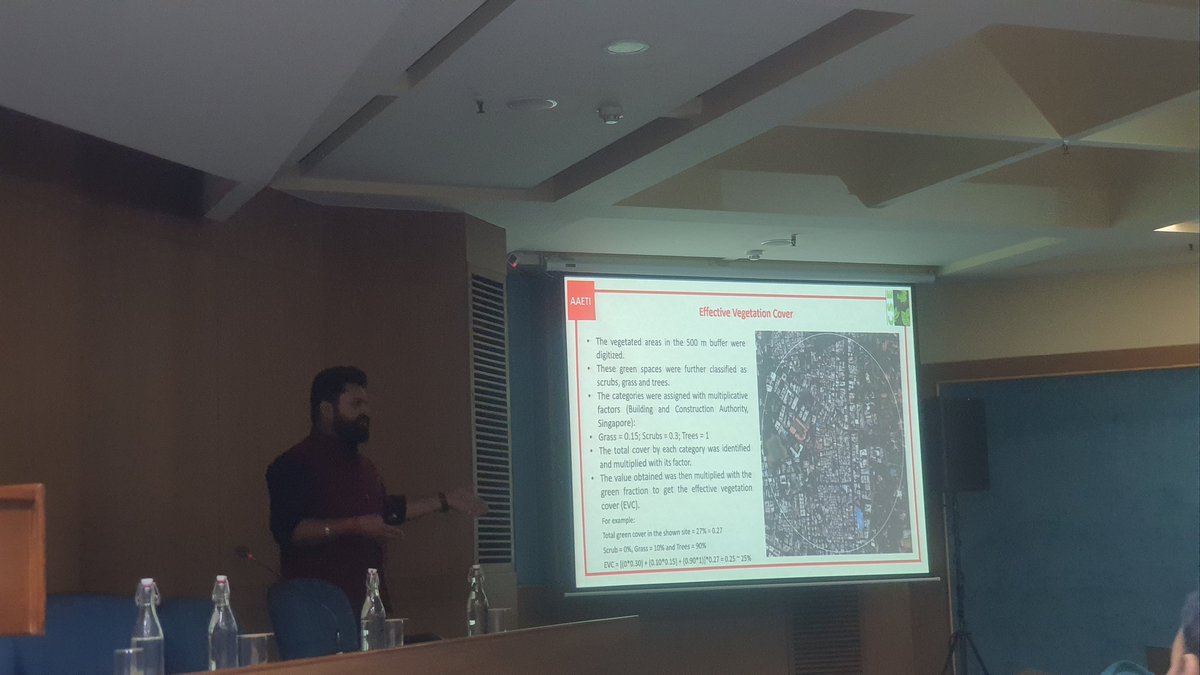
Training on Clean Build: The type and quality of greens matters - denser canopy greens could reduce the surface temperatures by as much as 10 degrees C. @Nimish_Gpt
@SinghMitashi presented CSE's study on city heat analysis of 10 cities: Cities in India are becoming heat centres with several cities having more than 80 per cent of their areas under heat risk.
Workshop on Clean Build: Pathways to decarbonize the built environment: Sensitivity, Adaptive capacity and Exposure are three key components for understanding vulnerability of a sector. @sareen_rajneesh
Mr. Rajneesh Sareen kicks off the workshop on Pathways to decarbonize the built environment by emphasizing the importance of Environmental Impact Assessment as an important environmental safeguard.
Our cities need upscaled transition towards inclusive planning: India has a better advantage as our baselines of car usage, ownership of AC's is already low. We will need to redefine our aspirations and glamorize the right.
@sareen_rajneesh@SinghMitashi@AnumitaRoychowd