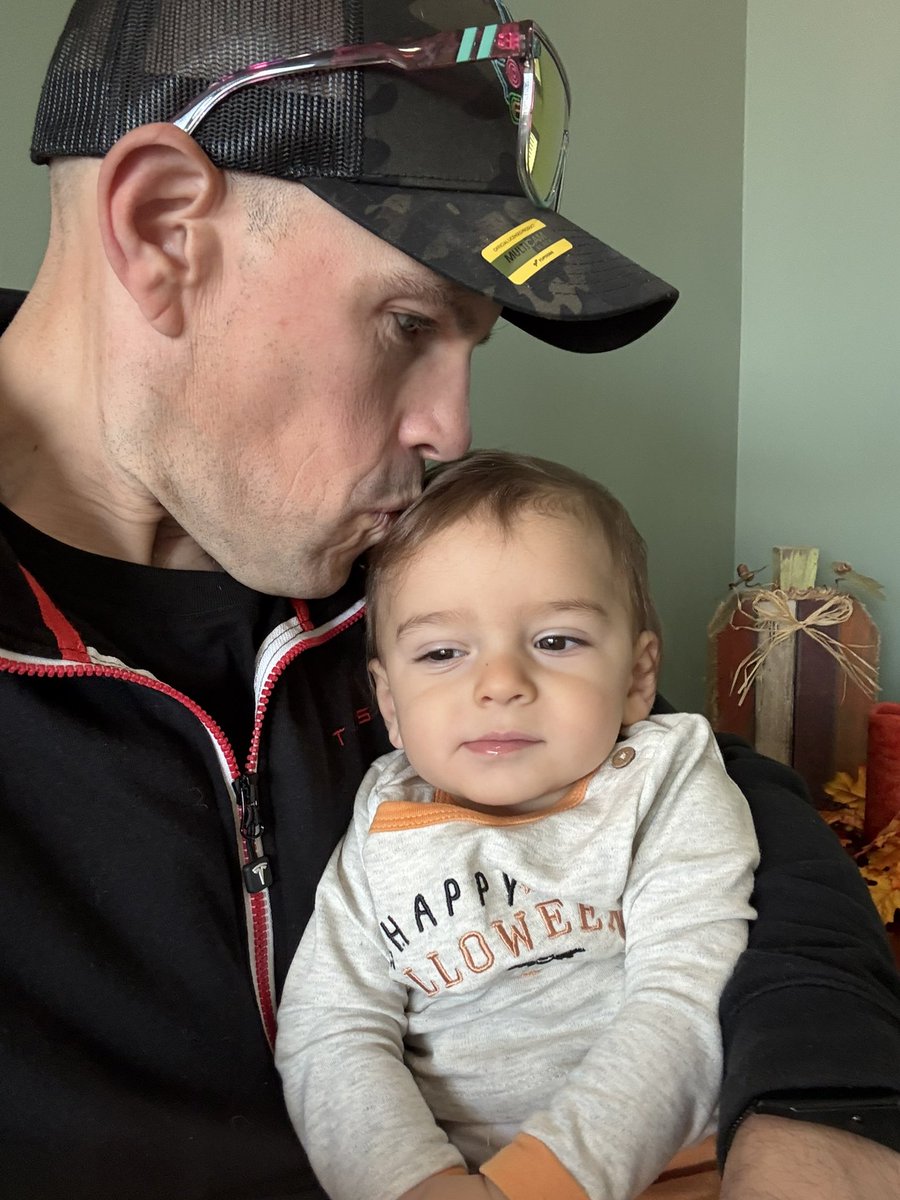
Grumpy about most things. Not about this. My @cybertruck w/ FSD drives me and Onyx around Michigan every day, and he's never once complained about the driver!
@Tesla
Refer friends & family to gift them a month of FSD Supervised
Once they subscribe, you'll receive a free month in return (or $99 in Tesla Credits if bought outright)
Available in the US
Transformers have barely changed since the 1890s: copper coils in a tank of oil.
Batteries, solar and compute run on DC. The grid runs on AC. Bridging the two has meant inverters plus transformers.
Powercore is a solid-state transformer, breaker and inverter in one box. Finally, one conversion and about half the losses.
Hats off to the Tesla power electronics engineers!
Delta Airlines CEO: "We've been out with a great product from Viasat, which we've got two new satellites in the sky. It's not Starlink caliber but it's pretty darn close."
It's not even remotely close to Starlink 😂😂
Tesla’s Annual Meeting is coming up on December 3 & we need your vote
Voting is quick & easy – you can vote online, by mail, by QR code or by phone
@Tesla_Optimus can show you how
https://t.co/PMQbMQZMr7
Nashville, we’re hiring!
Prufrock-MB3 has arrived (the third TBM building Music City Loop), and Prufrock-MB4 arrives in the next 8 weeks.
Come dig with us - Engineering, Ops, Weld, Maintenance, Electrical, Facilities, Safety, and Security.
Hiring Event: Tuesday, November 24
Apply here: https://t.co/r6QwFpG1uf
Five Bots now have full-time roles on our accounting team. We onboard, train, and manage them just like human teammates.
Here's how we built them to handle the order-to-cash process, from provisioning customer accounts to collecting payments.
https://t.co/v3uuGoLWhP
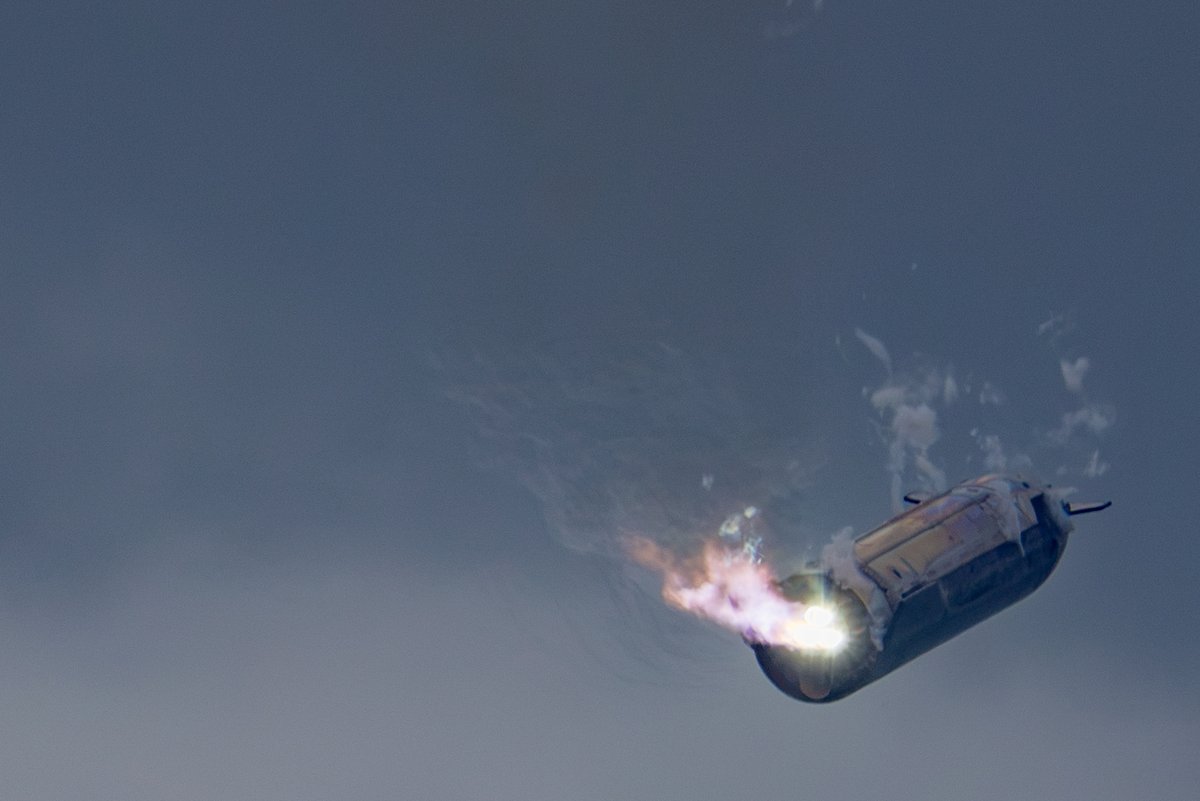
BOOM 🚨 Now that Ship 42 is back at SpaceX for inspection, some fascinating engineering details are emerging from Flight 15 🔥
🔧 The tower catch exposed a tricky materials problem.
Close-up footage of Ship 42 showed ablative material being scraped from the spacecraft’s side as it made contact with Mechazilla’s chopsticks.
This wasn’t the main ceramic-tile heat shield tearing off. Instead, the footage captured damage to a separate layer of ablative protection along the spacecraft’s side.
On November 16, Elon Musk revealed that SpaceX plans to replace the affected material with stainless steel wool on future flights.
It’s an intriguing choice, and the engineering logic behind it is worth exploring.
Ablative materials protect spacecraft by absorbing heat as they decompose, char, or erode under high temperatures. During a tower catch, however, that same protective layer also faces mechanical contact, friction, and concentrated loads from the catch arms.
Those are two very different operating environments.
Stainless steel wool could offer a better balance between thermal protection and mechanical durability.
Its flexible metallic fibers may handle rubbing and localized compression better than the current sacrificial ablative layer. The porous fiber structure can also provide insulation, while its similarity to Starship’s stainless-steel hull may offer advantages for thermal-expansion compatibility and attachment.
There’s another important benefit.
Unlike an ablative layer designed to sacrifice material, stainless steel wool could potentially remain in place through multiple flights and catches.
If the new protection survives repeated mechanical contact without needing replacement, SpaceX could eliminate another recurring refurbishment task.
The exact configuration, attachment method, and thermal performance haven’t been disclosed yet, so the material’s durability still needs to be demonstrated.
But the engineering goal is clear: protect the spacecraft during flight without creating unnecessary maintenance every time it returns to the tower.
🔍 Ship 42 could fly again after just a few weeks of refurbishment.
On November 15, Elon shared that he’d personally inspected Ship 42’s heat shield and that both the shield and engines looked great overall.
His preliminary assessment was encouraging: the spacecraft could probably fly again after a few weeks of refurbishment.
That’s a remarkable starting point for the first orbital Starship ever recovered intact by its launch tower.
Even so, Elon acknowledged that many small fixes are still needed before Starship achieves aircraft-like reusability.
He defined that benchmark as zero expected refurbishment between flights, apart from scheduled maintenance.
That’s an important distinction.
Being able to refurbish and refly a spacecraft is a major achievement. But a vehicle that needs weeks of hands-on work after every mission still isn’t ready for the high-frequency launch cadence SpaceX ultimately wants.
And that’s exactly why bringing Ship 42 home in one piece is so valuable.
Elon described the recovered heat-shield information as a “motherlode of data” that SpaceX can use to improve future vehicles.
Ship 42 has also been transported back to SpaceX’s production facilities, giving engineers direct access to hardware that survived an orbital mission, atmospheric reentry, and a tower catch.
For the first time, SpaceX can thoroughly inspect an intact orbital Starship after recovery and determine how much refurbishment its current design actually requires.
The scraped ablative material is already one visible example of the recurring maintenance SpaceX wants to eliminate.
Engineers can now assess the condition of the remaining thermal protection, engines, and structural hardware to identify which components are reusable as they are, which need repairs, and which may require design changes.
That distinction matters because refurbishment isn’t just about replacing damaged parts.
Every additional inspection, repair, or replacement adds time to the turnaround process, along with labor, equipment requirements, and operational costs.
A vehicle that survives reentry but needs extensive refurbishment after every flight may be technically reusable without yet being economically or operationally suitable for rapid reuse.
And Ship 42 finally gives SpaceX the recovered hardware needed to measure that gap directly.
⛽ Booster 22 showed just how tight Super Heavy’s recovery margins really are.
Flight 15 also delivered an important engineering lesson from the booster that didn’t make it home.
Its boostback burn ended prematurely after a low-fuel-mass alarm.
During the coast phase, the booster’s guidance, navigation, and control system determined that it could no longer meet the conditions required for a tower catch.
It automatically aborted the recovery attempt and diverted toward a designated offshore landing area in the Gulf of Mexico.
Booster 22 then performed its landing burn over the water. After the engines shut down, its flight termination system was activated.
That sequence demonstrated that the autonomous safety system could recognize an unacceptable recovery trajectory and protect the launch tower rather than attempt a catch outside its permitted conditions.
SpaceX said the underlying cause was still under investigation, while Elon subsequently attributed the propellant shortfall to slight Raptor engine underperformance.
He also explained the unusual green flame visible during the booster’s final moments.
According to Elon, fuel depletion in the regenerative cooling circuit caused copper to burn as the combustion chamber became oxygen-rich.
That explains the striking green exhaust.
But the biggest engineering takeaway concerns propellant management.
Elon explained that Super Heavy is designed to land with only tiny residual amounts of propellant.
When margins are that tight, even small variations in engine performance can make the difference between a successful tower catch and losing the booster.
SpaceX is already pursuing two improvements.
The first is better Raptor performance and consistency through the V3.2 engine development program.
The second is surprisingly straightforward.
Elon said SpaceX plans to adjust the flight software to shut down the booster’s main ascent burn, MECO1, approximately one second earlier.
He described it as a “tiny change.”
And that’s precisely what makes it so interesting.
Ending the ascent burn just one second earlier preserves additional propellant for boostback and landing, potentially providing enough margin to prevent another recovery failure.
But there’s also an engineering trade-off.
An earlier MECO1 means the booster delivers slightly less velocity before stage separation.
If the mission’s orbital target remains unchanged, that shortfall has to be accommodated elsewhere in the flight profile, potentially requiring Starship’s upper stage to provide additional acceleration.
SpaceX hasn’t disclosed the exact performance cost, which may be small. But the underlying physics is important.
The booster and upper stage share the overall mission’s performance requirements. Preserving more propellant for booster recovery can come at the expense of some ascent performance.
That’s why recovery margins can’t be optimized independently of the rest of the rocket.
And it’s a fascinating example of how a seemingly minor software adjustment can help improve the reliability of an enormous launch vehicle.
Flight 15 demonstrated both the vulnerability and a strength in SpaceX’s design.
Booster 22 ran short of propellant, but its autonomous safety logic worked as intended, abandoning the tower catch rather than attempting a recovery outside safe limits.
🚀 Flight 15 has given SpaceX three concrete engineering priorities.
The catch interface needs durable protection that can withstand repeated mechanical contact without frequent replacement.
Ship 42’s postflight inspection and refurbishment will reveal how much work the current spacecraft actually needs before flying again.
And future Super Heavy flights will test whether improved Raptor consistency and a small adjustment to MECO1 provide more reliable recovery margins.
These are no longer just challenges engineers can study through simulations and ground tests.
Flight 15 has given SpaceX an intact orbital spacecraft, visible evidence of recovery-related wear, and detailed flight data from a booster that couldn’t complete its return.
SpaceX can now turn those findings into specific hardware and software improvements, then measure the results on subsequent flights.
The most revealing evidence will be how much work Ship 42 needs before another mission, whether the revised catch protection survives repeated use, and whether future boosters return with enough propellant to complete their landings.
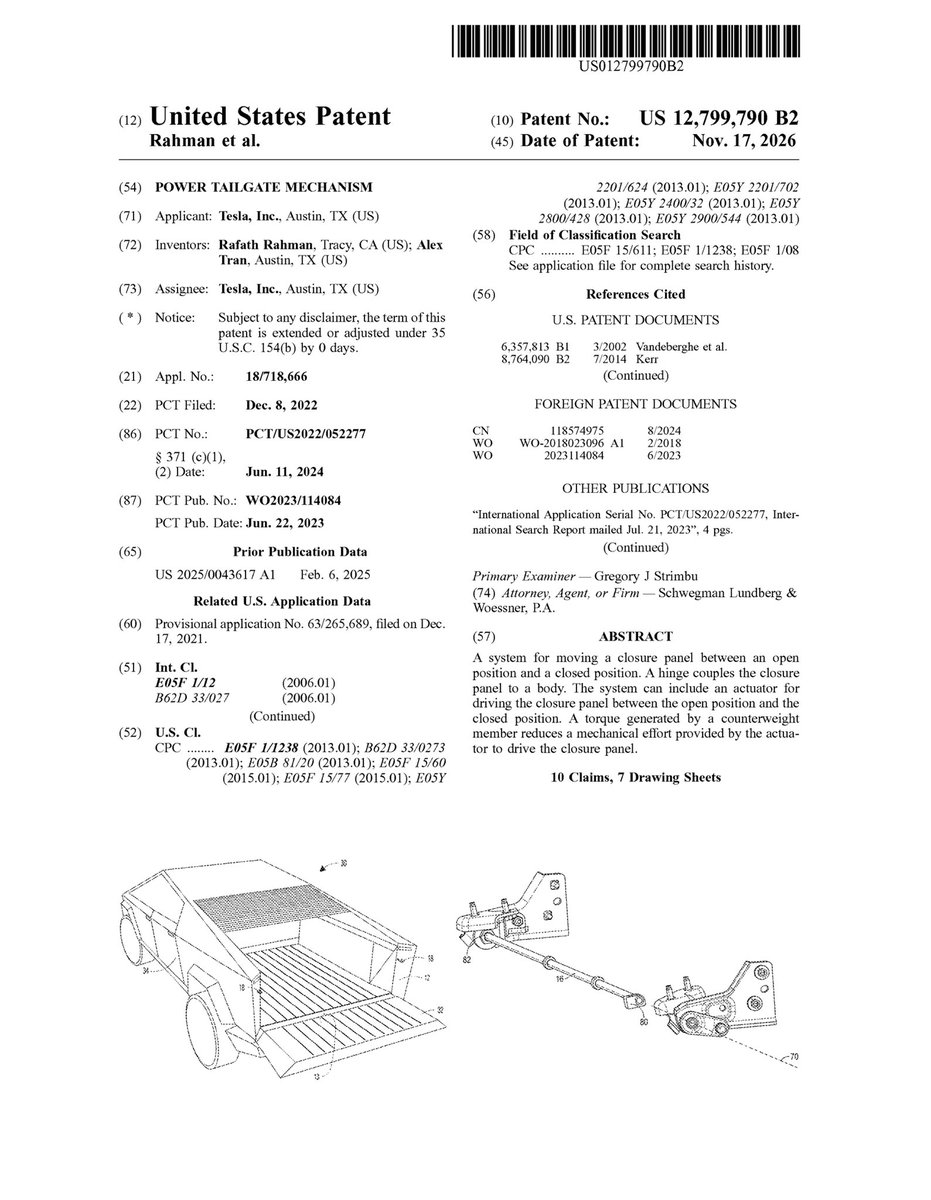
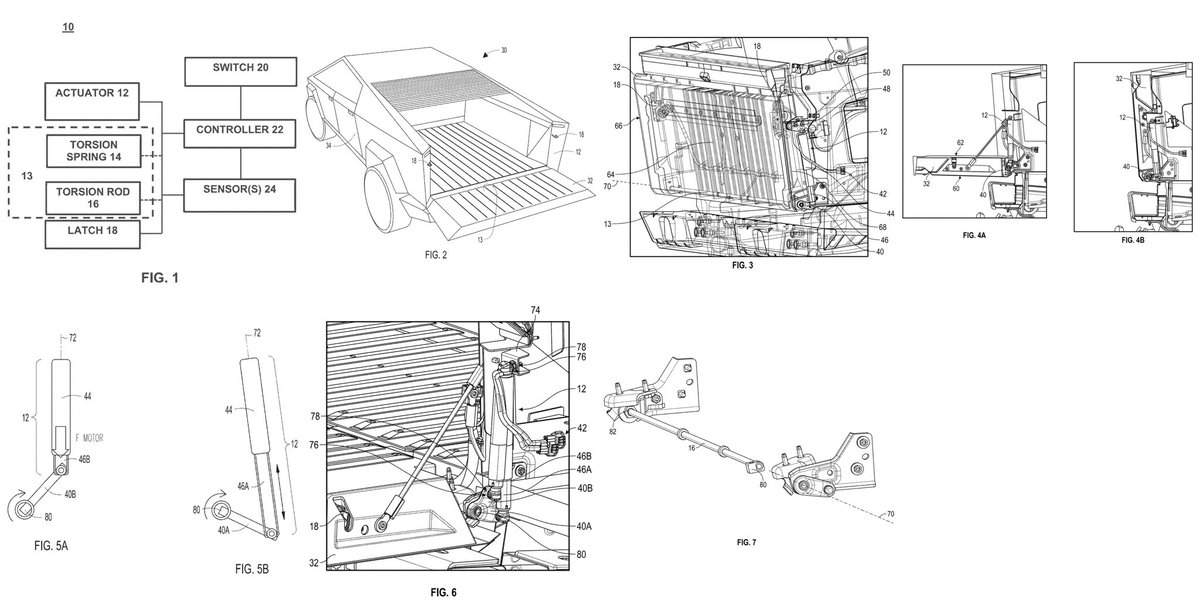
NEWS: Tesla just got a US patent for a power tailgate, and the drawing is a Cybertruck 🛻⚡
Details:
• Tap a button on the truck, your key fob, or the phone app and a small motor opens or closes the tailgate for you
• A hidden torsion spring inside the tailgate carries most of the weight, so the motor only has to give a gentle push
• Latches pull the gate snug for the last bit of closing, and sensors keep track of where the gate is
• Fewer parts than typical power tailgates, so it should be cheaper, easier to build, and more reliable
• Bonus: the motor can break a tailgate free when ice has frozen it to the bed
• The text just says "truck" or "SUV", but the Figure 2 drawing is clearly a Cybertruck with the bed cover open
This feature never made it to production Cybertrucks but still good to see it. Cybertruck Lives Matter ❤️
US 12,799,790 B2, granted Nov 17, 2026
$TSLA @elonmusk
Introducing Powercore
Solid state medium voltage transformer, inverter and breaker – reliable, safe and secure
7.4 MW/9 MVA continuously at 34.5 kVac w/ grid-forming support for 10MVA of peak power
Made in America. Operating 2027