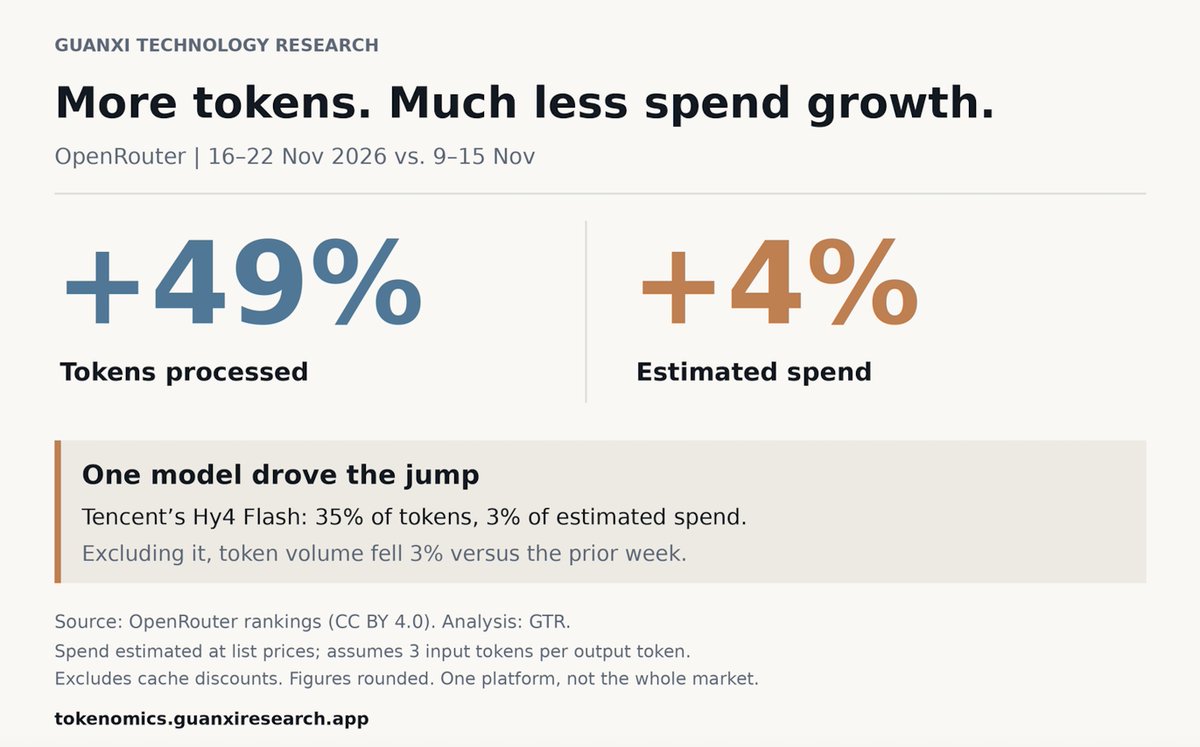
@OpenRouter token volume rose 49% last week. Estimated spend rose 4%.
@TencentHunyuan Hy4 Flash: 35% of tokens, 3% of estimated spend. Excluding it, token volume fell 3%.
Spend estimated at list prices.
Weekly note: https://t.co/rKBTWwP53v
Update to my Aug. 14 post on @mobileXus :
An FCC filing now confirms the CONX transaction and adds some useful details. MobileX has approximately 107,000 paid subscribers, while CONX will own 60.93% after closing.
@Verizon is expected to receive a 12.5% stake when the current MobileX-Verizon MVNO agreement concludes, which is estimated to occur in about nine months.
MobileX says it will continue operating under its existing brand and terms in the near term, with senior management remaining involved.
So, standalone for now. The longer-term question of how MobileX fits alongside @boostmobile remains worth watching.
@nvidia is hedging across the AI stack. It sells GPUs to closed-model leaders while backing open weights through @poolsideai /Nemotron, even as some customers develop custom silicon.
Poolside highlights a question from my GTR note: who finances frontier-scale open-weight models?
https://t.co/vzgteqGouc
As per WSJ, Charlie Ergen has agreed to take a controlling stake in @mobileXus through CONX, in a deal valuing the wireless provider at roughly $200M.
@Verizon will also receive a minority stake by converting an existing loan into equity.
If the deal proceeds as reported, worth watching whether MobileX remains standalone or becomes more closely aligned with Boost over time.
@OpenAI cut GPT-5.6 Luna token pricing by 80%. @AnthropicAI launched Opus 5 at half the price of its higher-end model.
Now @deepseek_ai is raising peak-hour V4 Pro output pricing more than 4x.
The bigger shift: AI competition is moving beyond $/token toward cost per successful task.
Price-performance is becoming the real battleground.
AI compute scarcity is changing neocloud economics.
@nebiusai said its first Blackwell capacity auction cleared 15% above its previous high. @CoreWeave also highlighted stronger pricing in the current demand environment, including an ~25% increase across SKUs in July.
Long-term contracts and prepayments can support capacity buildouts, while keeping some capacity available can capture higher near-term pricing.
The question is how durable those scarcity premiums will be as more capacity comes online.
#AIInfrastructure #Neocloud
@mindmoon_108@jukan05 The FT reported last year that SiCarrier has been working on EUV, under an internal project called “Mount Everest.” But the effort was described as early stage, with no evidence yet of a production-capable tool.
China’s lithography push may be entering a more consequential phase.
The Information reports that China is now manufacturing immersion DUV tools, with output targeted at five systems in 2026 and 20 in 2027.
This is not $ASML parity. The real test is whether these tools can deliver the overlay, throughput, uptime and process stability required for high-volume manufacturing.
#Semiconductors #DUV #ASML
𝗢𝗻𝗲 𝘁𝗮𝗸𝗲𝗮𝘄𝗮𝘆 𝗳𝗿𝗼𝗺 $AMD 's 𝗔𝗱𝘃𝗮𝗻𝗰𝗶𝗻𝗴 𝗔𝗜 𝗲𝘃𝗲𝗻𝘁:
The AI infrastructure ecosystem remains highly confident in long-term demand.
𝗢𝗻𝗲 𝘁𝗮𝗸𝗲𝗮𝘄𝗮𝘆 𝗳𝗿𝗼𝗺 𝘁𝗵𝗶𝘀 𝘄𝗲𝗲𝗸'𝘀 𝗲𝗮𝗿𝗻𝗶𝗻𝗴𝘀:
Markets are becoming more focused on 𝗿𝗲𝘁𝘂𝗿𝗻𝘀 𝗼𝗻 𝗔𝗜 𝗶𝗻𝘃𝗲𝘀𝘁𝗺𝗲𝗻𝘁—not just the scale of AI investment.
$META reportedly entering the AI cloud business isn't just another product launch.
It's a reminder that hyperscalers aren't just customers of AI infrastructure—they can also become competitors.
That's why $CRWV and $NBIS are down today.
The AI infrastructure landscape just got a little more interesting.
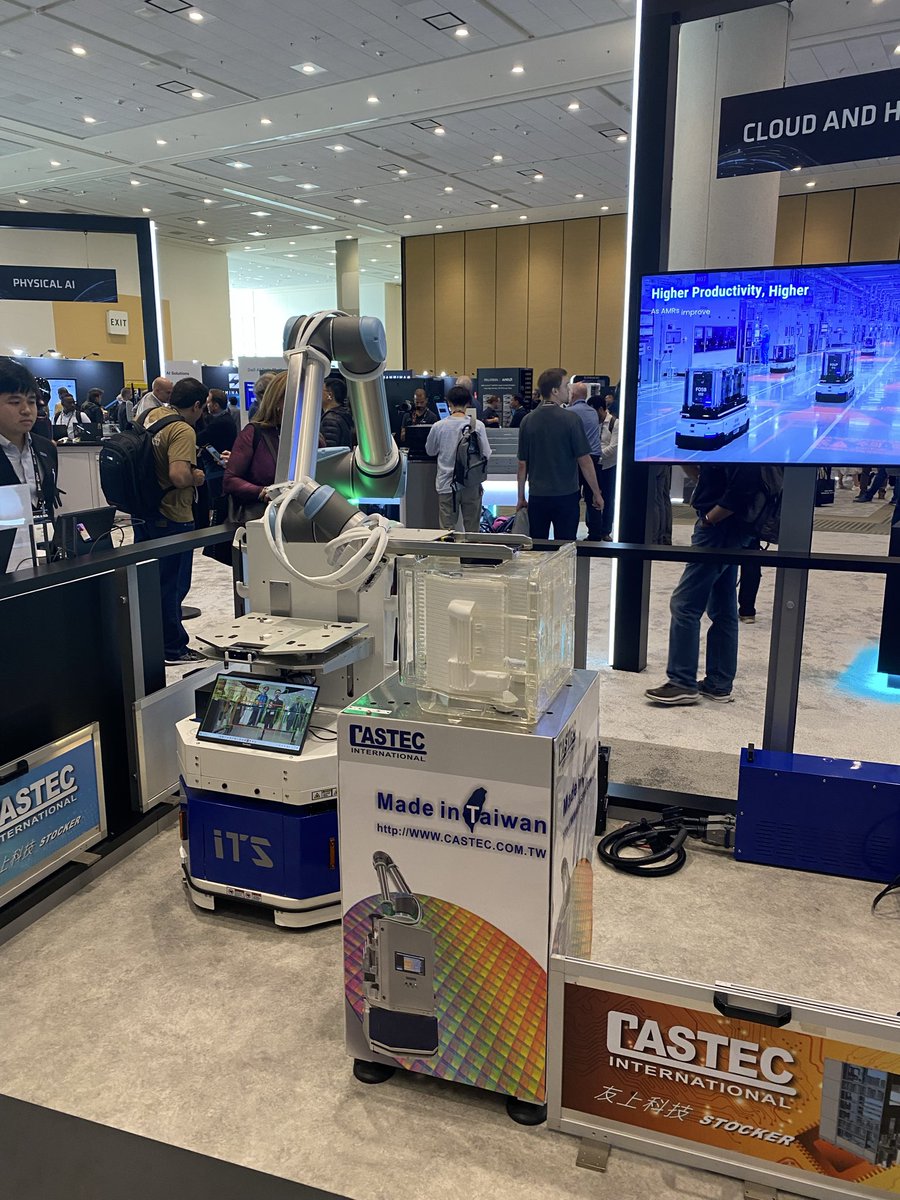
In SF this week for @AMD AI DevDay.
Interested in how AI workloads are actually being built and optimized at the developer level.
If you’re around, good to connect.
𝗔𝗦𝗠𝗟 𝗱𝗶𝗽𝗽𝗲𝗱 𝗼𝗻 𝗖𝗵𝗶𝗻𝗮 𝗿𝗶𝘀𝗸. 𝗕𝘂𝘁 𝘁𝗵𝗮𝘁'𝘀 𝗻𝗼𝘁 𝘁𝗵𝗲 𝗿𝗲𝗮𝗹 𝗱𝗲𝗯𝗮𝘁𝗲.
We all know the setup:
→ AI is driving leading-edge demand
→ EUV is critical
→ @ASMLcompany is the only supplier
That’s not new.
So why does the stock still react more to China headlines than to EUV demand signals?
Here’s how I think about it:
• 𝗖𝗵𝗶𝗻𝗮 𝗿𝗶𝘀𝗸 𝗶𝘀 𝗶𝗺𝗺𝗲𝗱𝗶𝗮𝘁𝗲 𝗮𝗻𝗱 𝗺𝗲𝗮𝘀𝘂𝗿𝗮𝗯𝗹𝗲
Revenue exposure, potential servicing restrictions, near-term earnings visibility — easy for the market to price.
• 𝗘𝗨𝗩 𝗱𝗲𝗺𝗮𝗻𝗱 𝗶𝘀 𝘀𝘁𝗿𝘂𝗰𝘁𝘂𝗿𝗮𝗹, 𝗯𝘂𝘁 𝘀𝗹𝗼𝘄𝗲𝗿 𝘁𝗼 𝘀𝗵𝗼𝘄 𝘂𝗽
Orders don’t translate into revenue overnight. There’s a lag: tool deliveries, installs, ramp.
• 𝗕𝘂𝘁 𝗼𝗿𝗱𝗲𝗿 𝗯𝗲𝗵𝗮𝘃𝗶𝗼𝗿 𝗶𝘀 𝘀𝘁𝗮𝗿𝘁𝗶𝗻𝗴 𝘁𝗼 𝗹𝗼𝗼𝗸 𝗱𝗶𝗳𝗳𝗲𝗿𝗲𝗻𝘁
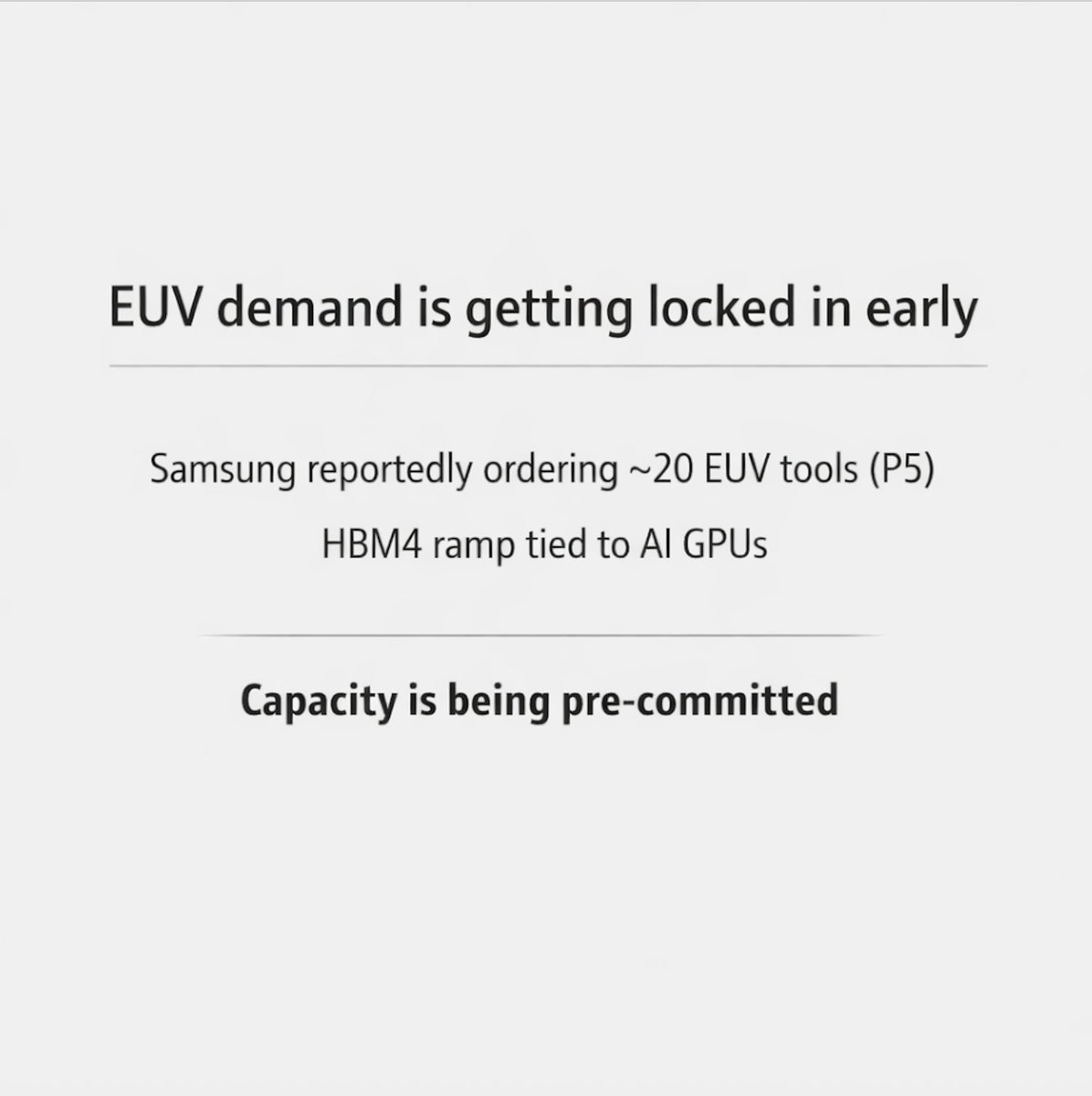
Reports of Samsung Electronics ordering ~20 EUV tools for P5 (plus broader lithography capacity) tied to HBM4/AI demand…
…and similar multi-$bn commitments from SK Hynix…
→ This feels more like capacity being pre-committed than a typical cycle.
The disconnect is timing:
→ China impact = near-term earnings
→ EUV demand = multi-year buildout
Markets tend to lean toward what shows up in the next few quarters.
𝗠𝘆 𝘁𝗮𝗸𝗲𝗮𝘄𝗮𝘆
The debate isn’t whether ASML benefits from AI — that’s settled.
It’s whether the market is 𝗳𝘂𝗹𝗹𝘆 𝗽𝗿𝗶𝗰𝗶𝗻𝗴 𝗵𝗼𝘄 𝗲𝗮𝗿𝗹𝘆 𝗮𝗻𝗱 𝗮𝗴𝗴𝗿𝗲𝘀𝘀𝗶𝘃𝗲𝗹𝘆 𝗘𝗨𝗩 𝗰𝗮𝗽𝗮𝗰𝗶𝘁𝘆 𝗶𝘀 𝗯𝗲𝗶𝗻𝗴 𝗹𝗼𝗰𝗸𝗲𝗱 𝗶𝗻.
That’s less obvious and still playing out.
Feels early to dismiss EUV demand as “already priced in.”
#Semiconductors #ASML #AIInfrastructure #EUV #HBM
#GuanxiTechnologyResearch
I will be attending @tensorwave 's Beyond Summit in San Francisco next week.
If you’re attending and working across semis or AI infra, happy to connect.