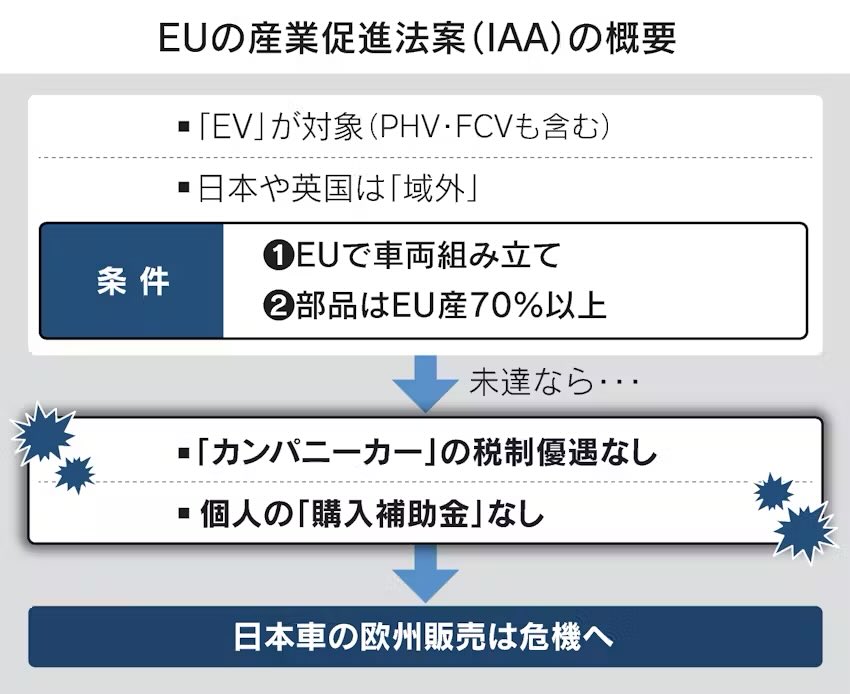
China further suspended a ban on exports of key critical minerals to the US, as it seeks to preserve a fragile trade truce despite growing tensions in their technology rivalry https://t.co/7rY5TJgwit
The recent breakdown in the Cop31 climate talks is a good moment to remember that Europe’s energy and emissions policy during the last few decades has been a failure.
To make this argument, let me present the evolution of GDP and CO2 emissions between 1990 and 2025 (2024 for emissions, the last year with data) for the four largest economies in the world: the European Union (with its current membership throughout), the United States, India, and China.
For GDP, I take constant 2021 international dollars at PPP. The European Union’s GDP has grown by only 77%, compared with 137% for the United States, 694% for India, and 1,763% for China. The European Union’s GDP has gone from being the largest of the four to the third.
The European Union has lowered its CO2 emissions by 35%, and the United States by 7%. In comparison, India has increased its emissions by 425% and China by 444%.
At first sight, it seems the European Union has outperformed the other three economies. But CO2 emissions depend on total output. Given the European Union’s slower GDP growth compared with the United States, India, and China, it is more informative to look at the reduction in CO2 emissions per unit of output. Here, the European Union has done worse than China (−63% vs. −69%) and only slightly better than the United States (−60%).
If the European Union had lowered its emissions per unit of output at the same speed as the United States, it would have emitted about 2.65 billion tons of CO2 in 2024, compared with the actual 2.46 billion tons. That is only 188 million tons (8%) more. So, all the European Union’s efforts on climate change, with their high associated costs, have resulted in only a trivial reduction in emissions.
Now, you could argue that, under a better energy and emissions policy, the European Union might have grown faster. For example, if the European Union had grown 10 percentage points more (87% vs. 77%) and lowered its emissions per unit of output at the US pace, its emissions in 2024 would have been about 340 million tons above the actual figure.
How good would this deal have been? Even at today’s direct air capture prices for CO2, removing the extra 340 million tons would cost about a fifth of the European Union’s extra GDP. That is, Europe could have still kept 80% of the extra growth with zero net effect on climate change.
The worst part, perhaps, is that there seems to be close to zero awareness of this failure at the European Commission. The recent EU Climate Action Progress Report 2026:
https://t.co/zdwh3XIf3p
is tone-deaf about these issues. And some of the press coverage of this report has highlighted how the European Union’s policy has been “successful” at combining reductions in CO2 emissions and keeping Europe “competitive.”
Unless we start having a serious conversation about Europe’s energy and emissions policy, it will be hard to fix some of the region’s problems. Also, it is not difficult to see why other countries disagree with Europe’s approach and why the Cop31 climate talks have failed.
Der Grünen-Politiker Robert Habeck warnt davor, dass der Einfluss Euopas schwinden könnte. Russland, China und die USA seien dabei, »die Welt unter sich aufzuteilen«. https://t.co/3MXYfnhZ6i
Premier David Crisafulli said Queensland was sitting on a treasure trove of critical minerals during a visit celebrating the Mount Carbine tungsten mine expansion in Far North Queensland.
Owner EQ Resources approved the $39 million expansion project midyear to lift crushing capacity from about 1Mtpa to about 2Mtpa while streamlining and automating materials handling.
It is set to become a major supplier of tungsten into the United States market, for use by the Department of War.
Mr Crisafulli said this followed his advocacy to the highest levels of the US Government during a recent Trade Mission, and Natural Resources and Mines Minister Dale Last’s Trade Mission to the United States in 2025.
EQ Resources secured a $US34 million letter of interest from the Export-Import Bank of the United States (EXIM) in June last year to support further development of the Mount Carbine tungsten mine.
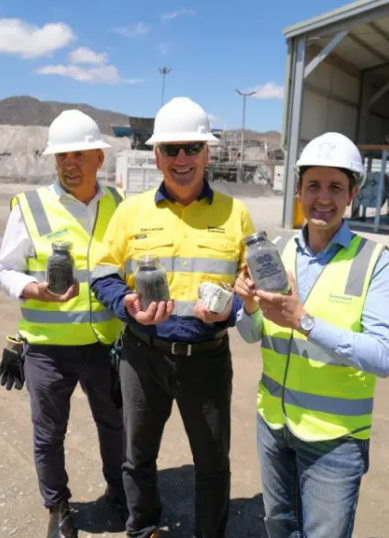
📷Member for Cook David Kempton, Mines Minister Dale Last and Premier David Crisafulli at the Mount Carbine mine site.
It came under EXIM’s new Supply Chain Resiliency Initiative (SCRI), which aims to finance overseas mines to develop sources of critical minerals outside of China, reducing the risk of supply chain disruption for the United States.
EQ Resources announced earlier that year that it had become a member of the US Defense Industrial Base Consortium, which oversees investments under the US Defense Production Act.
Related: ‘Transformational’ US deal for FNQ tungsten miner
“Queensland has the critical minerals the world needs and it’s critical we supply them to the globe,” Mr Crisafulli said.
“The United States has opened the door for major investment in critical minerals, and we are walking through it as a reliable partner.
“We’ll keep securing investment in our critical minerals because Queensland is open for business, and a stronger economy means more jobs and better services for the entire state.”
EQ Resources managing director Craig Bradshaw said the expansion at Mount Carbine would strengthen an established Australian tungsten-producing operation and lay the foundations for its next phase of growth.
“The project supports approximately 100 construction jobs in addition to EQ Resources’ existing operational workforce, creating opportunities for Queensland contractors, suppliers and local businesses,” Mr Bradshaw said.
“The broader economic benefits extend well beyond the mine itself.
“As global demand for secure and reliable critical minerals supply grows, EQ Resources is building a connected Western tungsten platform, supported by our producing operations in Australia and Spain, and our participation in downstream tungsten processing development in the United States.
“We welcome the Queensland Government’s interest in Mount Carbine and the opportunity to demonstrate how investment in regional Queensland can create jobs, support local industry and contribute to more resilient Western tungsten supply chains.”
Tungsten has applications in the defence, aerospace and healthcare industries along with use in technology including batteries and mobile phones.