AI isn’t just a tool. It’s a digital worker.
When you grant autonomous agents access to your infrastructure, you aren't just deploying software—you are scaling AI Risk.
Reimagining the insider threat for the modern cybersecurity landscape: https://t.co/Mn4r5LfpSr
Follow @GuardrailTech for upcoming releases in our AI Traffic Light suite at https://t.co/vcyJ103wRy, built to help teams scan and secure the next generation of AI agents.
I built my expertise in rooms AI will never enter. Mistakes were visible. Fixes were earned. You built confidence through repetition, until the work could carry your name...https://t.co/jMb4p95kWM
Two lives lost, different stories, same pattern of harm. For anyone who still thinks these are “edge cases,” how many more before we stop calling them rare?
https://t.co/gChr4Jp0sU
The bottom line is these LLMs are human decisions at scale. You can’t control who the humans are shaping them. Proceed with caution.
Source: https://t.co/TTejANdx7i
So, if you’re deploying AI, ask for receipts: written safety standards ; what’s barred with minors and vulnerable people; red lines on health/finance/identity; audit policy drift; a kill switch; an escalation path.
They pick training data, define in/out-of-bounds, and decide when a bot deflects vs hard-stops. But, when kids are in the blast radius, “trust us” is not a real policy.
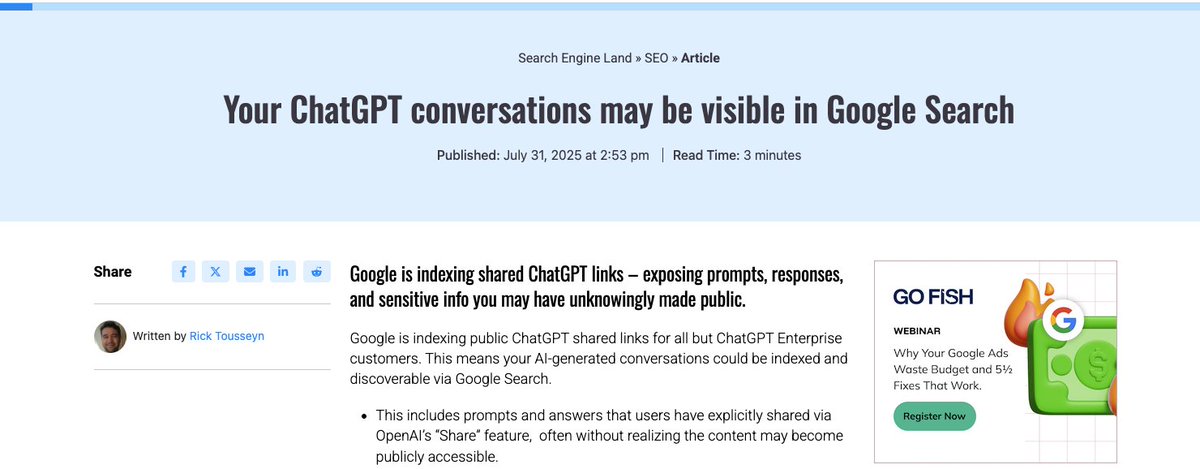
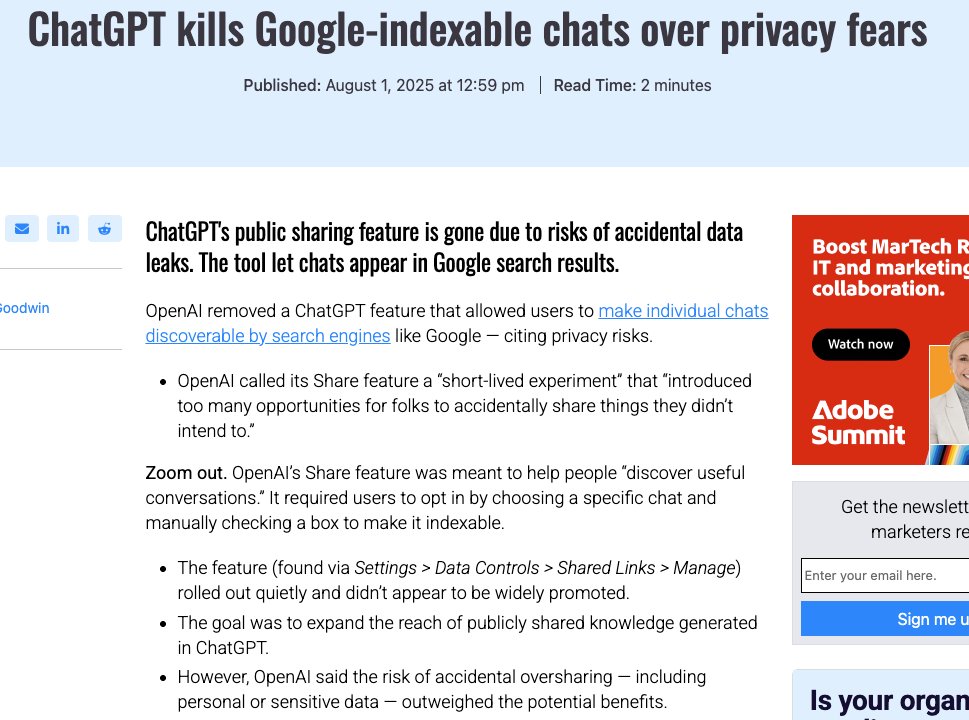
Another key security weakness for companies using AI?
Shadow, in which users share information with AI models that haven’t been verified and authorized by their organization’s IT department.
It happens in almost every organization (and then there are the ‘AI policies,’ a.k.a. a piece of paper filled with rules that aren’t enforced).
Do you want to give an algorithm or an LLM access to everything? What can go wrong? #AIRisks #AISecurity