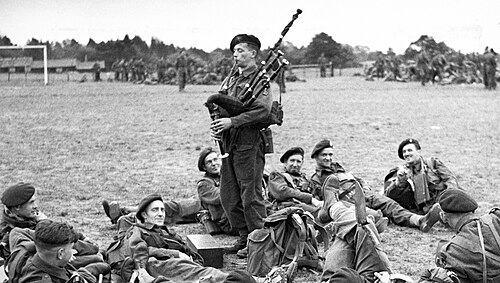
The Scottish bagpiper was Bill Millin, the personal piper to Lord Lovat, commander of the 1st Special Service Brigade on D‑Day. Bagpipes had been banned in combat since World War I because pipers were such obvious targets, but Lovat ignored the rule and ordered Millin to play as their landing craft approached Sword Beach.
Under heavy fire, Millin marched up and down the shoreline playing traditional Scottish tunes while bullets and shells tore through the sand around him. His presence became a surreal symbol of defiance, an echo of ancient Highland warfare dropped into the chaos of modern mechanized battle.
After the beach was secured, Millin learned from captured German snipers why he hadn’t been shot. They admitted they saw him clearly but assumed he had lost his mind, wandering through gunfire with a bagpipe instead of a weapon. To them, he wasn’t a threat, just a madman. That misunderstanding saved his life.
Millin’s piping became one of the most iconic and improbable stories of D‑Day: a lone musician walking through the storm of war, protected not by armor or strategy, but by the sheer absurdity of what he was doing.
#archaeohistories
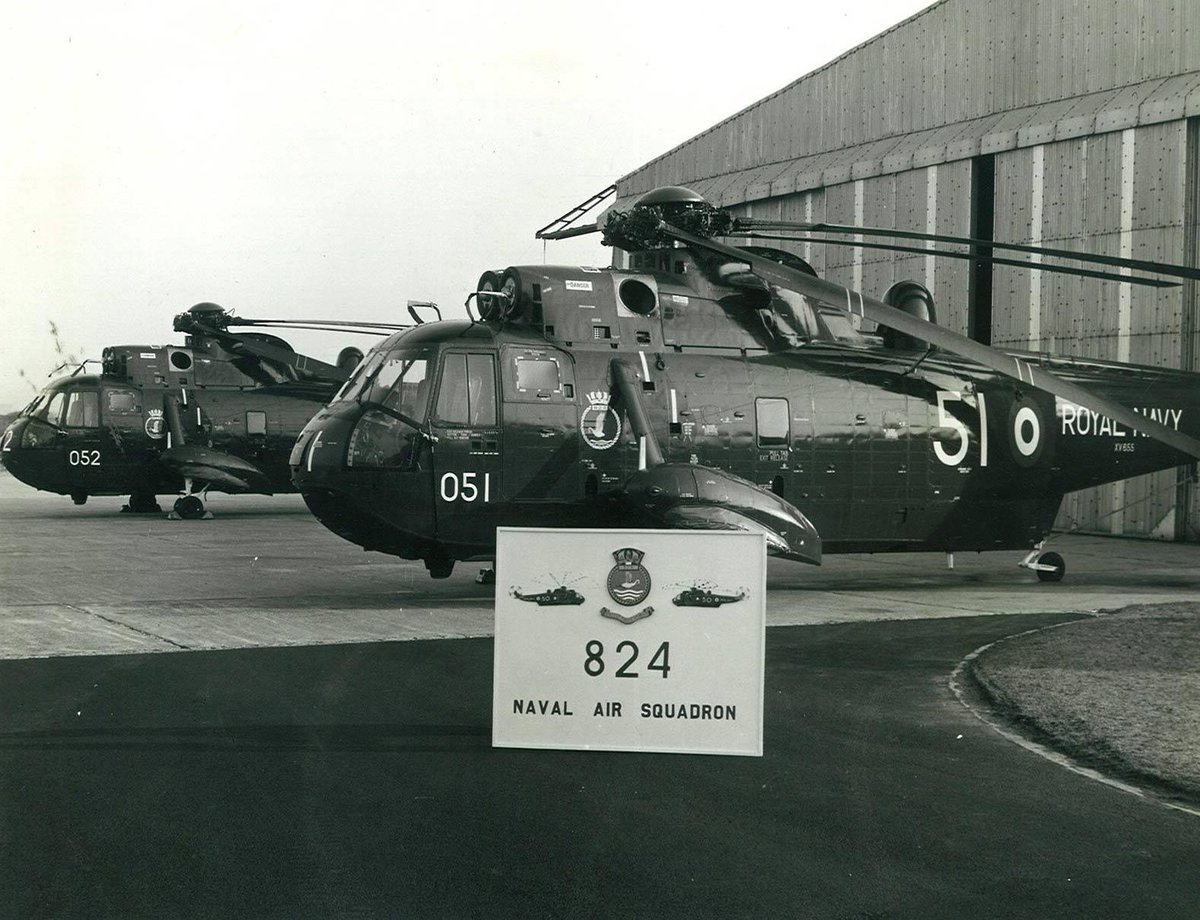
🗓️ #onthisday 24 February 1970
👊 The first front-line Sea King squadron is formed at RNAS Culdrose for anti-submarine duties in HMS Ark Royal.
🙌 824 Squadron's own Commissioning was held at HMS Sea Hawk.
🎟️ See inside the Sea King at the museum - https://t.co/2tqXR56Yx3
Please forgive the obligatory, cheesy ‘author holding their book’ photo.
After working on this research for so long, it feels wonderful to see and hold it as something real and tangible.