Asesinan al activista medioambiental Antonio Regis Nicolás.
El 17 de mayo de 2024, Antonio Regis Nicolás, uno de los lideres de la policía comunitaria de Santa María Ostula en el municipio de Aquila, Michoacán, y opositor a la minería ilegal, fue asesinado por un comando armado del Cártel Jalisco Nueva Generación.
Fue interceptado mientras que viajaba con su esposa y su hijo de dos años, para posteriormente ser ejecutado.
La comunidad indígena Nahua de Santa María Ostula ha pedido protección al Gobernandor de Michoacán de Alfredo Ramírez Bedolla y al Presidente López Obrador por las amenazas y ataques del CJNG pero no existe ningún tipo de apoyo.
No fue un ahorro los recortes en alimentos, medicamentos y agua potable a los zoológicos que hizo Sheinbaum.
Fue una masacre de animales.
1692 animales murieron en cuatro años y medio de su gobierno
El cobro de seguros por estas muertes, tampoco es dinero ganado.
After about 2 years working as a Data Analyst I realized almost everyone is winging it! No one knows everything and people do a lot of research to figure things out - they don't just know it.
This completely baffled me because I thought you needed to really know almost everything before you got a job!
Not just other Data analysts - I'm talking the data engineers, project managers, even the SVPs. We're all just winging it.
There's something really comforting about that.
Data Visualization should be the last thing to learn in Data Analytics, because it's about the last stage of the analytical process.
Take time to learn how to explore, clean and manipulate data.
You should also learn how to calculate and interpret metrics (Maths & Statistics).
¿Qué carajos sucede en Ecuador? ¿Cómo que un conflicto armado interno?
En Twitter abundan explicaciones sencillas –y sensacionalistas- de lo que pasó el día de hoy, sin embargo, de verdad no hay explicaciones sencillas. Así que aquí va el mejor resumen para quienes tienen CERO contexto del tema:
Rafael Correa gobernó Ecuador del 2007 al 2017 y llevó a cabo una hiper polémica política de seguridad: legalizó a las pandillas. ( o sea, le dio espacios dentro de la sociedad, inclusive trabajos en gobierno a gente marginada - y que tal vez cometió algún crimen - ).
Para asombro de muchos la legalización de las pandillas redujo los homicidios en 70% y convirtió a Ecuador en uno de los países más seguros del continente…
Y en 2017 todo cambio con un nuevo Presidente.
Lenin Moreno (quien había sido vicepresidente de Correa) comenzó a disminuir el gasto público de Ecuador, acabó con el subsidio a combustibles y llegó al grado de incluso desaparecer el Ministerio de Justicia y Ministerios de seguridad. De su relación con las pandillas ni hablar, abandonó poco a poco el programa de legalización y cortó relación con ellas.
Para la mala suerte de Ecuador, si es que se le puede decir así, al mismo tiempo en el país vecino del norte, Colombia, se firmaban unos históricos tratados de paz entre el gobierno y la guerrilla (FARC). Dichos acuerdos obligaron a quienes se dedicaban al crimen dentro de la guerrilla a desplazarse a otros lugares, entre ellos, Ecuador.
Peor aún, los carteles mexicanos (Sinaloa y CJNG) vieron en Ecuador un Estado débil que permitió incrementar sus operaciones, al mismo tiempo que encontraron un lugar estratégico para el tráfico de drogas: la ciudad costera de Guayaquil, hoy una de las urbes más violentas del mundo.
Lenin Moreno quiso parar el crimen a base de decretos de estados de excepción. (Permitirle a la policía y ejército violar ciertos derechos con el último fin de mantener la paz). Sin embargo, esta política no tuvo éxito y la violencia continuó incrementándose y ante el poco control de las prisiones, estas se convirtieron en los nuevos centros de mando del crimen.
En 2021 entró un nuevo Presidente, Guillermo Lasso, quien no hizo cosas distintas a las de Lenin permitiendo que la crisis de seguridad se agudizara. Al poco tiempo, ante un enorme reclamo social y un juicio político en su contra, disolvió el parlamento y renunció (muerte cruzada), lo que generó que se convocaran nuevas elecciones.
Durante el periodo electoral la inseguridad escaló a tal grado que fue asesinado un candidato presidencial que prometía acabar con el crimen utilizando toda la fuerza del Estado: Fernando Villavicencio.
Y hace apenas dos meses, fue electo el presidente más joven en la historia de Ecuador, Daniel Noboa (36 años)…. Quien ya enfrenta una crisis enorme.
El domingo un peligroso reo y líder criminal se fugó de prisión (Adolfo Macías), lo que llevó al Presidente Noboa a declarar un nuevo estado de excepción. ¿Y la respuesta del crimen? Atormentar a la población con violencia e incluso tomar rehenes en un canal de televisión.
Y esto nos llevó a que hoy, Noboa declarara la existencia de un Conflicto Armado Interno en Ecuador declarando a los grupos criminales como terroristas…
No sabemos si Noboa será quien por fin le ponga fin a la escalada de violencia en Ecuador, pero si algo le podemos recomendar desde un país que lleva años azotado por el crimen y el narcotráfico, es que debe entender que Ecuador es un actor más en el negocio transnacional del narcotráfico (como lo es México), debemos entender que el narco debe ser combatido a nivel regional e incluso continental y que las soluciones mágicas a corto plazo no existen...
Un abrazo amigos de Ecuador.
40 Data Analytics Interview Questions 📖
Difficulty: Beginner and Intermediate
Tools: Excel, SQL and PowerBI
How many can you answer correctly? 🤔🤔
Follow me for more updates in Data Analytics and Job Search
🧵
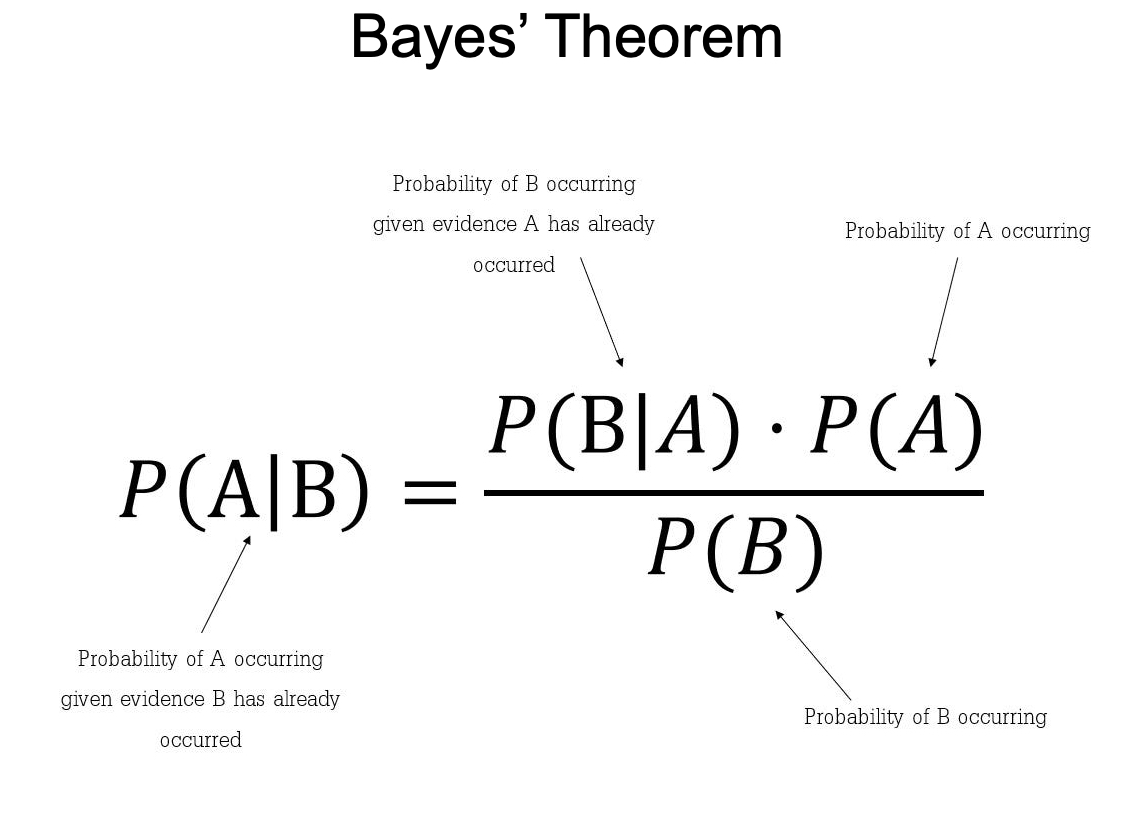
Bayes' Theorem is a fundamental concept in data science. But it took me 2 years to understand its importance. In 2 minutes, I'll share my best findings over the last 2 years exploring Bayesian Statistics. Let's go.
1. Background: "An Essay towards solving a Problem in the Doctrine of Chances," was published in 1763, two years after Bayes' death. In this essay, Bayes addressed the problem of inverse probability, which is the basis of what is now known as Bayesian probability.
2. Bayes' Theorem: Bayes' Theorem provides a mathematical formula to update the probability for a hypothesis as more evidence or information becomes available. It essentially describes how to revise existing predictions or theories in light of new evidence, a process known as Bayesian inference.
3. Bayesian Statistics: Bayesian Statistics is an approach to statistics that interprets probability as a measure of belief or certainty rather than just a frequency. This belief may be based on prior knowledge of the conditions that might be related to the event or experiment in question. This allows for making probabilistic statements about unknown parameters. For instance, instead of estimating a single value for a parameter, Bayesian statistics provides a distribution of possible values, reflecting the uncertainty.
4. Bayesian vs Frequentist: Bayesian inference is fundamentally about updating beliefs or probabilities as new data is observed, which can be very intuitive and aligns with how we often think about the world. Frequentist statistics interpret probability as the long-run frequency of events. The problem I have with frequentist approaches is that pre-determined distributions are used (e.g. Normal Gaussian), which does not always make sense.
5. Bayesian Machine Learning: Any time true confidence and probabilistic decision making is needed, Bayesian is the answer. Here are a couple of examples. Uncertainty Modeling: Unlike traditional machine learning methods that often provide point estimates, Bayesian methods focus on estimating distributions. Time-Series Analysis: Bayesian methods are particularly useful in time-series analysis, where uncertainty in the future is crucial.
6. Business Context: Businesses can use Bayes' Theorem to assess and quantify various risks, such as market risks, credit risks, or operational risks. By continuously updating the probability of risks as new information emerges, businesses can make more informed decisions.
===
Ready to learn Data Science for Business?
I put together a free on-demand workshop that covers the 10 skills that helped me make the transition to Data Scientist: https://t.co/LR39RJ5XKB
And if you'd like to speed it up, I have a live workshop where I'll share how to use ChatGPT for Data Science: https://t.co/EaMpKrJiqX
If you like this post, please reshare ♻️ it so others can get value.
Data Analytics Portfolio Projects 101:
- Focus on one business problem/hypothesis
- Transform and clean data
- Visualise data
- Explain very simply what the data means
- Use that explanation to solve the problem or prove/disprove the hypothesis
- Recommend next steps
Si tienes 20 ideas en tu mente
1. Escríbelas
2. Ordénalas por prioridad sin pensarlo mucho
3. Toma la primera en lista y la realizas por 1 semana SOLO esa
4. Al final de la semana analiza cómo te sientes
5. Elige si Quieres continuar con esa idea o seguir con la siguiente
No sabemos si la razón fue incompetencia, indolencia o indiferencia. Lo que sí sabemos es que el Centro Nacional de Huracanes en Estados Unidos advirtió 21 horas antes del potencial catastrófico de Otis en Acapulco. Alertó 21 horas antes sobre cómo se transformaría de una tormenta tropical en un huracán categoría 5.
El gobierno de México tuvo 21 horas para alertar a la población, crear refugios, enviar al Ejército, evacuar las zonas más vulnerables.
21 horas es las cuales pudo haberse preparado y actuado pero no lo hizo.
Ojalá haya suficiente valor y conciencia ciudadana para imponer un costo político en la siguiente elección.
Don't forget to understand these essential SQL topics if you're just starting out.
1. SQL Basics
- SELECT Statement:
It's like asking the database for specific information.
- FROM Clause:
Tells the database where to look for that information.
- WHERE Clause:
Filters out the stuff you don't need.
- ORDER BY Clause:
Arranges the results in a specific order.
2. Data Manipulation
- INSERT: Adds new data.
- UPDATE: Changes existing data.
- DELETE: Removes data.
- MERGE: Combines these actions.
3. Data Definition
- CREATE TABLE: Makes a new table.
- ALTER TABLE: Edits an existing table.
- DROP TABLE: Deletes a table.
- INDEXES: Helps with finding data quickly.
4. Constraints
- PRIMARY KEY: Ensures each row is unique.
- FOREIGN KEY: Keeps data relationships intact.
- UNIQUE: Ensures values are unique.
- DEFAULT: Sets a value if none is given.
5. Joins (Really Important)
- INNER JOIN: Combines data from different tables.
- LEFT JOIN: Gets all data from one table and matching data from another.
- RIGHT JOIN: Opposite of LEFT JOIN.
- FULL JOIN: Gets data if it's in either table.
- SELF JOIN: Links data within the same table.
6. Subqueries:
- Correlated Subqueries: Subqueries connected to the main query.
- Scalar Subqueries: Subqueries that return a single value.
- Subquery in FROM Clause: Using a subquery as a table.
7. Aggregation Functions:
- SUM, COUNT, AVG, MAX, MIN: Math on groups of data.
- GROUP BY: Groups data before doing math.
- HAVING: Filters groups based on math results.
8. Views:
- CREATE VIEW: Makes a pretend table.
- ALTER VIEW: Changes the pretend table.
- DROP VIEW: Deletes the pretend table.
9. Transactions:
- BEGIN TRANSACTION, COMMIT, ROLLBACK: Ensures data stays safe and consistent.
- ACID Properties (Important): Rules for safe transactions.
10. Database Security:
- GRANT and REVOKE: Decides who can do what.
- Roles: Groups of permissions for users.
11. Normalization (Important):
- 1NF, 2NF, 3NF, BCNF, 4NF:
Ways to organize data for efficiency and accuracy.
12. Indexes:
- Clustered vs. Non-Clustered Indexes: Different ways to find data quickly.
13. Database Management Systems (DBMS):
- Different software tools for working with databases, like MySQL etc.
SQL has many more things to learn, but these topics will give you a strong starting point if you're new to it.