A Strategic Pact: Egypt Cedes 25% of Suez Canal Revenue for Ethiopia’s Blue Nile Water Assurance
The Nile River, a lifeline threading through East Africa, has long been a source of sustenance and friction. Egypt depends on it for nearly 90% of its freshwater, fueling its economy and survival, while Ethiopia, origin of the Blue Nile, harnesses it for progress through the Grand Ethiopian Renaissance Dam (GERD). As of March 15, 2025, GERD’s operations have deepened a standoff: Egypt fears water shortages, and Ethiopia defends its sovereign right to development. Negotiations have stalled, leaving the region teetering between cooperation and conflict.
What if Egypt could secure its water future by sharing a slice of its economic crown jewel? We propose that Egypt relinquish 25% of its annual Suez Canal revenue to Ethiopia in exchange for a legally binding guarantee of Blue Nile water flow. This bold concession could transform a decades-long dispute into a partnership, trading revenue for resource security.
The Strategic Context
The Suez Canal, fully controlled by Egypt’s Suez Canal Authority, is a global trade artery, channeling about 12% of the world’s shipping traffic. In 2024, it generated over $9 billion in revenue, a critical lifeline for Egypt’s strained economy. Meanwhile, Ethiopia’s GERD, now operational, produces over 6,400 megawatts of electricity, doubling its power capacity and fueling ambitions as an energy exporter. The Blue Nile, supplying 85% of the Nile’s flow, is Ethiopia’s leverage—and Egypt’s vulnerability—tied to outdated treaties (1929 and 1959) that Ethiopia rejects.
Egypt faces an existential risk if Nile waters dwindle, while Ethiopia risks regional backlash if it ignores downstream needs. Sudan, a mutual neighbor, seeks balance for its own dams. A breakthrough is overdue—one that secures Egypt’s lifeline while rewarding Ethiopia’s contribution.
The Proposal: Revenue-for-Flow Agreement
Here’s the deal: Egypt agrees to transfer 25% of its annual Suez Canal revenue—approximately $2.25 billion based on 2024 figures—to Ethiopia each year. In return, Ethiopia commits to a legally binding minimum flow of Blue Nile water to Egypt, pegged to meet Egypt’s core needs (historically 55.5 billion cubic meters annually) while operating GERD for power generation.
The framework could look like this:
Revenue Transfer: Egypt cedes 25% of the Suez Canal’s annual revenue yearly to Ethiopia, drawn directly from canal tolls, without relinquishing ownership or control. This could be structured as a water-security payment, renewable based on compliance.
Water Guarantees: Ethiopia ensures a baseline water release, adjustable during droughts, overseen by a trilateral body with Sudan. This balances Egypt’s survival with Ethiopia’s energy goals.
Mutual Benefits: Egypt locks in water security, averting economic collapse, while Ethiopia gains a substantial revenue stream without upfront investment, enhancing its regional clout.
Why It Could Work
For Egypt, the logic is clear: 25% is a steep but calculable price for water security, far less than the cost of prolonged drought or conflict. The Suez Canal’s $9 billion haul leaves Egypt with $6.75 billion annually—still a robust sum—while neutralizing the GERD threat. For Ethiopia, 25% yearly is a windfall, dwarfing GERD’s construction cost
The Great Reversal: How #Egypt Lost the Geopolitical Primacy It Was Given, and Why #Ethiopia Now Deserves Its Seat at the Table https://t.co/FCNUZQR9Z7
Egypt’s pressure on #Ethiopia is weakening not because Egypt has lost power, but because the Arab nationalist order that once amplified its pressure has faded. In this new Horn–Red Sea reality, Ethiopia’s task is to turn diplomatic space into durable regional influence.
By Getahun Tsegaye
https://t.co/a0ieg0k9yg
Watch this: 1991 video report shows nearly half a million Ethiopians forcibly expelled from Eritrea. Among them, 22,500 from Assab — a port city where Ethiopians were the overwhelming majority — dumped into makeshift camps in Addis Ababa. Overnight Ethiopia became landlocked.
Opinion: Recognizing Somaliland is not enough. Israel can't stop with the opening of embassies and exchange of ambassadors; it has to turn a symbolic breakthrough into diplomatic momentum.
https://t.co/rOP9qi50MD
Why do Arab states champion Palestinian self-determination while rejecting Somaliland’s? One cause inspires summits and solidarity; the other meets silence despite 30+ years of stability and self-rule. Is it principle or politics? #Somaliland#Palestine#ArabLeague#HornOfAfrica
The video clearly shows the President of Mogadishu promoting antisemitic rhetoric through inflammatory and hostile remarks directed against Jews and Israel.
🚢 ESL Vessel Gamballa proudly represents Ethiopia on international waters! 🌍⚓
Delivering reliable and efficient maritime logistics services while connecting Ethiopia to global trade routes.
🇪🇹 Ethiopian Shipping and Logistics
“Beyond The Sea!”
#ESL#Gamballa#Shipping
It is unfortunate that some Arab and Islamic countries have chosen political pressure over constructive engagement with Somaliland. Somaliland remains committed to its sovereign decisions and peaceful cooperation, our relation with Israel is important and based on mutual interests, and continue to grow in a stable and constructive direction.
The world is unfair. Those who wasted not time to cheer and recognize Eritrea's secession from Ethiopia are now complaining about Ethiopia's willingness to recognize independence of Somaliland.
Why is what's good for Eritrea & Ethiopia not good for Somaliland and Somalia?
As post World War II former colonies of Italy, the situation of #Eritrea and #Somaliland is almost similar.
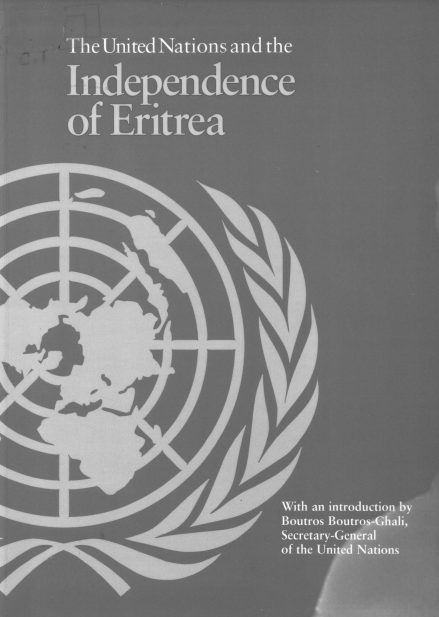
The United Nations played an "activist role" to engineer the gradual secession and independence of Eritrea. Why it failed to do so for Somaliland remains confusing.
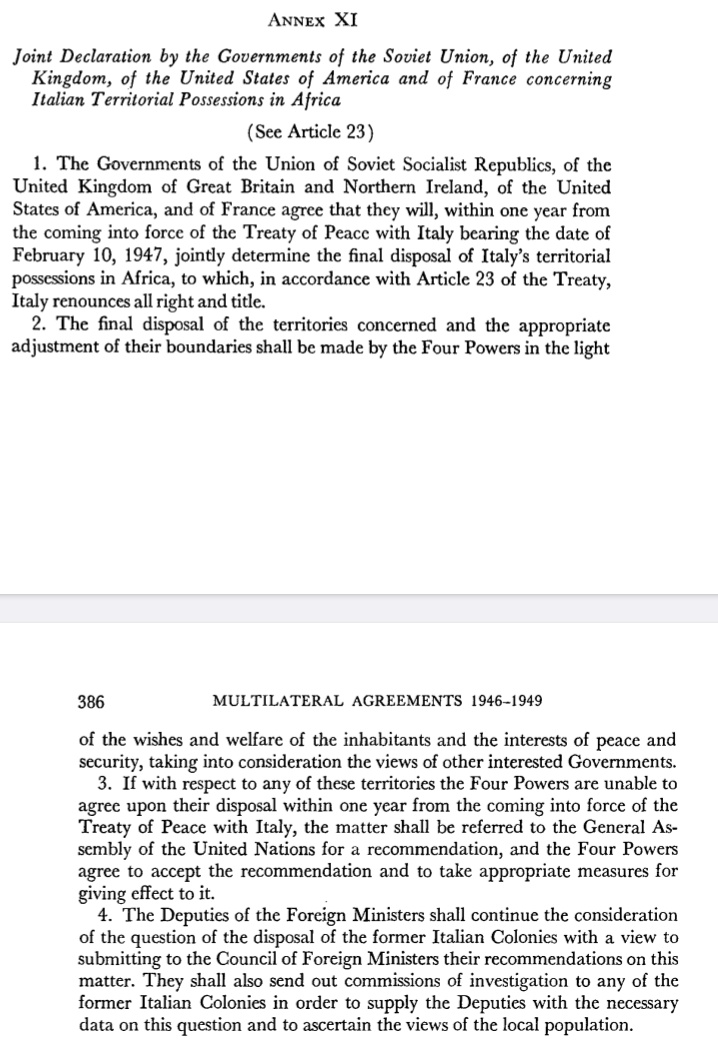
Document below, "The United Nations and the independence of Eritrea", curated by Egyptian Secretary General of the UN - Boutros-Ghali (1922-2016), highlights the steps UN took to effect secession of Eritrea from Ethiopia.
No such document for Somaliland.
https://t.co/k8L89epWYP
Eritrea was possible because of Annex XI paragraph 3 of the treaty of peace with Italy. The "big four" couldn't agree on how to carve up the post World War II Africa. Somaliland will soon be possible for similar reasons but in the context of post pandemic Africa. #PandemicTreaty
I am pleased to announce that the Republic of Somaliland’s Embassy will be located in Jerusalem - the Embassy will be opened soon, while Israel will also establish its Embassy in Hargeisa, reflecting growing friendship, mutual respect, and strategic cooperation between our two peoples.