En man låg i bakhåll i en kvinnas trapphus. Han trängde sig in i hennes lägenhet, tog hennes telefon, nycklar och låste dörren inifrån.
Han beordrade henne därefter att klä av sig och våldtog henne. När hon grät tog han av sig en strumpa och tryckte in den i hennes mun. Övergreppen pågick i flera timmar.
Hovrätten skriver:
”Den brottslighet som han nu döms för är visserligen av allvarligt slag. Det är dock inte fråga om brottslighet av det svåraste slaget. Slutsatsen efter den helhetsbedömning som ska göras vid avvägningen [...] blir därför att en utvisning av honom inte skulle vara proportionerlig.”
HD:s nya praxis verkar innebära att det i princip ska krävas mord för att utvisa personer som varit här mycket länge.
https://t.co/akK81m5vs4
Idag minns vi vår partikollega Fredrik D. Andersson, ordförande för MED Solna, som för 3 år sedan föll offer för både en mördare och en rättsapparat som sviker medborgare, offer och anhöriga. Fredriks engagemang för ett bättre och tryggare samhälle fortsätter i än större styrka till hans minne i Medborgerlig Samling. Tack för mycket fin text som berör, @malmbergskan !
~~~~~
Idag har det gått 1096 dagar sedan Fredrik D. Andersson lämnade denna värld. Han lämnade ofrivilligt. Ihjälskjuten på ett gym i Stockholm när han försökte se till att mördaren inte skulle lyckas i sitt uppsåt att ta livet av en annan på gymmet. För det civilkurage som Fredrik visade fick han betala dyrt. Han fick betala med sitt liv. Det yttersta priset.
Mördaren dömdes till ungdomsvård i två år och 11 månader för mordet; grovt vapenbrott och allmänfarlig ödeläggelse (efter att han slängt in en handgranat på en restaurang). Den korta strafftiden är inte bara en skymf mot brottsoffret och hans nära och kära, den visar också hur ointresserad rättsstaten – och därmed ytterst politikerna - är att skydda allmänheten från en farlig individ, en person som inte bara skjutit ihjäl en människa utan även slängt in en handgranat i en restaurang, i syfte att skada och döda urskillningslöst. Här är politikernas uppgift att se till att våra lagar skyddar allmänheten från att en sådan våldsverkare går fri.
Våra lagar är inte gjorda för ett Sverige som befinner sig i ett krig mot kriminella gäng och klaner och där statens våldsmonopol är illa sargat. Våra lagar räcker inte till för att skydda medborgarna i den typ av samhälle Sverige har utvecklats till. Här måste riksdagen se till att skärpa lagarna. Det brådskar.
Förutom att den milda domen är en skymf mot offret och hans nära och kära, är det faktum att gärningsmannen tilldelades svenskt medborgarskap, efter att han hållit sig undan den rättsliga processen (i Armenien), en ytterligare skymf mot offren. Den slapphänta politiska hållningen vad gäller tilldelning av svenskt medborgarskap måste förpassas till historien. Att godkänna medborgarskap för en mördare, som dessutom höll sig undan lagen, är stötande. Och farligt.
Ansvaret vilar tungt på de partier som suttit vid makten de senaste årtiondena.
Det var faktiskt just dessa partiers ovilja att ta tag i våra allvarliga samhällsproblem som gjorde att Fredrik valde att engagera sig politiskt i Medborgerlig Samling. Fredrik var ordförande för Medborgerlig Samling Solna och han insåg att det behövdes nya tag inom politiken och framför allt behövdes det ryggrad. Ryggrad att bl.a. stå upp mot det värdegrundsbabbel som skapat ett samhälle där förövare blir offer och offren blir negligerade. Fredrik blev sedan själv ett offer för just den värdegrund han vägrade. I sin ryggsäck bar Fredrik ofta en extra ryggrad (i plast) som på bilden, när jag fotade honom på Norrmalmstorg under valkampanjen 2018. Då hade Fredrik 1384 dagar kvar att leva.
Tack Fredrik för ditt engagemang i Medborgerlig Samling, och framför allt tack för ditt beundransvärda civilkurage i det samhälle som du ville förändra till det bättre, men som svek dig. Din kamp är vår.
Lena Malmberg
Demokratipolitisk talesperson
Medborgerlig Samling
Christians are being massacred in Syria. Churches burned. Priests executed. Families wiped out. And the West is silent. This is the greatest Christian persecution of our time—and the media won’t tell you. Let’s expose the truth. 🧵👇 1/13
En svensk mjölkbonde med växtodling har 450 lagkrav att ta hänsyn till. Mer än 20 journaler, 30 tillstånd och 20 berörda myndigheter. Detta kontrolleras av minst en part. Även av satellitbilder över gårdarna.
Samtidigt kan islamister få miljonbidrag utan vidare. År efter år.
Nu ska en 8 årig flicka född i Sverige, som haft svenska vårdnashavare i 5 år, UTVISAS
Men gängkrimnella galningar & våldtäktsmän från Mellanöstern får STANNA?!
VAD I HELVETE HÅLLER NI PÅ MED @Migrationsverk ??
Förbannade idioter!!
Klappa igen dårhuset @SwedishPM !
@Justitiedep
Man vill ju ha välfungerande polis- och åklagarmyndighet samt domstol som fångar och straffar brottslingar. Men om det inte finns på plats och det olyckligt nog istället formas civilgarden som tar lagen i egna händer så finns det vissa brottslingar jag inte kommer tycka synd om.
Case closed. Han är ju facksnubbe.
Så att arrangera terroristkonferens är helt okej så länge man är fackligt ansluten. Tydliga besked av @magdandersson
Folk och försvars rikskonferens i Sälen har inletts och Magdalena Andersson utropar från scen att biståndet till S systerparti Fatah ska återupptas.
Fatahs militära gren deltog i terrordådet mot Israel 7 oktober. Svenska skattekronor ska inte finansiera terrorism!
Stolen Land:
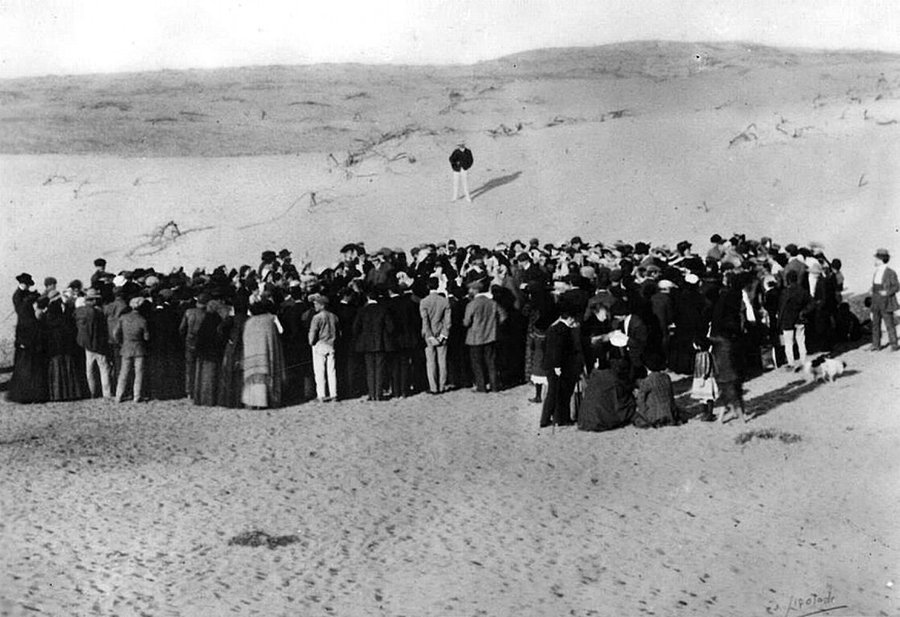
The term 'stolen land' frequently emerges in debates about the Israeli-Palestinian conflict, often implying that the establishment of Israel lacks legitimacy.
Yet, this perspective dismisses the historical and legal context that underlies the birth of the nation. A clear-eyed look at Zionism, the movement at the heart of Israel's creation, reveals a history of legal land acquisition and international agreements that paved the way for Israel's existence.
Historical background
Zionism is a national movement that emerged in the late 19th century with the goal of establishing a public and legally secured home for the Jewish people in their ancestral land of Palestine.
Its origins can be traced back to both ancient Jewish connection to the land and the modern experience of Jews as an oft-persecuted minority in various countries. The ideology of Zionism synthesized traditional Jewish longing for return, seen throughout centuries of diaspora life, with the modern principles of nationalism and self-determination that were sweeping through Europe at the time.
The term "Zionism" itself derives from the word "Zion," a biblical term for Jerusalem and the Land of Israel. The movement was formally established as a political organization by Theodor Herzl in 1897, following the publication of his influential pamphlet "The Jewish State" (Der Judenstaat).
Herzl and other Zionist leaders viewed the establishment of a Jewish state as the only solution to the "Jewish Question" in Europe, a term that referred to the debate about the civil, legal, and national status of Jews, who were living in horrible conditions in large parts of Europe.
At the heart of early Zionist efforts was the understanding that in order to realize their goals, they needed to create a structured plan that included purchasing land, developing agriculture and infrastructure, and building economic and social institutions.
This pragmatic approach was aimed at laying the foundation for Jewish self-rule and was pursued through legal and diplomatic means.
During the period leading up to the creation of the State of Israel, the region known as Palestine was stateless, in the sense that it was not a sovereign country but rather a geographic area under successive foreign rules, including the Ottoman Empire and later the British Mandate after World War I.
The population living in Palestine was a mixture of religious and ethnic groups, including Jews, Christians, and Muslims, each with their own identities and community structures, but there was no distinct national Palestinian identity as understood in the modern sense of a nation-state.
The notion of a collective Palestinian identity was reactive and emerged more coherently in response to the development of Zionist aspirations and the increasing Jewish immigration encouraged by the Zionist movement.
The interplay of local Arab identities and the pan-Arab sentiment contributed to the later formulation of a distinct Palestinian national consciousness, which was lacking prior to 1948.
In the absence of a centralized or sovereign state governing the lands, the Zionist approach to building a homeland was characterized by purchasing land legally from often absentee landlords and local inhabitants. These transactions were conducted within the legal frameworks provided first by the Ottoman Empire and later under British administration.
Land purchase
The Zionist movement operated within the legal frameworks of the Ottoman Empire and subsequently, the British Mandate, both of which were recognized authorities over the region, to purchase lands that were, by the legal standards of the time, available for sale.
The legal environment under the Ottomans was based on the Ottoman Land Code of 1858, which reformed the land ownership records and processes.
This code allowed individuals, including foreign entities, to purchase and register land that was either uncultivated or without clear ownership. Many lands in Palestine were owned by absentee landlords who lived outside the territory, often in Beirut or Damascus. The Jews legally purchased these lands, which were often swampy, arid, or otherwise uncultivated and not utilized by the local Arab population.
Under the British Mandate, these practices continued, with the mandate authorities overseeing and sanctioning the land transactions.
The British facilitated Jewish immigration and land purchase as part of the Balfour Declaration of 1917, which expressed support for the establishment of a "national home for the Jewish people" in Palestine, while also stipulating that "nothing shall be done which may prejudice the civil and religious rights of existing non-Jewish communities."
The Jewish National Fund (JNF), established in 1901 to buy and develop land in Palestine for Jewish settlement, played a significant role in these legal purchases.
It acted as a custodian of the land, holding it in perpetuity for the Jewish people. The funds for these land purchases were raised through donations from Jews around the world, emphasizing the collective effort and aspiration for a safe haven after centuries of diaspora and persecution.
The majority of land that would eventually become part of Israel was lawfully acquired through purchase from willing sellers. The narrative of "stolen land" does not account for the meticulous records of transactions that were maintained and are still available for scrutiny.
These transactions were often conducted at prices well above the market value, reflecting the Jews' willingness to pay a premium for the ancestral and spiritual significance of the land.
Furthermore, during the transition from British rule to Israeli sovereignty, various United Nations resolutions, particularly the 1947 UN Partition Plan (Resolution 181), which sought to divide the territory into separate Jewish and Arab states, provided a legal framework for Jewish claims to statehood.
Although this plan was accepted by Jewish leaders, it was rejected by the Arab Higher Committee, leading to the subsequent conflict.
The subsequent acquisition of land during the conflicts of 1948 and 1967 was conducted under the laws of war, which, while controversial and subject to debate, are distinct from the notion of "theft" and must be understood within the context of national survival and security.
Lastly, Israel has implemented a legal process to address claims of lost or disputed land. Israeli courts, including the Supreme Court, have ruled on numerous occasions in favor of Arab claimants when evidence substantiates their claims, ordering the return of land or compensation.
1948 & 1967 Wars
The war of 1948, known as the Israeli War of Independence or the Nakba (Catastrophe) in Arab narratives, followed the United Nations General Assembly's adoption of Resolution 181 in November 1947, which recommended the partition of the British Mandate of Palestine into Jewish and Arab states.
The Jewish leadership accepted the plan, which provided legal legitimacy to the nascent state of Israel, while the plan was rejected by the Arab Higher Committee and the surrounding Arab states.
The immediate aftermath was a civil war between the Jewish and Arab communities of Mandatory Palestine, which escalated into an interstate conflict upon Israel's declaration of independence on May 14, 1948. The subsequent invasion by Arab states, in opposition to the UN resolution, placed Israel in a position of defending a legal and internationally sanctioned act of self-determination.
Similarly, the events leading up to the Six-Day War of 1967 were characterized by a mounting existential threat to Israel. A series of aggressive actions, including the mobilization of Egyptian forces in the Sinai Peninsula, the expulsion of the United Nations Emergency Force, the blockade of the Straits of Tiran—a vital maritime route for Israel—and aggressive rhetoric from Arab leaders, created a sense of impending annihilation.
Israel’s preemptive strike was an act of self-defense, undertaken in the face of what was perceived within the country as the looming possibility of destruction.
Legalities of land acquired through war
International law acknowledges the right to self-defense, under which Israel's military responses in the wars of 1948 and 1967 are justified, particularly highlighted by Article 51 of the United Nations Charter.
The acquisition of territories during these conflicts and the ensuing administrative actions by Israel have been contentious.
The armistice lines post-1948 served as provisional boundaries, not formal borders, while the territories gained in 1967 have led to ongoing disputes. Notably, the Fourth Geneva Convention governs occupation conduct, and while Israel's annexation of East Jerusalem and the Golan Heights has met with international disapproval, Israel contends with historical and security justifications.
The complexity of these events and their legal ramifications illustrate that the narrative of "stolen land" is overly simplistic and does not capture the intricate historical and legal context of Israel's territorial situation after wars, specifically given they were all existentially defensive in nature.
"STOLEN LAND"
A thorough review of historical records shows that labeling Israel's land as "stolen" is not supported by facts.
The return of Jewish people to this area began with legitimate purchases, following the rules of the Ottoman and British authorities. These lands were sometimes even bought at high prices, emphasizing their significance to the Jewish community.
The establishment of Israel was backed by international agreement, especially following the UN's 1947 proposal to create separate Jewish and Arab states—a proposal accepted by Israel but rejected by Arab leaders. The wars in 1948 and 1967, which led to Israel's expansion, were responses to threats against the nation, not an attempt to seize land aggressively.
Claiming that Israel's land was stolen overlooks the documented legal transactions, international support, and the defensive nature of Israel’s wars.
Such claims misread history and are unhelpful in advancing peace. Only with historical literacy can there be hope for peace and working together in the future.
~ ThePolymath @LesPolymathes