Excited to announce that our data paper has been published in ESSD! Thanks to all co-authors for their contributions and everyone who helped during the field campaign. @GWFutures@GWF_pubs@unbc@sciencesUQAM
https://t.co/6VYMmdDs6J
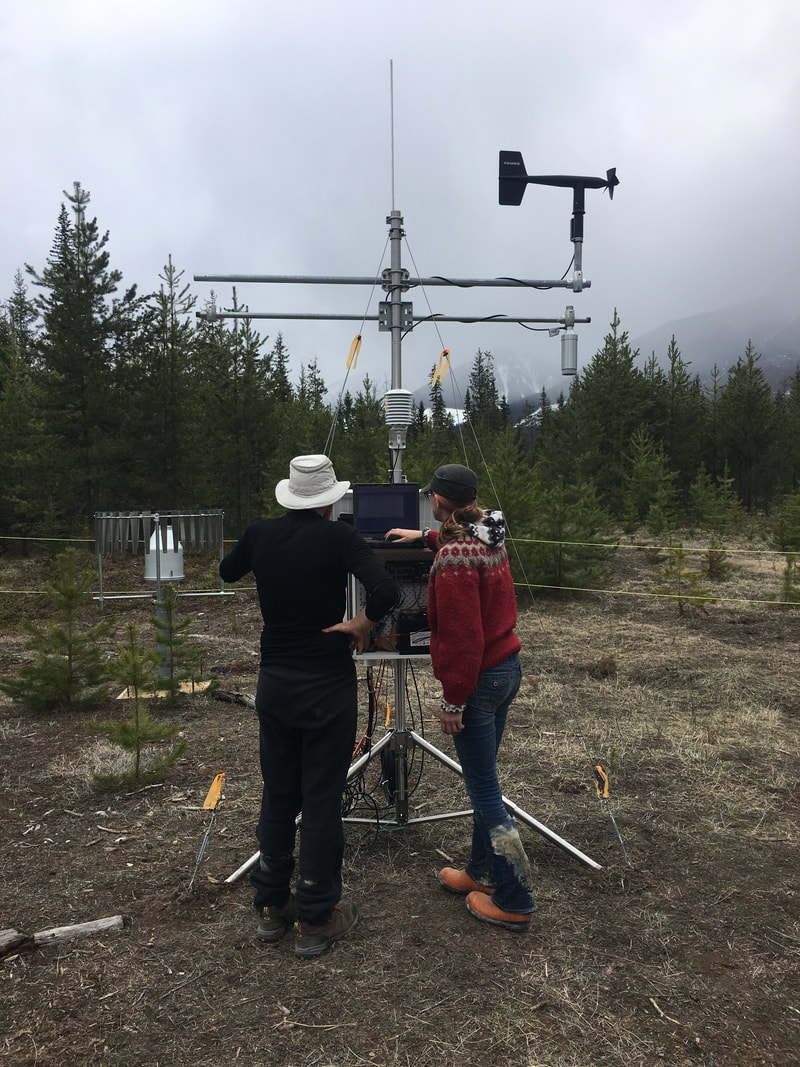
Setting up our temporary field site @StormMtLodge before a snow storm on June 7, 2019. Our temporary set up included a MRR Pro, tipping bucket rain gauge, snow depth board, microphotography, and a temperature and humidity sensor. @sciencesUQAM@UNBC@GWFutures#atmoshpericscience
Meteorological observations collected during the Storms and Precipitation Across the continental Divide Experiment (SPADE), April–June 2019 https://t.co/EB545uuUV5
Near our Nipika field site, we had a transect of precipitation gauges placed at increasing elevations to determine the change in precipitation with elevation. Here we are downloading data from the tipping bucket and making minor repairs in May 2019. @unbc@GWFutures@sciencesUQAM
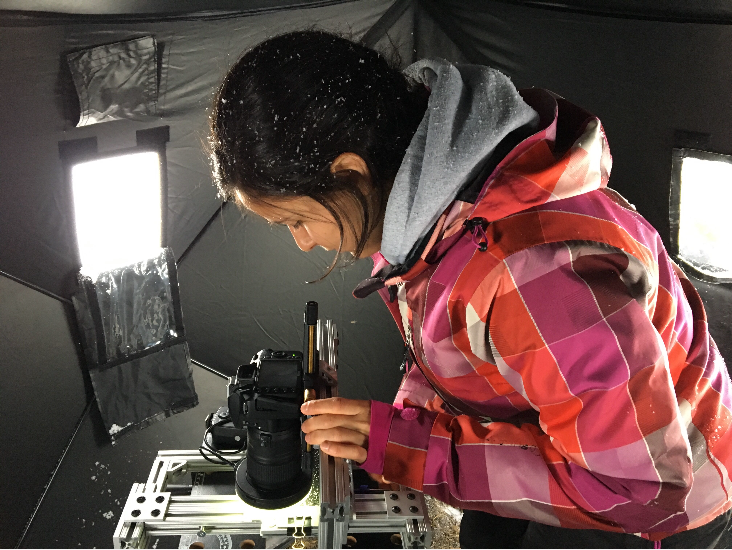
During a storm, we would take nine microphotographs of snow particles every 10 mins to gather data on the size and type of hydrometeors. This photo was taken in May 2019 during the SPADE field campaign @GWFutures@sciencesUQAM@UNBC#fieldworkfriday#atmosphericscience
During the field campaign, we also set up a transect of three tipping bucket rain gauges to research changes in precipitation amount with elevation. Here we are ensuring the tipping bucket is level so that it collects accurate data. @UNBC@sciencesUQAM@GWFutures#fieldworkfriday
This time last year, we had decommissioned the field sites and everyone had gone back home after a very successful field campaign. This is an image of us putting away the LiDAR that was at our Fortress Powerline site. @UNBC@GWFutures@sciencesUQAM#fieldwork#atmosphericscience
On June 21, 2019, the biggest storm of the field campaign occurred. 19 mm of rain occurred at Nipika and 57.8 mm of rain and snow occurred at Fortress Powerline, which accounted for 27% of the total precipitation at Fortress Powerline. @UNBC@sciencesUQAM@GWFutures
On June 19-20, 2019, weather conditions were vastly different at our field sites on either side of the continental divide. Our Nipika site received 3.5 mm of rain and our Fortress Powerline site received 12.6 mm of rain and snow. @sciencesUQAM@UNBC@GWFutures#fieldworkfriday
Starting TODAY the #GWF2020 virtual poster session is viewable. The poster session is #FREE and available to everyone!
Learn about the @GWFutures thematic research program and the interdisciplinary research happening within!
view poster session >> https://t.co/dG6TJjfHMe
On June 14, 2019, we observed the shortest storm of the field campaign. It lasted for 30 mins and precipitation accumulation at Fortress was 2 mm. There was no precipitation accumulation at Nipika. @sciencesUQAM@UNBC@GWFutures#fieldworkfriday
Last year, on 7 June, we set up a temporary field site at Storm Mountain Lodge (pictured). Over the course of 25 hours, we observed 21.4 mm of precipitation at Fortress Powerline, 12.8 mm at Storm Lodge, and 14.5 mm at Nipika. @GWFutures@UNBC@sciencesUQAM#fieldwork