What Southeast Asia can learn from China:
reflections from the 17th @caixin summit
-
Every developing economy carries the same quiet thirst: to attain modernity.
And modernity has a measurable floor. It begins at roughly 10,000 kWh of electricity per capita. The United States and China both operate at that benchmark. Yet the scale behind it is staggering. The United States runs on 1,400 gigawatts of installed capacity. China has built 4,000. Indonesia stands at barely 100.
That gap is not merely about power. It is about the capacity to create rather than merely consume in the age of AI. And closing it rests on three attributes China has mastered:
(1) entrepreneurialism that drives execution,
(2) policy that de-risks and finances,
(3) supply chains that integrate from factory to grid.
-
Whether nations thrive or falter in building economic cooperation frameworks often comes down to this common thread:
(1) Geopolitics. A more multipolar world rewards the bilateral, the plurilateral, and the minilateral, arrangements built around the marginal productivity of the partners themselves. This is at the expense of the protection from multilateral institutions such as the World Trade Organization.
(2) Technology: Cooperation means little unless the diffusion of technology from one partner to another is embedded in the framework from the outset, rather than hoped for after the fact.
(3) Politics: As public policy divorced itself from public opinion, and accountability tilts toward elites rather than people, economic cooperation loses its anchor in what populations actually need.
(4) Culture: In China's dealings with almost any partner, the understanding tends to run deeper in one direction. This is classically manifested in the disproportionately higher numbers of Chinese studying in countries such as the US or Europe, than the other way around.
-
In the near future, China's gaze will inevitably turn toward the Global South for technological and economic diffusion. This is shown through the decreasing ratio of its exports to the US with respect to its total exports to the world.
This means trade and investment flow outward to the developing world. But is Southeast Asia prepared to receive this diffusion? Its speed and scale is dependent on whether those in the developing world, including most in Southeast Asia, are keen to be open minded in taking certain views.
-
Two forces explain how China reached this point.
(1) The first is sheer investment in human capital. China produces 3.57 million STEM graduates each year, some 41 percent of all its tertiary graduates. Southeast Asia produces 750,000, with Indonesia converting barely a fifth of its university cohorts into STEM.
(2) Industrial dominance. China leads global production across advanced industrial sectors, holding a 25.3% global share ($2.55 Trillion of $10.097 Trillion total output). Across the Hamilton Index of advanced manufacturing, China now commands a quarter of global output, leading in machinery, chemicals, electronics, metals, and motor vehicles alike.
-
Southeast Asia carries structural limits that no neighbour can dissolve on our behalf.
- Our tax-to-GDP ratios hover between 10 and 16 percent, against an OECD average of 33.
- Our grids are thin, with Indonesia electrified at around 1,300 kWh per capita, a fraction of the threshold. Modernizing the region demands adding 1.5 terawatts of capacity, at a cost between 1.8 and 4 trillion dollars.
- And eight or nine in ten household heads still hold no tertiary degree.
-
So what would it take for Southeast Asia to become a true beneficiary of what China is diffusing?
First, education, and STEM above all. We must lift our graduate output toward the 40% that Malaysia and China already reach, and we must draw teachers from the top of the academic distribution and pay them as the profession deserves.
Second, the ability to translate uncertainty into risk. Capital flees the unknown unknown, but it is drawn to the known unknown, because risk can be priced, calculated, and managed. Our task is to convert ambiguity into a narrative capital can read.
Third, the rule of law as gravity. Capital flows toward trustworthiness, measured by how predictably a nation enforces its own rules over time. Singapore draws up to 140 billion dollars in FDI each year, more than 19,000 dollars per capita, on the strength of legal certainty. Indonesia, with 280 million people, captures a fraction of that per head. The lesson is unambiguous. Capital rewards certainty, more than size.
China’s rise is a foregone conclusion, if we had seen its efforts through scale, through education, and through the patient construction of trust between rules and results.
@pohsi Poh Si Teng, a Malaysian filmmaker, shares a behind-the-scenes story of her monumental film “American Doctor” (2026)—a documentary about a Jewish-American surgeon (Dr. Mark Perlmutter), Palestinian-American emergency physician (@ThaerAhmadMD), and American trauma surgeon of Pakistani Parsi/Zoroastrian heritage (@FerozeSidhwa) who volunteered in Gaza.
This episode is recorded on September 11, 2026. A tribute to Dr. Rizk Abu Shaaira, a Palestinian surgeon featured in “American Doctor”, victim of the November 12, 2026 airstrike on Nasser Medical Complex in Khan Younis, Gaza.
Dari percakapan antar kedua intelek ini, yang pasti adalah:
Bahwa budaya ketenaran dan populisme jangka pendek akan menggerus kompetensi dari pemimpin.
Bahwa perlu ada otot birokrasi yang membangun dan menuntaskan, lebih dari kesuksesan dalam tereleksi.
Dan ketika prosedur dan hasil akhirnya berjalan searah, di situlah sebuah bangsa mampu bertahan.
Sistem pemerintahan apa yang terbaik?
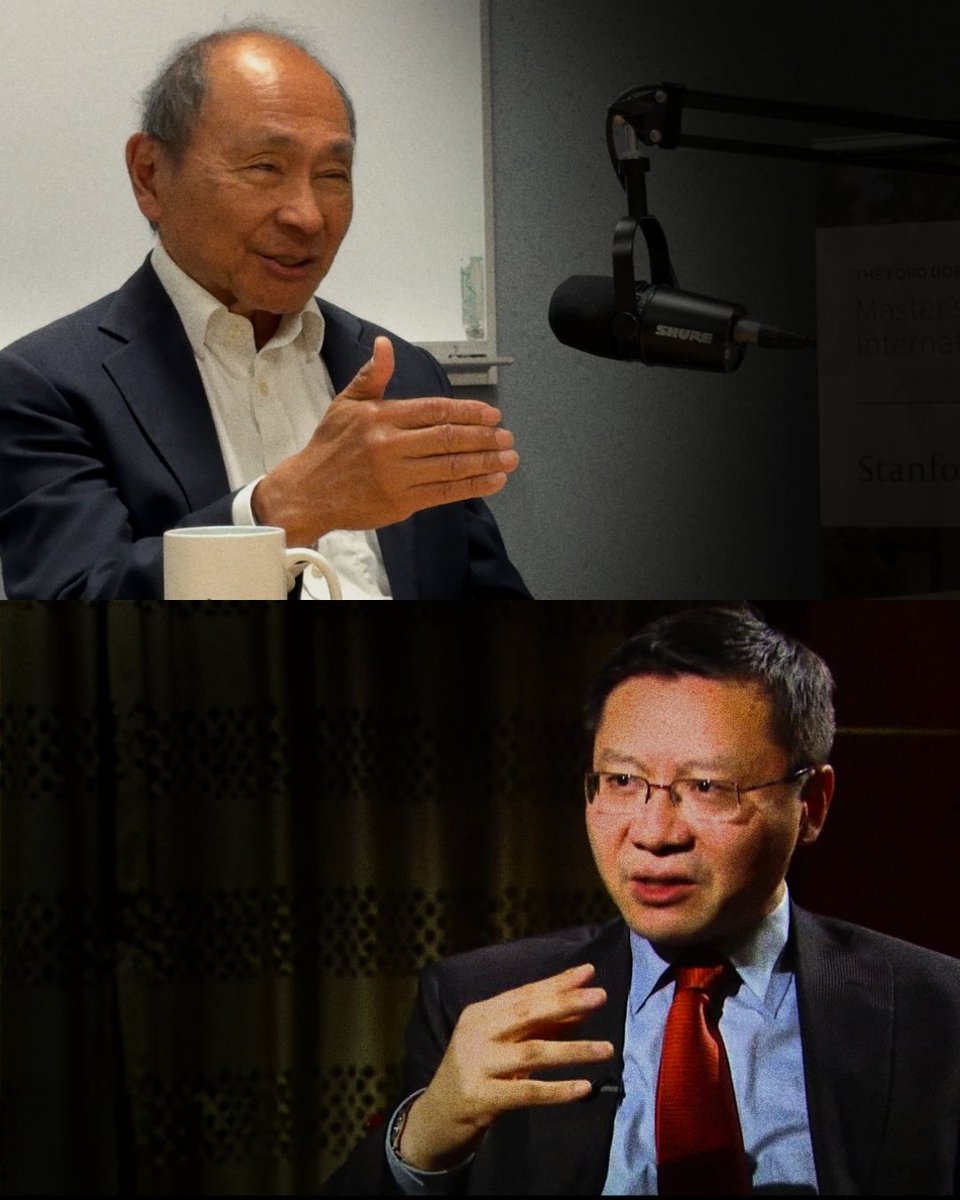
Pertanyaan yang menjadi landasan perdebatan antara gagasan @FukuyamaFrancis dan Zhang Weiwei.
–
Dalam sumbu antara demokrasi dan otokrasi, Francis Fukuyama meyakini bahwa demokrasi liberal menjadi titik akhir dari evolusi peradaban manusia.
Zhang Weiwei menolak sumbu itu sedari awal.
Baginya ini melebihi format demokrasi atau otokrasi. Yang lebih penting adalah apakah kita memiliki good vs. bad governance.
Memilih Kepemimpinan
Fukuyama menyerahkan pemimpin pada pilihan rakyat untuk menjamin rotasi kekuasaan.
Zhang menawarkan sistem yang telah dianut oleh Tiongkok, yaitu seleksi dan pemilu, untuk menjamin bahwa pemimpin yang hendak dipilih memiliki kompetensi dasar.
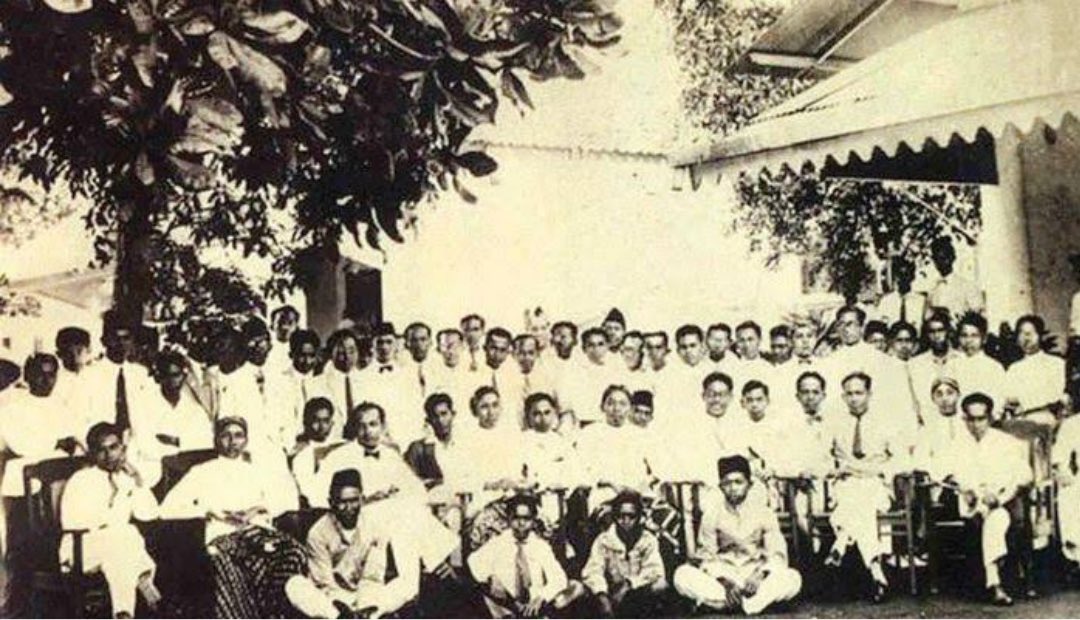
A story about Sriwijaya: a civilization that, over 400 years, intersected with other great civilizations from the Arabian peninsula, India, China, and Southeast Asia.
Notwithstanding internal and external conflicts, its tremendous interlocuting role manifested Southeast Asia’s early years of embracing multipolarity.
Some of its magnificent legacies include remnants found in Kedah, Muara Jambi, Palembang, Borobudur, Mendut, Pawon, and Prambanan.
@HeraldLinde
Every hurdle I have named rests, in the end, on two things the region must cultivate between its own members:
better communication, and open mindedness.
First, the next generation of Southeast Asians must communicate better, with one another and with the world.
Understanding one another is the quiet precondition for trade.
Intra-ASEAN trade remains below 25% of the region’s collective GDP. Europe’s intra-regional trade sits near 65%.
The gap bridges from economic to familiarity of one another.
Second, open-mindedness among the young.
It prepares them for the exponential change bearing down from every quarter at once: geopolitics, climate, economics, technology.
More than preparation, it is the path to becoming a golden civilization, one capable of holding two forces in the same hand:
the force of innovation and the force of preservation.
The midterms are in.
What comes next for Southeast Asia?
An excerpt from my conversation with @jeep_kline@NakarinThe84763 at @thestandardth 2026 Economic Forum in Thailand.
Consider the pace of what is now upon us.
Earlier technological waves took a generation to arrive. Artificial intelligence became mainstream in roughly two years.
As AI diffuses into Southeast Asia,
four barriers demand our attention:
1. Energy
The nine countries outside Brunei and Singapore must raise electrification toward 10,000 kWh per capita. That is the price of admission.
To be creators in this wave rather than spectators, a society needs the power to run the machines of creation.
2. Accountability
Large language models hallucinate somewhere between 27%–46% of the time.
The responsibility, therefore, sits with the user and never with the model. A low cognition prompt yields a low-cognition output.
The machine mirrors the mind that queries it, which is precisely why it demands higher ethical and cognitive standards from us.
3. Control
Compute is expanding exponentially, and
we are entering territory with no precedent.
We must recognize, that no preceding model has worked where the less intelligent would govern the more intelligent.
4. Democratization
Unlike the internet that delivered more on information and little else, AI must be of use for the purpose to democratize ideas and public goods, including welfare, healthcare, education, moral value, and social value.
Sudah sering saya utarakan bahwa investasi pada pendidikan itu penting.
Namun sembari kita menunggu keputusan besar itu datang, kita bisa memulai dari hal yang paling sederhana.
Membangun kembali budaya membaca, dan mendiskusikannya bersama keluarga atau tongkrongan.
Dan hanya ada satu cara untuk mendemokratisasi nilai itu, agar teman-teman kita di Tarakan, Kaliurang, Rote, Nabire, Merauke, hingga Sabang bisa benar-benar menikmati public goods.
Caranya adalah dengan memastikan siapa pun yang mengelola urusan publik, di pusat maupun daerah, direkrut atas dasar meritokrasi, bukan patronase atau loyalitas.
Dan ini membutuhkan talent pool yang memiliki intelektualitas itu.
Hal ini terpancar dalam Pasal 33 UUD kita, yang lebih beranggapan bahwa aset negara adalah SDA. Tapi jika bisa saya tambahkan: sumber daya manusia termasuk dalam aset negara.
Inilah gema dari pelajaran pertama Bayt al-Hikmah: mereka memuliakan otak, sementara kita masih memuliakan tanah.