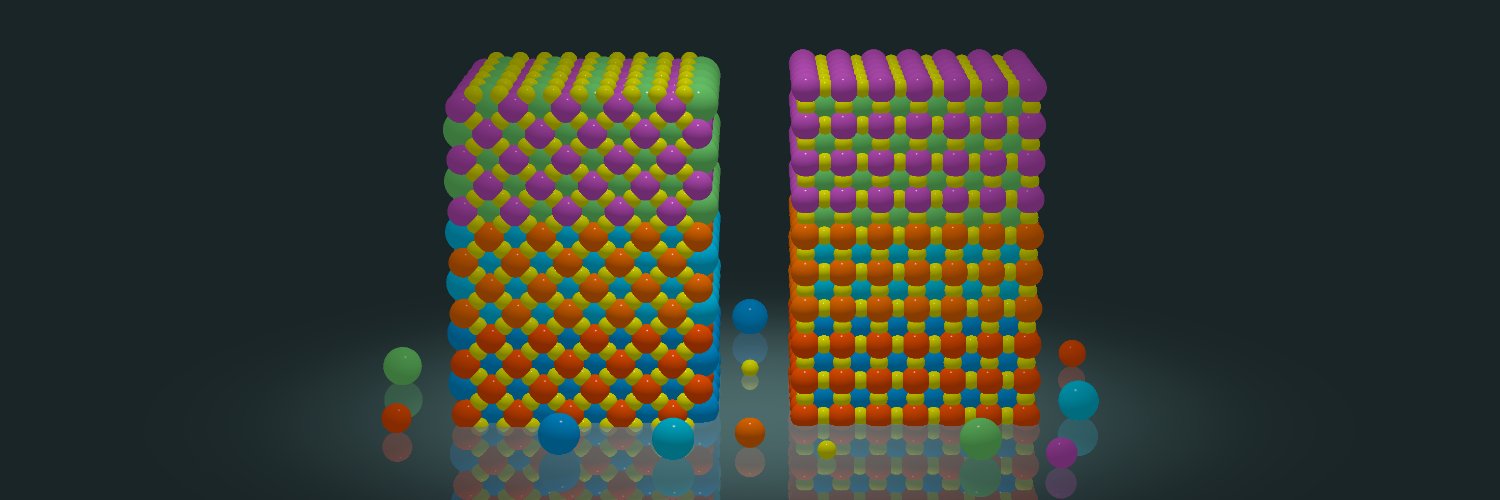
Excited to share our latest paper in @NatureMaterials , led by Roger! Congratulations to the entire team on this collaborative achievement.
Proud to have contributed to this work, and looking forward to the new insights and future research it will inspire. @icmabCSIC
Read the paper: https://t.co/3ZiPGS8wVU
#NatureMaterials #QuantumMaterials #Superconductivity #CondensedMatter #Research
Our new @PhysRevLett paper is out! We reveal how oxygen isotope fingerprints shed light on electron–phonon coupling in Vanadate, offering fresh insights into correlated materials and quantum interactions. Thanks for the support @icmabCSIC@CSIC https://t.co/55rVYC5jLk
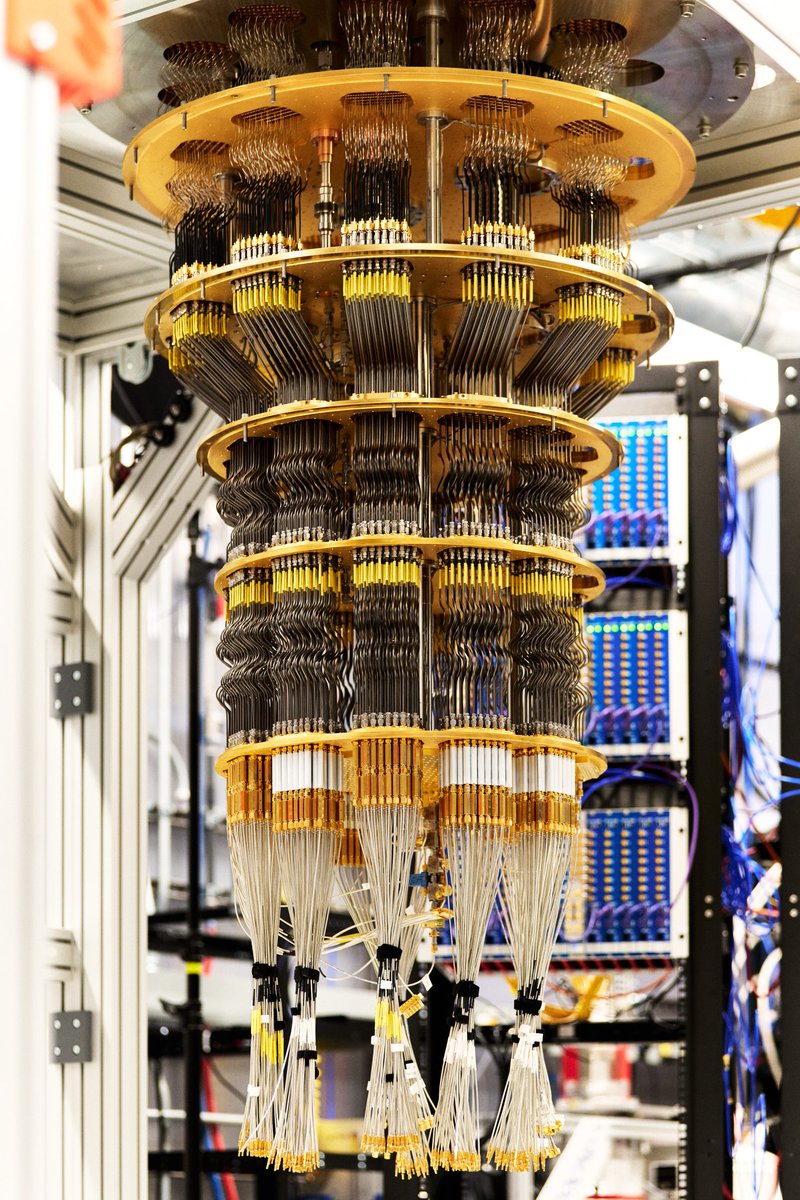
New breakthrough quantum algorithm published in @Nature today: Our Willow chip has achieved the first-ever verifiable quantum advantage.
Willow ran the algorithm - which we’ve named Quantum Echoes - 13,000x faster than the best classical algorithm on one of the world's fastest supercomputers. This new algorithm can explain interactions between atoms in a molecule using nuclear magnetic resonance, paving a path towards potential future uses in drug discovery and materials science.
And the result is verifiable, meaning its outcome can be repeated by other quantum computers or confirmed by experiments.
This breakthrough is a significant step toward the first real-world application of quantum computing, and we're excited to see where it leads.
BREAKING NEWS
The Royal Swedish Academy of Sciences has decided to award the 2025 #NobelPrize in Physics to John Clarke, Michel H. Devoret and John M. Martinis “for the discovery of macroscopic quantum mechanical tunnelling and energy quantisation in an electric circuit.”
Congratulations to John Clarke, Michael Devoret, & John Martinis
@NobelPrize in Physics "for the discovery of macroscopic quantum mechanical tunneling & energy quantization in an electric circuit" in 3 PRLs
https://t.co/ZJWyJB8ta4
https://t.co/rYlODViEZR
https://t.co/M7tyw1KFzD
Celebrating 450 years of research: #detijdvooruit! Our history in #physics goes back more than a century. We took the time to 'remake' some of the beautiful photographs from the period 1898-1948. https://t.co/mL1uhI8n0G @UniLeiden
Introducing Majorana 1—the world’s first quantum processor powered by topological qubits, featuring a new state of matter. This breakthrough marks a significant step toward scalable quantum computing. Learn more: https://t.co/CoxjyQWkSB #QuantumReady
A couple reflections on the quantum computing breakthrough we just announced...
Most of us grew up learning there are three main types of matter that matter: solid, liquid, and gas. Today, that changed.
After a nearly 20 year pursuit, we’ve created an entirely new state of matter, unlocked by a new class of materials, topoconductors, that enable a fundamental leap in computing.
It powers Majorana 1, the first quantum processing unit built on a topological core.
We believe this breakthrough will allow us to create a truly meaningful quantum computer not in decades, as some have predicted, but in years.
The qubits created with topoconductors are faster, more reliable, and smaller.
They are 1/100th of a millimeter, meaning we now have a clear path to a million-qubit processor.
Imagine a chip that can fit in the palm of your hand yet is capable of solving problems that even all the computers on Earth today combined could not!
Sometimes researchers have to work on things for decades to make progress possible.
It takes patience and persistence to have big impact in the world.
And I am glad we get the opportunity to do just that at Microsoft.
This is our focus: When productivity rises, economies grow faster, benefiting every sector and every corner of the globe.
It’s not about hyping tech; it’s about building technology that truly serves the world.
Superconducting qubits are measured using microwaves, posing constraints on its size and thermal budgets. The electro-optic transceiver presented here can be used to perform optical readout without affecting qubit performance.
https://t.co/HN66GYLhia
We will start the second day at 9 AM 🕘!
We will have Nini Pryds and @LeniBascones , and in the afternoon we will have another poster session.
Here you have a family picture of all of us:
Next 16 and 17 of January 2025, we will have the "ICMAB School on 2D MATERIALS: oxide membranes, twistronics and beyond". 👨🔬
Register here: https://t.co/C1Uo6yhvyo
Visit the website: https://t.co/hwIvdWhdha
More info: https://t.co/ittA3Lvz5B