A UNIVERSITY HOMEWORK ASSIGNMENT IN TURIN BECAME ONE OF THE BIGGEST NETWORK TOOLS ON GITHUB.
His name is Giuliano Bellini. Computer engineering student at Polytechnic University of Turin. Course: System and Device Programming.
The assignment: write a small program that logs network traffic to a file. Command line only. Submit it. Get a grade. Move on.
Most students did that. Giuliano didn't.
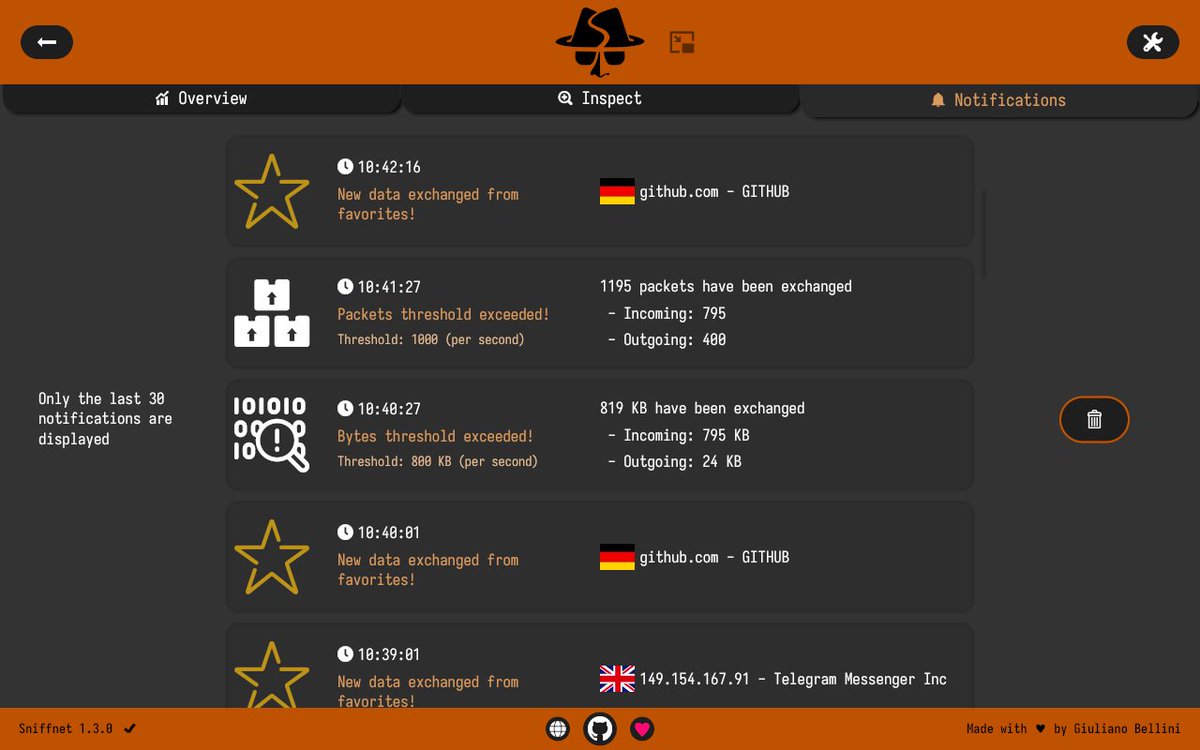
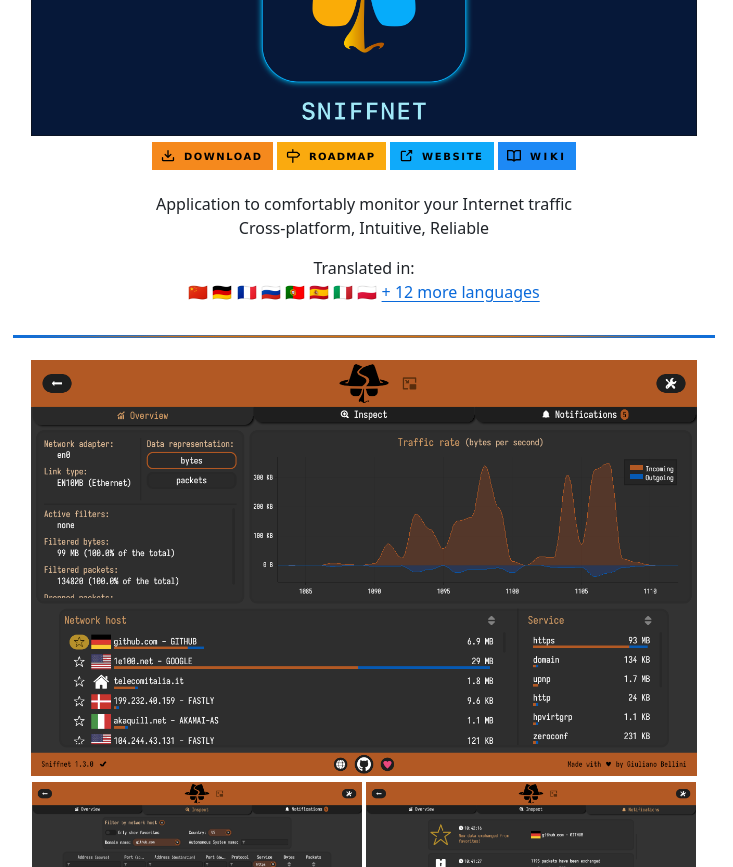
After he turned the project in, he kept working on it. Added a GUI. Added geo-location. Added a real-time chart. Added protocol detection. Added 24 language translations. Added webhook notifications. Added PCAP import that runs 2X faster than Wireshark.
Three years later, GitHub picked it for their Accelerator Program and he started working on it full-time.
He called it Sniffnet. Sniffer + network.
Today:
→ 33K GitHub stars
→ 1.2K forks
→ 2,771 commits
→ 64 contributors
→ 24 supported languages
→ 16 official releases
→ Sponsored by NLnet, ADS Fund, and IPinfo
→ Featured by Windows Central as a free GlassWire and Wireshark alternative
His bio still says "pasta addicted, can't resist a good plate of spaghetti." His README still calls it "comfortably monitor your Internet traffic."
The whole thing is written in Rust. 98.8% of the codebase. MIT and Apache-2.0 dual licensed.
He refuses to add ads. He refuses to add telemetry. He refuses to lock anything behind a paid tier.
A homework assignment from Italy is now used by network engineers in every country with internet.
This is what coursework was supposed to lead to.
Repo in the first comment.
One of the most annoying programming challenges we’ve ever faced 🤦♂️
In today's blog post, we go through the details of supporting process identification.
If implementing this feature seems like a no-brainer to you, well… read the post and be surprised.
https://t.co/Ttfm7AbRNl
Sniffnet is 3 years old today 🥳
This is the perfect moment to glance back at the past year, and reflect on the importance of sustainability for a long-lived FOSS project.
There is also a little spoiler in the blog post, so make sure to give it a read!
https://t.co/z4u1Zw0W9U
Announcing Sniffnet v1.4 🎉
This version introduces support for importing PCAP files… and it’s 2X faster than Wireshark at processing them!
Check out the blog post to know more about it and discover other new features.
https://t.co/nehLZ8x2dX
When rethinking a codebase is better than a workaround 💡
In this blog post, we go behind-the-scenes of the app, exploring the framework that powers Sniffnet's user interface, and how the Rust programming language can improve the developer experience.
https://t.co/u8ZWX2MAJG
Sniffnet recently got a complete security audit 🔒
We are happy to share that the outcome was highly positive, as a testament of the security-first approach that has always characterised Sniffnet in protecting its users' data privacy and system integrity
https://t.co/0BdJKwxFWU
Sniffnet just landed on X!
This is the official account for Sniffnet, the open-source network monitoring tool!
Follow us for news and insights about the application's development.
Sniffnet : un outil Open Source pour surveiller le trafic Internet. Il permet d'inspecter les connexions en temps réel et d'identifier les protocoles et services utilisés.
+ 6000 ⭐ sur GitHub depuis notre dernier partage.
👉 Le code : https://t.co/AEHocO96n2
@yobuko201 Hey, thank you for your interest!
The only big missing feature before the 1.3.0 release is read & write of PCAP files.
Many many other features have been already added: to see the them, see the CHANGELOG “Unreleased” section: https://t.co/6jtr9E3vww
@William86762130@vikingmute Yeah, Sniffnet already works in promiscuous mode by default (meaning that all packets going through your adapter are analyses)