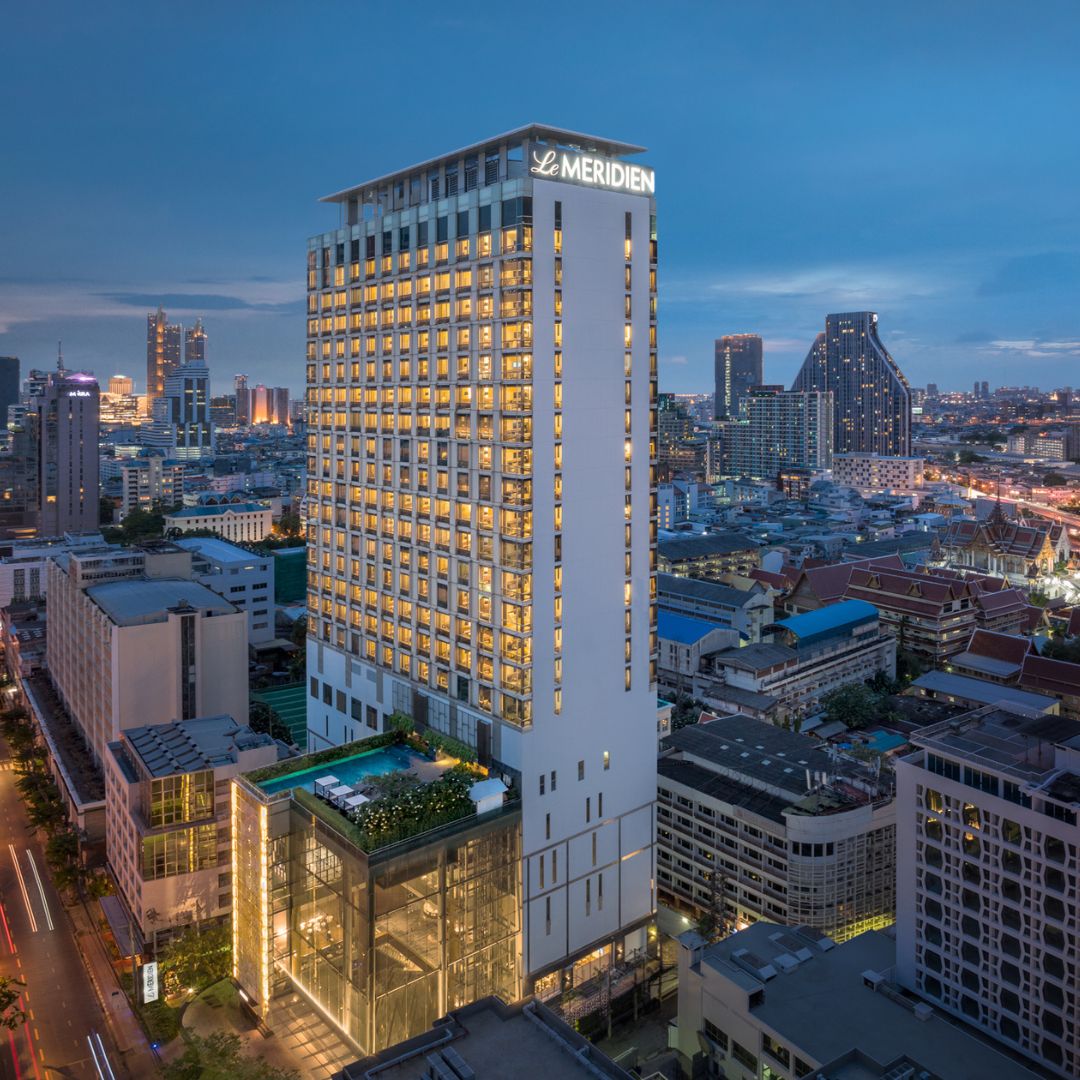
Thailand continues to strengthen its position in the global Halal travel market, with @lemeridienbkk leading the way.
Recognised by @Crescentrating for Halal travel excellence, the five-star hotel offers a fully Halal-certified guest experience, from prayer amenities and culturally trained staff to Halal dining across all outlets and private wellness facilities.
Located in Silom with easy access to shopping, hospitals, and Muslim-friendly amenities, Le Méridien Bangkok reflects how luxury hospitality can meet the needs of Halal-conscious global travellers without compromise.
Read more on https://t.co/fKSU1aZFvp: https://t.co/6gQ6C7UK89
#HalalTravel #HalalTourism #Thailand #Hospitality #MuslimFriendly #HalalLifestyle #TravelAndHospitality
Dubai makes exhibition history as @Gulfood 2026 runs from 26–30 January across two mega venues, delivering a record breaking 280,000 sqm of sold out space. With 8,500+ exhibitors from 195 countries, Gulfood is setting a new benchmark for the future of food, logistics, and Halal trade.
Read more on https://t.co/fKSU1aZ7FR: https://t.co/wgal1qQMgc
#HalalFocus #Gulfood2026 #Dubai #HalalTrade #FoodManufacturing #GlobalTrade #Logistics #UAE
Hong Kong is stepping up its Muslim friendly travel strategy, expanding halal certified dining, hotel accreditation, and targeted outreach to Muslim travellers. It’s a clear signal that trust, accessibility, and inclusion are becoming core tourism infrastructure, not add ons.
Read more on https://t.co/fKSU1aZ7FR: https://t.co/uyYH1BDdq1
#HalalFocus #HalalEconomy #TravelHospitality #MuslimFriendlyTravel #HongKong #Asia #HalalEcosystem
Modest fashion is getting its own trust standard. Malaysia’s Usanita is expanding its Halal Modest Fashion push into Türkiye, centering Halal compliant materials, supply chain transparency, and ethical labour practices, not just aesthetics. It’s also a smart soft power play tied to Visit Malaysia Year 2026.
Read more on https://t.co/fKSU1aZ7FR: https://t.co/pmhVJL0n4o
#HalalFocus #ModestFashion #HalalEconomy #Malaysia #Turkiye #EthicalFashion #HalalIntegrity
Indonesia will make Halal certification mandatory for all products and restaurants by October 2026. The move strengthens consumer trust and positions the country as a serious global Halal hub, with food, cosmetics, supplements, and more now under one regulatory umbrella. Another signal that Halal is shifting from a label to core market infrastructure.
Read more on https://t.co/fKSU1aZ7FR: https://t.co/irVtSbuUGw
#HalalFocus #HalalEconomy #HalalCertification #Indonesia #HalalTrade #GlobalHalal #FoodManufacturing #Regulation #ConsumerTrust
As Halal trade becomes more complex and global, trust cannot rely on fragmented tools or manual verification. OneAgrix has appointed Philippe Chatelain to its Board of Advisors, reinforcing its focus on lifecycle level traceability, compliance, and regulatory readiness across Halal and other regulated supply chains. With deep experience in serialization, authentication, and digital product passports, Chatelain’s appointment signals a maturing approach to infrastructure led Halal trade built for scale and governance.
Read more on https://t.co/fKSU1aZ7FR: https://t.co/LGLm7ik1tj
#HalalFocus #HalalTrade #HalalEcosystem #SupplyChain #Traceability #Compliance #DigitalInfrastructure #FoodTech #RegulatedTrade #OneAgrix
Ukraine is strategically expanding halal product access to three more international markets, boosting export potential for local food producers and strengthening trade ties across the Middle East, Asia, and Africa. With Halal certification becoming an increasingly important gateway to diverse global consumers, this move reflects Ukraine’s broader efforts to deepen agricultural export reach and connect producers with high-growth markets.
Read more: https://t.co/1oIDW5HVeY
#HalalFocus #HalalEconomy #GlobalHalal #HalalTrade #Ukraine #FoodExports #Agriculture #EmergingMarkets #TradePolicy
The Halal economy is now a multi trillion dollar global market spanning food, beauty, finance, logistics, and tourism. Malaysia’s strong certification framework and Sabah’s position within the BIMP EAGA region offer clear growth potential, but gaps in awareness, policy alignment, and Halal logistics continue to limit scale. Bridging those gaps is where the real opportunity lies.
Read more on https://t.co/fKSU1aZFvp: https://t.co/wvWf1XiMWs
#HalalFocus #HalalEconomy #HalalTrade #GlobalHalal #IslamicEconomy #Malaysia #SupplyChain #HalalLogistics
Sarawak is tightening halal governance ahead of Ramadan, with the Sarawak Islamic Council stepping up field visits and guidance to help hotels, restaurants, seafood outlets and street vendors obtain Halal certification.
The Council also drew a clear line on terminology: “Muslim friendly” is not the same as halal certified, and consumers are encouraged to report misleading claims so authorities can act.
Read more on https://t.co/f9i3TU17QS: https://t.co/K1L0bEOj2e
#HalalFocus #Malaysia #Sarawak #Halal #HalalIntegrity #HalalEcosystem #FoodService #Restaurants #Retail #ShariahIssues #Ramadan
Canada is investing up to $2,256,786 to upgrade halal beef processing and packaging at Atlantic Beef Products in Prince Edward Island through the Kosher and Halal Investment Program. The project includes new packaging tech, improved sanitation systems, and in line analysis to boost yield, reduce food waste, and strengthen food safety for halal certified products headed to Canadian retailers.
Read more on https://t.co/f9i3TU17QS: https://t.co/sfH9mDXXoP
#HalalFocus #Canada #G20 #Halal #HalalIntegrity #MeatAndPoultry #FoodManufacturing #FoodSafety #SupplyChain
Bangladesh’s push to capture a share of the multi-trillion-dollar global Halal market is being undermined by a turf battle over Halal certification between two government entities, the Islamic Foundation and the Bangladesh Standards and Testing Institution.
Exporters caught in the middle face costly dual certification requirements, regulatory confusion, and weaker credibility in key international markets. Industry insiders say harmonizing certification under a single authority with global recognition could unlock export potential and strengthen Bangladesh’s position in Halal trade.
Read the full story on https://t.co/fKSU1aZFvp: https://t.co/lmDs1pRV21
#HalalFocus #HalalCertification #HalalTrade #Bangladesh #GlobalHalal #ExportGrowth #HalalEconomy
Malaysia and Türkiye have signed a new Memorandum of Understanding aimed at strengthening bilateral investments and expanding cooperation across the Halal industry.
Beyond trade volumes, this agreement signals deeper alignment on halal value chains, investment frameworks, and market access, with Türkiye positioned as a strategic gateway to Europe and Malaysia reinforcing its role as a global Halal hub.
For Halal focused businesses, investors, and policymakers, this MoU opens the door to cross border collaboration in food and beverage, certification, services, and the wider Islamic economy.
Read more on https://t.co/f9i3TU17QS:
https://t.co/uBgxUVIFof
#HalalFocus #HalalEconomy #HalalTrade #Malaysia #Turkiye #IslamicEconomy #GlobalHalal #Investment #TradePolicy
Saudi Arabia is tightening the link between Halal compliance and sustainability expectations.
The Saudi Halal Center has introduced the Halal Mark Track, a system designed to integrate approved halal standards with Environmental, Social, and Governance requirements. Backed by a partnership with the Halal Product Development Company (PIF) and THIQAH, the initiative aims to raise market confidence, standardize evaluation criteria for products and services, and help companies scale locally and internationally while aligning with evolving global benchmarks.
For brands exporting into the GCC and wider OIC markets, this is another signal that “Halal” is increasingly being positioned alongside traceability, governance, and responsible production, not treated as a separate checkbox.
Read more on https://t.co/fKSU1aZ7FR: https://t.co/nUMkolifaG
#HalalFocus #SaudiArabia #ESG #HalalCertification #IslamicEconomy #Sustainability #FoodIndustry #GCC #SupplyChain
Halal certification is not a static label. It is a governance system that can directly shape global trade flows.
In 2025, U.S. beef exports to Indonesia and the UAE faced temporary restrictions due to differing halal certification requirements. Through regulatory engagement, research validation, and dialogue with local halal authorities, market access was restored after roughly six months.
The episode highlights a key reality for halal trade stakeholders: access to Muslim majority markets depends not only on compliance, but on trust, transparency, and alignment with country specific halal frameworks. It also underscores how halal standards influence demand for specific cuts and byproducts that have limited domestic markets in exporting countries.
Read more on https://t.co/f9i3TU17QS:
https://t.co/h9qEyoZyce
#HalalFocus #HalalTrade #HalalIntegrity #IslamicEconomy #GlobalTrade #FoodSystems #HalalCertification #Indonesia #UAE
Halal certification in the United States plays a critical role in building trust between Muslim consumers and food producers. Unlike many Muslim majority countries, the U.S. does not have a centralized government authority overseeing Halal certification.
Instead, independent certifying bodies verify compliance across sourcing, processing, and handling. As demand for Halal products continues to grow, understanding how these certification systems work is essential for businesses, regulators, and consumers alike.
Read more on HalalFocus: https://t.co/L2CX5NcqGB
#HalalFocus #HalalCertification #HalalEconomy #FoodIndustry #MuslimConsumers #HalalEcosystem
Indonesia’s Halal economy is moving into a new phase. With Rp335 trillion allocated to the Free Nutritious Meals Program (MBG) in 2026, the country is linking social policy directly to Halal industry expansion.
Backed by institutions like the Halal Product Assurance Organizing Agency and reinforced by record halal investment figures from the State of the Global Islamic Economy Report, this is a clear signal that Halal is no longer niche. It’s national infrastructure.
For policymakers, investors, and food system players, Indonesia is setting a model worth watching.
Read more on https://t.co/fKSU1aZ7FR: https://t.co/MoNuX5HYhx
#HalalFocus #HalalEconomy #Indonesia #HalalIndustry #IslamicFinance #FoodSecurity #HalalInvestment #PublicPolicy
South Korea is getting a real time lesson in Halal travel economics. As Muslim arrivals climb past the 1 million mark annually, the shift is not just more visitors, it’s different behavior. Travelers who once defaulted to familiar food are now actively looking for Korean cuisine that fits Halal requirements, and restaurants are responding with Halal friendly menus, clearer ingredient choices, and small but meaningful hospitality upgrades.
The bottleneck is credibility and scale. Only a limited number of restaurants have formal Halal certification, so discovery is happening through social, apps, and word of mouth. That’s an opportunity for tourism boards, certification bodies, and operators to build clearer pathways that reduce friction and increase spend.
Read more on https://t.co/fKSU1aZ7FR : https://t.co/woU6oNLFki
#HalalTourism #SouthKorea #MuslimTravel #TravelHospitality #HalalFood #TourismTrends #HalalEconomy #HalalFocus
Halal tourism is no longer niche, it’s competitive.
Malaysia has outpaced major destinations including the UAE, Indonesia, and Singapore in the global halal tourism race, thanks to consistent investment in Muslim-friendly infrastructure, services, and policy alignment.
As Muslim travel continues to grow, this sets an important benchmark for how destinations can combine accessibility, cultural awareness, and economic strategy to attract a global Halal-conscious audience.
Read more: https://t.co/ZmXMoH1yei
#HalalFocus #HalalTourism #TravelIndustry #Malaysia #IslamicEconomy #MuslimTravel #GlobalTourism