What Did Pakistan Gain? People keep asking, “What did Pakistan get? Where is the money?” Money? What money?
They are measuring diplomacy with the wrong yardstick. Pakistan’s greatest gain was not financial. It was strategic.
Pakistan gained stature. It gained respect. It gained mutual admiration. Above all, it gained a relationship of trust with its neighbour, Iran.
The state visit of President Masoud Pezeshkian to Pakistan symbolised that transformation. He was welcomed with the highest honours of the Pakistani state—a full ceremonial reception, a guard of honour, a 21-gun salute, fighter aircraft escort, and the presence of Pakistan’s entire civilian and military leadership. Such honours reflected the importance Pakistan attached to this relationship and the warmth with which the Iranian President was received.
This is no ordinary diplomatic achievement.
Imagine a country capable of walking one of the finest diplomatic tightropes in modern geopolitics. Pakistan maintains a close strategic and mutual defence relationship with Saudi Arabia while simultaneously enjoying the confidence and friendship of Iran. Very few countries are trusted by both.
If Pakistan succeeds in becoming a bridge between Saudi Arabia and Iran, it will have achieved something generations of diplomats have sought but failed to accomplish. Stability between these two great regional powers would transform the geopolitics of the Middle East and the wider Muslim world.
Pakistan’s diplomacy with the United States also demonstrated that dialogue can achieve what confrontation cannot. The negotiations culminating in the June 2025 understandings showed that diplomacy remains the most powerful instrument of statecraft. In my view, the patient efforts led by Field Marshal Asim Munir helped convince President Donald Trump that engagement, rather than continued escalation, offered the better path forward.
Those who judge success only by the size of a cheque miss the larger picture.
The real dividend lies ahead.
Iran possesses the world’s second-largest natural gas reserves and some of the largest oil resources on Earth. If today’s trust eventually enables the long-discussed Iran–Pakistan gas pipeline to become operational, and one day extends onwards to India, the benefits will dwarf any short-term financial package. Energy security, expanded trade, regional connectivity, and economic interdependence would become the foundation of lasting peace.
Countries connected by pipelines, commerce, and shared prosperity have far greater incentives to cooperate than to fight.
History rarely remembers the size of an aid package.
It remembers the nations that changed the course of events.
Pakistan did not merely gain goodwill.
It gained strategic trust.
It gained regional stature.
It gained brotherly relationships.
It gained the confidence of neighbours and major powers alike.
That trust cannot be printed, borrowed, or purchased.
It is earned.
And that is what Pakistan gained.
I'm Jewish, British & 64
All my life, I wondered how the Holocaust could have happened. I understood that Hitler & other leaders were EVIL, but how did millions of ordinary people go along with it?
NOW, seeing how so many in the West rationalise & defend the Gaza Genocide, I feel I have an answer and it is profoundly disturbing
People often ask me which Pakistani city I admire the most. Without hesitation, I say Sialkot.
A city of 4.5 million people, yet contributing 2–3% to Pakistan’s GDP and nearly 10% of its exports through the hard work, enterprise and resilience of its people.
A city whose citizens were patriotic enough to build an international airport with their own resources and even launch an international airline.
And above all, Sialkot gave us two towering poets, Allama Iqbal and Faiz Ahmed Faiz.
This is the kind of legacy a city should cherish and be proud of.
The Iranian navy, which has been destroyed eight times, closed the Strait of Hormuz again, because the United States for the seventh time won the war that wasn’t a war, so the United States can open the Strait of Hormuz that was open before the not war.
The not war that started to get the uranium that was completely obliterated, so that the Iranians can’t build the nuclear bomb that they weren’t building for the not war that the United States started.
Then the United States which has nuclear weapons threatening to use nuclear weapons to prevent Iran from having nuclear weapons because having nuclear weapons is dangerous.
If the United States saw what the United States is doing in the United States, the United States would invade the United States to liberate the United States from the tyranny of the United States.
Iran needs to be clear, fast.
If it is not attending the meeting in Pakistan, it must spell out why:
is it the port blockade?
the deal terms?
or both?
Because silence comes at a cost.
Iran earned global sympathy as the underdog.
It risks losing that quickly if it appears evasive or inconsistent.
The bigger concern is strategic judgment. War may have created leverage but leverage is fleeting.
It can disappear in days if not converted into outcomes.
History is a harsh reminder.
In 1988, after years of war and immense losses, Iran was forced to accept a deal it once resisted.
Leverage unconverted is leverage lost.
And misreading the moment can turn advantage into regret, very quickly.
Araghchi’s tweet reflected an understanding in Tehran, likely based on what they heard from Pakistan, that if they took a positive step by opening Strait of Hormuz, US would reciprocate by lifting the blockade. But Trump kept the blockade in place, and through his many tweets, suggested that Iran was surrendering on the nuclear issue.
This has only fed Iran’s suspicions about Trump and that Islamabad like Geneva is a diplomatic ruse before another military attack. The door to diplomacy is not closed, but it has now become considerably more difficult. Deliberately or not, Trump has undermined diplomacy and raised likelihood of more war.
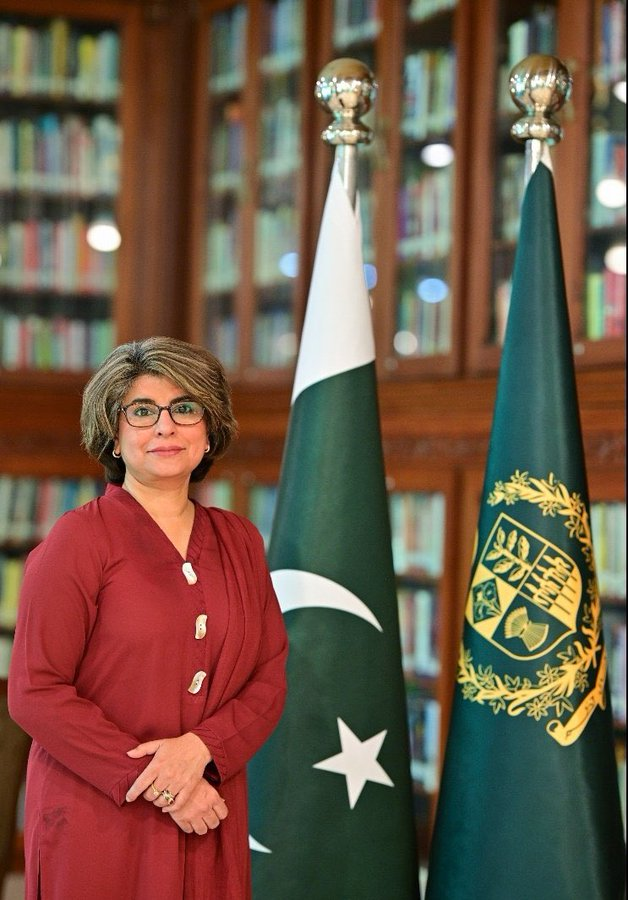
Let’s not forget the remarkable efforts of Foreign Secretary Amna Baloch and her team in helping to avert one of the most serious global crises since World War II. More power to Pakistani women.
Tonight is one of the most consequential moments of the 21st century.
A moment that will be etched in our memories forever.
I am so proud to be a Pakistani.
Diplomatic efforts for peaceful settlement of the ongoing war in the Middle East are progressing steadily, strongly and powerfully with the potential to lead to substantive results in near future. To allow diplomacy to run its course, I earnestly request President Trump to extend the deadline for two weeks. Pakistan, in all sincerity, requests the Iranian brothers to open Strait of Hormuz for a corresponding period of two weeks as a goodwill gesture. We also urge all warring parties to observe a ceasefire everywhere for two weeks to allow diplomacy to achieve conclusive termination of war, in the interest of long-term peace and stability in the region.
@realDonaldTrump@JDVance@SecRubio@SteveWitkoff@SEPeaceMissions@drpezeshkian@mb_ghalibaf@araghchi
Quite seldom do I find myself unable to make sense of a single thing another person has to say. In this case, I am in that position. In today’s world, Pakistan could care scant little about India’s destruction whereas India’s entire Pakistan “policy” is based on utter hysteria.
'Pakistan Does Not Exist For Us': Anand Ranganathan Backs Modi's Biggest Foreign Policy Win
Anand Ranganathan argues that Narendra Modi's single biggest foreign policy success is telling India one brutal truth no previous government dared to ‘Pakistan simply does not exist for us.’ He calls out the UPA's ‘terror and talks can go together’ policy as a historic betrayal, and delivers a blunt verdict on Aman ki Asha diplomacy. ‘They are killing people and you are eating biryani in Lahore.’ He also makes the case that the Indus Waters Treaty, not war, is India's most powerful deterrent against Pakistan.
@prasadaditi
Pakistanis hold $100 billion in UAE banks, confirmed by senior journalist Haider Naqvi.
Government is working to bring this money back, expecting $20 billion via Roshan Digital Account, while developing Karachi Port and Gwadar Port.
UAE's future looks uncertain as investments flow out.
The Pasteur Institute has been an icon of Iran’s health care system, a symbol of modern Iran, established a century ago along with foundational health and education institutions. Destroying it could have no other purpose than assaulting Iran’s history, erasing the history of its modernization and development—take Iranians back to the Stone Age.
The Islamabad process now has endorsement from China, the EU, the UN Secretary-General and the Gulf states simultaneously. The EU Council President separately told PM Sharif that the 27-member bloc supports all mediation efforts. This is no longer a regional initiative. It is a framework with global co-signatories.
https://t.co/MAkIajjcok