Fever, lymph node swelling, and rapid rash progression should raise suspicion for a severe cutaneous adverse drug reaction. At #ACAAI2026, Elizabeth Phillips, MD, of Vanderbilt outlined the red flags and latency clues allergists need. #SJS#DRESS https://t.co/R5JMpfUp2G
On the latest episode of Diabetes Dialogue, Diana Isaacs, PharmD, and Natalie Bellini, DNP, break down the recent FDA clearance of the MiniMed Fit insulin patch pump and what it means for patients with type 1 and type 2 diabetes alike.
Watch now: https://t.co/J1nwpulbUY
Can leadership be taught? Inside the Skin of Color Society's Center for Leadership retreat in Chicago, dermatology leaders share what the program is building. https://t.co/DRBjaw7O9M
Leadership doesn't stop at the exam room door. Four dermatologists reflect on the @SkinOfColor Center for Leadership Learning Collaborative on the #SkinofColorSavvy podcast...👇
🎙️View here: https://t.co/hSvlvMRUas
🚨New episode of #SkinofColorSavvy out today!
Values, feedback, and media training: what does it take to train the next generation of dermatology leaders? Hear from @SkinOfColor Center for Leadership attendees on this episode of the podcast.🎙️
🎥View: https://t.co/hSvlvMRUas
Can a daily pill rival biologics in moderate to severe atopic dermatitis?
Phase 2b BROADEN2 data for oral STAT6 degrader KT-621 are in. See how the mid dose did👇
https://t.co/JAfRToYPtX
New from #AHA2026: Interim data from the open-label extension of CORALreef have revealed the sustained effects of enlicitide on LDL-C, non-HDL-C, apoB, and Lp(a). We spoke with Christie Ballantyne, MD, to learn more.
Watch now: https://t.co/RKohIzf4nv
Back-to-school can be a timely moment to reassess pediatric hemophilia B care. Explore considerations around bleed protection, treatment fit, and clinical experience as children's routines evolve. Read More: https://t.co/MZgQQd1VGD #Sponsored
ICYMI: Why might just 1 moderate COPD exacerbation matter more than clinicians think? Gerard Criner, MD, weighs in from #GOLD2026 in Philadelphia.
https://t.co/oABDa7KDdl
Omalizumab had the highest #anaphylaxis reporting proportion among 7 respiratory biologics in a FAERS analysis, but Jennifer Priessnitz, MD @ODU cautions against using these data to choose a biologic. #Asthma https://t.co/kButQx7YIf
In the latest episode of Diabetes Dialogue, Diana Isaacs, PharmD, and Natalie Bellini, DNP, discuss 3 major trials from #AHA2026 and what they mean for the future of obesity and diabetes treatment.
Watch now: https://t.co/rXYUotcSQY
Open-label, no comparator, 52 weeks in kids aged 2 to 11. How should clinicians read the pediatric nemolizumab data in atopic dermatitis? Lawrence Eichenfield, MD, weighs in: https://t.co/fUYAPXFMYW
In the phase 3 VITESSE trial, the Viaskin Peanut Patch raised peanut-specific IgG4 about 5-fold in children aged 4 to 7 years. #PeanutAllergy#FoodAllergy#ACAAI26
Watch interview with David Fleisher, MD, @ChildrensColo here: https://t.co/scQbugtRgh
New from #AHA2026: A substudy of the SUMMIT trial of tirzepatide has revealed tirzepatide's effect on left and right atrial metrics of HFpEF. Christopher Kramer, MD, joins us to discuss more.
Watch now: https://t.co/KUHx3yZFiv
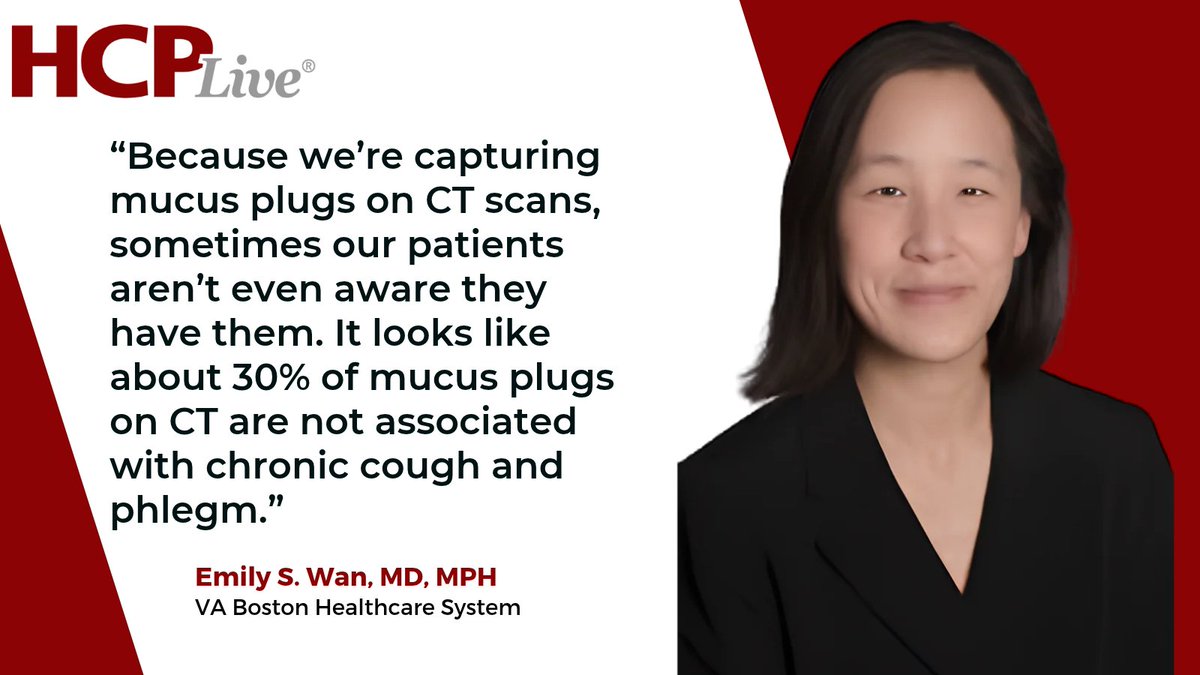
About 30% of mucus plugs seen on CT occur without chronic cough or phlegm. Emily Wan, MD, MPH, explains what that means for #COPD risk.
https://t.co/vde3GyRwOY
Kids under 12 with moderate-to-severe atopic dermatitis have few systemic options. Could that change? Lawrence Eichenfield, MD, unpacks new pediatric nemolizumab data: https://t.co/H9ScZF4sml
Once-monthly PVX108 raised the tolerated peanut dose 2.4-fold in children in a phase 2 trial. Brian Vickery, MD, of @childrensatl explains what the data mean for phase 3. #PeanutAllergy#ACAAI2026: https://t.co/m4boZkSXxm
Review emerging evidence on hypercortisolism in resistant type 2 diabetes, resistant hypertension, and evolving disease management. Watch Now: https://t.co/oH3rXnAw1U