BHIVA, @BASHH_UK and @NAT_AIDS_Trust welcome the introduction of practical guidance for fertility clinics which will remove barriers to the donation of sperm or eggs by people living with HIV to recipients, including people not living with HIV. Guidelines for the Medical and Laboratory Procurement and Use of Sperm, Egg and Embryo Donors (2025) - full details can be seen here: https://t.co/iroqWnSMdd
This change follows the campaign started in 2018, with BHIVA and BASHH working alongside NAT to change the law regarding gametes donation. It is a further step towards equality in healthcare for people with HIV, including same sex couples where one or both have HIV and want to have children, or to donate an egg or sperm to friends or relatives experiencing fertility issues.
https://t.co/F3UaMYmKSz
We’re pleased to see the publication of the new UK Guidelines for the Medical and Laboratory Procurement and Use of Sperm, Egg and Embryo Donors, developed by representatives across ARCS, BFS, BHIVA, AND BASHH.
To read the full guidelines, visit https://t.co/RM9gb8Vrox
The REgimen optimisation: Feasibility of simplifying NucleotidE therapy in
HIV/HBV confection (REFINE-B) Trial. A very small study looking at stopping tenofovir/entecavir in HIV/HBV, it looked feasible short-term (no HBV flares/viral rebound at 24 wks), but data are limited and we can’t recommend tenofovir-free ART yet. Bigger studies + inclusion in HBV cure research needed. #BHIVABASHH26
Lots of interest in the congenital syphilis 2015-24 in England overview from Helen Peters at #BHIVABASH2026 showing rising numbers. Negative screening in pregnancy and engagement with care were significant factors
@BritishHIVAssoc@BASHH_UK
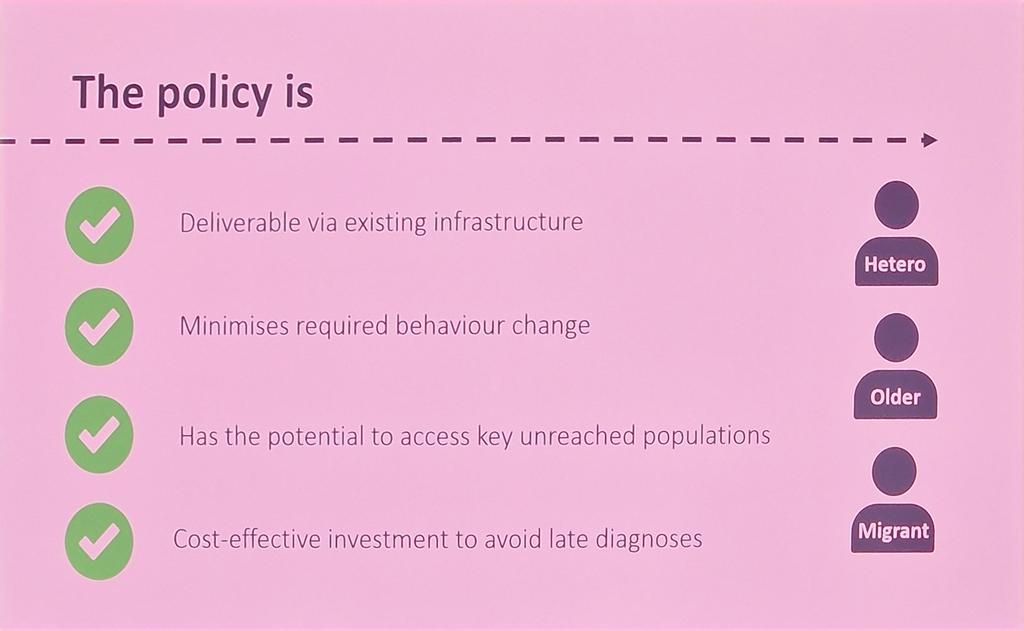
Victoria Pilkington estimates the potential impact of opt-out HIV testing in Primary Care if this were integrated into the NHS Health Checks programme.
This has the potential to identify more people outside of ED opt-out testing, and may be more cost effective! #BHIVABASHH26
Dipti and Jess from @londonftci share the outcomes of an opt-out BBV testing programme in Primary Care in Croydon.
With proper staff training, meaningful information dissemination and the creation of clear, safe pathways they demonstrate how success can be achieved with this strategy.
The pilot found:
- a low decliner rate
- successes in linkage to care and re-engagement
- higher rates of BBV positivity than the local ED opt-out testing
- a greater awareness of BBV in Primary Care as a result of the pilot #BHIVABASHH26
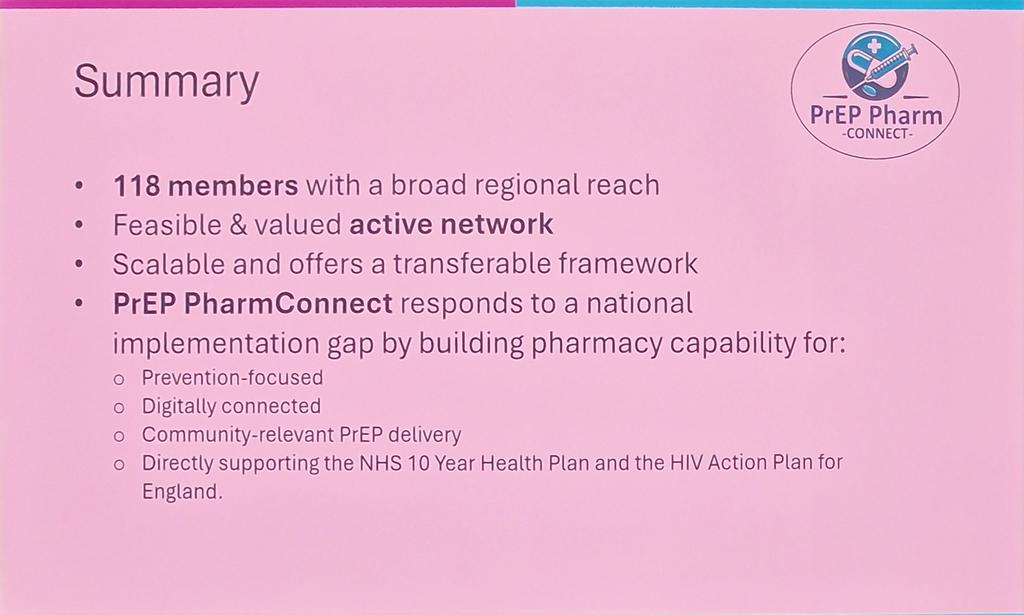
Stephanie Katier describes the PrEP service gaps which exist as a barrier to achieving global HIV elimination targets, and how utilisation of pharmacists may help bridge this. #BHIVABASHH26
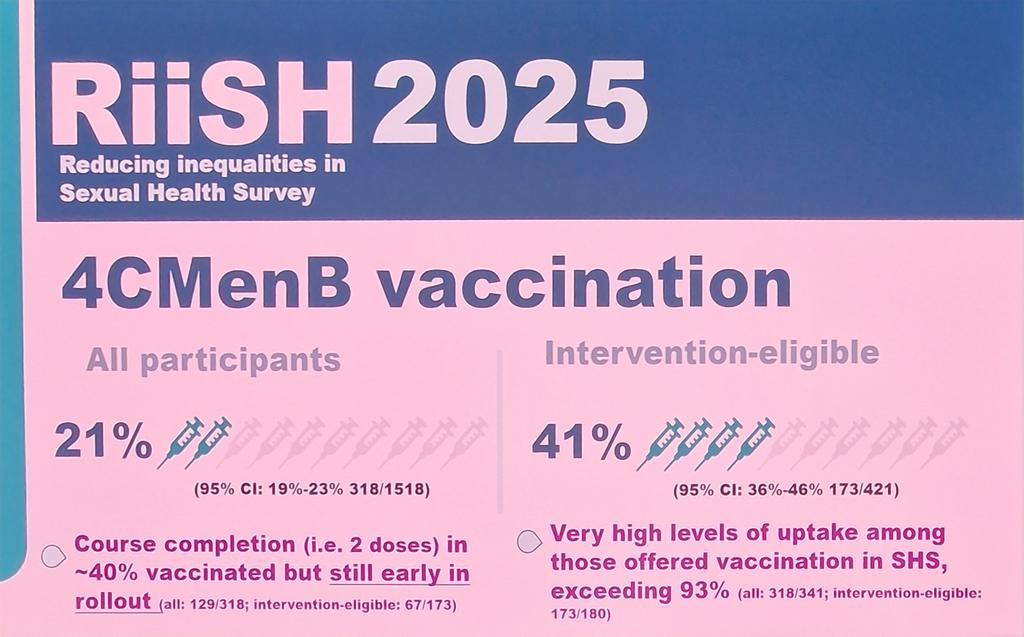
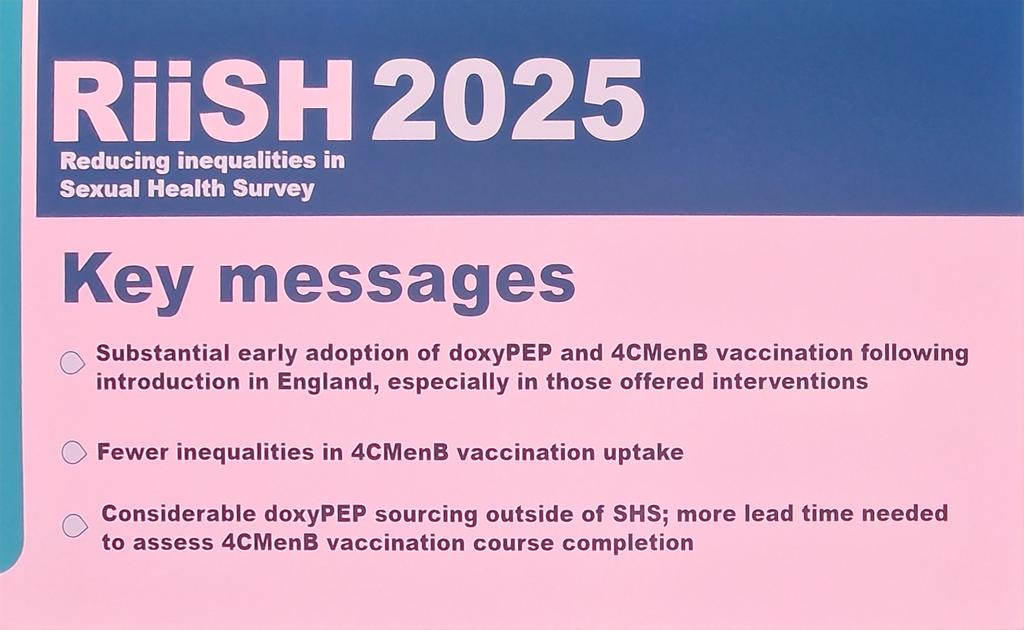
Hamish Mohammed from @UKHSA explores the early uptake of DoxyPEP & the 4CMenB vaccine among a gender-diverse population who have sex with men. #BHIVABASHH26
Is it time that we review the HIV prevalence banding that guides local testing recommendations?
Tamara Djuretic from @UKHSA proposes these key considerations..
#BHIVABASHH26
Martyn Wood explores the impact of the introduction of doxyPEP on gonorrhoea susceptibility.
- Ciprofloxacin and tetracycline resistance increased after the introduction of doxyPEP
- No differences by gender or sexuality
- No differences by anatomical site
- Pre-doxyPEP levels lower than national average, post-doxyPEP levels in line with national average
- No conclusions can yet be drawn from this....#BHIVABASHH26
In the oral session 1 Nigel Field from @ucl explores the insights from the 2024 Natsal data for HIV and chlamydia testing from 2010-2024.
Although the data are embargoed for SoMe sharing, we can conclude...👇🏾#BHIVABASHH26
Powerful session from Grace Sumner at #BHIVABASHH26 on the future of inclusion
• “STIs and BBVs don’t discriminate”
• Who is not in the room and why?
• Guidelines don’t always reflect lived realities.
• Let communities lead, not just be included.
Community-led knowledge is still too often excluded from research, policy, and service design.
If we’re serious about equity, we need to be willing to have uncomfortable conversations, challenge systems, and shift power, not just improve access.
Really thoughtful session from Tom Witney at #BHIVABASHH26 on the future of HIV stigma.
Moving beyond stigma as just individual attitudes, this focused on how it is shaped through relationships, intimacy, and wider social expectations.
• Evolving alongside changes in care, including remote and digital services
• Unevenly experienced across communities, reinforcing existing inequalities
• Closely linked to how healthcare systems are designed and delivered
As services evolve, there is a real risk that stigma is not reduced but reshaped, particularly for those already marginalised.
Reducing stigma isn’t just about better treatment, but about designing systems that recognise lived experience, power, and inequality.
Strong session from Professor Jeremy Horwood at #BHIVABASHH26 on ED opt-out testing for HIV, Hep B and Hep C.
• Earlier diagnosis, especially in underserved groups
• Cost-effective at scale
• High acceptability with minimal impact on ED workload
But testing is only the start : rapid, holistic, person-centred linkage to care and strong pathways beyond ED are what drive real impact.
Insights from Hamish Mohammed at #BHIVABASHH26
• STI trends shaped by social change, behaviour, and public health response
• Prevention evolving with doxycycline and vaccination strategies
• Equity and real-world impact remain key challenges
Now in the auditorium: Prof Alison Rodger of UCL, on hepatitis B and PrEP. HIV/HBV coinfection confers worse outcomes than single infection alone, and everyone with positive HBV surface antigen and detectable DNA should now be considered for treatment (EASL 2025) #BHIVABASHH26@BASHH_UK
Discussions on event-based PrEP in PLWHBV, and monitoring after stopping PrEP in those below HBV treatment thresholds - watch HBV DNA and LFTs #BHIVABASHH26@BASHH_UK
The University of Liverpool Drug Interactions Group presents The Liverpool Course: COVID-19. Join us on Zoom webinar on Wednesday 3rd December 2025 at 3PM GMT.
From the current status of COVID-19 therapies, and treating patients in intensive care and outpatient settings, to managing patients with chronic persistent or relapsing COVID-19.