Statewide advocacy group of community organizations and addiction recovery providers working to improve Measure 110 implementation policies and practices.
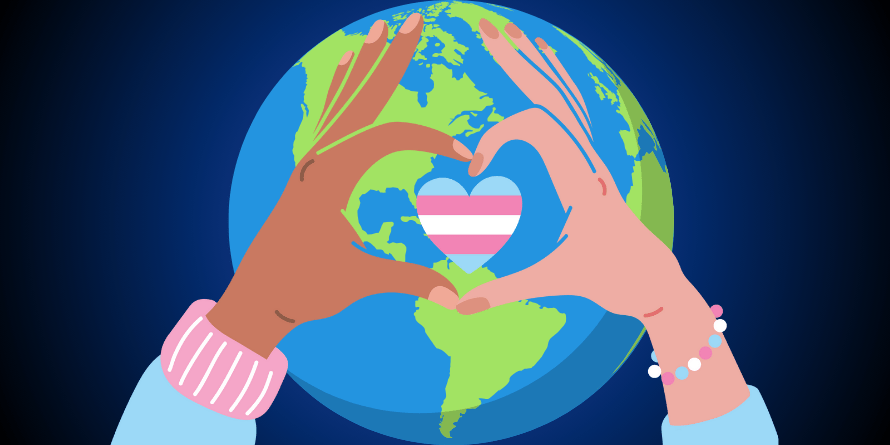
Happy #TransDayOfVisibility! Today we celebrate the resilience, strength, and contributions of transgender, non-binary, and gender non-conforming individuals. We recognize and honor the diverse experiences and identities within the LGBTQIA2S+ spectrum.
“When someone decides they’re ready to enter treatment, they’re ready right then. The longer they have to wait, the harder it becomes to get them into treatment. Here, we can get them evaluated, and with a peer mentor immediately,” said Crow-Martinez."
https://t.co/BnCZWxfbh8
They provide mentoring, help w/ basic needs & connect individuals w/ supports like housing & treatment in hopes of ending the cycle of recidivism. With BHRN funding, Fresh Out can now serve 600+ individuals annually. Learn more: https://t.co/FpkiOZngwU (4/4)
In celebration of #BlackHistoryMonth, we're highlighting the profound contributions of African American Behavioral Health Resource Network (BHRN) providers. Here is just one of the culturally-specific BHRN providers working every day to help their communities heal (1/5)
They decided to help make the path easier for others reentering into the community after incarceration, focusing on the African American population. Fresh Out provides culturally-specific mentoring and other recovery services to assist formerly incarcerated individuals. (3/4)
"With additional staff [from BHRN funding], BAFS has expanded treatment/recovery support services, housing assistance, direct outreach, and the ability to provide a peer mentor to every client throughout their journey with the organization." https://t.co/omC2m1HPkl #orleg#orpol
Registration for Safety and Justice Advocacy Day 2025 is now open! 🗣️
Join Partnership for Safety and Justice on Wednesday, April 16, near the Oregon State Capitol to advocate for policies that strengthen families and promote safer communities. 🌟
🔗 https://t.co/BmUmC8KmGX.
"...we need to shift the focus away from politicizing the issue of fentanyl use and instead refocus the conversation on the best way to handle those who become addicted." https://t.co/fp4SwxdzBy
"...we need to increase investments in harm reduction programs and double down on a public health approach to the overdose crisis to keep our neighborhoods, friends, and loved ones safe." https://t.co/ewzK7wz1ss
"...these schools don’t just provide academic continuity, peer support and needed services. They empower long-term recovery that supports these individuals and the whole community as a result, “'keeping students healthy and thriving and alive.'”
https://t.co/LSBY45n4Og
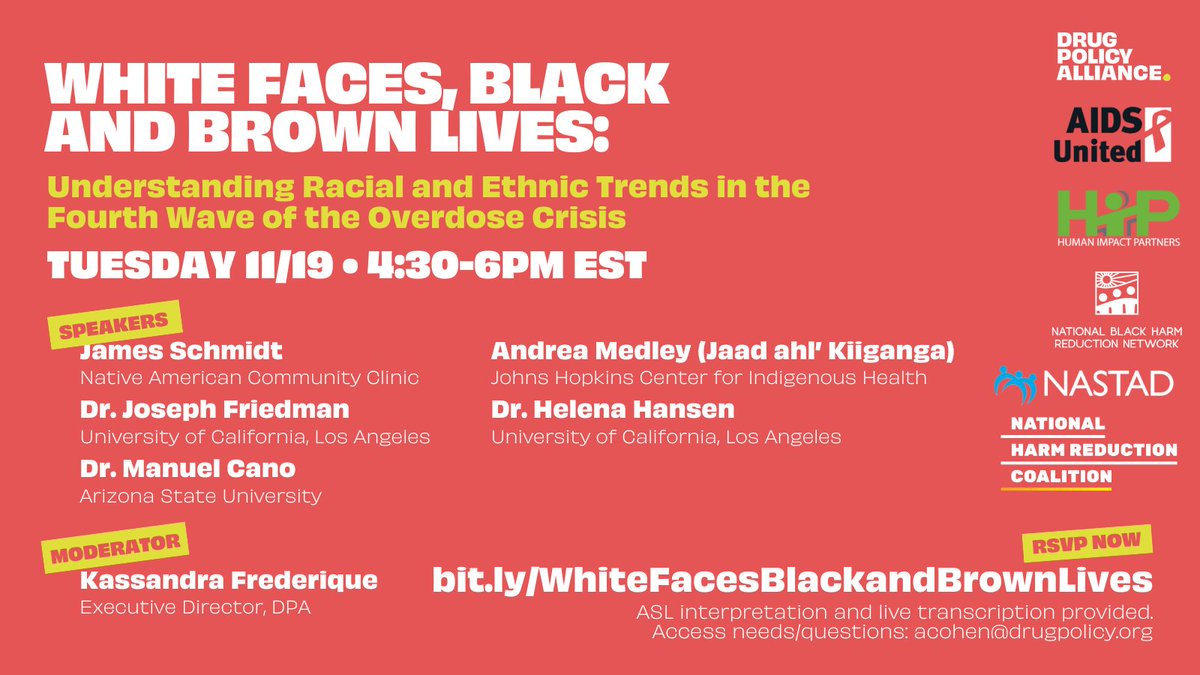
IN ONE MONTH - Nov 19th 4:30-6pm EST
Join us for a panel on the racial disparities in the fourth wave of the overdose crisis. We are thrilled to be co-hosting with such amazing organizations and featuring such brilliant speakers.
RSVP: https://t.co/CLPzm9pyJx
"The increase in overdose deaths wasn’t a result of the Oregon bill. [It was] the rapid spread of unregulated fentanyl during this same period."
Read more about the study and access the full study here: https://t.co/pS1DgT2CKt #orleg#orpol
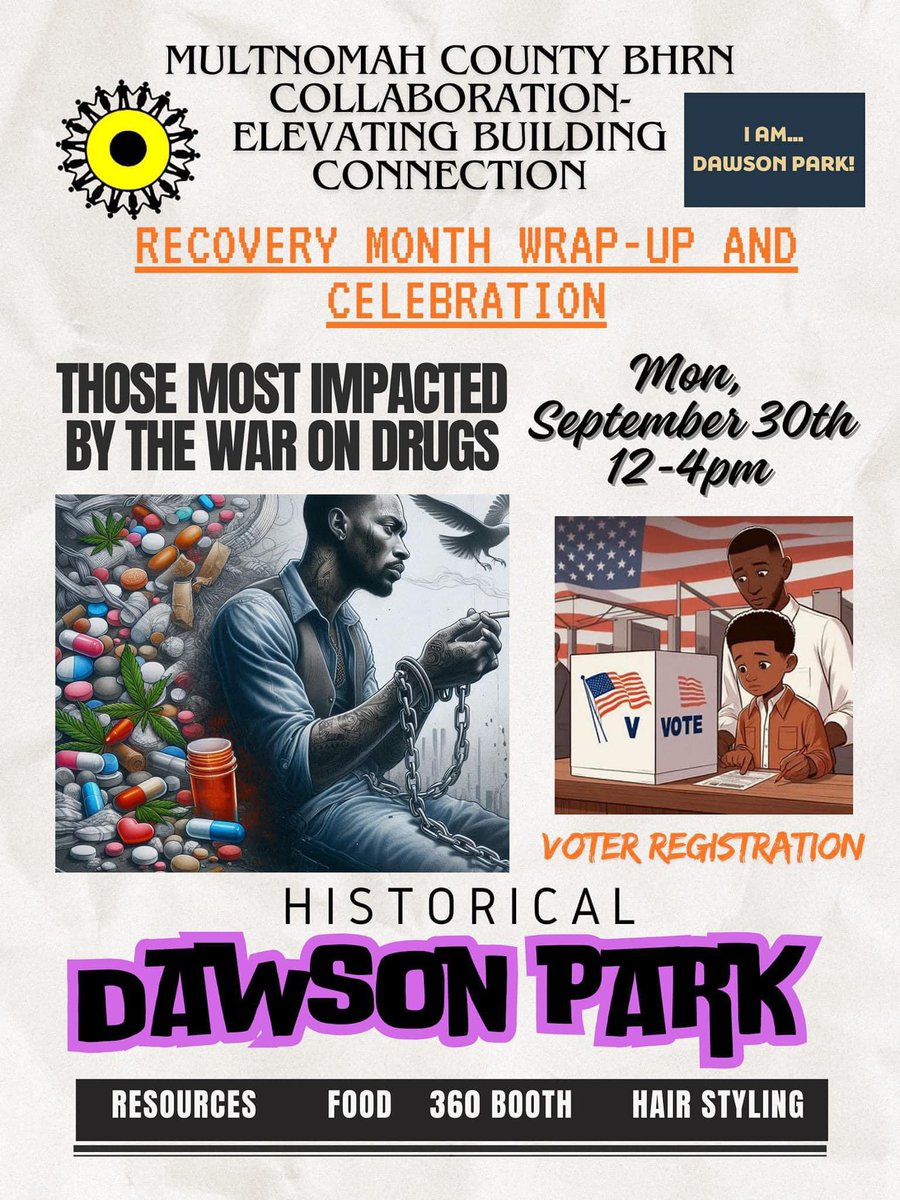
It was a beautiful ☀️🌳 day for a community event at Dawson Park!
The #Measure110 BHRN structure helps ensure that people struggling with addiction don’t fall through the cracks of the system, and gives providers more tools to save lives. #orleg#orpol
"Like any health issue, addiction care should be evidence-based, rooted in science, and met with compassion. We must never again settle for a system that uses stigma, shame, punishment and fear as the only way to access help." #orpol#orleg
https://t.co/q6rtQUI4aG
"It wasn’t until I encountered a local harm reduction group that my life took a turn.
[Harm reduction], coupled with stable medication for Opioid Use Disorder, allowed me to find stability and begin the slow, painful process of rebuilding my life."
https://t.co/4v5Hkp3rYa
"There was always a view that mental health was something that came after addiction, and caused mental health,” she says.
“But increasingly, studies show that mental health comes first, and that addiction is a response or symptom of other health issues.”
https://t.co/vZ2IQq31SX


![HJRAOregon's tweet photo. "The increase in overdose deaths wasn’t a result of the Oregon bill. [It was] the rapid spread of unregulated fentanyl during this same period."
Read more about the study and access the full study here: https://t.co/pS1DgT2CKt #orleg #orpol https://t.co/ytz80qBHhD](https://pbs.twimg.com/media/GZThwFeaIAAvQAt.jpg)