Human-Machine Communication is OA and a peer-reviewed journal. @autumnedwards is the Editor-in-Chief. Leopoldina Fortunati is the Founding Feature Editor.
Communicative machines are epistemic provocateurs. Etzrodt & Edwards open HMC Vol. 12, arguing that #HMC is built to sit with the knowledge disruptions machines create—not resolve them. https://t.co/MDEKyeFLV9
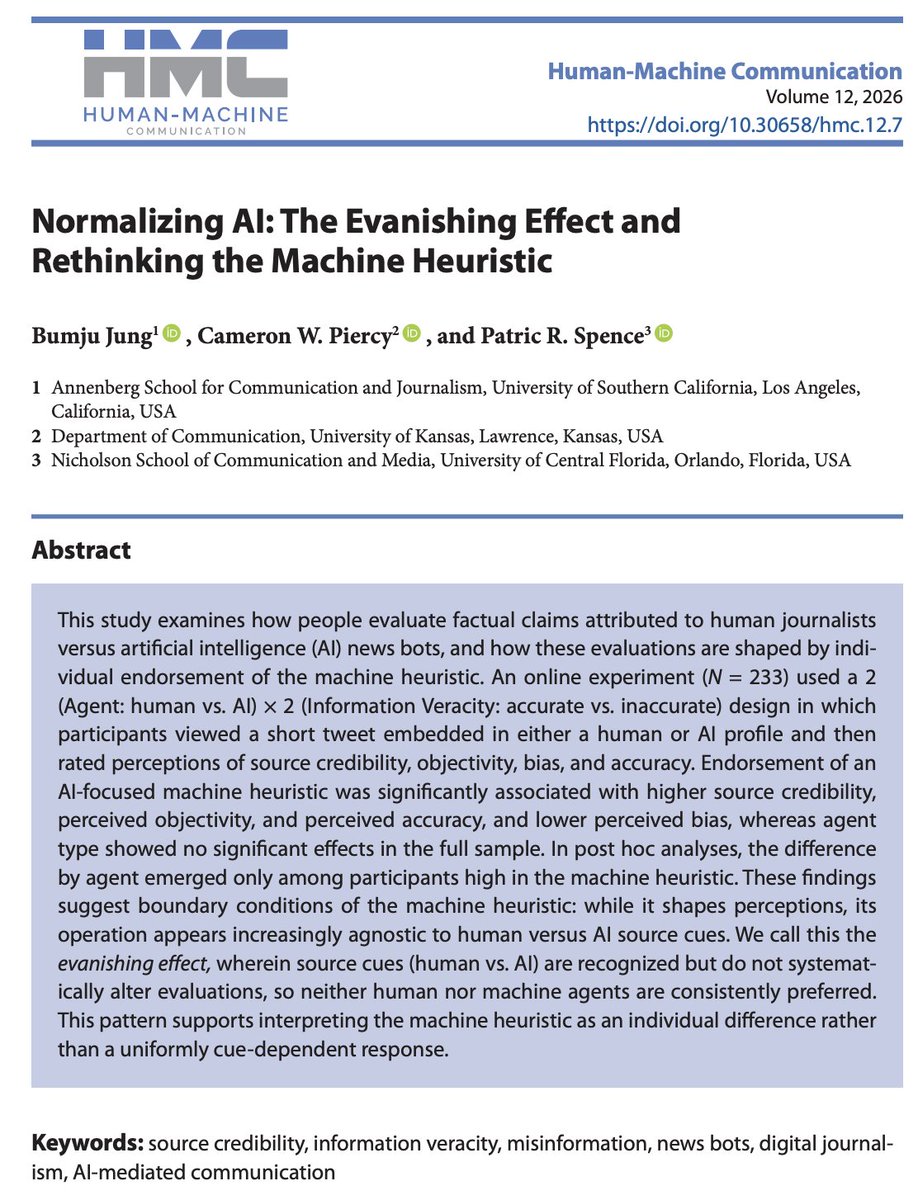
Jung et al. find the evanishing effect — source cues (human vs. AI) are recognized but don't shift credibility evaluations. The machine heuristic is an individual difference, not a cue-dependent reflex. Read it: https://t.co/W0m2AfQsFz #HMC
New in @HMCjournal (Vol. 12)! 🤖📰 Jung, Piercy, & Spence ask: does it matter if your news source is human or AI? Spoiler: less than you'd think. "Normalizing AI: The Evanishing Effect and Rethinking the Machine Heuristic" #HMC#HumanMachineCommunication
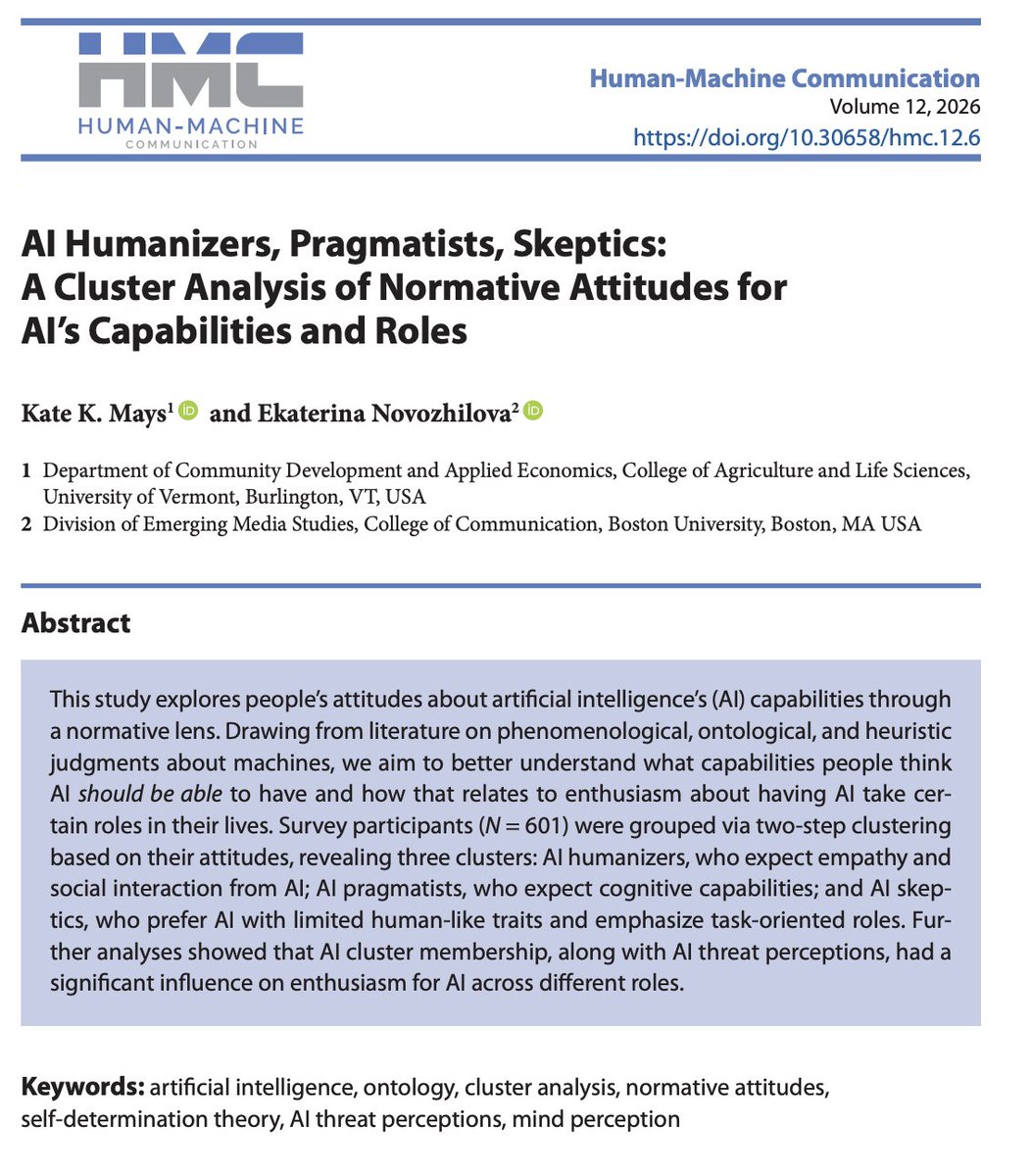
Using survey data and clustering, Mays and Novozhilova show how humanizers, pragmatists, and skeptics differ in expectations for empathy, cognition, and task roles, with implications for AI adoption and threat perceptions across everyday contexts.
https://t.co/gwQzA51vos
What do people think AI should be capable of and what roles it should play? In “AI Humanizers, Pragmatists, Skeptics: A Cluster Analysis of Normative Attitudes for AI’s Capabilities and Roles,” Kate Mays and Ekaterina Novozhilova map three distinct public orientations toward AI.
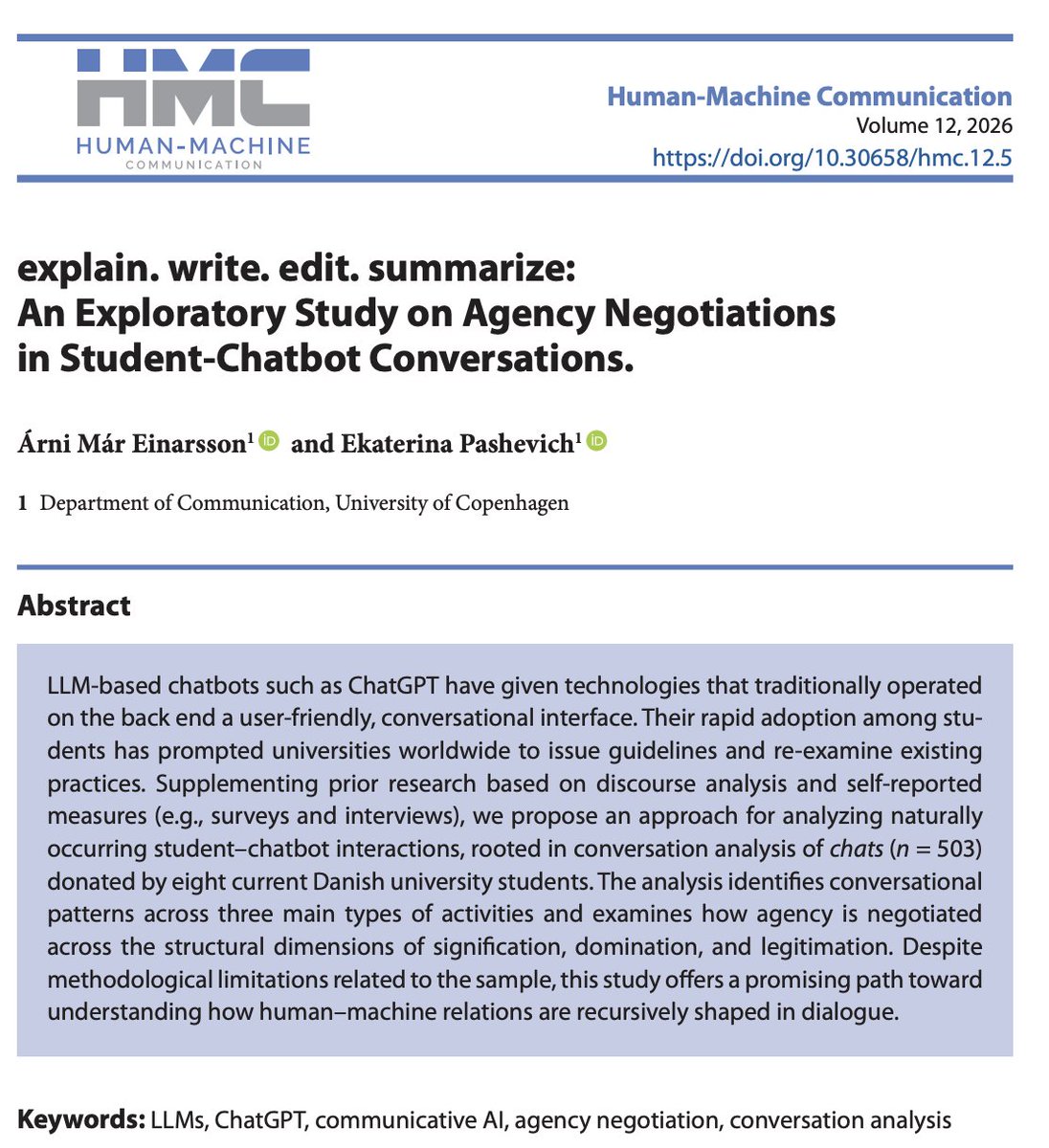
New in Human-Machine Communication: Árni Már Einarsson & Ekaterina Pashevich examine naturally occurring student–chatbot interactions, showing how human–AI relations are communicatively constructed through patterns of activity and agency negotiation.
https://t.co/CEaD1afcXl
Mollen and Kannengießer argue that AI ethics must be studied through socio-technical infrastructures and everyday practices shaping generative AI across developers, users, and global production chains. Check it out. #hmc
New article: “The Material Condition: A Practice Theory-Oriented Infrastructural Turn to the Ethics of Human-AI Communication” by Anne Mollen and Sigrid Kannengießer.
Read it here: https://t.co/qoZP7onjoR
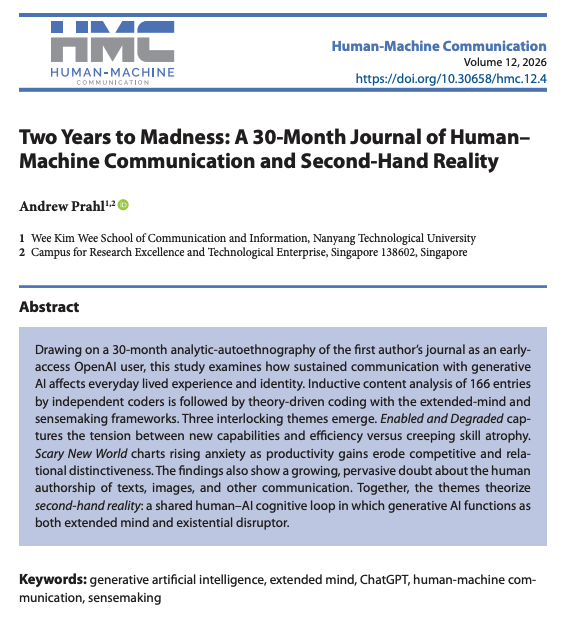
New in Human–Machine Communication: Andrew Prahl’s “Two Years to Madness: A 30-Month Journal of Human–Machine Communication and Second-Hand Reality” explores how sustained engagement with generative AI reshapes identity, cognition, and everyday life. #hmc#ai
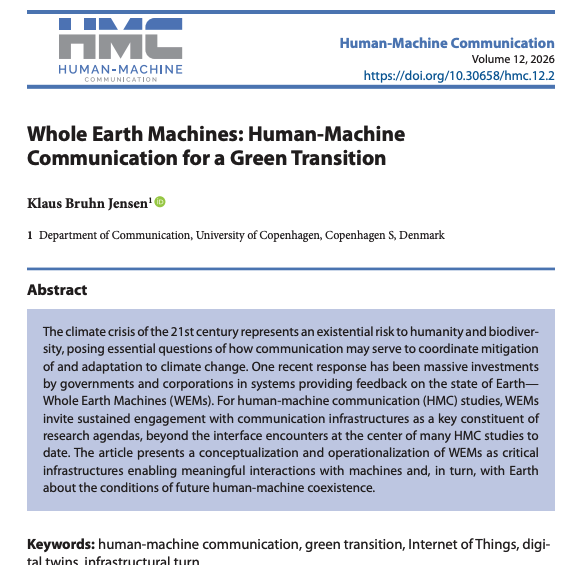
New in Volume 12 🌍📘
Klaus Bruhn Jensen’s "Whole Earth Machines: Human-Machine Communication for a Green Transition" examines how communication systems and Whole Earth Machines inform climate action and human–machine coexistence.
https://t.co/iTtXeeMBjf
Excited to share Volume 12 of the Human-Machine Communication Journal is now live 🎉! Explore all the articles at https://t.co/O3CUWmQlHU — we’ll be highlighting these amazing pieces over the next few weeks. Stay tuned! #hmc
🎉 Exciting news — Human–Machine Communication (HMC) is now accepting submissions for the July issue. Deadline: January 2. Huge thanks to our dedicated editorial board for strengthening our community. Check out the submission page and guidelines here: https://t.co/oWYToPIKkg
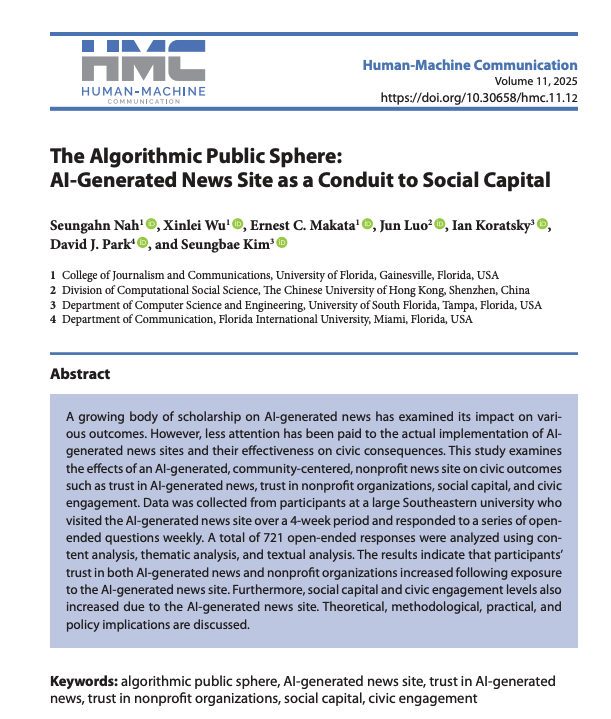
Across a 4-week field study, exposure to an AI-generated, community-centered nonprofit news site increased trust in AI news, trust in nonprofits, social capital, and civic engagement. A strong contribution to emerging Human–Machine Communication scholarship.
New research by Seungahn Nah et al., “The Algorithmic Public Sphere: AI-Generated News Site as a Conduit to Social Capital,” examines how AI news platforms shape trust, social capital, and civic engagement.
https://t.co/u5BIfdVUVQ
New publication alert. Leopolidina Fortunati, Autumn Edwards, WeiMing Ye, Anna Maria Manganelli, Chad Edwards, Soledad Caballero, Lusike Mukhongo, and Giovanni Ferrin examine global student perspectives in Making Sense of the Role of ChatGPT in Education. https://t.co/uMJAxGlKTz