A super-complaint about alleged systemic failings in the policing of image-based abuse raised by @centreWJ, @NotYourPorn and @LeighDay_Law has been assessed as eligible for investigation. We will jointly investigate this with @HMICFRS and @policeconduct.
https://t.co/dJp5HXS3O1
Ahead of the next cycle of our Policing Performance System, we’ll be looking at the different levels.
Level One is the default position.
Forces manage any improvement needed locally and can still access support.
It does not mean there are no areas to improve.
📢 Call for poster presentations
We’re looking for posters showcasing research from PhD students or early career researchers for the HMICFRS Research Conference 2027 on 19 January.
Applications for those wanting to present posters close on Monday 14 December.
We have closed our accelerated cause of concern for @SuffolkPolice.
The constabulary has cleared a backlog of more than 500 Domestic Violence Disclosure Scheme applications and improved how it manages risk and safeguards vulnerable people.
⤵️ Read more:
https://t.co/6hS0SuTtys
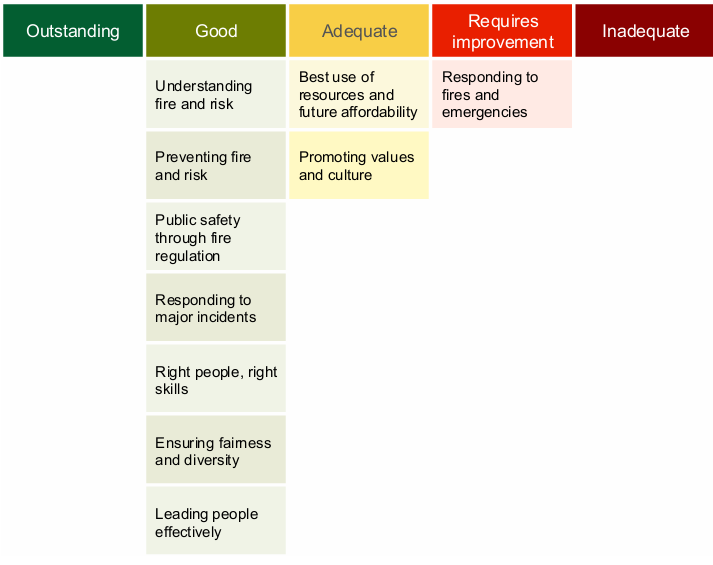
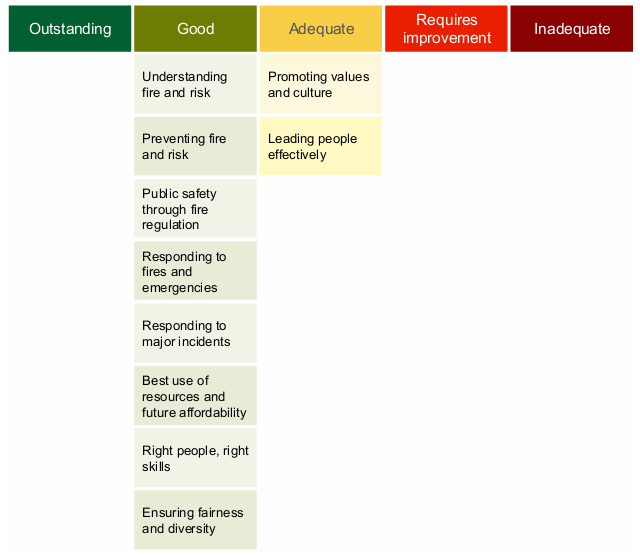
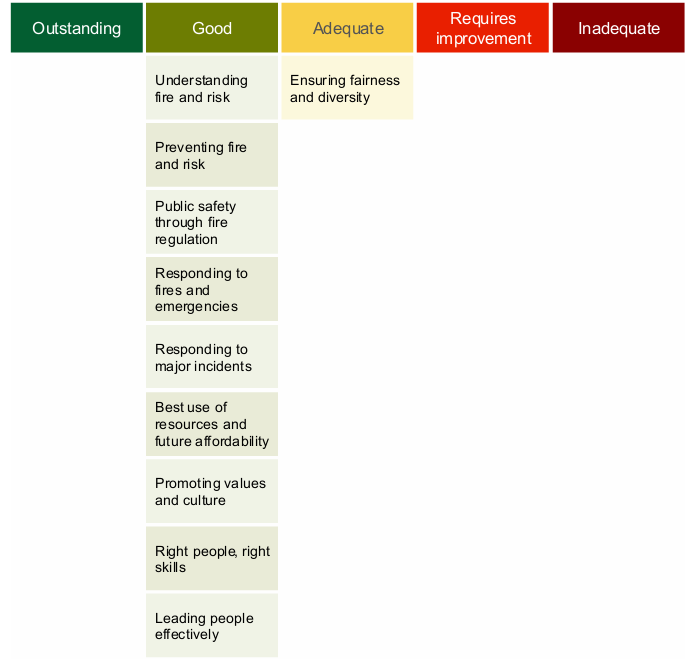
Our latest inspection for Northamptonshire Fire and Rescue Service has been published today.
We found the service has made considerable progress in its performance, including substantial improvements in its prevention work.
We’ve published our latest inspection report for @nottsfire.
We found the service has made progress since our last inspection, particularly in productivity and prevention. But, it needs to make sure all leaders consistently promote the service’s values.
@StaffsFire has made progress since our last inspection.
We found the service has made improvements in its prevention and protection work. But, to achieve a consistently good service it still needs to improve in some areas.
We’re also seeing change following inspection.
Out of 19 forces where inspection activity is complete:
🔹 74% introduced new governance
🔹 58% introduced new processes
🔹 47% increased or introduced resources
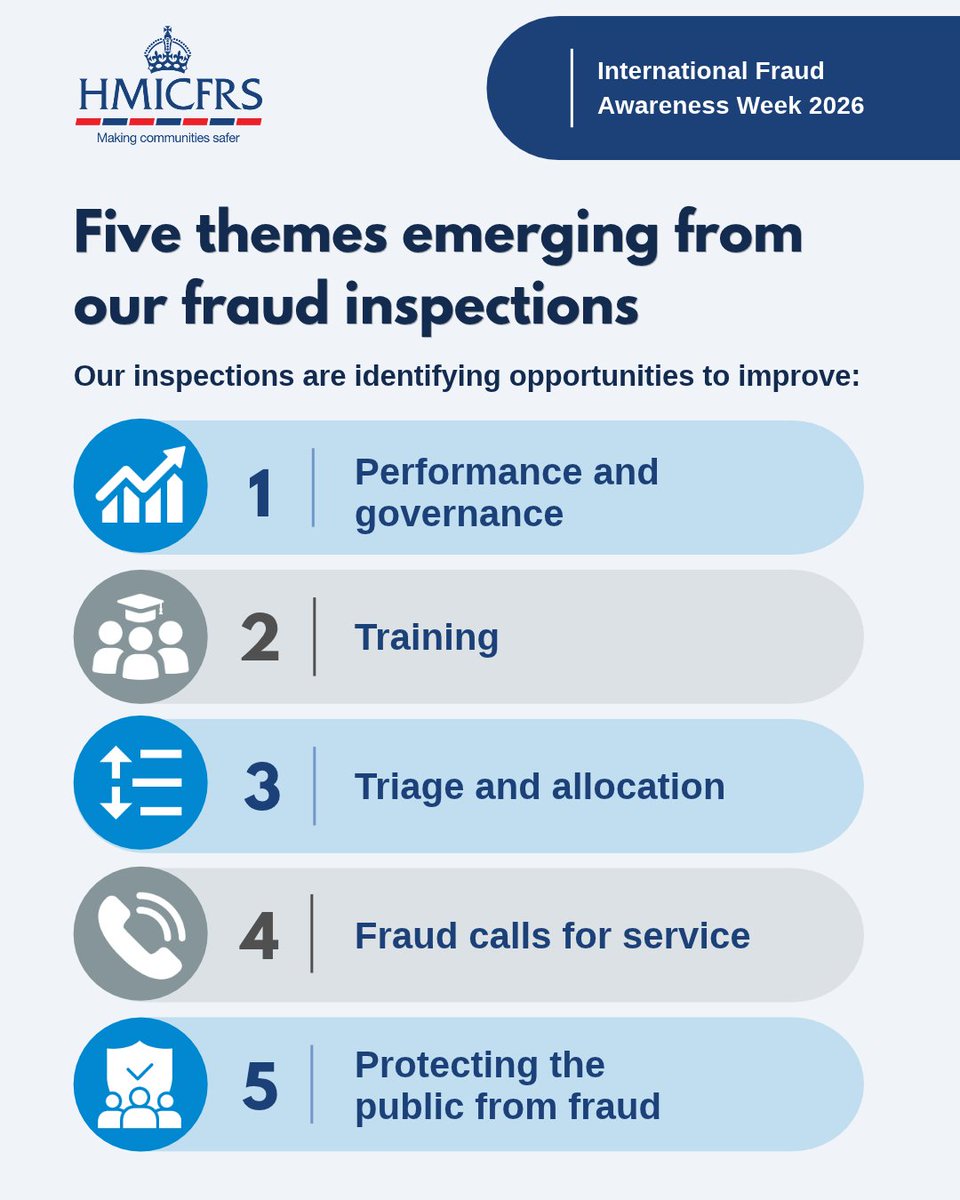
What are our PEEL inspections telling us about the police response to fraud?
Recurring themes include:
🔹 governance
🔹 training
🔹 triage and allocation
🔹 fraud calls for service
🔹 protecting the public
We’re sharing our emerging insight for #InternationalFraudAwarenessWeek
MYTH: Retrospective facial recognition identifies a suspect.
REALITY: It suggests a potential match. Further checks are needed.
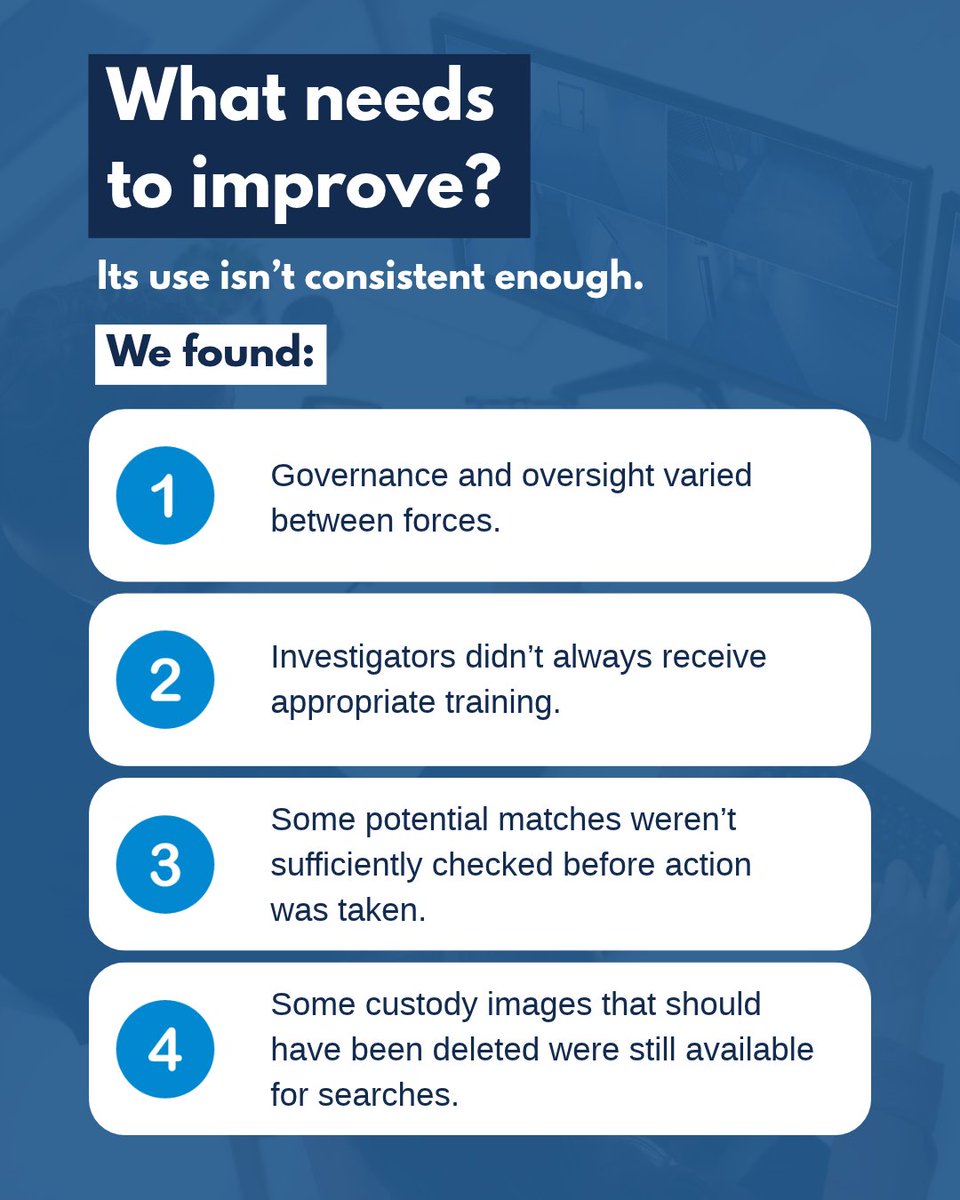
Our recent inspection found investigators didn’t always understand this distinction, highlighting the need for better guidance and training.
We’ve made 16 recommendations to strengthen the police use of retrospective facial recognition.
They include better training, stronger national standards, a statutory code of practice and independent oversight.
Read our recommendations: https://t.co/KCv4Ka9Tc5
@bedspolice However, we also found positive leadership, effective safeguarding arrangements and sound scrutiny of the use of police powers.
⤵️ Read the full report:
https://t.co/CtxMklm4Oe
In our latest inspection of @bedspolice, we found that although the force is operating in a challenging environment, it needs to urgently improve how it investigates crime.
We have issued a cause of concern relating to ineffective governance and oversight of investigations.
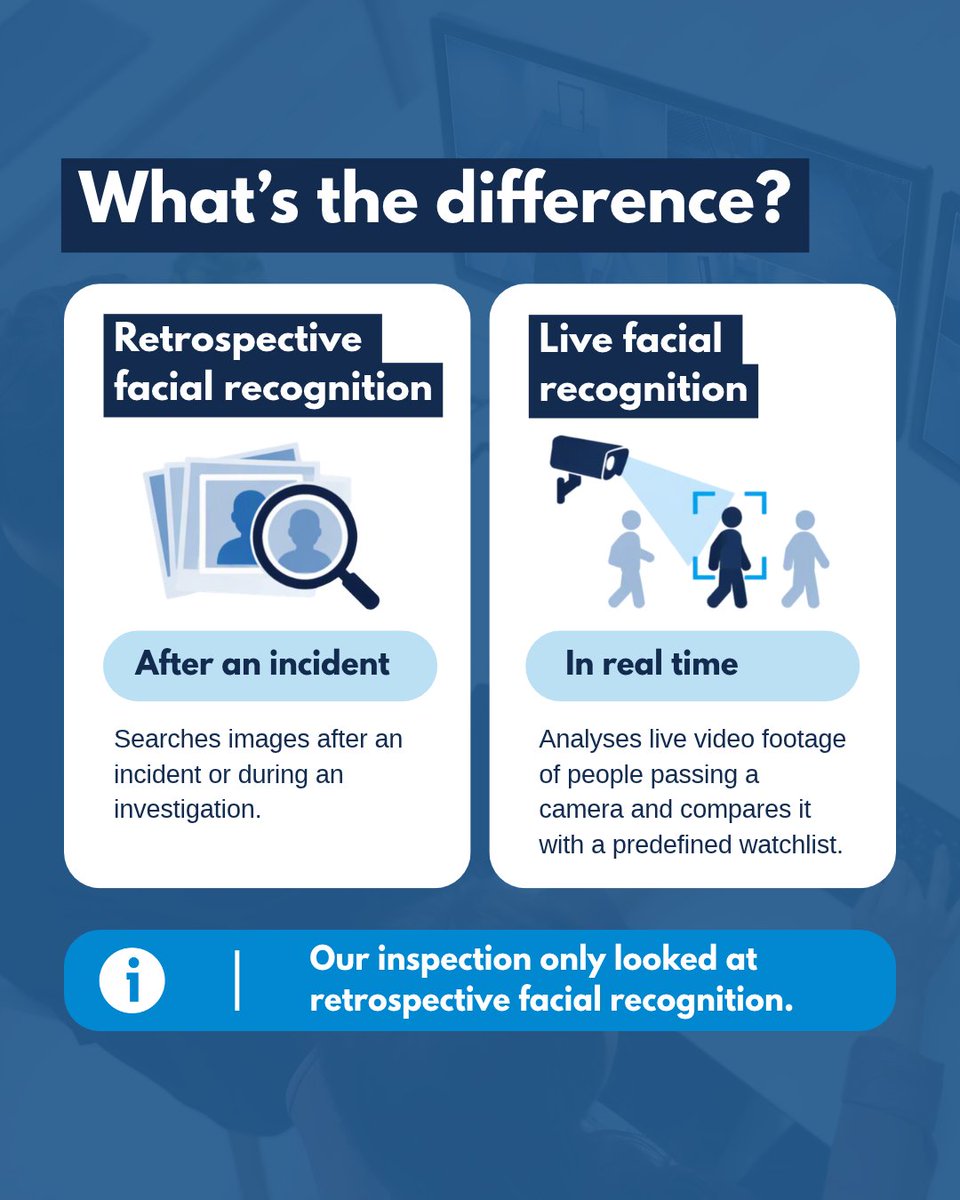
What is retrospective facial recognition and how is it different from live facial recognition?
Our new inspection looked at how police use the technology, its investigative benefits and where stronger safeguards are needed.
See our explainer 👇