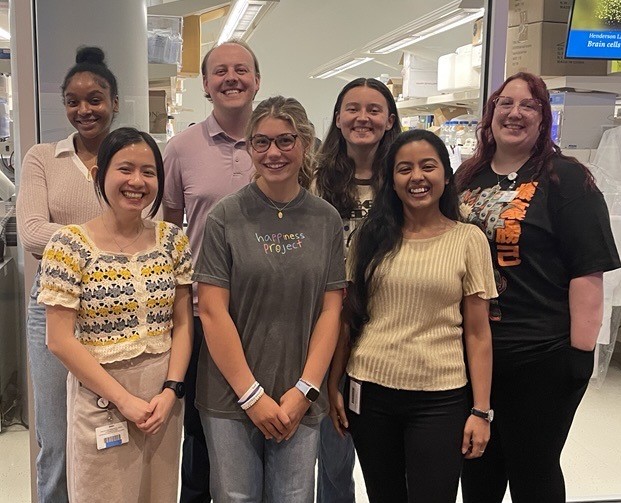
Up next in our Lab Member Spotlight series is @yaksbmb
Fun fact: With Ben, you can never quite tell whether he’s serious, joking, or just keeping you guessing! :D
We are kicking off a new initiative this month: Lab Member Spotlight. We will be highlighting a different member each month to showcase our talented team in the Henderson Lab! Our first featured lab member is Kevin Kurgat! Thank you for all of your hard work, Kevin!
We’re hiring a Postdoc in the Henderson Lab @ Van Andel Institute!
Join our team studying neurodegenerative disease across scales (molecular → circuits). Flexible, high-impact projects and strong mentorship.
Apply: https://t.co/QJFXnmLiIy
Please share!
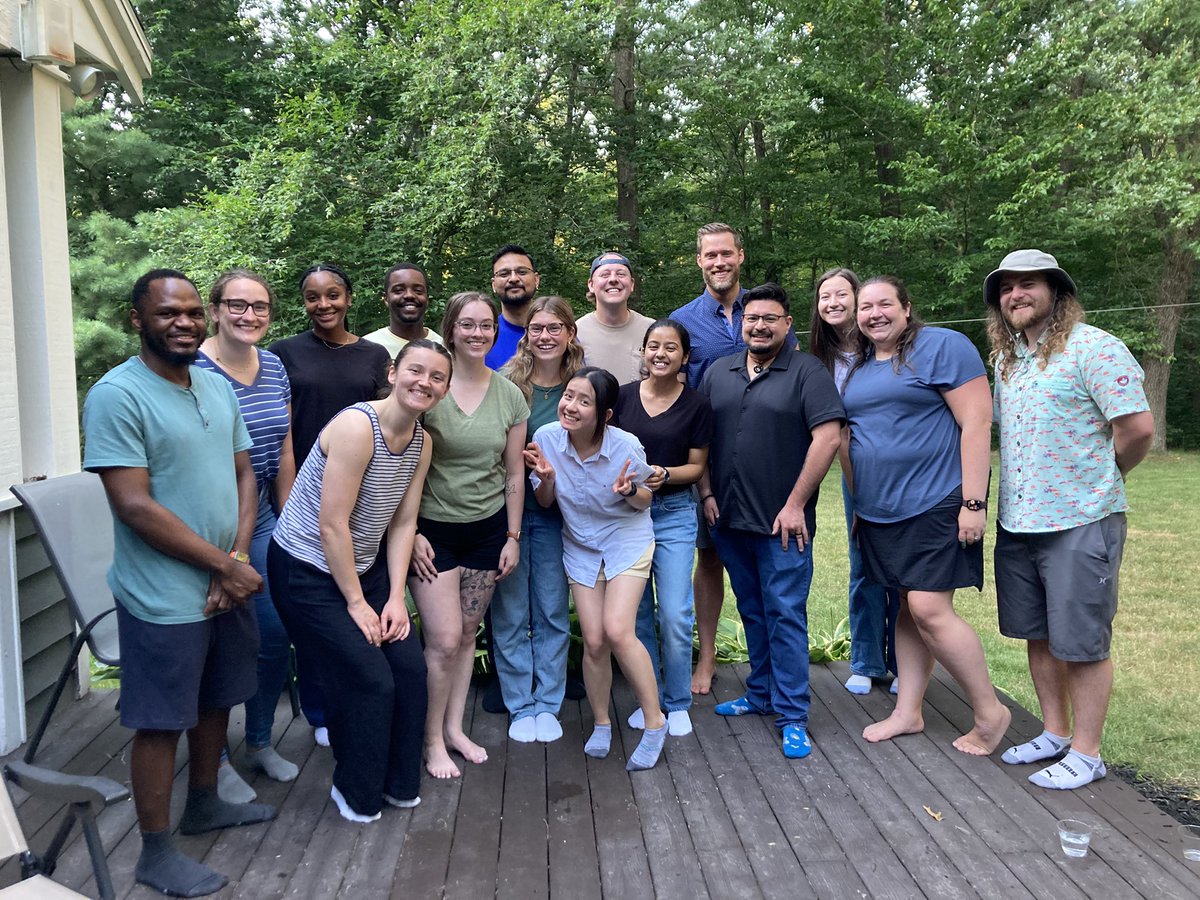
It’s been a busy year so far in the Henderson lab! We have several new lab members to welcome—Anika and Noah as new graduate students, Aastha as a new postdoc, Sydney as a new technician, and Giang, Kelsey, and @Abbeyzuzelski who are joining us as summer fellows! Lab is bustling!
Bridging network and cellular biology took a large team including co-first authors @namanvatsa, Kate Brynildsen, Tommy Goralski, and Kevin Kurgat and long-time collaborator @DaniSBassett!
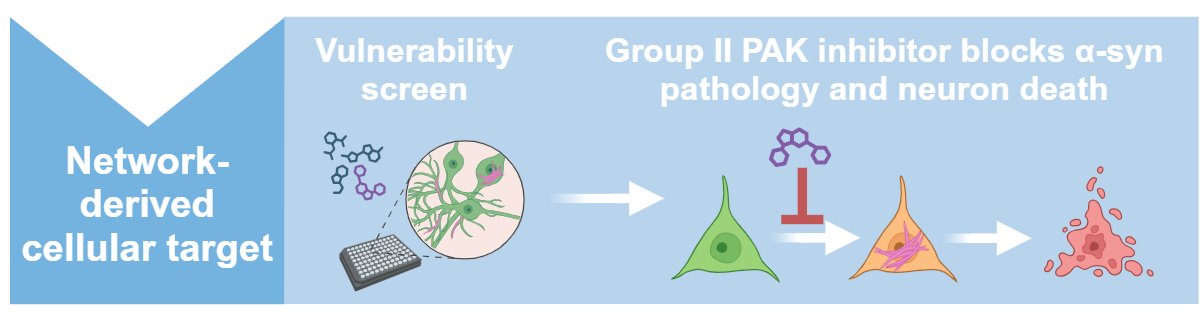
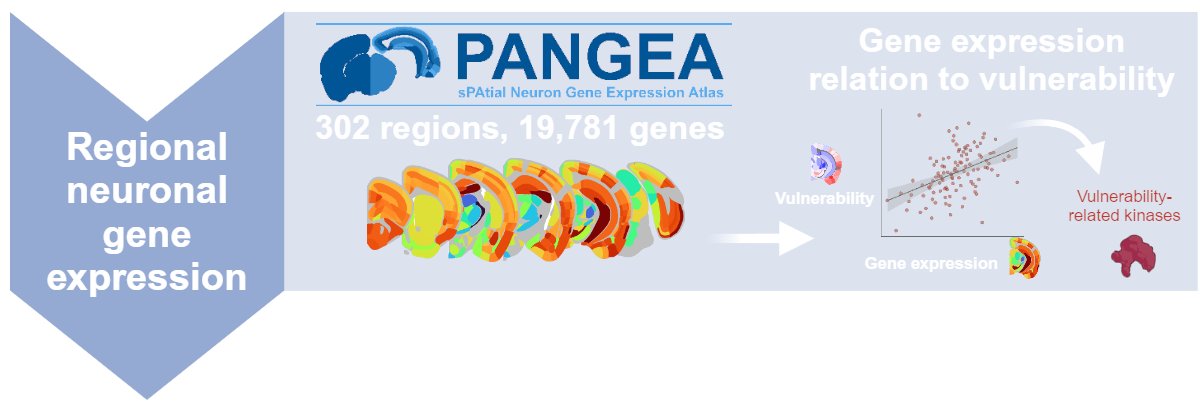
We then used these data to gain cellular insight by inhibiting 12 kinases associated with vulnerability. Among these, inhibition of group II PAKs was highly neuroprotective in a neuron model of α-synucleinopathy. Bridge from pathology patterns to molecular targets complete!
We developed a brain-wide neuron gene expression atlas (PANGEA). The atlas can be browsed here: https://t.co/mnREYV2bhK. Surprisingly, resilience is associated with mitochondrial pathways!
Can new targets for Parkinson’s disease be identified by examining pathology patterns in the brain? We are very excited to share our latest preprint where we explore exactly that question.
https://t.co/5KtEXpJZDj
We then compared these pathology patterns to the brain’s connectome, predicting where pathology would go. Some regions should have developed pathology but did not. What underlies this resilience?
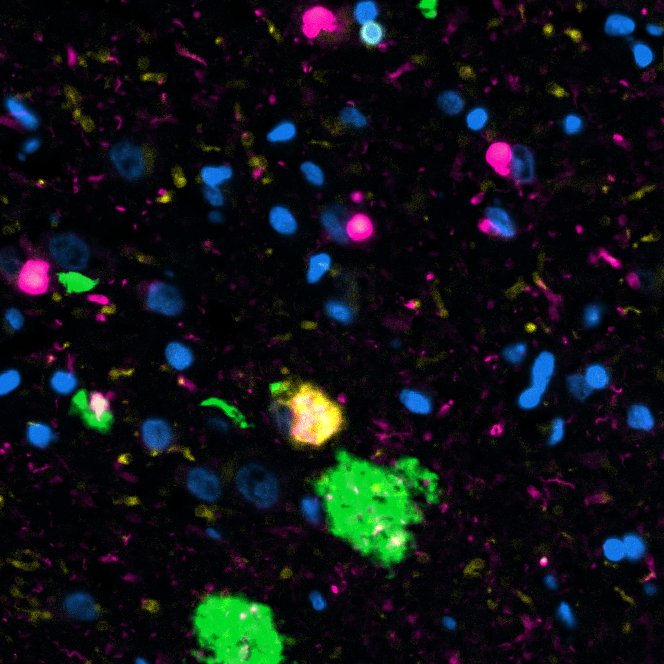
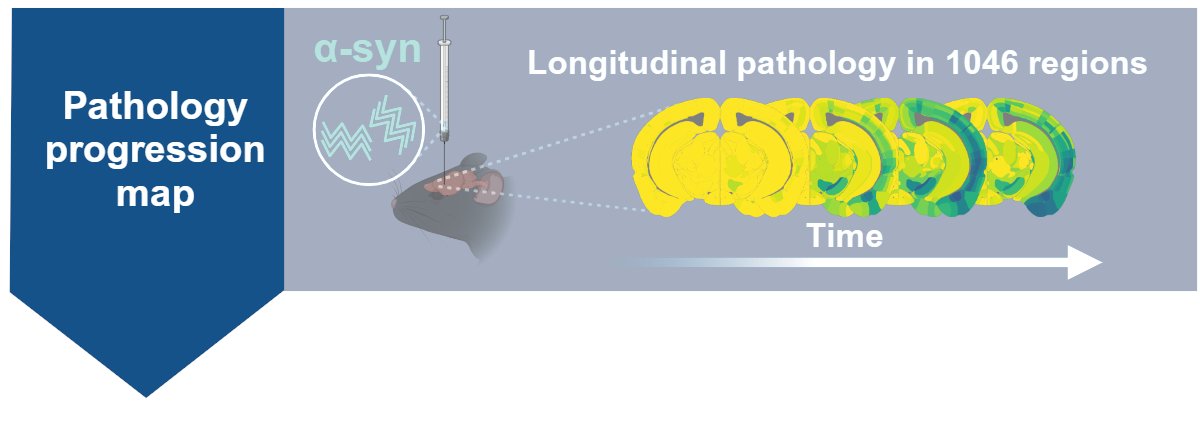
We first needed data on the longitudinal progression of α-synuclein pathology. We captured this in over 1000 brain regions and 8 timepoints in a murine model.