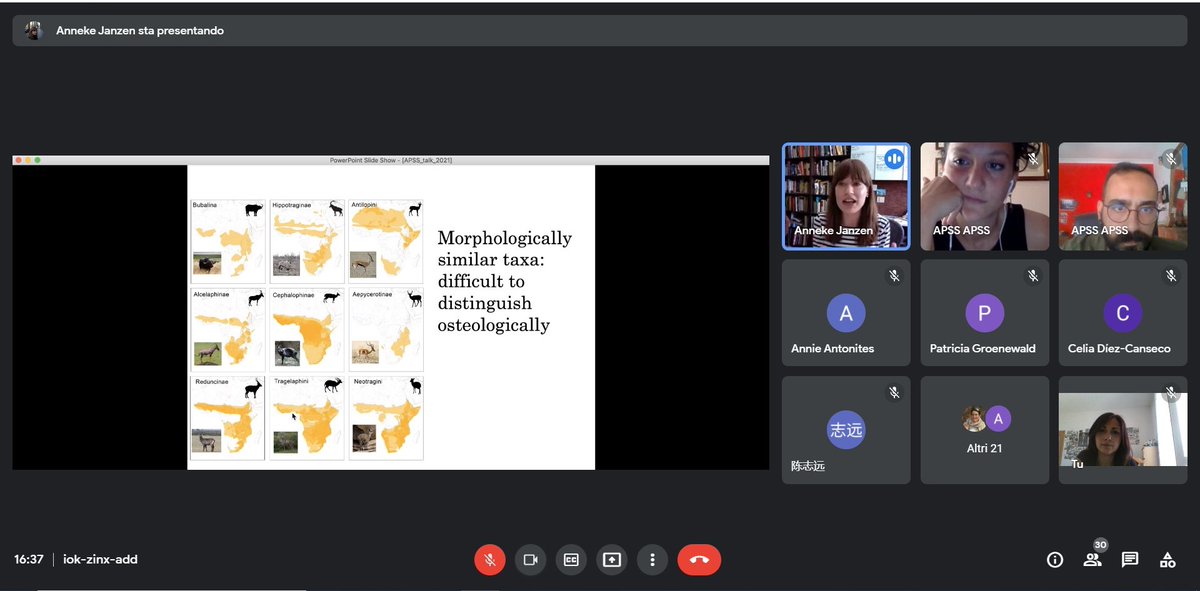
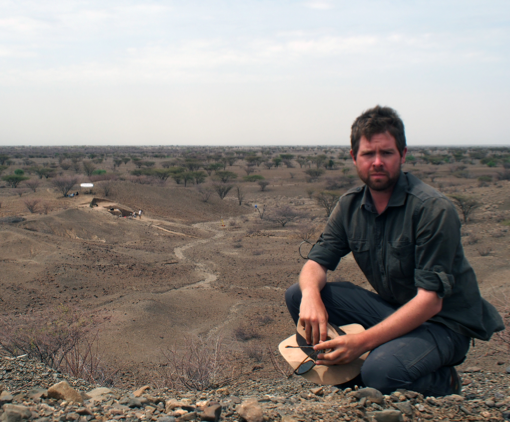
Thrilled to announce our 3rd guest:
Dr. Anneke Janzen - University of Tennessee, Knoxville on:
"Methodologies for exploring ancient African pastoralism: ZooMs and stable isotope analysis".
Thursday, June 17th at 4 pm (CEST).
Register mailing to: [email protected]!!
Second guest of APSS, who will speak about Pleistocene archaeology :
Dr. Alice Leplongeon - FWO fellow (KULeuven) on:
“Late Pleistocene lithic variability in Eastern and North-Eastern Africa”
Next Wednesday (19/05) at 3 pm CEST.
To register mail to: [email protected]
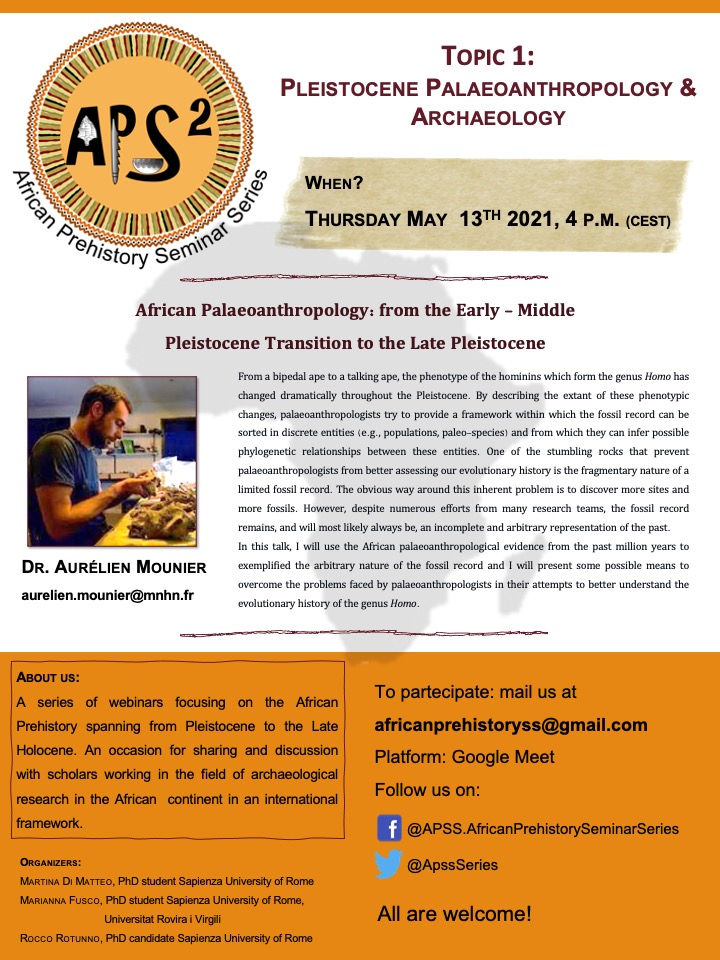
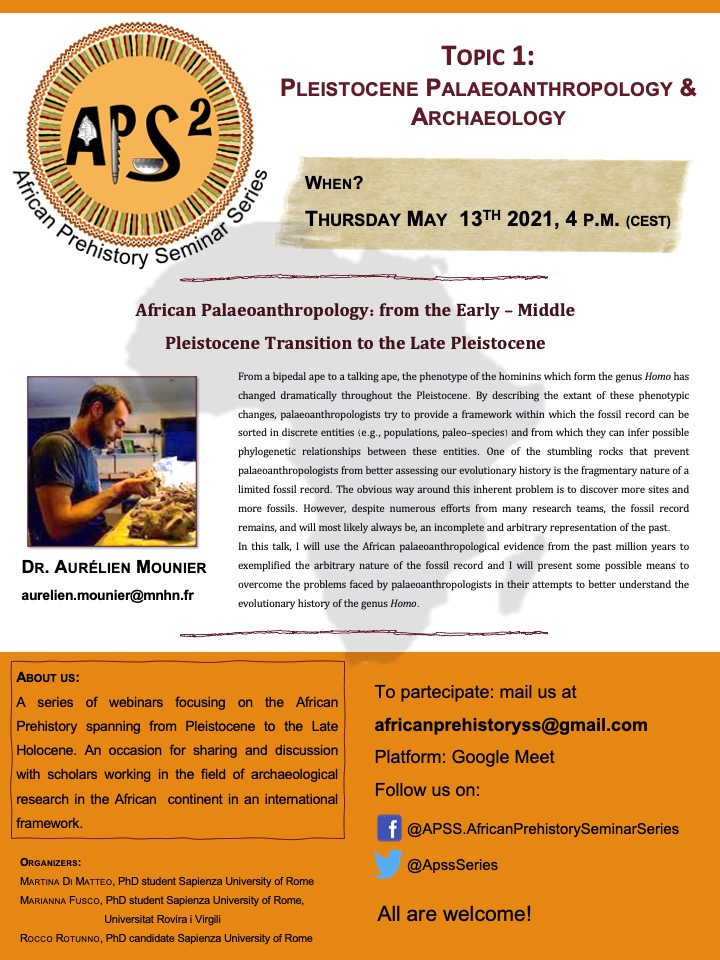
First guest of APSS, who will speak about the history of genus Homo:
Dr. Aurélien Mounier - CNRS (Musée de l’Homme) on:
“From the Early – Middle Pleistocene Transtion to the Late Pleistocene”
Next Thursday (13/05) at 4 pm CEST.
To register mail to: [email protected]
Dates out!!!
Our first two webinars on the amazing African Prehistory: Dr. Alice and Dr. Aurélien will speak about Pleistocene archaeology and palaeoanthropology!
To participate send us an e-mail: [email protected]
looking forward to seeing you!!
StAy TuneD
The next Rainforest Redux talk will be held on the 29/07 at 5pm CET. Dr Nick Taylor will tackle the Lupemban Technocomplex: is it real? what is its actual spread? Can we link it to Africa's rainforests? Check pinned tweet for seminar subscription details, and please share!
Our new paper about coatings from #Yabelo rock-shelter paintings "Geomicrobial Investigations of Colored Outer Coatings from an #Ethiopian#RockArt Gallery" @MDPIOpenAccess https://t.co/8Xn7DWLlJK
Congrats to the Drimolen team, great discovery and extremely well dated! Now to explain to my human evolution course that what I said last week about Homo/Australopithecus habilis/rudolfensis is wrong... https://t.co/PBwLjOrMvs
Some of the extraordinary #beads, #pigments and worked #bones from Panga ya Saidi, #Kenya Thanks to Francesco d'Errico and colleagues for some excellent analyses of a key #MSA, #LSA and #IronAge sequence of Eastern Africa!
https://t.co/tiaCnuaWbU
“~6%-7% of the genomes of West Africans is archaic in origin. But this isn’t Neanderthal or Denisovan, instead the additional ancestry came from an archaic population for which we don’t currently have a genome.” https://t.co/ZIenjgGv3Y via @ConversationUK