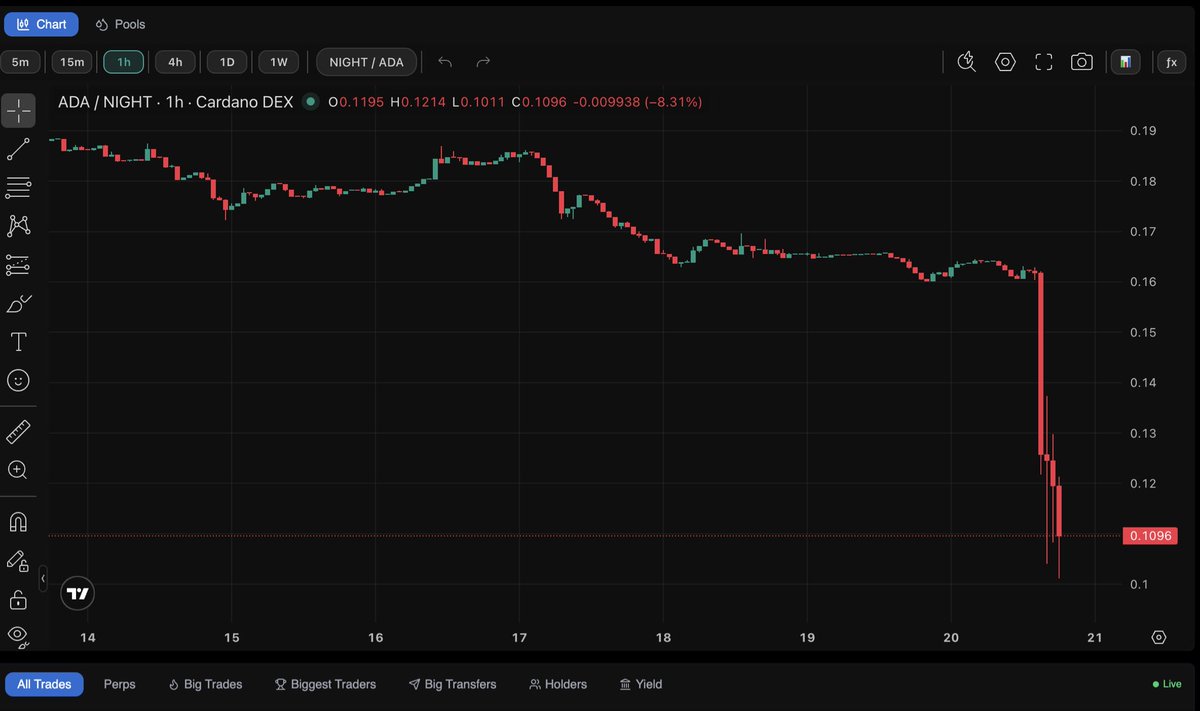
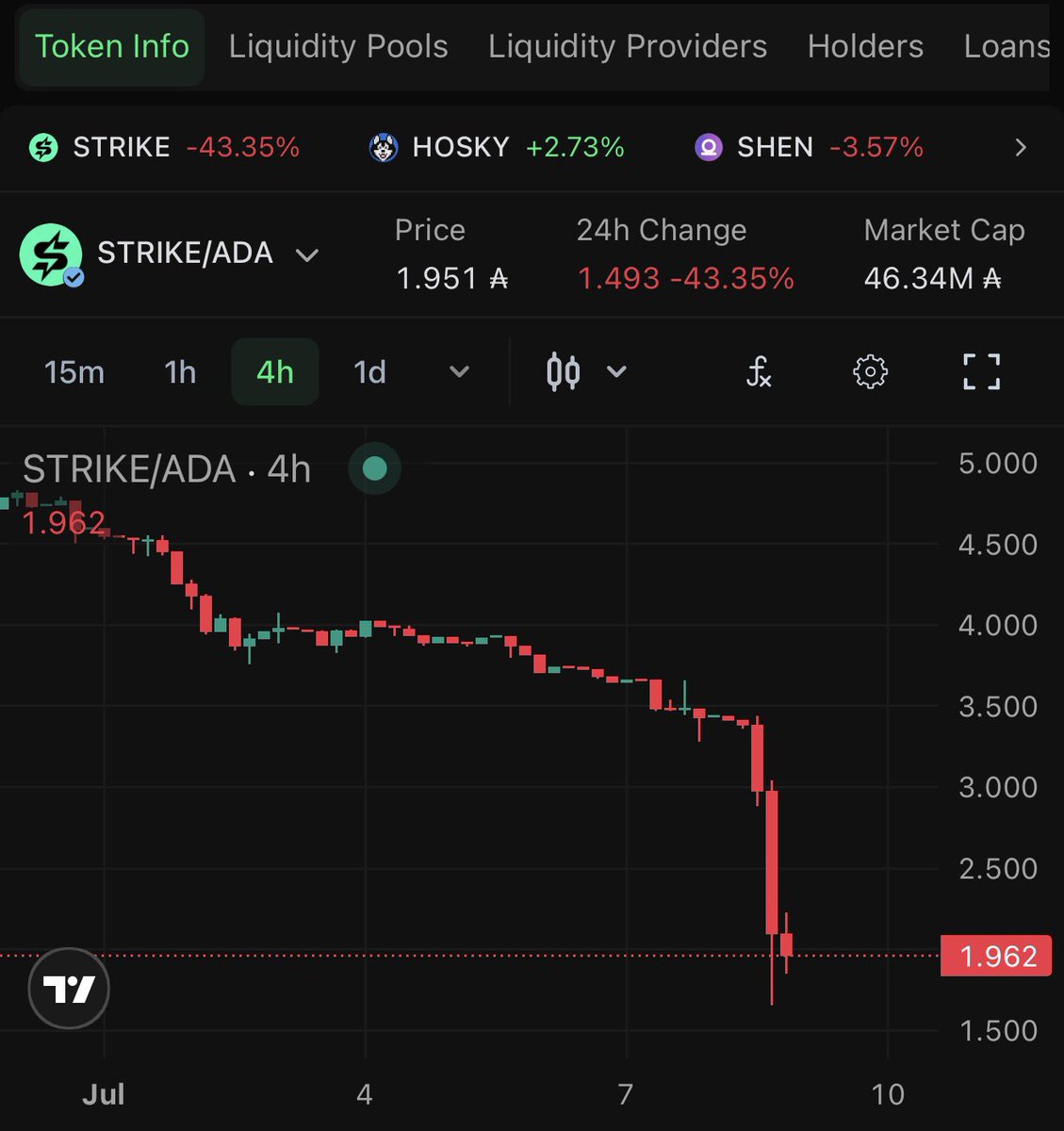
$NIGHT is down 35%+ in the last 24 hours after a whale began unloading millions of tokens.
This wasn’t just any wallet. It was once a top 20 $NIGHT holder.
One oversized seller can wreck the chart in the short term.
Watch the wallet’s remaining balance at: https://t.co/KkZsxPyvjr
@cwpaulm@alphagrowth1@PaddyCTO@Cardano Our DM’s are open. We’d love to give you assistance as we’ve already built a lot of tooling you’d probably benefit from using.
Working with the team at Vyfi we are integrating full liquidity management to fetch 🦾 we will add all dex's along with adding better processes for Projects to setup liquidity earning incentives
Builders should not need to build a Cardano DEX aggregator before they can ship a swap flow.
Fetch has a free public API and an MCP server.
That means a wallet, AI bot, dashboard, or AI agent can ask for a route, show the fee before signing, and send users to a cleaner trade path.
Package: @fetchswap/cardano-mcp
Command: npx -y @fetchswap/cardano-mcp
https://t.co/KkZsxPyvjr
7/
Full on-chain analysis - every figure, the money flow, and all wallet addresses so you can verify it yourself:
🔗 https://t.co/G0aRrpdzgF
Compiled by Fetch - Cardano DEX Aggregator. Preliminary & evolving; not financial advice.
🚨 Yoroi / SecondFi wallet incident — Fetch on-chain analysis
First, the important part: this is a wallet/software incident. The Cardano network itself is NOT compromised - no protocol exploit, no chain reorg. The blockchain is operating normally.
🧵👇
6/
How did it happen?
Transactions were signed using the affected wallets' own keys - a key-compromise event, not a smart-contract or protocol bug. SecondFi says the root cause is "at the address level," triggered when an affected user signs a transaction.
Exact cause: still unconfirmed.