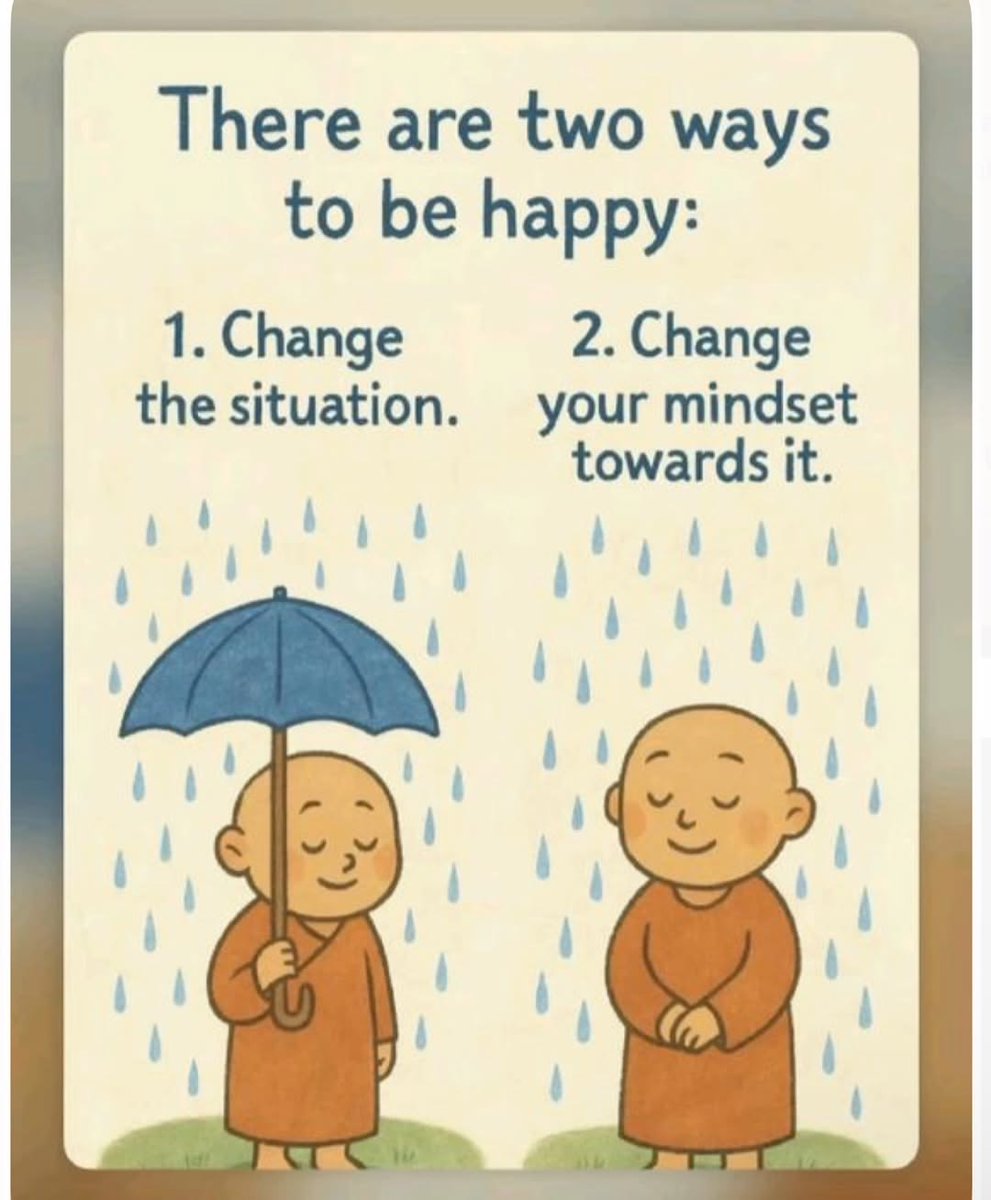
"There will always be more to do. The cleaning and laundry won’t stop. The inbox will refill. The to-do list will rewrite itself overnight. But your life isn’t just a series of tasks to complete. Go for the walk, call your friend, slow down without trying to optimize the moment. You don’t need to clear your entire life before you’re allowed to feel ease. Because if that’s the rule, ease will never come. So learn to pause in the middle of it, not at the end of it.” @VexKing
If everything feels like too much, you're not alone. Small steps can help - like stepping outside, texting a friend, or giving yourself permission to rest. If the weight is still there, support is always within reach. Call, text, or chat 988 to connect with someone who cares.
The best way you can ensure we are able to continue our vital work in funding lifesaving research is by making a gift this #MentalHealthAwarenessMonth!
Make a gift at https://t.co/9xSW65H3wK
In the late 1970s, a teenager named Jadav Payeng witnessed the aftermath of a flood along the Brahmaputra River, numerous snakes had died after being left exposed on a treeless sandbar. When he asked authorities to plant trees to protect the area, he was told the land was too barren for anything to grow.
Instead of accepting that, he started planting on his own. He spent years carrying water and tending saplings under harsh conditions, without support or formal training. What began as a solitary effort gradually turned into a lifelong commitment.
Over the next four decades, the once-empty sandbar evolved into a vast forest spanning over 1,300 acres. Today, the area, now known as Molai Forest, supports diverse wildlife, including elephants, rhinos, and large animals
Payeng’s work eventually gained recognition, earning him the nickname “Forest Man of India” and a Padma Shri award. His story demonstrates how sustained individual effort can lead to large-scale environmental change.