In our latest for @ForeignAffairs, we examine the consequences of the new regional disorder - aggressive & unrestrained Israel, weakened but vengeful Iran and unpredictable US - for the Gulf states' interests. Bottom line: not looking good. https://t.co/FlG3cytEEI
۱-ما امتیازات را نه با گفتگو، بلکه با موشکها میگیریم، در مذاکره فقط آنها را تفهیم میکنیم.
۲- هیچ اعتمادی به تضمینها و حرفها نداریم، فقط رفتارها معیار است. اقدامی پیش از اقدام طرف مقابل انجام نخواهد شد.
۳-پیروز هر توافق، کسی است که از فردای آن بهتر برای جنگ آماده شود.
A very timely inaugural piece by my colleague Tomisha Bino, who joins IISS-Middle East as Research Fellow for Energy Geopolitics. She examines the region’s nuclear-security landscape in light of the Iran war, and what Gulf nuclear newcomers can do to mitigate their exposure.
Recent events need not jeopardise plans by Gulf states to acquire nuclear power plants. Yet precedents, doctrinal realities and the fragile regional-security landscape require nuclear newcomers in the Gulf to consider the risks of attacks against civilian nuclear facilities and potential mitigation measures.
Explore the latest #ChartingMiddleEast analysis by Tomisha Bino: https://t.co/PcDZgTSfw5
The Arab Gulf states are looking to replenish and strengthen their air and missile defences following the Iranian attacks earlier this year.
While there has been a flurry of activity, rearmament will require overcoming multiple challenges.
Read the latest analysis by @albert_vidal_: https://t.co/Wu0TiYr1oo
“Iranian regime believes it can outlast Trump and therefore has no real reason to compromise”
There are 3 camps emerging in the Gulf @HTAlhasan tells me regarding the approach to the Iranian regional threat
* Accommodative (Oman). Compromises need to be made to a large neighbor who isn’t going away
* Confrontationists (UAE, Bahrain). Diplomacy has failed. Military deterrence needed
- somewhere in the middle (KSA, Qatar, Kuwait) ultimately no alternative to an immediate de-escalation as military strikes haven’t achieved political effects
Watch here: https://t.co/kVNKh3tq7F
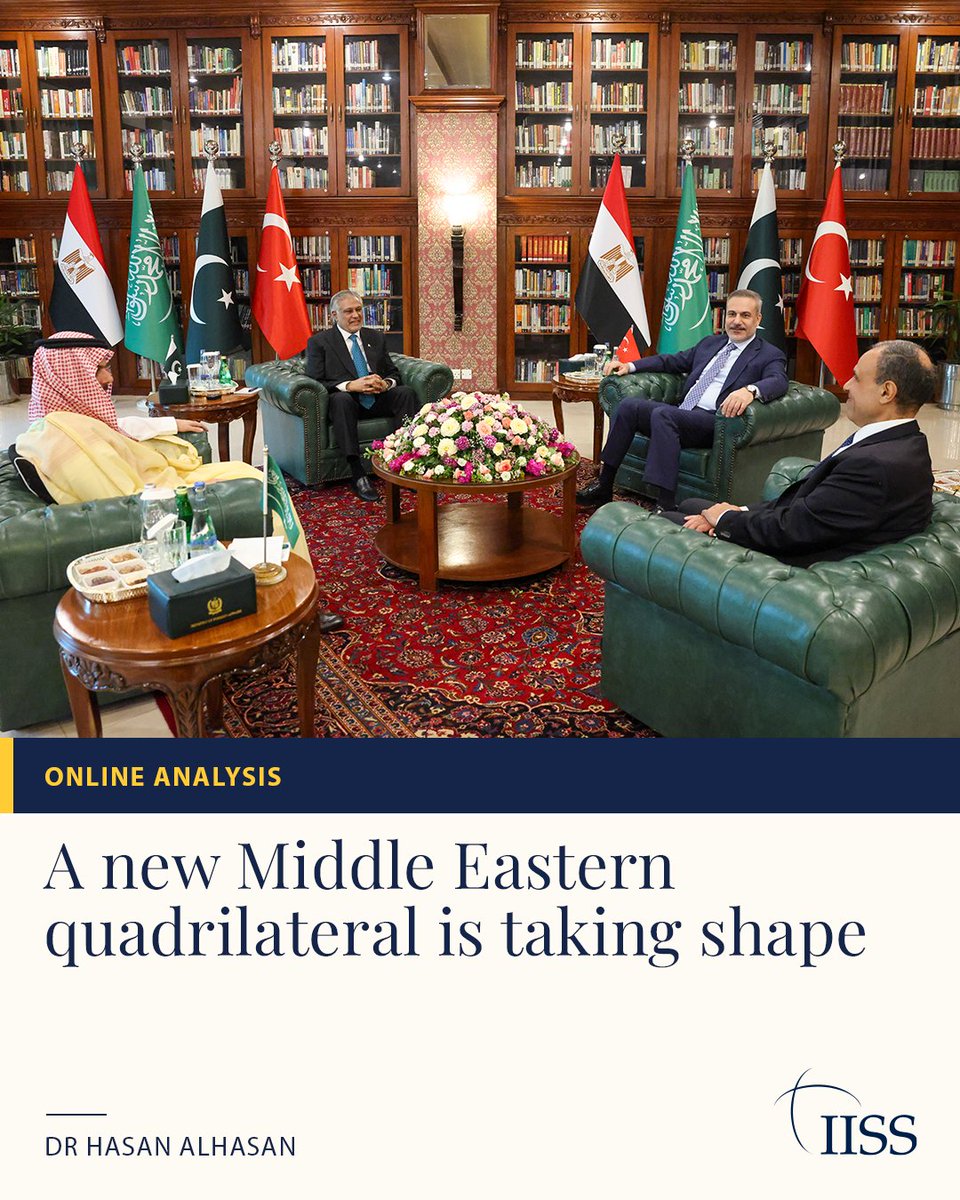
"A group of four regional powers – Egypt, Pakistan, Saudi Arabia and Türkiye – are closing ranks...The new Middle Eastern quadrilateral appears to be an attempt to counterbalance Israel’s designs to ‘redraw’ the map of the Middle East and to address shared security concerns, most notably the United States–Israeli war with Iran," @HTAlhasan writes
https://t.co/W9r4iuIddK
As Kuwait and Qatar report fresh attacks, the Arab Gulf states risk being drawn into prolonged low-intensity warfare by Iran and Iran-backed militias in Iraq — a danger intensified by Trump’s seemingly desperate push to put a lid on the war ahead of his meeting with Xi.
The British military said a ship caught fire after being hit by an unknown projectile off the coast of Qatar. There were no reported casualties, it said. https://t.co/t81eXEPWD5
Since the recent conflict in Iran, a new geopolitical bloc involving Egypt, Pakistan, Saudi Arabia and Türkiye has been forming in the Middle East.
While not formalised, the four states are poised to tackle shared security concerns together.
Read the latest analysis by @HTAlhasan: https://t.co/XlpjCd57Pd
The Egypt–Pakistan–Saudi Arabia–Türkiye quadrilateral formed as a reaction to Israel’s aggressiveness and the fallout from the US/Israel war with Iran.
My latest for @IISS_org 👇
https://t.co/PjLB0NPOKM
Once Trump's attention shifts elsewhere and the US draws down its military presence in the region, there will be little to stop Iran from exercising economic blackmail against the Gulf states (and many others) by threatening to block Hormuz, even if selectively. 3/3
Realistically at this stage, the Gulf states can at best hope to avoid a bad outcome where Trump concedes too much - e.g. withdrawal of US forces, lifting of sanctions, etc. - in return for nuclear concessions and return to normalcy in Hormuz. 1/3
https://t.co/ctgxIrExwh
Assuming Trump prefers a face-saving exit over war, it is unlikely he'll prioritise the Gulf states' security concerns including Iran's missiles, UAVs or support for regional militia networks which were always intractable issues anyway. 2/3
Wouldn’t a US swap/loan be preferable to the alternatives?
Borrowing now is more expensive due to war premium - Abu Dhabi has raised $4.5bn since March - and liquidating SWF assets may lock in losses.
Politically, the UAE may feel the US owes it the show of solidarity. 2/2
Valid points, but here’s a slightly different way of framing it: why wouldn’t the UAE seek cheaper access to USD from the Treasury/Fed?
The UAE Central Bank’s forex reserves cover 5-6 months’ worth of imports. Not bad but could be stretched thin in wartime. 1/2
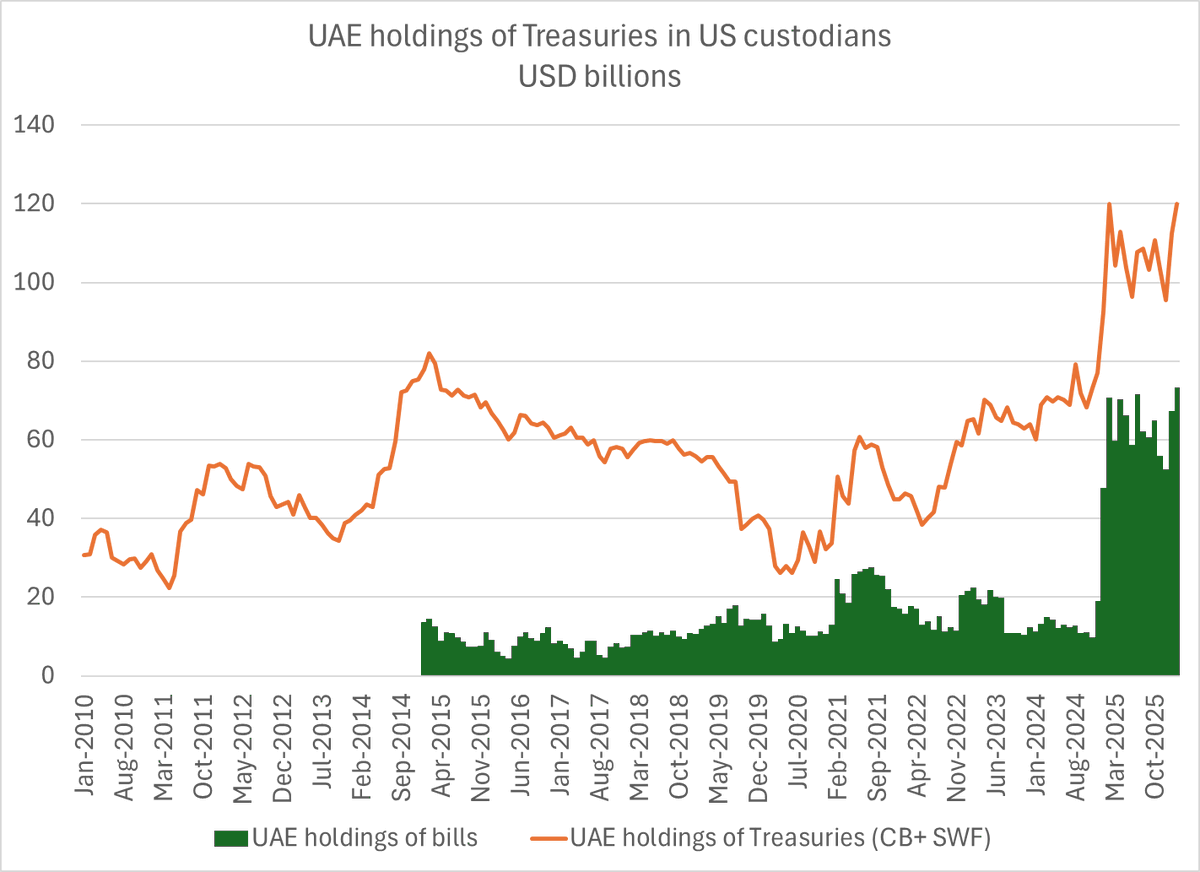
The UAE isn't just oil rich, as the NYT suggests, it is asset rich:
The UAE's central bank had more assets at the end of February than the Treasury's Exchange Stabilization Fund ($285b v $213b including the US SDR balance). It also had more bills! $73b v $23.5b ...
1/
“Different Gulf states want different things,” @HTAlhasan tells me, stressing there is no unified GCC position on what an Iran endgame should look like. (1/2)
Enter the era of Gulf hyper transactionalism.
Subtext of Dr Gargash’s post: UAE will scrutinize support (or lack thereof) shown by allies and partners during war and recalibrate relations accordingly.
Reflects widely shared sentiment of abandonment in the Gulf by key partners.
من السابق لأوانه استخلاص دروس العدوان الإيراني الغاشم، ومع ذلك نمضي في ترسيخ مفهوم الدولة الذي كرّس نجاح الإمارات ونموذجها، ونعمل على تعزيز قدرتنا على صون هذا الوطن والدفاع عنه.
وبثقة من انتصر على عدوان غادر، سنقرأ خريطة علاقاتنا الإقليمية والدولية بدقة، ونحدّد من يُعوَّل عليه، بما في ذلك هيكلة اقتصادية ومالية تعزّز صلابة نموذجنا.
المراجعة العقلانية لأولوياتنا الوطنية هي طريقنا إلى المستقبل.
Traffic through the Strait of Hormuz has climbed to its highest level since the conflict began, but most of that growth is still being driven by Iran-linked trade, and transits remain far below normal levels
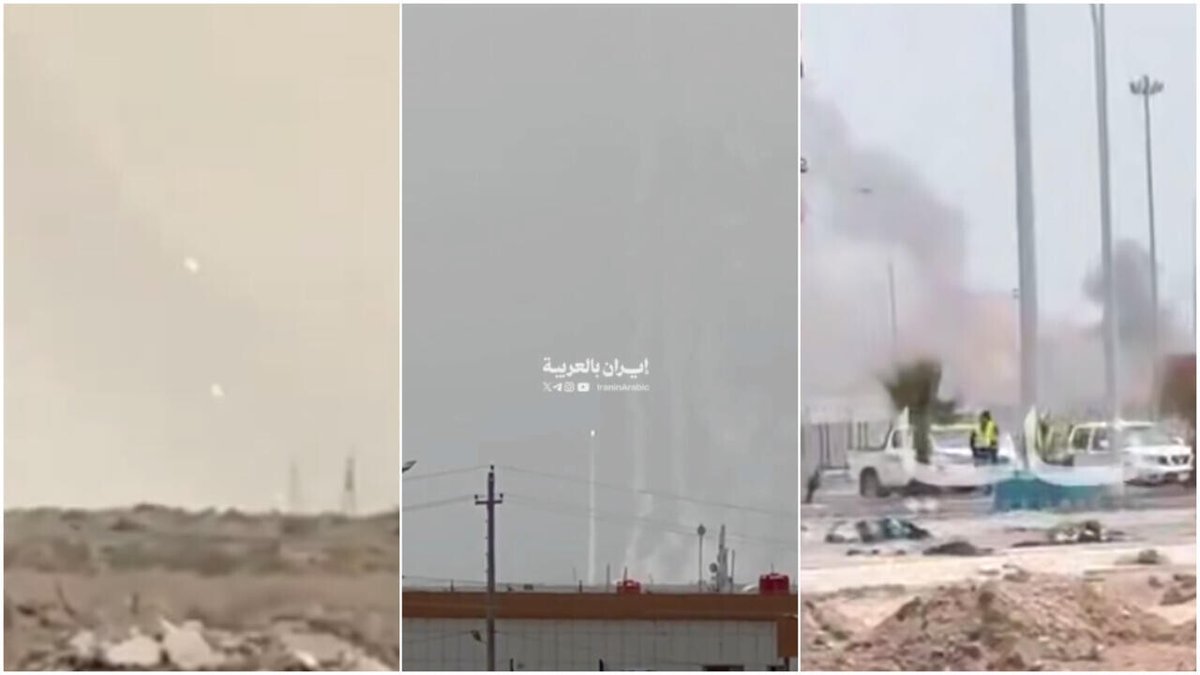
Missing context: by March 24, the date of the first alleged US missile launch from Kuwait, Iran had rained over 800 missiles and UAVs on Kuwait for over three weeks straight, damaging its airport, refineries and other civilian and military infrastructure.
Excellent work by IISS
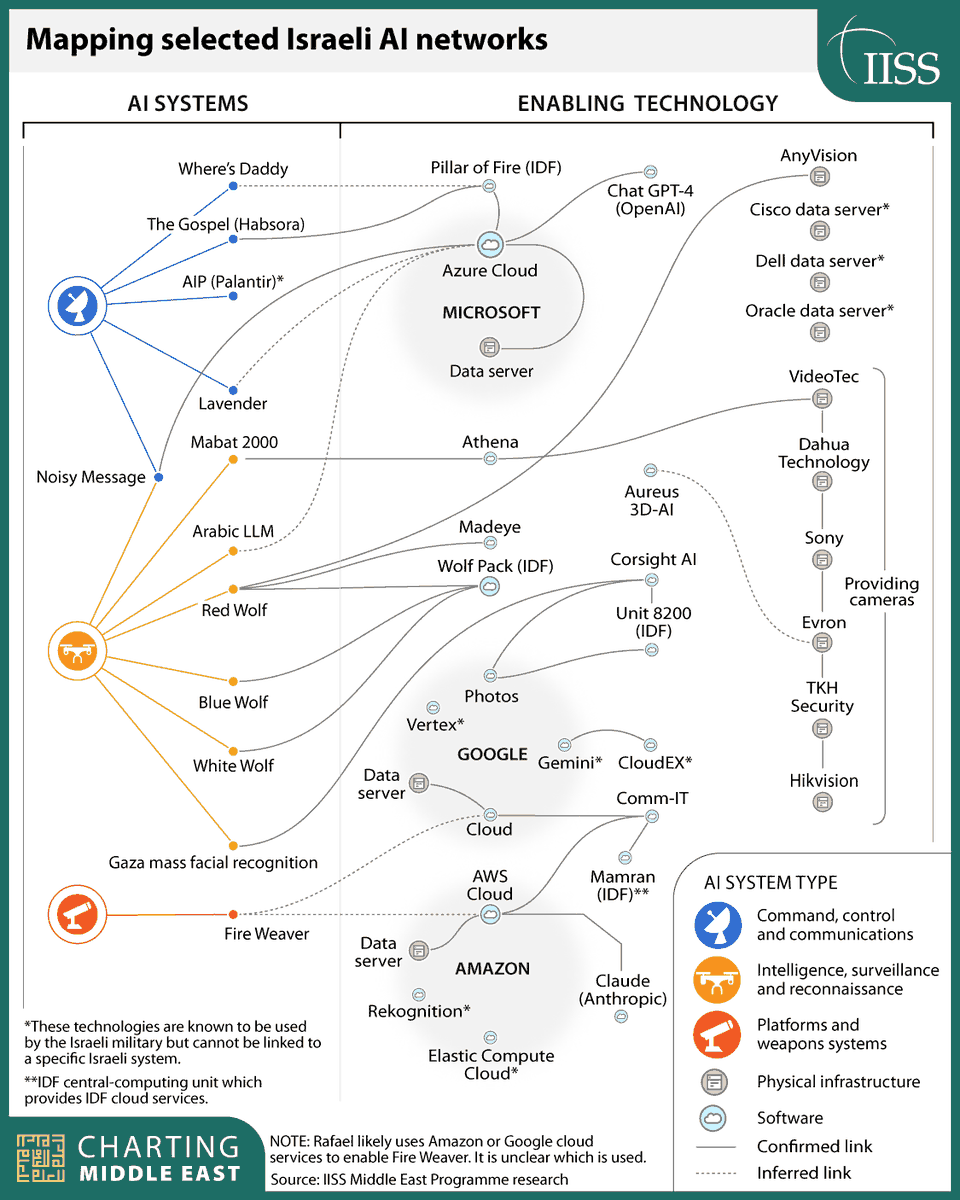
-Middle East’s Noor Hammad on the proliferation of AI-enabled military tech in the region. Here, she zeroes in on the connections between Israel’s AI-enabled military networks and big tech commercial providers, highlighting lapses in corporate governance.
Israel’s success in developing a range of artificial-intelligence-enabled military technologies is underpinned by tie-ups with commercial entities, from Israeli start-ups to Palantir and big-tech corporations including Amazon, Google and Microsoft. These provide key enabling technologies, ranging from facial-recognition software and hardware that facilitate Israeli mass surveillance of Palestinians to commercial cloud servers used to host intercepted communications and train the Israel Defense Forces’ planned Arabic large language model.
Explore the latest #ChartingMiddleEast analysis by Noor Hammad: https://t.co/1WCAvCINLu