A mathematician at Bell Labs noticed that the scientists who won Nobel Prizes and the ones who never amounted to anything were equally smart, equally hardworking, and equally credentialed, and the only thing that separated them was a single question almost nobody is brave enough to ask themselves before they die.
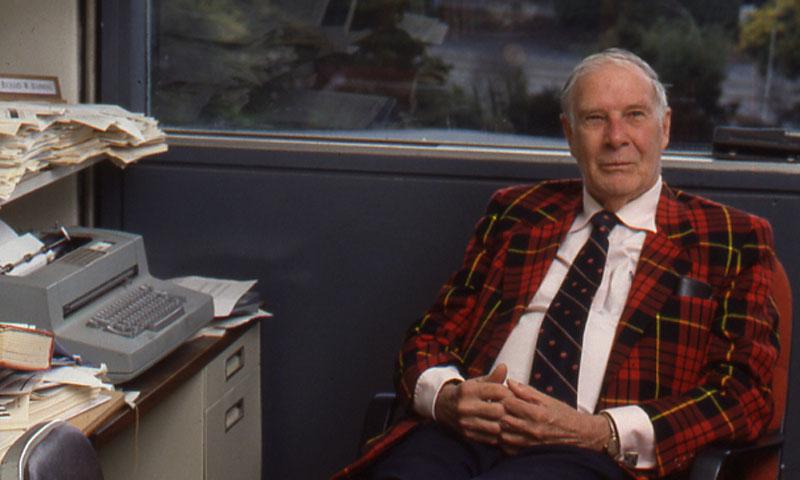
His name was Richard Hamming.
He spent 30 years at Bell Labs, in the same building as John Tukey, Walter Brattain, and a long list of physicists who took home Nobel prizes for work they did down the hall from his office, including the legendary Claude Shannon.
His invention of error-correcting codes made modern computing possible. He has won the Turing Award. And all the while he was creating his own legacy he was secretly doing a study on the people around him.
The study was straightforward. 2 Teams. The legends and the lost. Same I.Q.s. Degrees same. Same desk hours. Same access to the world’s best resources.
And yet, at the end of 40 years in their careers, one group had changed entire fields, and the other group could not be remembered by their own colleagues five years after retirement. He wanted to discover what the actual difference was.
In March 1986, he stood before 200 researchers in a Bellcore auditorium and told them what he had seen.
He said it all came down to one question. And hardly anyone he ever met was willing to ask it directly.
He called it the Friday-afternoon ritual. He spent years blocking out his Friday afternoons and not doing anything productive with them every week. No experiments. No meetings. No deliverables.
He called it Great Thoughts Time. He sat down with a notebook and asked himself a couple of questions in order. What are the most relevant problems in my discipline? And why I am not working on either of them.”
Most weeks, the answer was the same, he said. For a week now he had marched confidently in a direction he did not think was the most important direction. He was a goer. He worked a bit. He was getting clean results that would publish in respected journals. (
And for five days straight he'd been lying to himself about whether any of it mattered.
The reason almost nobody does this ritual is because the honest answer is unbearable. The thing is that if you sit down on a Friday afternoon and say out loud that you are not working on the most important problem in your field, now you have to do something about it.
You have an immediate change in direction, or you have to keep lying to yourself every week from that point on. Most people choose the lie.
In the short term it’s cheaper, but over a career it’s more expensive.
Hamming took the ritual a step further in the Bell Labs cafeteria. He began approaching scientists he barely knew, asking them what they thought the most important problems in their field were.
A week later he would ask them why they had not worked on these problems. Eventually people wouldn't have lunch with him. “I had to keep finding new tables,” he said.
Nobody had a good answer for that, and being around someone who kept asking it made every meal feel like a performance review.
The line that broke me is the line that most people skim over in the transcript. His words: If you do not work on an important problem you are unlikely to do important work.
That’s not motivational line. It is a rational one. You cannot make a great result from a problem that does not matter. Input restricts the output. The choice of the problem is the ceiling of the career.
The transcript has been freely available on the internet for almost 40 years. Stripe Press published the complete lectures as a book. Naval Ravikant quotes it all the time. It’s still given out to new hires at every serious engineering lab in Silicon Valley.
Most people will not run the ritual this Friday. They will be busy. They always are.
When Ted Turner asked Carl Sagan if he was a socialist, Sagan gave an answer that redefined what it means to be a civilized society.
It wasn’t about politics or ideology.
The best way to accelerate R&D? A connected ecosystem. 🤝
Highlights from our recent event with @AWS, bringing together scientists, engineers, and partners to shape the future of AI in Science.
Watch the recap below! 🎥
#SDLabs#SelfDrivingLabs#PhysicalAI
Why do we innovate?
To discover medicines, clean energy, and sustainable tech. Faster, Smarter, Bolder.
We augment scientists with #PhysicalAI and an ecosystem of partners to reimagine the modern lab.
For a new era of exponential science! ✨
#SDLabs#SelfDrivingLabs
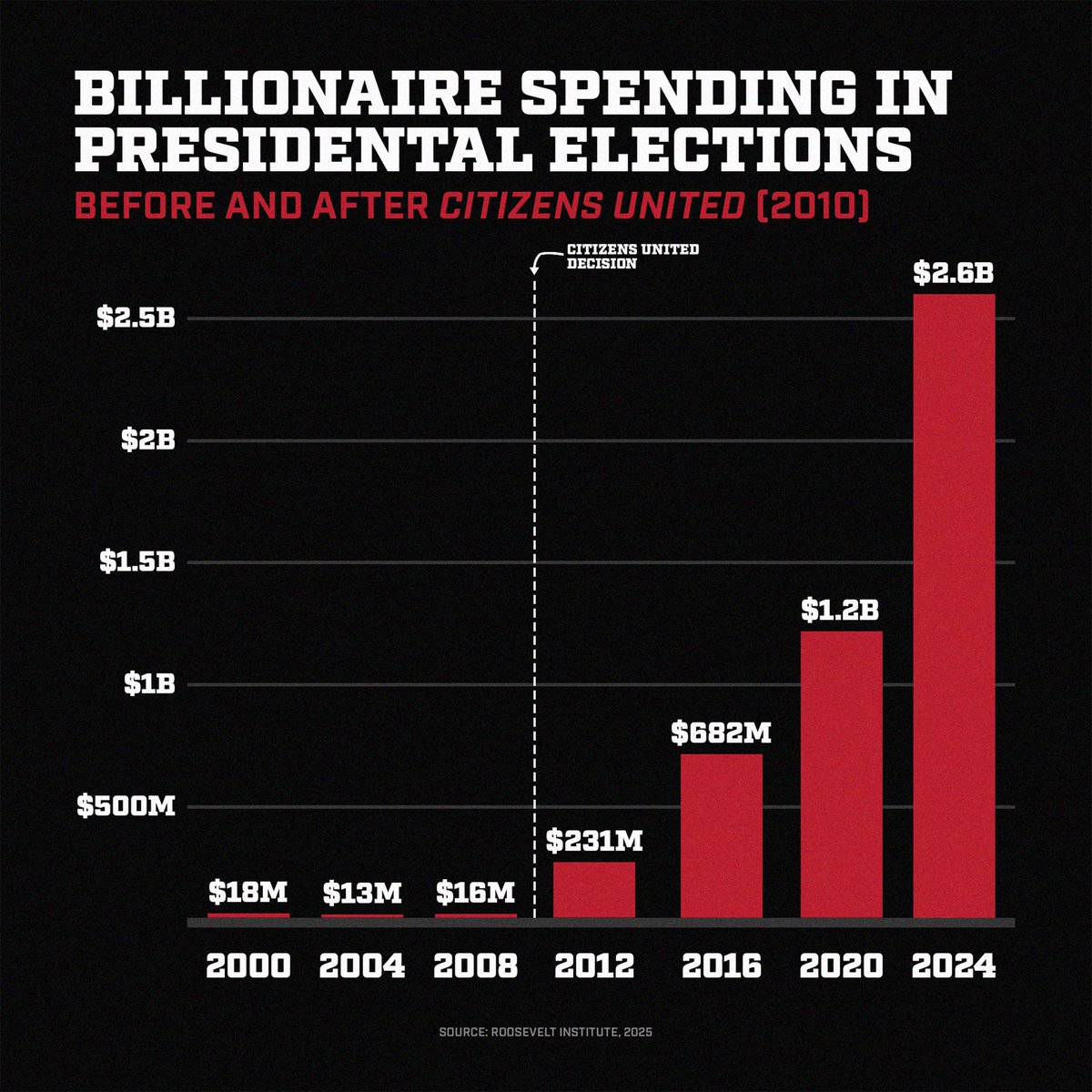
Before Citizens United, billionaires spent around $16 million on presidential elections. In 2024, they spent $2.6 BILLION.
And what did they get for that money? They got a MASSIVE tax cut for themselves.
This explanation of the 'greenhouse effect' in 1985 by Dr. Carl Sagan remains a landmark of science communication for its clarity and planetary perspective.
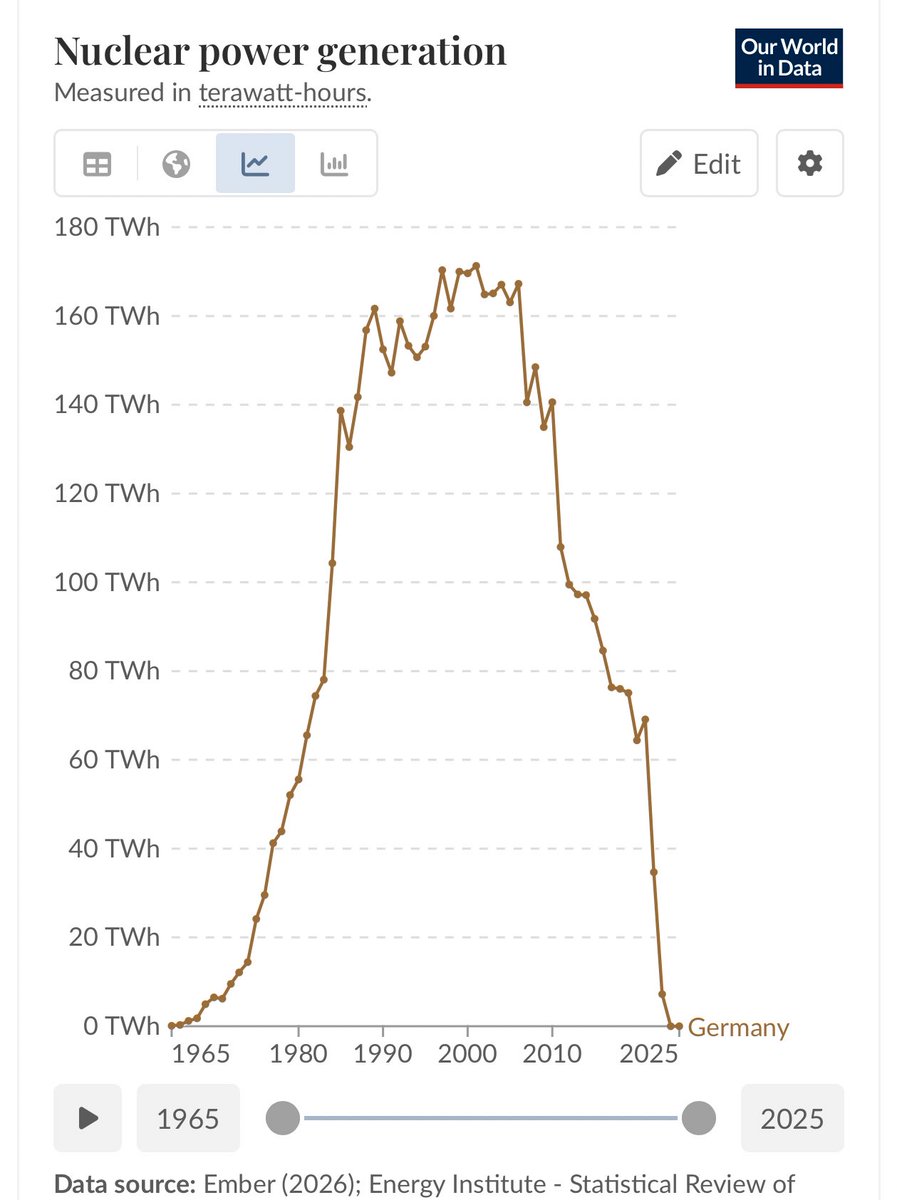
Unreal numbers 👀⚡️
"JPMorgan estimates that, had Germany not phased out nuclear power, the country would have generated 50% less electricity from fossil fuels and 84% less electricity from natural gas in 2024. Electricity prices in Germany would have been around 25% lower, and the country would have imported half as much electricity.."
I resigned from OpenAI. I care deeply about the Robotics team and the work we built together. This wasn’t an easy call. AI has an important role in national security. But surveillance of Americans without judicial oversight and lethal autonomy without human authorization are lines that deserved more deliberation than they got. This was about principle, not people. I have deep respect for Sam and the team, and I’m proud of what we built together.
𝐒𝐋𝐀𝐒 𝟐𝟎𝟐𝟔: "We are able to generate as many data an knowledge in a week as what a student can produce throughout their PhD."
@AtinaryTech's CTO Loïc Roch describes how a combination of machine learning and robotics is changing how science is done.
Mexico could, if it chose to, inject real chaos into global financial markets with silver exports being the most obvious pressure point. The fact that this is not even part of the conversation is telling. The leverage exists but the awareness does not.
This is a basic failure of statecraft. Policymakers speak fluently about norms and cooperation while overlooking the few hard assets that actually move markets. The result is comic: a country with genuine leverage behaving as if it has none, largely because it does not realize it does.
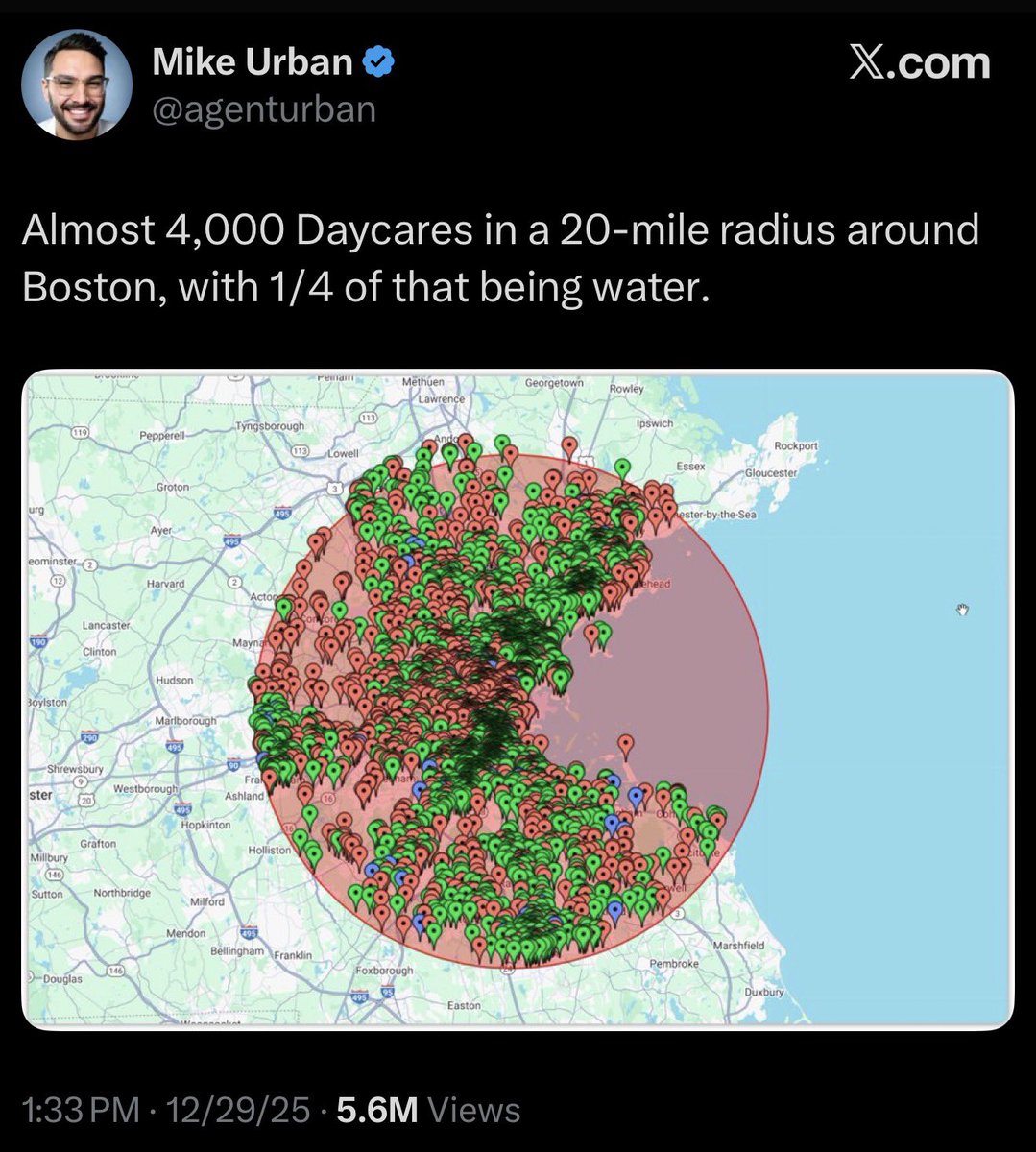
4,000 daycares were discovered in a 20 mile radius around Boston Massachusetts
There are “clusters” of condos and homes that are registering themselves as daycares
Americans can’t even fathom the theft and money laundering taking place nationwide. Why are any of us paying taxes
Novak Djokovic: “My kids don't have cell phones and won’t until they’re mature enough. They complain everyone at school has one except us. When everyone follows the herd, conformity is expected. But it doesn’t have to be that way. That’s where we differ.”
https://t.co/vNZ7xueTcV
The numbers don’t lie—insurance middlemen and hospital billing departments collude to inflate prices, knowing insurers will pay the markup while patients get stuck with the “negotiated” scraps. A basic metabolic panel costs $25 cash at Labcorp but magically becomes $250+ once insurance “discounts” are applied.
This isn’t healthcare—it’s a racket where bureaucrats and corporate contractors profit by layering complexity. Medicare fraud alone bleeds $60B annually from taxpayers, yet D.C. keeps rubber-stamping the same broken system.
Real reform means slashing the red tape that lets hospitals charge $242 for a Vitamin D test that clinics provide for $75. Cut the middlemen, enforce price transparency, and watch costs plummet.
American doctor shows how bad we’re being ripped off by US Health Insurance Companies
She shows a list of blood work a doctor would order
With insurance they say it’s $1,086.75, patient pays $252.12
The cash price for the exact same bloodwork is $44
Health insurance is a criminal enterprise
Turning Atinary's vision into reality!
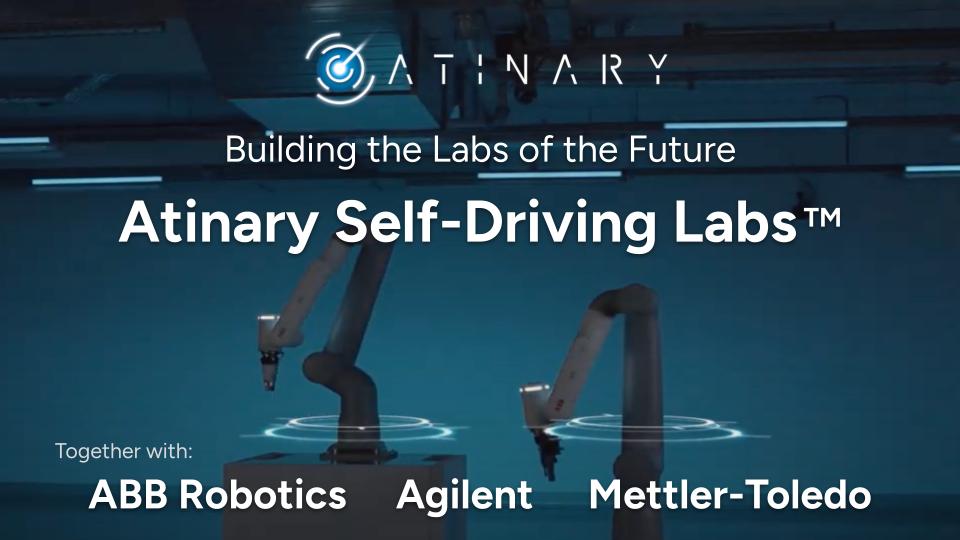
The #AtinaryLabs bring together human imagination + AI closed-loop experimentation + robotics + precision instruments to create Self-Driving Labs™.
Huge thanks to our partners @ABBRobotics, @MettlerToledo, @AgilentTech + the Atinary team!