Abdulhamid II, one of the most important figures of the late Ottoman Empire, ascended to the throne in 1876 and accepted the Kanun-ı Esasi, which can be considered the first constitution of the Ottoman Empire, and the first parliament was opened. However, this did not last long; Abdulhamid closed the Chamber of Deputies, using the Ottoman–Russian War as a pretext. The long period of censorship, oppression, and persecution that followed came to be generally known as the Istibdat (Despotism) period. During this period, young and fervent officers in the army, driven by the idea of liberty, turned to underground organization. Among these, the one that stood out the most was the Committee of Union and Progress.
In 1908, these members of the army took to the mountains and started a rebellion with demands for the implementation of the constitution. These uprisings, which also received support from the public, put the Sultan in a difficult position. In the western cities of the Ottoman Empire, the constitution began to be declared de facto by these military groups and the people. The Committee of Union and Progress sent an ultimatum to Istanbul, stating that if the Constitutional Monarchy was not officially proclaimed, the army would march on the capital. As a result of this pressure, on July 24, 1908, Abdulhamid reinstated the Kanun-ı Esasi, which had been suspended for 30 years.
However, in the following days, a 13-day uprising took place in Istanbul. Although in essence it had the character of a revolt initiated by soldiers who were not Unionists, it later took on a religious character as a result of the propaganda of the softas who joined afterwards.
On the first day of the uprising, the government resigned and the insurgents took control of Istanbul. During this time, a large number of Unionist civilian and military figures, including deputies and ministers, were killed by the insurgents. Thereupon, the Ottoman army in the west, together with civilian groups alongside it, came to Istanbul, suppressed the uprising in a bloody manner, and declared martial law in the city. Meanwhile, the parliament convened and declared this intervention legitimate, and on April 27, 1909, deposed Abdulhamid. After being deposed, Abdulhamid was sent to Thessaloniki and stayed there for three years. With the outbreak of the Balkan Wars, he was brought back to Istanbul and remained there until his death in 1918.
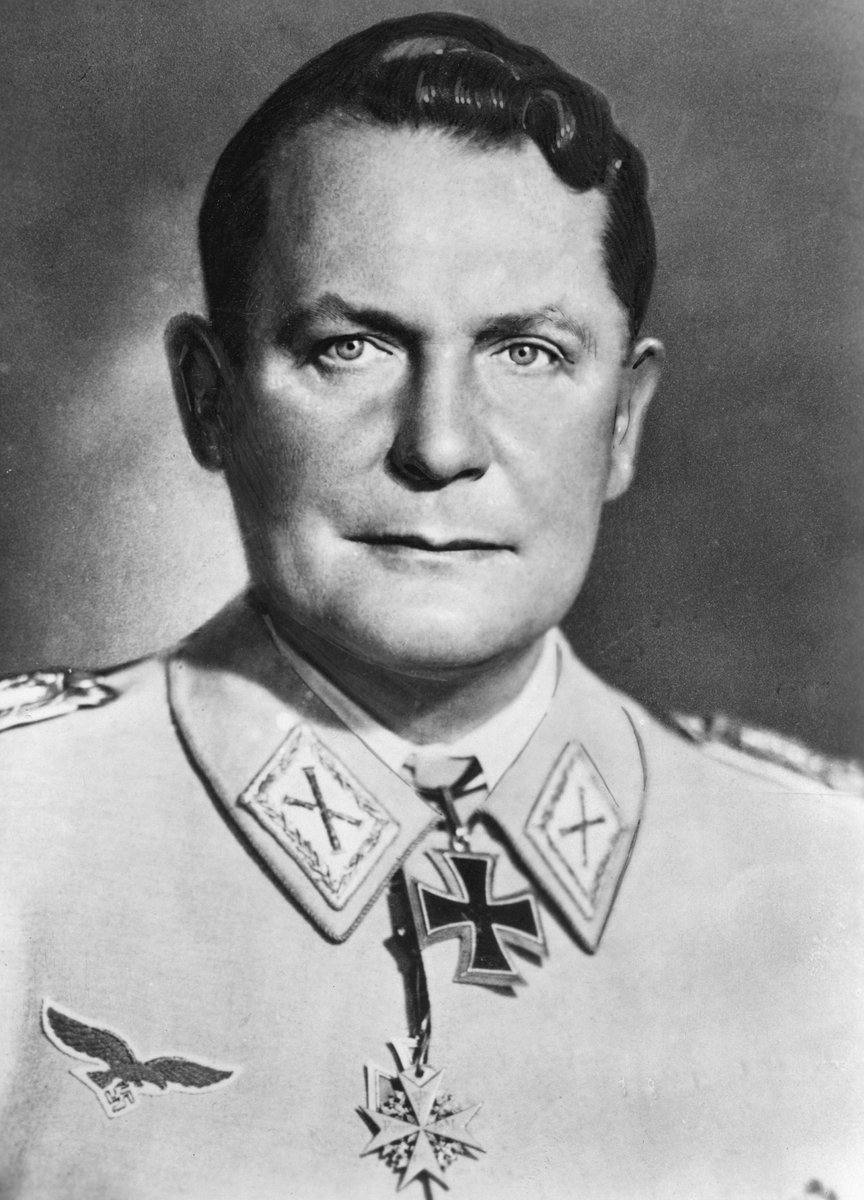
On April 26, 1933, the Gestapo was established in Nazi Germany under Hermann Göring, who consolidated several existing security agencies in Prussia. Its name—Geheime Staatspolizei (Secret State Police)—soon became associated with the regime’s system of political repression. In the following years, control of the organization increasingly shifted to Heinrich Himmler and the SS, integrating the Gestapo into a broader security apparatus.
Working closely with the SS, the Gestapo played a central role in identifying, arresting, and interrogating individuals targeted by the Nazi regime, including those sent to concentration camps. It was responsible for investigating cases defined as treason, espionage, and sabotage against the state.
The Gestapo Law of 1936 effectively removed the organization from judicial oversight, placing its actions beyond the reach of the courts. This allowed it to operate with extensive and largely unchecked authority.
After the war, the Nuremberg Trials declared the Gestapo a criminal organization. Although many of its members avoided capture, those who were prosecuted faced severe penalties, including execution or long prison sentences.
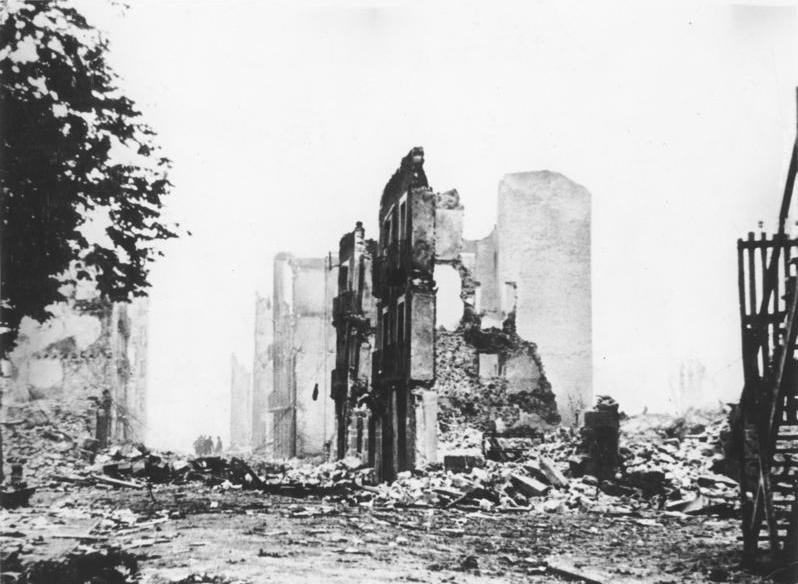
On April 26, 1937, during the Spanish Civil War, one of the most devastating air raids in history took place. As part of "Operation Rügen," aircraft from Nazi Germany’s Condor Legion and Fascist Italy’s Aviazione Legionaria relentlessly bombarded the Basque town of Guernica for hours.
This civilian settlement, known for its support of the Republicans, was targeted less for its strategic value and more as a "testing ground" and a display of raw military might. The attack leveled most of the town and claimed the lives of hundreds of civilians.
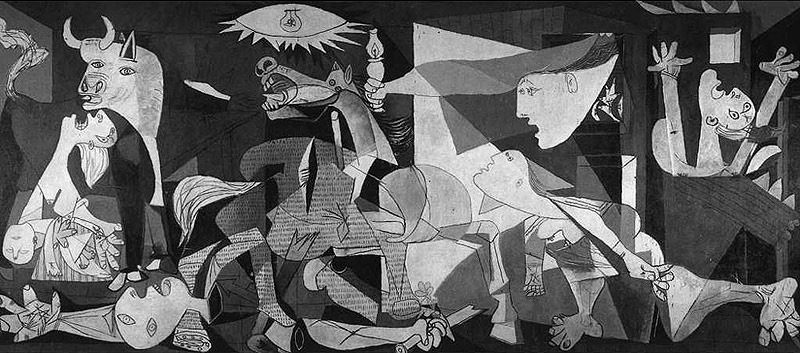
The tragedy became an enduring symbol of the horrors of war, immortalized by Pablo Picasso in his world-renowned masterpiece, "Guernica"
Cleopatra (1963) cost so much it nearly sunk 20th Century Fox. What started as a $2M movie exploded into a $44M epic, forcing the studio to sell off land just to stay afloat.
On November 22, 1963, the 35th President of the United States, John Fitzgerald Kennedy, was assassinated. At 12:30 PM, while riding in an open-top convertible as part of a campaign motorcade in Dallas, Kennedy was shot by Lee Harvey Oswald. Struck three times, the President died before he could even reach the hospital. Governor Connally, despite sustaining critical injuries, managed to survive. Later that same day, Vice President Lyndon B. Johnson was sworn in, assuming the presidency.
The suspect, Oswald, was captured shortly after the attack but was gunned down just two days later in front of police headquarters. His killer, Jack Ruby, also died while in prison. Because so many aspects of the case were left unresolved and given the convenient deaths of those involved, countless conspiracy theories have emerged over the years. Organizations like the Mossad, the Pentagon, the FBI, and the CIA have all been implicated in these narratives at one time or another. To this day, the assassination remains shrouded in mystery, leaving behind more questions than answers.
In the spring of 845, alongside the Siege of Paris, Vikings laid waste to Hamburg. At the time, the city was a crucial bishopric on the northern frontier of the Carolingian Empire, serving as a base for missionary work targeting Slavs, Danes, and other pagan groups. Its commercial wealth made it a tempting target for a raid. Viking warriors sailed up the Elbe River, reaching the city with speed and meeting almost no resistance as they began sacking it. Hamburg was burned nearly to the ground; churches, administrative buildings, and warehouses were all looted. This raid dealt a severe blow to the work of Ansgar, the Archbishop of Hamburg-Bremen. With the loss of the city, Ansgar found himself facing a serious collapse in both political backing and financial resources.
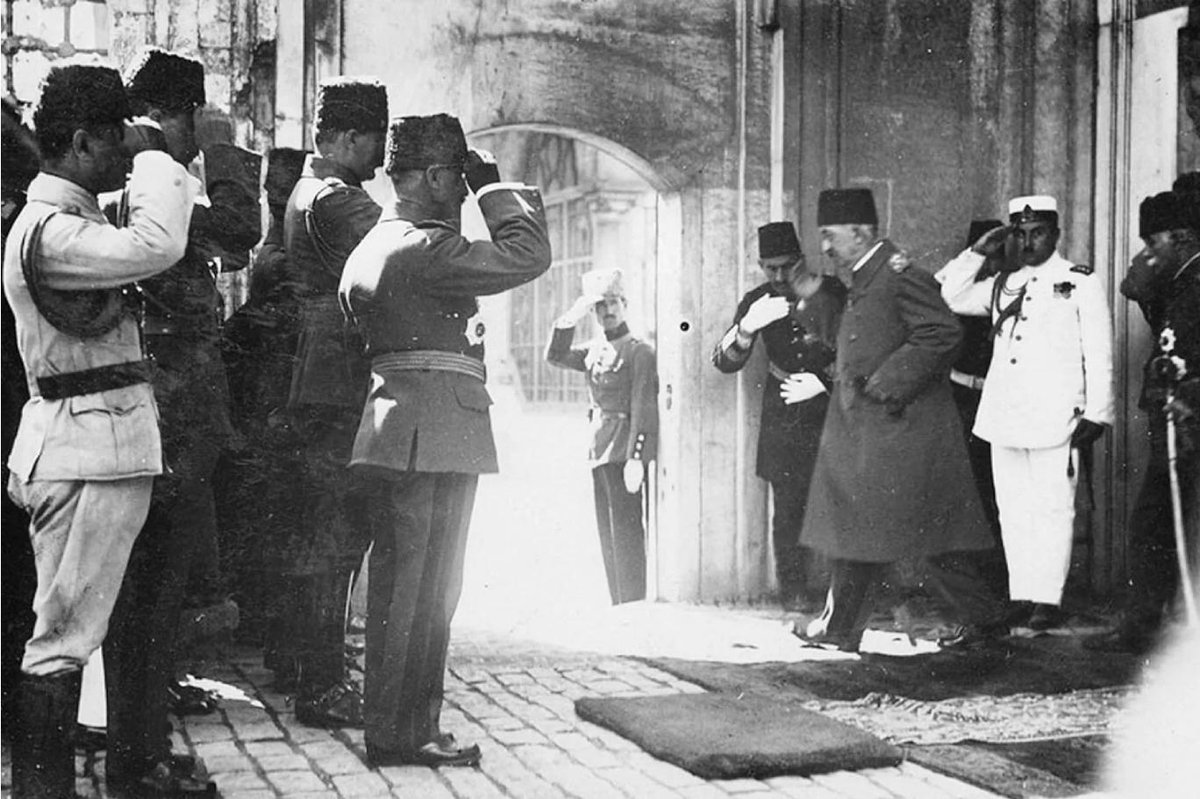
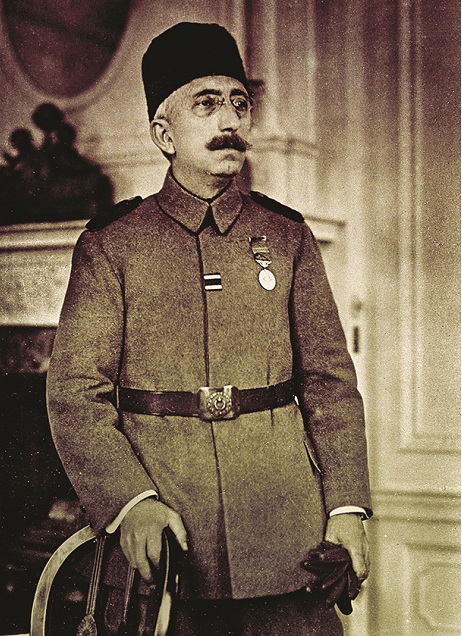
On 17 November 1922, the last Ottoman sultan, Mehmed VI Vahdettin, boarded the British battleship HMS Malaya and left Istanbul for Malta. With his departure, the six-hundred-year-old Ottoman sultanate effectively came to an end.
Vahdettin had come to the throne in 1918 as Mehmed VI, at the age of fifty-seven. He inherited an empire on the verge of collapse; the first major issue that confronted him was the Armistice of Mondros, signed after the Ottoman defeat in the First World War. In terms of surrender conditions, it was even harsher than the Treaty of Versailles. Under the armistice, Ottoman territories were subjected to de facto occupation, and Greece was among the occupying powers.
Yet an unexpected development changed the course of events: in Anatolia, under the leadership of Mustafa Kemal Pasha, a national force was organized, first mounting resistance and eventually securing victory. Vahdettin, however, dismissed commanders who opposed the Greek occupation and approved death sentences for key figures of the national movement.
Once the Anatolian government prevailed militarily, it abolished the sultanate on 1 November 1922. Confronted with this new political reality, Vahdettin left the country on 17 November. He initially sought asylum in Britain, but was refused. He later lived in Mecca and then in San Remo, passing away on 16 May 1926.
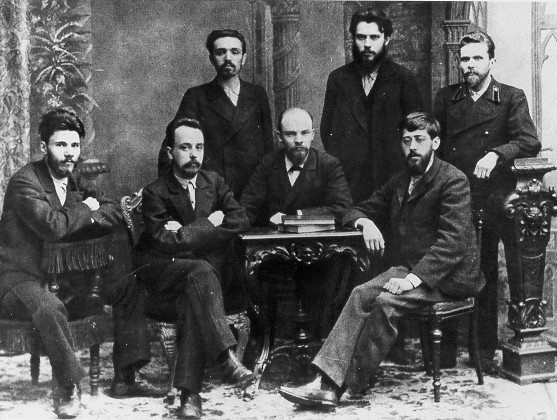
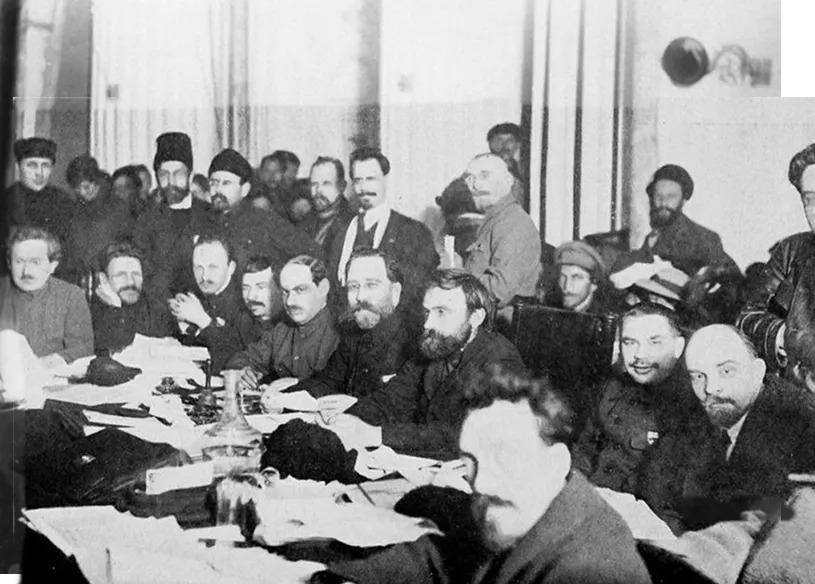
On 17 November 1903, the Russian Social Democratic Labour Party split into two factions: the Bolsheviks and the Mensheviks. At the heart of this division were deep disagreements about revolutionary strategy.
The Bolsheviks, led by Vladimir Lenin, argued for a tightly organized, disciplined, and professional revolutionary vanguard. The Mensheviks, under Julius Martov, favored a broader, more flexible party that rested on mass participation. This ideological rift would shape the future of the revolutionary movement. In the end, following the October Revolution of 1917, it was the Bolsheviks who emerged victorious and who would determine the political trajectory of Russia.
With the official establishment of the Soviet Union in 1922, a social engineering project unprecedented in history began. The policies implemented during the eras of Lenin and later Stalin aimed to radically change the living conditions of the people. Industrialization was planned by the state; private property was abolished, and land was nationalized. The five-year development plans launched at the end of the 1920s transformed the Soviet economy in a short time from an agriculture-based structure into a heavy industrial center. Women actively participated in working life; education and medical services became free. The literacy rate reached 90% in the 1930s. Thanks to the electrification campaign, in Lenin’s words, “Soviet power plus electricity equals socialism” was becoming a reality.
At the same time, the Soviets aimed to create a new type of human being ideologically: a citizen with collective consciousness, carrying social responsibility rather than individualism. Investments in culture, art, and science were directed toward strengthening this ideal. Scientific research was carried out with state support, and young people from the working class were trained as engineers, doctors, and teachers. Gender equality was guaranteed by law. Education spread to rural areas, and hundreds of thousands of village children encountered school for the first time. Of course, this process was not entirely free from the shadow of repression and authoritarianism; particularly under Stalin, the plans came with heavy costs. However, despite everything, the Soviet project transformed a poor, illiterate population in a short time into a powerful world force in science, industry, and culture.
Although the idealistic foundations of the October Revolution became a subject of debate in later years, the movement launched by the working class with the will to determine its own destiny took its place in history as one of the turning points that shaped the course of the 20th century.
In the autumn of 1917, the atmosphere in Petrograd was filled with tension. The exhaustion of war, hunger, and political uncertainty had pushed the people’s patience to the limit. After a long period of exile, Lenin returned to the country and, with the slogan “All Power to the Soviets!”, inspired the masses. The Bolsheviks argued that the Provisional Government could not solve the people’s problems and that the war served only the interests of capitalists. On October 25, 1917 (November 7 in the new calendar), under Lenin’s leadership, the Bolsheviks took that historic step. The Red Guards surrounded the Winter Palace before dawn. The government surrendered with almost no resistance. This was not merely the seizure of a palace; it was the end of an era. That evening, Lenin declared before the Petrograd Soviet, “All power now belongs to the Soviets!”, marking the beginning of a new era.
After the October Revolution, the Bolsheviks began to seize power across the country. However, the process was not peaceful. The remnants of the old order, monarchists, liberals, and even some socialist groups took up arms. Russia was dragged into a bloody civil war that would last three years. On one side was the Red Army, on the other the White Army. Foreign powers (Britain, France, Japan, and the United States) also supported the Whites in an attempt to strangle the revolution. Yet the Bolsheviks won, thanks to both their disciplined organization and mass support. The new government under Lenin signed the Treaty of Brest-Litovsk with Germany in March 1918, withdrawing from the First World War. The revolution had now become an international hope, an inspiration for the working class. However, after this victory, Russia was in a devastation from which it would not recover for a long time. Despite this, the Soviets began to build a new state based on the principle of popular sovereignty. Its name would be the Union of Soviet Socialist Republics.
At the beginning of the 20th century, although the Russian Empire was the largest state in the world by land area, it was on the brink of a deep social and economic crisis. Nicholas II, who ascended the throne in 1894, was an authoritarian ruler who believed he was appointed by God; however, he lacked the vision to understand the country’s need for modernization. The majority of the population were peasants, and most of the land was in the hands of the aristocracy. The abolition of serfdom in 1861 had brought freedom only on paper, but the peasants continued to be crushed under heavy debt. Industrialization was progressing, especially in cities such as Petersburg and Moscow; however, this also gave rise to a new class conflict: workers who worked for low wages and lived in poor conditions had begun to lose hope in the system.
The Revolution of 1905 was the first major outbreak of this discontent. The killing of hundreds of workers in the Bloody Sunday incident undermined the legitimacy of the Tsarist regime in the eyes of the people. A parliament called the Duma was established, but its powers remained merely symbolic. The First World War completely shook the already fragile state structure. Millions of soldiers died on the fronts, and due to logistical collapse, soldiers were left unarmed and hungry. Inside the country, famine, inflation, and unemployment deepened. By the beginning of 1917, indiscipline in the army had reached its peak; soldiers were deserting, and strikes and demonstrations were spreading in the cities. The protests that began in the capital Petrograd in February 1917 soon brought the end of the empire. Nicholas II abdicated, and the centuries-old Romanov dynasty collapsed. However, the Provisional Government that was established failed to meet the expectations of the people by deciding to continue the war. The workers’ and soldiers’ councils (Soviets) formed in factories and villages were gaining strength. It was in this chaotic atmosphere that Lenin and the Bolsheviks reemerged. Russia was now being swept toward one of the most radical transformations in history.
On November 2, 1912, the Battle of Lüleburgaz (Lule Burgas), the bloodiest battle of the First Balkan War, ended with the decisive victory of the Bulgarian armies. After the defeat at Kırklareli, the Ottoman army had withdrawn to the Lüleburgaz-Pınarhisar line. Low morale, logistical problems, and failures within the army’s command structure had reduced its combat capability. The reinforcements that arrived consisted of inexperienced soldiers. The Bulgarian army, on the other hand, held the moral advantage.
The battle, which began on October 28, turned the Thracian plain into a lake of blood with heavy artillery fire and bayonet charges. Both sides suffered tens of thousands of casualties, but the Ottoman army, with many desertions, ultimately could not hold its ground and was forced to retreat to the Çatalca line. The Bulgarian army could only be stopped there, at the border of Istanbul.