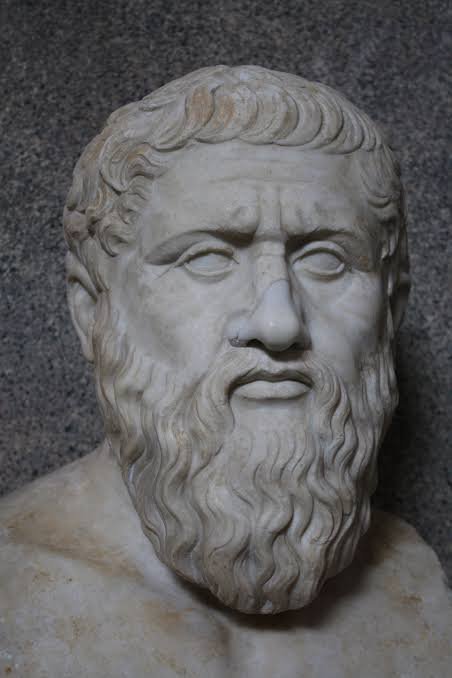
Plato, one of history's greatest philosophers, why did he often express his ideas not in his own words, but through the voice of his teacher Socrates?
With Socrates' execution, philosophy was dragged from the streets of Athens to the courtroom. Plato, to compensate for this loss, brought his teacher back to life; but this was no ordinary commemoration. Socrates now spoke, questioned, and judged through Plato's pen. This choice was both a profound act of loyalty and a silent manifesto against injustice. Because Socrates was dead, but the questioning mind was not. By keeping him alive in his works, Plato declared that philosophy could not be executed.
Socrates' endless questions, irony, and "knowing that he didn't know" attitude provided Plato with a unique stage for explaining philosophy. Instead of a dry system, the reader found themselves in the midst of a lively debate taking place in the streets of Athens. Ideas were born, clashed, and matured along with the characters. Thus, philosophy ceased to be the pursuit of the elite and became a journey that everyone could undertake in their minds. The fact that Socrates wrote nothing down made his legacy even more meaningful; Plato, by writing down his teacher's thoughts, made them permanent and open to discussion.
The deepest reason, however, was that Socrates was the ideal philosopher for Plato. He explained difficult subjects such as the theory of Forms, the understanding of the soul, and justice through Socrates' simple, courageous, and moral personality. He used Socrates not as a mask, but as a mirror. Thus, he both showed respect to his teacher and conveyed the message: "Philosophy is not merely thinking; it is rejecting an unexamined life." Therefore, Socrates continued to live on in the conscience and minds of humanity even after his death.
#archaeohistories
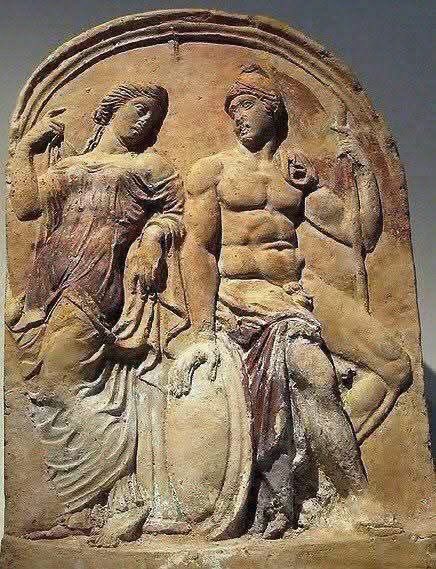
GOD ARES AND GODDESS APHRODITE.
200 BC
ANTEFIX
ATHENS MUSEUM
This is a depiction known as the twenty-fifth day of Pyanepsion.
This is a sacred day.
It is a day in which the God of War, Ares, is honored.
Antefix is the name given to the decorative caps for the ends of tiles located on the edge of a roof.
This example, showing the Goddess Aphrodite and the God Ares, holds a significant portion of its painted surface.