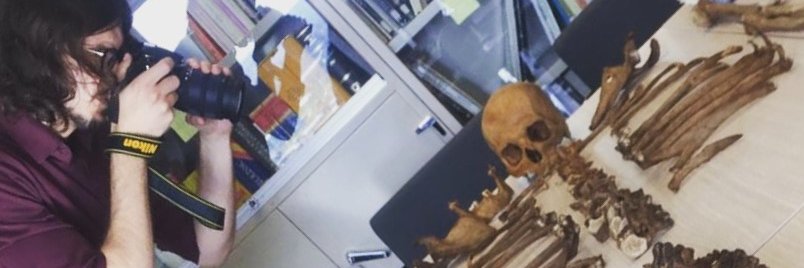
Ever wondered if aDNA methods could be applied to forensic samples?
Glad to share this work with my fellow @XavierRocaRada done during my stay in @ACAD_Research_
(Spoiler: they could, with magnificent results.)
https://t.co/HuG6R6OQU2
We have just published our work on: Epigenetic changes produced in women victims of intimate partner violence: A systematic review. Thank you very much for the opportunity @WHEJournal
https://t.co/r4q2uOW5FQ
@Miguel__Lorente@jlorentegrx@Haarkotter
Our manuscript about the performance of Y-STRs commercial kits with degraded human bones has been published. We found that PowePlex Y23 outperforms the other kits:
https://t.co/BPsSuB6Te7
Our manuscript on the usefulness of Innotyper 21 (INNULS) in the DNA analysis of skeletal remains has been published! @jlorentegrx
https://t.co/3COWNS5Lwt
Research has found key areas within forensic science that are associated with higher rates of wrongful convictions. Addressing them should strengthen trust in our criminal justice system.
https://t.co/8H9YfoqSfz
Finally, I evaluated four qPCR and three autosomal STR commercial kits and their compatibilities for critical remains analysis:
https://t.co/RfqgAeRuGQ
Secondly, I compared five different DNA extraction methods in the same set of critical remains samples, including phenol/chloroform, silica, and AutoMate Express:
https://t.co/pUZcFgh6PN
Acabamos de subiros a la web de @cienciascenio el resumen del #ATPATC 🐈⬛ en @tertuliagranada ❤️🔥
Echadle un ojo, porque vuestra tía Paqui igual tiene las respuestas a sus preguntas. 🙄
🔗 https://t.co/GphPvMZD3V
📢 ¡Ya es la hora! Os presentamos a todas la gentecilla que nos va a acompañar el próximo miércoles 📅 27 en 📍 La Tertulia en el evento #ATPATC 🐈⬛
¿Se viene hilo de presentaciones? Efectivamente 🧵