I told you I was taking over… and I wasn’t joking.
Tomorrow by 6:00 PM, you’ll see exactly what I meant.
Introducing Eve Residence— perched high above Abuja and The view? No where comes close. It is without a doubt the most breathtaking view in the city.
This isn’t just another project. It’s something special.
Trust me… this one is going to be HOT. 🔥
Set your reminder for 6:00 PM. You do not want to miss this reveal.
AI factories don’t have to be a strain on the grid. Instead, they can be an energy supplier⚡
Emerald AI's Conductor platform, developed using the NVIDIA Vera Rubin DSX AI Factory reference design, is leading the way for power-flexible AI factories — built to come onto the grid faster without impacting existing power needs.
GPT-Live is now fully rolled out to all ChatGPT users globally.
We're also doubling everyone's voice usage limit for the whole weekend so you can try more of it.
Have fun! 🎉
Every AI response you've ever gotten started with an electron. ⚡
In a recent interview with Sequoia Capital, Jensen Huang described AI infrastructure as a five-layer cake, and at the very bottom, before chips, before data centers, before models, is energy.
That's the binding constraint on the Intelligence Age: not compute, not software — watts.
This is why NVIDIA calls AI factories the dynamos of our era. They take in electrons and send out tokens of intelligence. We're a few hundred billion dollars into what Jensen calls the largest infrastructure buildout in human history. Trillions more to go.
The question isn't whether AI will scale. It's whether the energy grid can keep up. ⬆️
The classroom is being reimagined — and NVIDIA is bringing together the people building what's next.
At SIGGRAPH 2026, join an expert panel for How AI Is Changing Education — a candid look at how AI is reshaping the way students learn, educators teach, and institutions deliver knowledge at scale.
If I had a daughter starting her career today, there are 10 investments I'd tell her to make.
Only one of them is on the stock market.
The rest will shape her earning power, influence, opportunities, and wealth for decades.
I know a lot of you are interested, but not everyone is ready to buy.
The good news? You can still make money from this opportunity.
Refer a buyer, earn your commission, and get paid without delays. It’s that simple.
Call me directly on 09111111818 or visit the Sarkinmota Group HQ to get started.
If you know someone looking to invest, don’t let the opportunity pass you by. Let your contacts make you money.
@SchwabAcademy@ProfKlausSchwab The Fourth Industrial Revolution is redefining education,AI won’t replace those who learn, it will empower those who never stop learning, lifelong education is becoming the new standard for success.
@PulseNigeria247 This success story highlights the very best of humanity: compassion crossing borders, cutting-edge technology saving young lives, and the unbreakable bond of family.
Artificial intelligence is transforming how knowledge is created, validated, and shared. Universities must therefore rethink their mission, moving beyond episodic education toward lifelong learning.
📘My book, Universities, Professors and Students in the Intelligent Age is now available on @Amazon for only US$2.99. ➡️🔗https://t.co/sxNpuW5clu
The World Economic Forum Must Remain True to Its Mission
Will the World Economic Forum @WEF remain a mission-driven institution for public-private cooperation, or will it become a prestigious conference and networking enterprise?
The future of the World Economic Forum will not depend solely on how many heads of state and government come to its Annual Meeting in Davos, how much media attention it continues to attract, or how successful its corporate partnerships are. A deeper question is at stake: will the Forum remain a mission-driven institution or will it gradually evolve into a brand-driven organization?
This question has become particularly urgent today. International institutions are under increasing pressure. Geopolitical tensions are rising; technological transformations are reshaping economies and societies; and trust in elites, corporations, and public institutions has weakened in many parts of the world. At such a moment, an organization like the Forum must not appear to be just another global platform. Trust has become the scarcest resource in international cooperation.
Trust and Responsibility
For more than fifty years, the World Economic Forum has been guided by a mission: to improve the state of the world by creating a new form of international cooperation. It has brought together representatives of government, business, academia, civil society, and culture, and later included social entrepreneurs and young leaders. The Forum was never conceived merely as a conference. It was designed as a platform of responsibility.
The Forum’s brand became strong because its mission was strong. It earned trust because it was perceived as an institution serving a purpose greater than itself. Leaders came to Davos not only to be seen but to contribute. Companies participated not only to expand their networks but also to deepen their understanding of their broader responsibilities to society. Governments used the Forum as a place to exchange perspectives in a broader, more informal, and future-oriented environment.
This mission-driven orientation was not simply a matter of culture. It was also the foundation upon which the Forum achieved a unique status: recognition as an international organization for public-private cooperation. This status was not granted because the Forum had become a well-known brand. It was earned because the Forum demonstrated over decades that it serves the public interest, operates as a neutral platform, and complements existing international institutions wherever governments, business, and civil society must act together.
To safeguard this mission institutionally, a governance structure was created. Leaders of governments, international organizations, academia, business, and civil society were not just participants in individual events; they were intended to serve on the Board of Trustees as stewards of the Forum’s oversight and strategic direction. This broad institutional representation distinguished the Forum from a conference organizer or a corporate network. It ensured that the Forum would not be driven by business interests or a particular ideology but could fulfill its mandate as an impartial international organization dedicated to public-private cooperation.
This is also where the Forum’s close connection to Switzerland originates. The Forum was able to develop in Geneva and Davos because it reflected fundamental Swiss values: neutrality, reliability, discretion, bridge-building, dialogue across divides, and responsibility toward the common good. Switzerland is not a place for demonstrations of power; it is a place for mediation. The Forum gained international credibility because it embodied these values.
A brand-driven organization, however successful it may be, does not possess the same credibility, neutrality, and institutional independence. A brand can attract attention, create visibility, and open doors. But a brand alone does not create legitimacy. Legitimacy arises from mission, consistency, independence, and the perception that an institution serves a purpose greater than itself.
For the Forum, this is not merely a philosophical distinction. It is an institutional one. The Forum’s special status and the privileges associated with it were not granted to a brand; they were granted to an institution with a public mission. They rest on neutrality, multistakeholder legitimacy, mission orientation, and a demonstrable contribution to international cooperation.
If the Forum loses this character and develops into a purely brand-driven organization, it will not only lose cultural substance. It will also undermine the very foundation of the special recognition that distinguishes it from ordinary global platforms.
The Cultural Difference
Every successful institution faces this danger. In its early years, people join an organization because they believe in its purpose and want to be part of something meaningful. But when an institution becomes successful, visible, and prestigious, a different motivation can emerge. People may no longer join primarily to serve the institution but to use it, as a platform for personal visibility, career advancement, and future opportunities.
This is the cultural difference between a mission-driven organization and a brand-driven one. In the former, people ask: What can I contribute? In the latter, they ask: What can this institution do for me?
In the former, leadership is stewardship. In the latter, leadership becomes positioning. In the former, the long-term public interest remains the ultimate point of reference. In the latter, image, influence, and short-term advantage gain increasing weight.
From the outside, the two cultures may appear similar. Both use the language of purpose. Both publish reports, organize events, and discuss global challenges. Internally, however, they are fundamentally different. One culture places the brand in service of the mission. The other uses the mission to protect the brand.
For the World Economic Forum, this distinction is existential. The Forum does not possess the legitimacy of a state, the authority of a treaty-based organization, or the democratic mandate of an elected institution. Its legitimacy has always rested on trust: trust in its neutrality, its independence, its long-term orientation, and its commitment to the public interest.
In a world marked by geopolitical fragmentation, technological disruption, and social polarization, such trust is more necessary than ever. The challenges posed by artificial intelligence, climate change, cyber threats, biotechnology, social inequality, and demographic transformation cannot be addressed by governments acting alone, nor by businesses, universities, or civil society acting in isolation. The need for a credible multistakeholder platform is not diminishing. It is growing.
For this very reason, it would be dangerous to measure the success of the Forum solely in terms of visibility, reach, or brand strength. If the Forum becomes primarily a stage for corporate positioning, political signaling, media exposure, or institutional self-interest, it may continue to be successful for a long time. The Annual Meeting in Davos will still attract leaders. The brand will remain strong. Financial reserves may remain solid. Yet the Forum would gradually become ordinary: one global platform among many.
The greatest risk facing the Forum is therefore not its disappearance. Its brand, network, and history are too strong for that. The greater risk is a gradual transformation: from a trusted institution for public-private cooperation into a prestigious conference and networking enterprise.
The future of the Forum depends on whether its leadership, governing bodies, members, partners, and employees understand that the brand is not the purpose. The decisive question is not whether the Forum will remain famous. It will. The question is whether it will remain necessary, and whether it will continue to deserve its special status and the privileges that accompany it.
If the Forum renews its mission, protects its independence, strengthens its multistakeholder character, and attracts people who wish to serve rather than exploit it, its future can be greater than its past. If, however, it becomes merely a brand, it may retain the name, the stage, and the visibility, but lose the spirit that made it unique.
The choice is simple, yet consequential: the Forum can remain a mission that created a brand. Or it can become a brand searching for a mission.
-------------------------
This guest commentary was first published in the Neue Zürcher Zeitung @NZZ "Bei der Zukunft des World Economic Forum muss es um die Mission gehen, nicht um die Marke, schreibt der Gründer" ➡️🔗https://t.co/aOTBNxaxhW
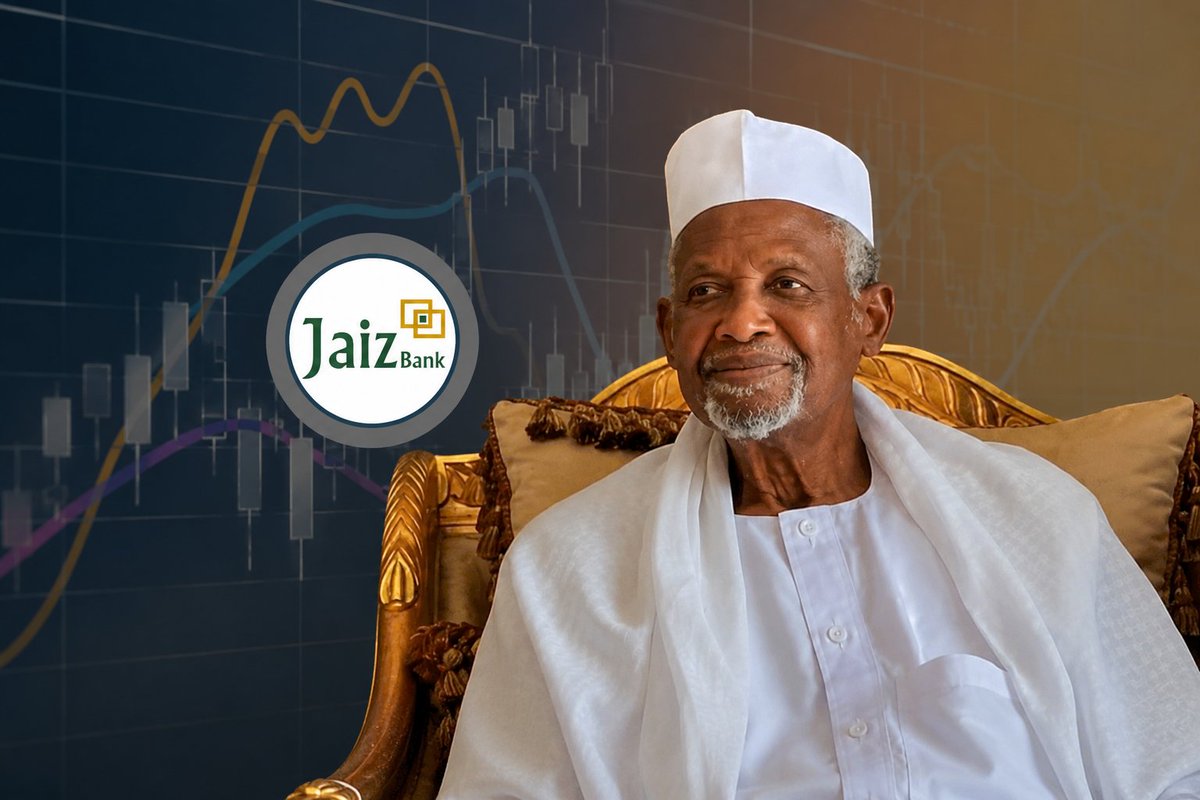
Dangote would receive about ₦302 million in dividends from Jaiz Bank
Dantata family would receive about ₦990 million in dividends from Jaiz
Dantata Investment & Securities Ltd, owns about 4.46 billion shares (11.65% of the bank).
Dangote Industries Ltd owns about 2.77 billion shares (7.24% of the bank).
No shortcuts, no pride.
Today I was on the streets personally sharing flyers for interiorsbysarkinmota.
Every great brand starts with putting in the work, and I'm committed to building this one from the ground up.
If you want your home, office, or space transformed with style, quality, and excellence, Interiors by Sarkinmota is ready for you.
Your dream space, our expertise.
Started my morning where it all began — the streets. Then the car stand, and finally the Sarkinmota Group HQ.
Moments like this remind me how far Allah has brought me. I’m forever grateful and thankful to everyone who has supported this journey.
From the streets to the vision. Alhamdulillah always
To everyone who helped bring the Obama Presidential Center to life, thank you. Michelle and I are so grateful for all your dedication and hard work over the years.
I got a little teary-eyed tonight thinking about my mother-in-law, Marian Robinson.