What if you could test a drug on a human organ and simultaneously know what would have happened without it?
That's what we built.
Proud to share our work in @NatureBiotech: digital twins of human lungs 🫁🔥 (paper: https://t.co/Y8wzxNwWfd)
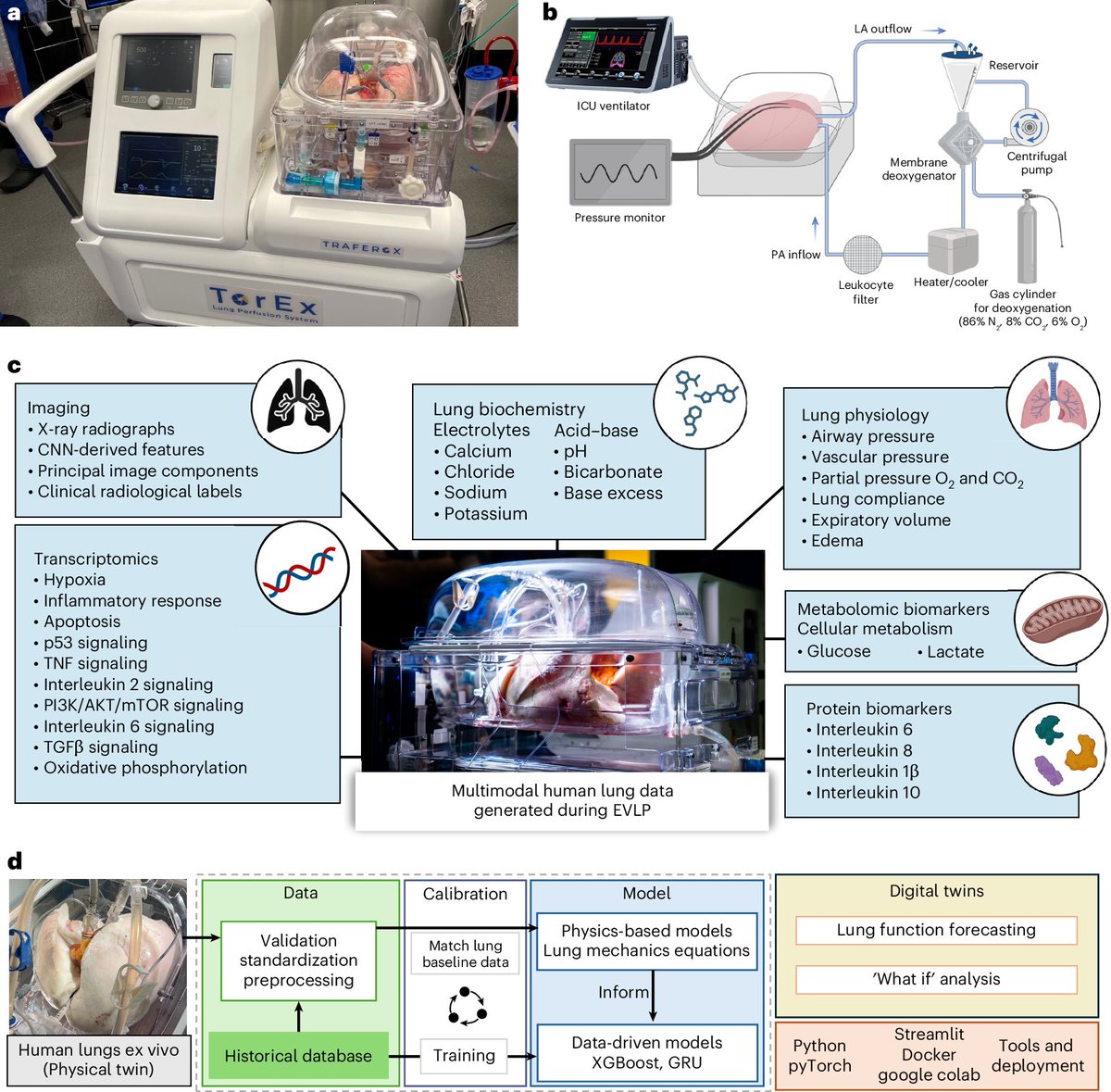
We created digital twins of ex vivo human lungs: multimodal AI models trained on 951 human lungs from the world's largest EVLP dataset at @UHN. Physics-informed ML across physiology, biochemistry, transcriptomics, proteomics, metabolomics, and imaging, all forecasting together.
The key insight: the physical lung receives the treatment. The twin is the untreated control. Paired causal inference on the same organ. No separate cohort. No intersubject noise.
Result: we detected drug efficacy with 6 lungs. Traditional methods would need 18.
This is what precision preclinical evaluation looks like.
From Virtual Cells → Virtual Organs → Virtual Patients.
One step toward virtual organs replacing animal testing.
Huge congratulations to Elly Zhou (a phd student I co-supervise) for leading this work with exceptional rigor, and to Andrew Sage and @SKeshavjee for building the foundation that made it possible.
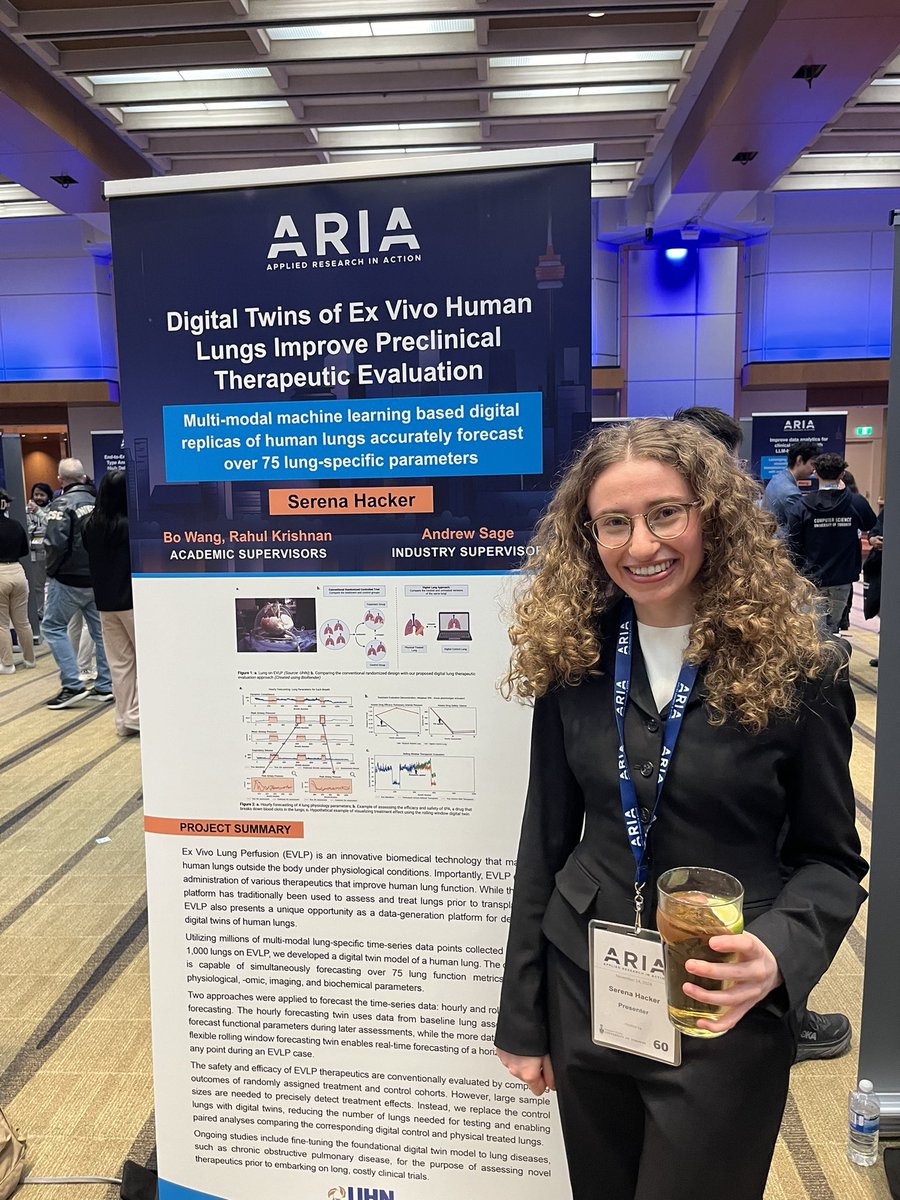
Fantastic showcase by UofT MScAC students at ARIA! Congrats Serena for your work on digital twins of ex vivo lungs! @UofTMScAC@UHNAIHUB@SKeshavjee@BoWang87 @TGHRI_UHN
So excited to be presenting our poster @aistats_conf in Valencia! Come visit us on Saturday at Room 2, Poster Number 94 to learn more about the project! 😀
Deep networks are overconfident far from the data. Can we make them *provably* uncertain by just doing lightweight finetuning? Come see us at AISTATS Poster Session 3 on Saturday, May 4 in Valencia! 🧵 below!
Collab with @HackerSerena@akristiadi7@gjzhang1@PascalPoupart