NEW YORK ― ⚡️Eritrea has been elected to serve on the UN Economic and Social Council (ECOSOC) for the 2027–2029 term, beginning on 1 January 2027.
It has also been elected as one of the Vice-Presidents of the UN General Assembly’s 81st session, which runs from September 2026 to September 2027.
In Ethiopia’s voter registration process ahead of today’s election, local cadres are alleged to have systematically filled out voter registration cards in the names of people who never appeared at registration centers and, in some cases, individuals who do not even exist. According to sources, officials were instructed to register 1,500 voters per polling station regardless of the actual number of applicants. Opposition figures claim the practice was intended to conceal low registration rates caused by ongoing conflicts in the Amhara and Oromia regions and to create the appearance of high voter turnout. Most recently, stacks of pre-filled voter registration cards reportedly emerged as further evidence supporting these allegations.
ETHIOPIA —⚡️Amid the ongoing road transport blockade in the Oromia region, aimed at disrupting what opponents describe as Abiy Ahmed's illegitimate election process, OLA forces say that under "Operation Egeree Oromiyaa" they freed hundreds of civilians who had been detained in Suroo Bargudda, West Guji.
According to OLA claims, many of those released were mothers who had been held for refusing to accept election cards issued by the authorities or declining to publicly denounce the OLA.
The incident is yet another sign of the Abiy Ahmed government's shrinking grip on the country. Having lost effective control over Tigray and facing mounting challenges across large parts of Amhara and Oromia, the regime appears increasingly unable to impose its authority beyond major urban centers.
Meanwhile, ordinary civilians continue to bear the devastating human cost of a widening national crisis.
Ethiopia, Africa’s second-most populous nation, stands deeply divided, facing violent ethnic conflicts, restrictions on free speech and crackdowns on dissent.
As the country heads toward a national election, the leader once celebrated as a healer is now viewed by critics as the main driver of these schisms. https://t.co/spNIFvefxi
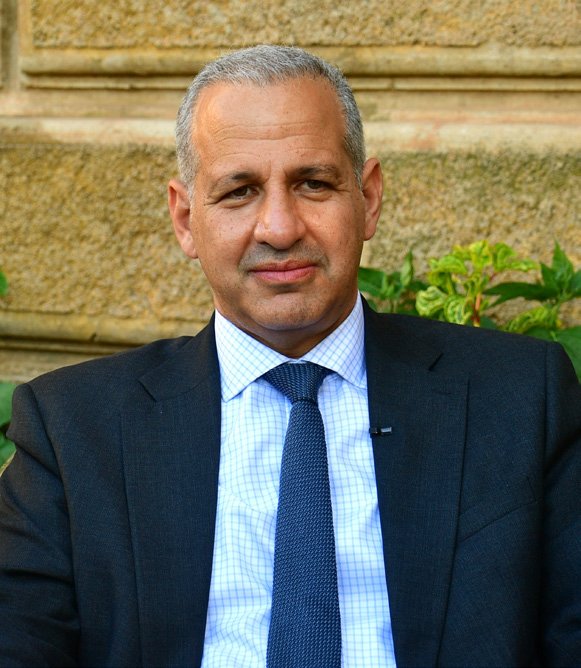
“Asmara Is Not Only the Capital, It Is a Pride of UNESCO”: An Interview with UNESCO’s Mr. Mohamed El Faranawy
By : - Sabrina Solomon
Mr. Mohamed El Faranawy, Acting Assistant Director General at UNESCO for Priority Africa, is currently on a working visit to Eritrea. As part of his trip, the senior official who oversees UNESCO’s flagship “General History of Africa” project and champions youth coding initiatives across the continent has met with high-level Eritrean officials and toured Asmara, a UNESCO World Heritage site, as well as other cultural landmarks. Upon concluding his visit, Mr. Mohamed El Faranawy sat down with Eri TV’s Rafael Giuseppe and Eritrea Profile’s Sabrina Solomon. Excerpts of the interview follow.
- Mr. Mohamed El Faranawy, you have met with several government officials. How do you assess your meetings and visit to Eritrea so far, and what specific goals do you hope to achieve to strengthen cooperation in heritage protection and sustainable development?
Thank you very much. It’s a pleasure to be here. This is my first visit to Eritrea, hopefully not my last. From UNESCO, we see great potential in Eritrea. I bring the greetings of UNESCO’s Director General, who is keenly interested in prioritizing engagement not only in Africa (which is one of the two priority areas of UNESCO) but is also keen on seeing how to develop the relationship with Eritrea and how to support Eritrea on cultural heritage, and also a number of other aspects that are within the UNESCO goals. The meetings have also shown that UNESCO is back to engaging with Eritrea, and we look forward to building on this collaboration. We also look forward to rebuilding and strengthening the relationship over the months and years to come.
- Asmara was inscribed as a UNESCO World Heritage site in 2017. How do you assess its current state of conservation, and what support can UNESCO offer to enlist other sites and intangible heritage in Eritrea?
Asmara is not only the capital of Eritrea. It is also a pride of UNESCO in terms of cultural heritage. It is a city that has great potential, but also showcases throughout the continent and globally what a modern city is and how it can be conserved and protected. We hope that after nine years of its inscription, we can collaborate more closely with officials here, and I have the specific directions of the UNESCO leadership to see how we can support Asmara, and showcase it as a proud capital of Eritrea and a proud heritage site of UNESCO. We are looking— we have discussed and will continue discussing with Eritrean officials about their priorities, what they would like to inscribe both in terms of tangible and intangible cultural heritage. We know there are a few sites on Eritrea’s radar that it would like to prioritize. Eritrea has Asmara to offer, but it also has a whole host of other activities, sites, and locations that showcase the heritage, history, and culture of Eritrea and its people.
- You have worked on several projects for Africa, including the Pan-African General History of Africa project. How can Eritrea’s unique historical narrative be better integrated into this narrative?
The General History of Africa is a series of well-thought-out and well-written volumes by Africans on Africa. Eritrea is an integral part of this continent. It is reflected in the volumes of the General History of Africa throughout the years. We would like to work with the Eritrean authorities, and we intend to collaborate and discuss with them the potential for translating the volumes of the General History of Africa and the pedagogical material into the school system in Eritrea. We have a number of examples throughout the continent to really put forward the history of the people of the continent to students, youth, and the people, and to help them learn more about their culture and be proud of their heritage and history.
- Eritrea recently ratified the 2003 Convention for Intangible Heritage. Looking ahead, which areas (education, science, or culture) hold the most promise for deeper UNESCO-Eritrea collaboration?
We think that Eritrea and UNESCO can collaborate throughout the scope of UNESCO’s mandate. It ranges, as you mentioned, from education to culture to science and technology. We see great potential for collaboration on girls’ education, working on digitalization, and working together on heritage protection. And we believe that this country has great potential for collaboration within the context of existing conventions to which Eritrea has signed, as well as outside that context. We are here, and my presence, along with the regional director, is here to present to you what it is we can work on, and we have already agreed on a timeline of engagement within the context of UNESCO’s mandate on certain aspects of higher education. We will have meetings with the Minister of Education as well; we’ve had meetings with a number of principals from the Foreign Ministry to the Ministry of Information to Culture, and we believe that each of those key entities of the Eritrean government has great potential to work closely with our institution. And UNESCO is ready to bring all of its capacity to bear.
- During your visit to some sites in Asmara, what impressed you the most?
Unfortunately, because of time constraints, I have been limited to Asmara. But I know, and I am aware that Eritrea has a lot more to offer. What I saw in Asmara reflected deeply the jealousy my colleagues felt when I told them I was coming to Eritrea. They were not only curious but also wanted to know more and wanted to engage in the various competencies of UNESCO, be it in heritage or education. And I can tell you that what I have found as most striking is the people of Eritrea and how friendly, how welcoming, how warm they are, and how much this country has to offer in terms of tangible and intangible heritage and in terms of tourism, with all that it has to offer, along with its beautiful people and weather. You are a very lucky people; you have great potential, and with the wisdom of the leadership and the support of UNESCO and other organizations that would like to support this country, we believe that what you have to offer can really be showcased not only as the pride of Eritreans but also the pride of the international community.
- Is there anything that you would like to add, or any message you wish to convey to our readers?
As long as we are welcomed in #Eritrea, we are happy to engage, happy to support, and we will offer it to various other entities for the people of Eritrea, because UNESCO is UNESCO for the people, and we are proud to support and help the people of this country.
- Thank you, Mr. Mohamed.
Let’s vote for our Eritrean-American football/soccer play maker and young talent Lily Yohannes who has had a great season with OL Lyoness and the USA national team as she is in the running for goal of the year. There are other goals that are beautiful but Lily’s goal 🥅 stands out as it was unique and different. A very witty long shot that also had power and gave no chance to the goalkeeper to save. Let’s vote everyone for 18 year old Lily Yohannes by going to this link:
https://t.co/wSJC8lFYKp
Congratulations 🎉🎈🎊 🇪🇷
History made! 🇪🇷 Habtom Samuel clocks a mind-blowing 12:57.23, breaking Zersenay Tadese's iconic national record. A historic milestone to celebrate Eritrea’s independence. From dominant college champion to elite national hero! #Eritrea@HabtomSamuel31
The U.S. Embassy in Asmara extends warm congratulations and best wishes to the people of Eritrea as you celebrate the 35th anniversary of your independence.
Wishing everyone a joyful and peaceful celebration.
Happy 35th Independence Anniversary, Eritrea!
ERITREA ― U.S. President Donald Trump has sent a message of congratulations to the people and Government of Eritrea on the occasion of the nation’s 35th Independence Anniversary.
In his message, President Trump stated that the American people join him in congratulating the people and Government of #Eritrea on the 35th anniversary of Eritrea’s independence on May 24.
He also expressed admiration for the steadfast spirit and resilience of the Eritrean people, as well as their continued dedication to safeguarding Eritrea’s national sovereignty.
President Trump further noted that, consistent with the sentiment expressed in his letter to President Isaias Afwerki last year, and with a new chapter ahead, he believes the time is right to move forward together in pursuit of shared peace and prosperity across the Horn of Africa and the Red Sea region. #EritreaAt35
https://t.co/ekwMIqelns
As Eritrea’s Independence Day approaches, I want to remind people that the land of Habasha, or the Kingdom of Aksum, where the Prophet’s companions migrated and which holds an important place in Islamic history, is not modern landlocked Ethiopia, but Eritrea, where the first mosque in the Horn of Africa was built.
Historically, Ethiopia stood alongside European powers and colonial forces against Muslims in the Horn of Africa and the Middle East. Today, Ethiopia is a Zionist state that cooperates with Zionist interests to destabilize countries in the region such as Somalia, Sudan, and Egypt, and it should be recognized as such.
Statement Delivered by Eritrean Delegation at 79th World Health Assembly
18 May-23 May 2026, Genève
"The theme of this Assembly - 'Reshaping Global Health: A Shared Responsibility' - reflects Eritrea’s long-standing commitment to self-reliance and health sovereignty... Over the past three decades, Eritrea has steadily widened access to quality health care. Preventive, promotive, and curative services are broadly available and heavily subsidized. Investments in hospitals, clinics, and community programs have brought care closer to home. Today, most people, even in the remote areas, live within five kilometers of a functioning health facility".
https://t.co/ASCVfK4E1P
@tesfanews The shamelessness of PP cadres is staggering;they seem completely blind to their own actions.Eritrea has neither the time nor the interest to engage with ppl who conduct themselves this way.Unlike theirs,our sovereignty and dignity come first,#Eritrea is a nation built by martyrs
In its current form, #Ximdo is focused on coexistence and peaceful relations among border communities in Eritrea, Ethiopia, and now Sudan.
However, supporters warn that if the Abiy Ahmed administration continues pursuing what they view as anti-peace policies, the initiative could eventually evolve into a broader political or military alliance.
Many involved in the initiative say this is the time for PM Abiy Ahmed to choose peace with his own people and neighboring communities before it's too late.
Audacity of Potemkin Party minions and their hired apologists is indeed beyond the pale.
The PP regime's delusional policies continue to foment, beyond any shred of doubt, unnecessary tension in the region:
- Exhibit 1: the illicit MOU that the PP regime signed stealthily with Somaliland in January 2024;
- Exhibit 2: the relentless media and diplomatic campaigns, accompanied by incessant saber-rattling, that the regime has unleashed since December 2023 to invade Assab in pursuit of its pipedream of "sovereign access to the sea";
- Exhibit 3: PP's widely reported (Yale University findings etc.) involvement in the conflict in the Sudan whose tentacles and dangerous ramifications (link below) are multi-layered and grave indeed.
Still, PP minions and their apologists accuse Eritrea and other countries in the region for "conspiracies... for forming an axis of powers" against Ethiopia.
These false flags are too transparent and cannot camouflage the real source and incubator of unnecessary and avoidable tension in the Horn of Africa region.
The lofty aspirations of the peoples of the region remain enduring peace and cooperation anchored on respect of each other's sovereignty and territorial integrity; not perennial conflicts to mollify elusive ambitions of hegemony and domination.
https://t.co/j7f3eN57o7
The defamation campaign against Eritrea has spiked in the past few weeks for rather obvious and predictable reasons and underlying motives.
This campaign, which has been going on for almost two decades now in the aftermath of the border conflict with Ethiopia, could not have gained traction in the first place without the support of certain countries.
The playbook is boringly the same; utilize, for reasons of outward credibility, spurious and coordinated "testimonies" of handpicked Special Rapporteurs within the UNHRC platform; some obscure NGO's; and other narrow interest groups who have never set foot and are generally clueless about the country.
As intimated above, the defamatory agenda is being resuscitated these days with more outlandish accusations and manufactured narratives. Obvious aim is to continue the unwarranted harassment of Eritrea through the UNHRC and its ilk. "እቶም ኣኽላባት ይነብሑ፥ ገመል ይመርሽ!" እዩ እቲ ነገሩ።
https://t.co/mXNhYaCTOa
There has been a lot written about Eritrea in the last few weeks, and I have decided to respond to one of the many pieces coming out of Ethiopia...The IFA article titled “Eritrea’s Sovereignty Claim and the Insecurity It Conceals”.
This article rests on a selective interpretation of international law, an incomplete account of the history of the #Horn of #Africa, and a troubling attempt to recast legitimate concerns regarding #sovereignty and territorial integrity as evidence of political insecurity rather than lawful state responsibility. It is therefore necessary to address several of the issues raised in this selectively framed piece.
The title itself is particularly revealing. It reflects an increasingly common tendency in certain Prosperity Party (PP) political and intellectual circles to delegitimize Eritrea’s invocation of sovereignty by portraying it not as a foundational principle of international law, but as a form of concealment, obstruction, or paranoia. That framing is deeply problematic.
Sovereignty is not something #Eritrea must “hide behind.” Sovereignty is the cornerstone of the modern international legal order, enshrined in the Charter of the United Nations and the Constitutive Act of the African Union. For African states in particular, many of which emerged from colonial partition, territorial disputes, occupation, and prolonged external interference, the defense of sovereignty and territorial integrity cannot be dismissed as rhetorical posturing; these are existential legal principles rooted in painful historical experience.
For #Eritrea, these concerns are not theoretical. Eritrea emerged from a long anti-colonial and anti-annexation struggle following federation, annexation, and decades of war. #Ethiopia was not merely a neighboring state in #Eritrean historical memory; it was Eritrea’s former colonizer. That historical experience inevitably shapes Eritrea’s understanding of sovereignty, borders, and national survival.
As the Amharic proverb aptly states: “የወጋ ቢረሳ የተወጋ አይረሳም” — ��The one who inflicted the wound may forget, but the one who was wounded never does.” The proverb captures an essential reality often ignored in external analyses of #Eritrea: historical memory shapes national security consciousness. States and peoples that endured annexation, war, occupation, territorial disputes, sanctions, and prolonged external pressure do not, and cannot, approach questions of sovereignty lightly or abstractly.
From an #Eritrean perspective, sovereignty is therefore not an abstract diplomatic slogan or tactical political shield. It is inseparable from the sacrifices made during one of Africa’s longest liberation struggles and from the determination to prevent any return, direct or indirect, to arrangements perceived as compromising Eritrea’s hard-won independence and territorial integrity.
To suggest that Eritrea’s insistence on sovereignty somehow masks illegitimate motives effectively reverses the legal burden. It implies that smaller states defending internationally recognized borders must justify their concerns, while larger regional powers, advancing inflammatory hegemonistic ambitions and openly invoking “historical rights,” “natural entitlement,” or “strategic necessity” regarding maritime access, are treated as merely pursuing economic pragmatism.
From Eritrea’s perspective, the issue has never been whether Ethiopia, as a landlocked state, possesses legitimate developmental interests in commercial maritime access. Eritrea has never disputed that principle. International law already recognizes the rights of landlocked states to negotiated access and freedom of transit. The issue is whether such ambitions are being articulated and pursued in a manner consistent with the UN Charter, sovereign equality, and the prohibition against the threat or use of force.
Article 2(4) of the @UN Charter prohibits not only the use of force, but also the threat of force against the territorial integrity or political independence of states. International law does not require states to wait for military invasion before taking seriously rhetoric, strategic signaling, or political discourse carrying coercive implications. Preventive vigilance regarding credible coercive signaling is fully consistent with the sovereign right of states to safeguard their territorial integrity and political independence.
Against this backdrop, Eritrea’s concerns regarding Ethiopia’s increasingly assertive discourse on Red Sea access are neither irrational nor propagandistic. Senior Prosperity Party (PP) officials, including Prime Minister Abiy Ahmed, have repeatedly framed maritime access in existential and revisionist terms, invoking notions of “historical rights,” “natural entitlement,” and strategic inevitability. #Ethiopia|n political discourse surrounding Red Sea access has at times gone even further, with prominent figures openly declaring that Ethiopia would obtain maritime access “peacefully if possible and militarily if necessary.”
This rhetoric has not emerged in isolation. It has been accompanied by a broader climate of increasingly normalized irredentist discourse on Ethiopian social and political media platforms, including circulation of altered maps depicting Assab and portions of sovereign Eritrean territory as part of Ethiopia. Independent fact-checking organizations documented multiple instances in which maps were digitally manipulated to incorporate Assab into Ethiopian territory amid heightened public debate surrounding #RedSea access.
Equally troubling were images and videos circulated from military-linked events and social media accounts showing #Ethiopia|n military figures displaying maps incorporating portions of southern #Eritrea into #Ethiopia during public ceremonies associated with special forces mobilization and nationalist messaging. Whether officially sanctioned or not, the widespread dissemination of such imagery contributed to a political environment in which revisionist territorial narratives increasingly entered mainstream discourse.
Taken together, these developments cannot reasonably be dismissed as harmless nationalist symbolism. In a region with a long history of interstate war, contested borders, and unresolved territorial grievances, such rhetoric and imagery carry legal and security implications that responsible states are entitled to take seriously under the precautionary logic embedded within Article 2(4) of the @UN Charter.
Prime Minister Abiy Ahmed himself publicly characterized Red Sea access as an existential issue for Ethiopia and suggested that the matter could not remain unresolved indefinitely. International media and regional analysts increasingly warned that such rhetoric, combined with military mobilization and nationalist agitation surrounding Assab, risked contributing to renewed regional instability and fears of interstate confrontation.
The 2024 Memorandum of Understanding between Ethiopia and #Somaliland further heightened tensions, particularly as Somalia formally rejected the arrangement as an infringement upon its sovereignty and territorial integrity. These developments underscore precisely why questions of maritime access in the Horn cannot be divorced from wider legal and security considerations.
Equally problematic is the article’s selective treatment of the 1998–2000 Eritrea–Ethiopia border conflict.
Eritrea’s borders were not undefined or ambiguous constructs. They were established through the 1900, 1902, and 1908 treaties concluded between imperial Italy and imperial Ethiopia. These treaties formed the legal basis upon which the Eritrea–Ethiopia Boundary Commission (EEBC), established under the Algiers Agreement, based its delimitation ruling.
Critically, the EEBC’s final and binding decision awarded Badme, the principal flashpoint and casus belli of the 1998–2000 conflict, unequivocally to #Eritrea. That fact is legally fundamental. It demonstrates that the territorial dispute centered on areas ultimately determined by the competent international arbitral body to fall within Eritrean sovereignty.
The article also misrepresents the role of the Eritrea–Ethiopia Claims Commission by implying that it definitively adjudicated the broader origins of the war. As legal scholars, including analyses published in the European Journal of International Law, have noted, the Claims Commission was not specifically mandated to comprehensively determine the origins of the conflict. The independent investigative mechanism envisaged under Article 3 of the Algiers Agreement for that purpose was never constituted.
Thus, no authoritative international process ever fully examined the broader antecedents of the conflict, including tensions arising from contested administration, local clashes, militia activity, mapping disputes, and allegations of encroachments into sovereign Eritrean territory during the 1990s, as well as the unprovoked assault by Ethiopian troops against an #Eritrean army unit in the Badme area on 5 May 1998. What was conclusively determined, however, was the territorial issue itself. And on that question, the #EEBC ruled in #Eritrea’s favor.
The defining legal and political crisis of the post-war period therefore was not Eritrea’s rejection of international law, but Ethiopia’s refusal, for nearly two decades, to implement a binding arbitral ruling it had expressly agreed would be “final and binding.” This remains one of the most consequential contradictions in discussions surrounding the rule of law in the Horn of Africa.
At stake was not merely a bilateral border dispute, but the integrity of international arbitration itself. If states may disregard binding arbitral rulings when politically inconvenient, the credibility of peaceful dispute resolution mechanisms under international law is fundamentally undermined.
The article’s treatment of the 2009 sanctions regime is similarly incomplete. From #Eritrea��s perspective, the sanctions imposed under United Nations Security Council Resolution 1907 emerged from a highly politicized process shaped by Ethiopia’s manipulation of #IGAD and the @AfricanUnion. The allegations underpinning the sanctions were strongly contested and were never established through an independent judicial process meeting accepted evidentiary standards.
For many Eritreans, the sanctions episode remains a troubling example of the instrumentalization of multilateral institutions for geopolitical purposes. Indeed, many #Africa|n observers viewed the process with deep discomfort, recognizing the damaging precedent of one #Africa|n state mobilizing punitive international measures against another amid contested allegations. The eventual lifting of sanctions in 2018 further underscored the fundamentally political nature of the process.
The article also presents Eritrea’s National Service Program in a highly reductionist manner. While external narratives often portray the program solely through a militarized lens, Eritrea’s national service system has long included substantial civic and developmental components. National Service graduates contribute across ministries, schools, colleges, hospitals, infrastructure projects, local administrations, and diplomatic missions abroad.
More importantly, the statutory 18-month duration of National Service was prolonged largely as a consequence of the prolonged no-war-no-peace environment and continued security threats emanating from unresolved tensions with successive Ethiopian governments.
At the same time, Ethiopia itself has, in recent years, undergone extensive military mobilization, major arms acquisitions, and repeated internal armed conflicts across multiple regions. Numerous international organizations, media investigations, and even #Ethiopian institutions have documented serious abuses in regions such as Amhara and Oromia, including extrajudicial killings, drone strikes affecting civilians, arbitrary detentions, mass displacement, and attacks on civilian infrastructure.
A balanced and credible analysis cannot selectively invoke human rights concerns only where they reinforce preferred geopolitical narratives while minimizing or contextualizing large-scale violence elsewhere.
More broadly, #Eritrea’s foreign policy has consistently emphasized sovereign equality, non-interference, regional ownership, and resistance to hegemonic arrangements in the Horn of Africa. #Eritrea’s invocation of sovereignty is not “camouflage”; it reflects the historical experience of a state that emerged from one of Africa’s longest liberation struggles and subsequently endured war, sanctions, prolonged territorial occupation, and sustained external pressure.
Regional integration and economic cooperation in the Horn are both necessary and achievable. Eritrea has never opposed negotiated frameworks for trade, connectivity, or maritime access grounded in mutual consent and international law. What Eritrea rejects, correctly, is the normalization of rhetoric implying that the strategic ambitions or demographic weight of larger states entitle them to exceptional arrangements at the expense of the sovereignty and security concerns of smaller neighbors.
Ultimately, the issue is not opposition to Ethiopia’s development. It is the insistence that all regional ambitions remain firmly anchored within the principles of international law: sovereign equality, territorial integrity, non-interference, pacta sunt servanda, and the prohibition against coercion enshrined in the Charter of the @UN.
As for future Eritrea–Ethiopia relations, or “settlement,” as the author characterizes it, prudence, realism, and historical experience counsel patience rather than premature and unrealistic optimism.
Genuine peace and stable relations between neighboring states cannot be manufactured through diplomatic slogans, external pressure, or intellectual wishful thinking. They must emerge organically, gradually, and on the basis of mutual respect, consistency, reciprocity, and trust built over time.
Lasting peace cannot be rushed, especially after the considerable goodwill and historic opportunity extended in 2018 were ultimately undermined by a leadership in Ethiopia that failed to consolidate reconciliation internally, regionally, and institutionally. Sustainable peace in the Horn of Africa will require seriousness, strategic patience, and above all, an #Ethiopia that is first at peace with itself.
ETHIOPIA — 🔥 Today’s meeting between Ethiopian officials and the Trump administration in Washington appears to mark the end of Abiy Ahmed’s Red Sea irredentist ambitions.
Trump’s adviser on Arab and African affairs made it clear in his X post, albeit in diplomatic terms, that the Abiy administration is expected to:
● Reach a final agreement with Egypt on the Nile and the GERD
● Refrain from interfering in Sudan to allow for lasting peace
● Avoid any further military confrontations in the region, including with Tigray
● Prioritize regional stability, particularly security in the Red Sea corridor, which is said to be a key focus of the Trump administration
After three years of aggressive regional posturing against the sovereignty of #Eritrea, it looks increasingly like GAME OVER for Abiy Ahmed’s irredentist agenda.
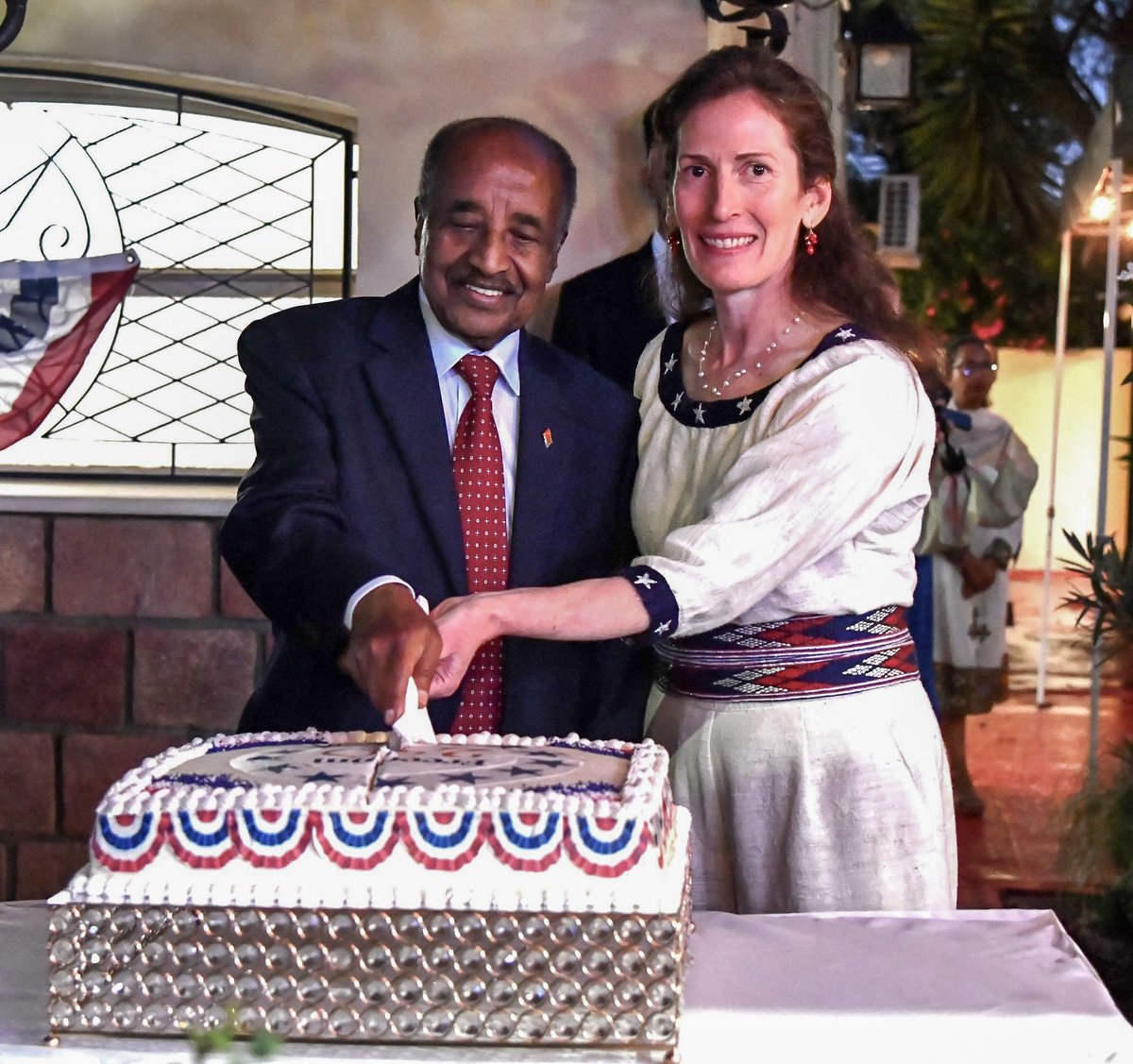
The U.S. Embassy in Eritrea proudly marked Freedom 250 on May 7 with friends and colleagues.
Chargé d’Affaires Christine Meyer highlighted the enduring values of freedom, democracy, partnership, and mutual respect that continue to strengthen ties between the American and Eritrean people.
The celebration, blessed with beautiful rains, was graced by Guest of Honor Foreign Minister Osman Saleh, along with government officials, diplomats, partners, alumni, and friends.
#Eritrea #USA