My latest paper, which reconstructs a lost recension of Ṣaḥīḥ al-Bukhārī, has just been published in the Journal of Islamic Studies (Oxford University Press). It is available here:
https://t.co/e0AtNJv4zA
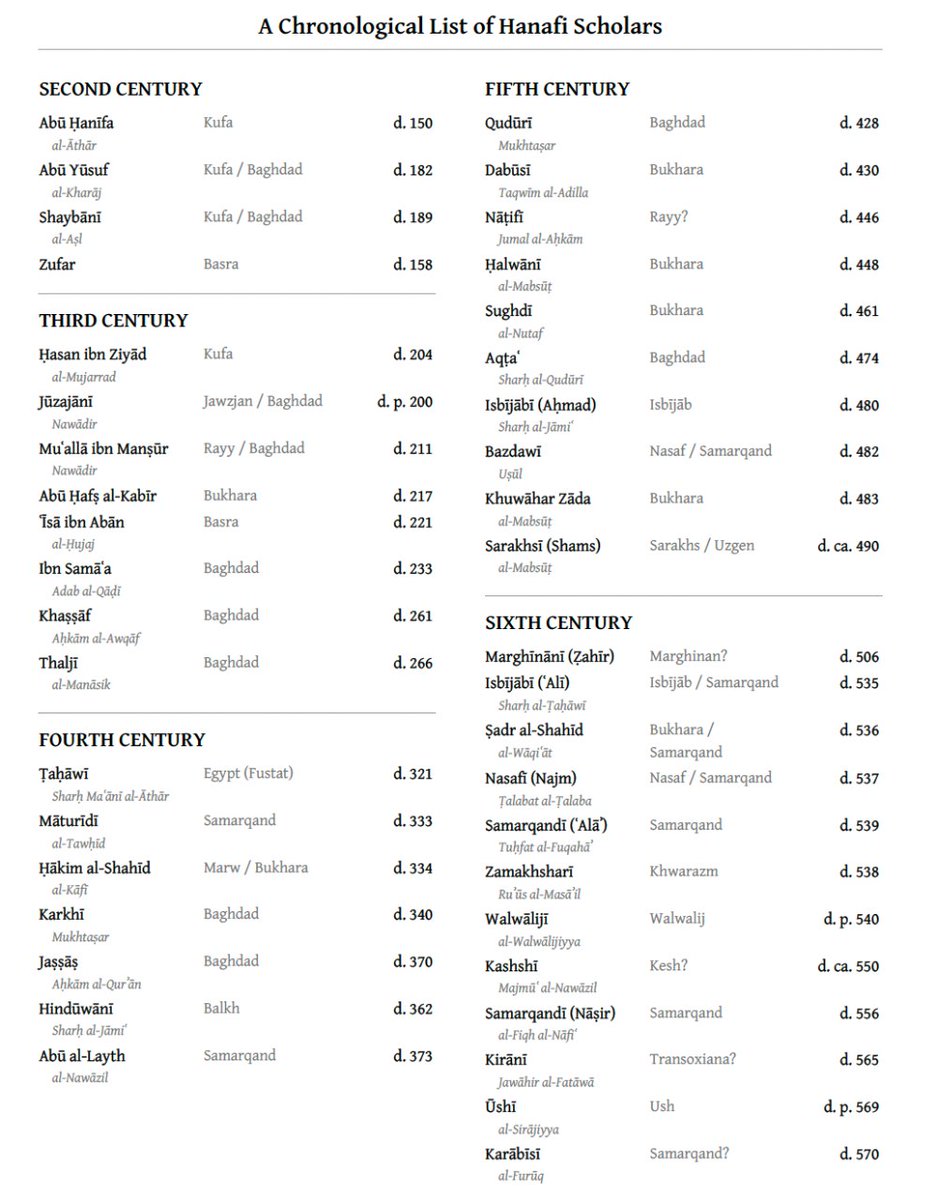
Knowing scholars’ death dates helps beyond hadith studies. Here’s a chronological list of notable Ḥanafī scholars to help students memorize. Ornate and complex timelines can be distracting, so I prefer to keep it basic.
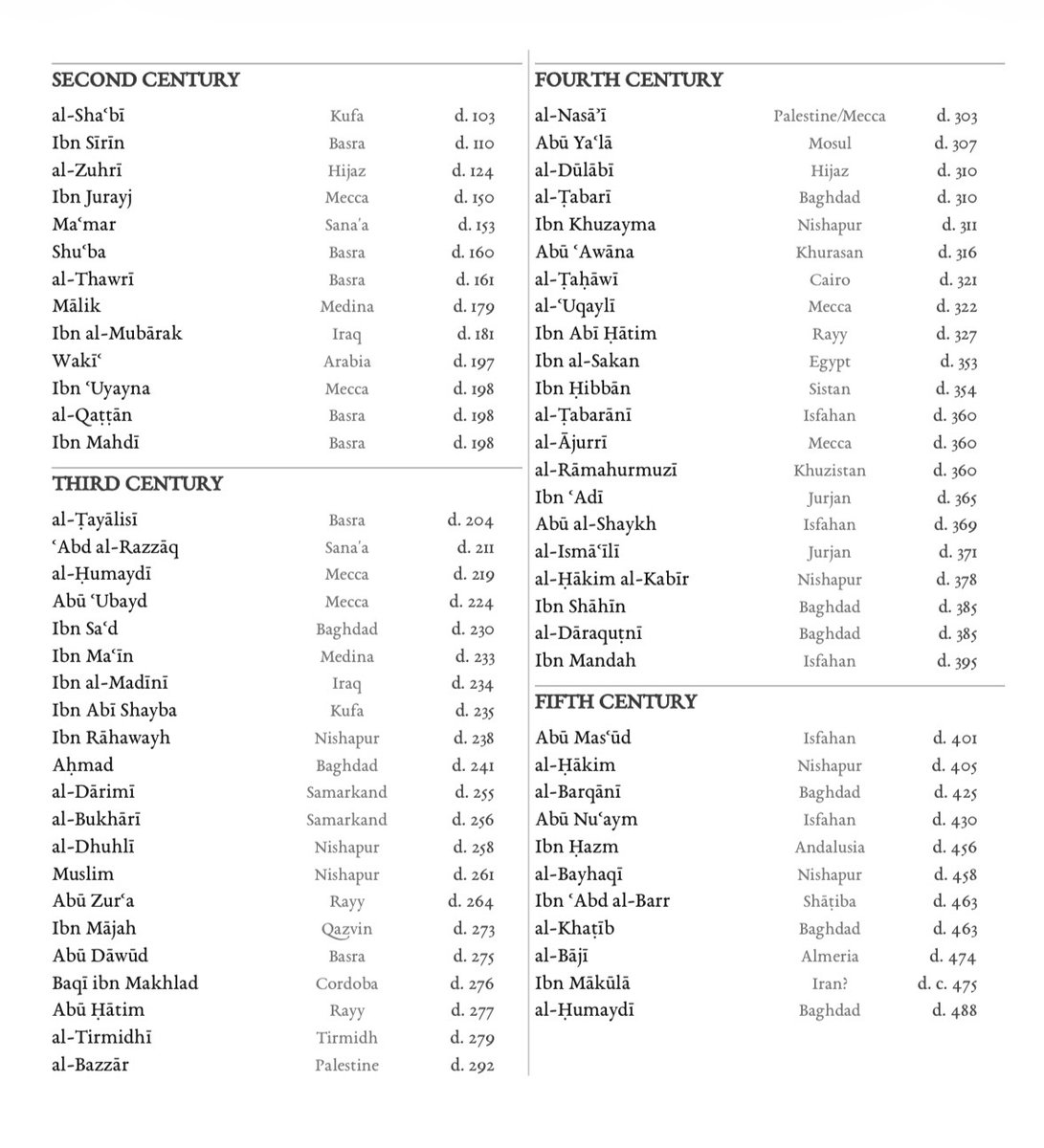
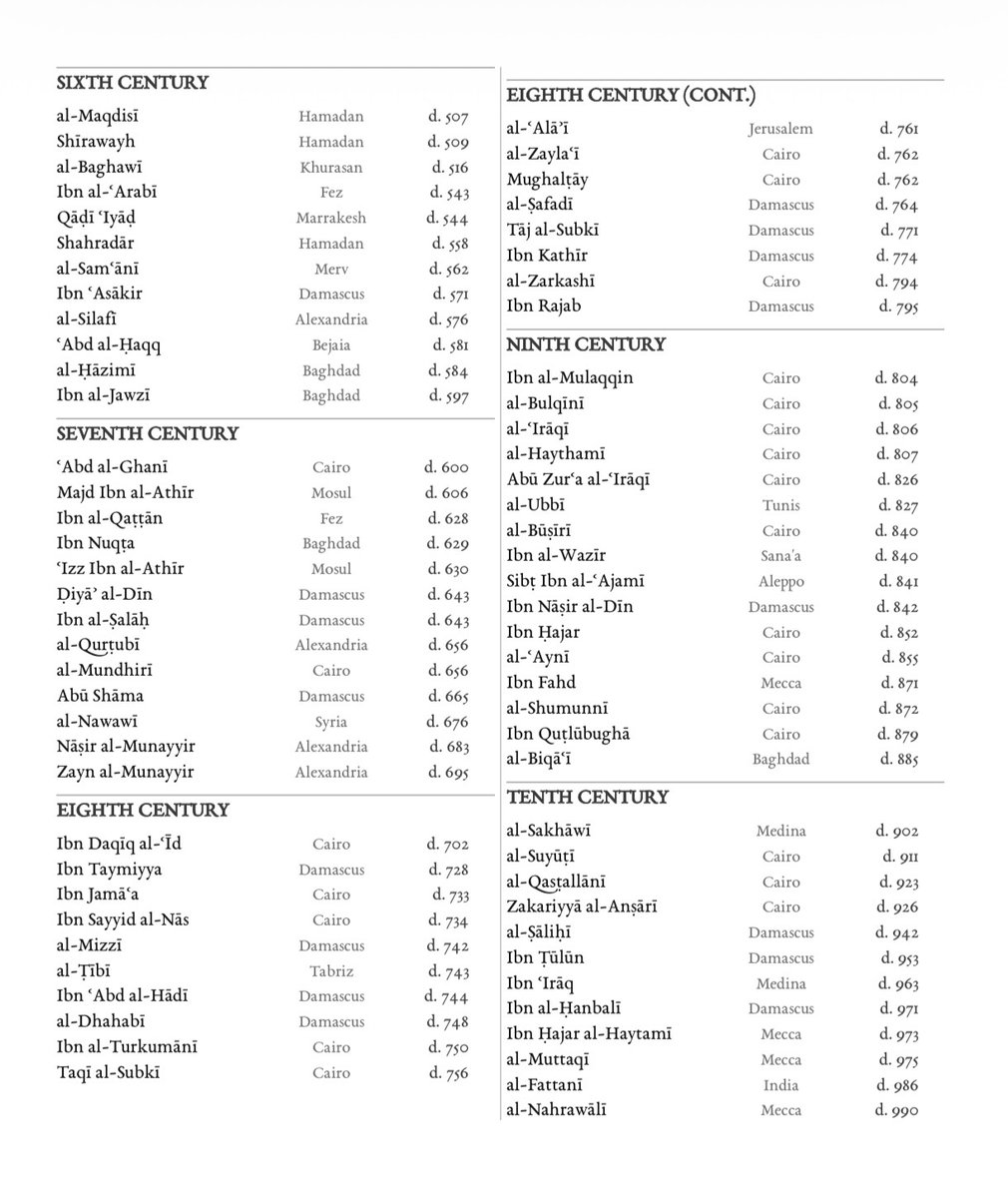
The best advice I received as a hadith student: memorize scholars’ names, death dates, and regions. It helped me connect the dots.
I made this list to help students do the same. Learn a few names each week, revise regularly, and soon you’ll know them by heart.
In a recent study, Ṣalāḥ al-Dīn al-Shāmī examines a report attributing a dismissive remark about Abū Hurayrah (r) to the Ḥanafī Imam Muḥammad b. al-Ḥasan al-Shaybānī.
Here is my translation and preface to the relevant section.
https://t.co/Fpbx2YvOTi
Ibn Ḥajar's Fatḥ al-Bārī began as basic lecture notes but evolved into a 25-year community project (& mutually "borrowed" notes from ʿAynī :)
After burning out on vol. 1, he pivoted to an "intermediate" commentary that became one of the greatest works in Islamic scholarship.
Imagine going about your day in Mecca and casually chatting with your neighbor, only to learn later that he was ʿAbd al-Raḥmān b. Mahdī (d. 198H) conducting field research.
His POV: "This guy had no clue what he was talking about!"
Your entire life reduced to a footnote...
A digital copy of my book examining the interplay between hadith and empirical data (via hadith on the height of Prophet Adam) is available for download.
https://t.co/hJxGVVoCqR
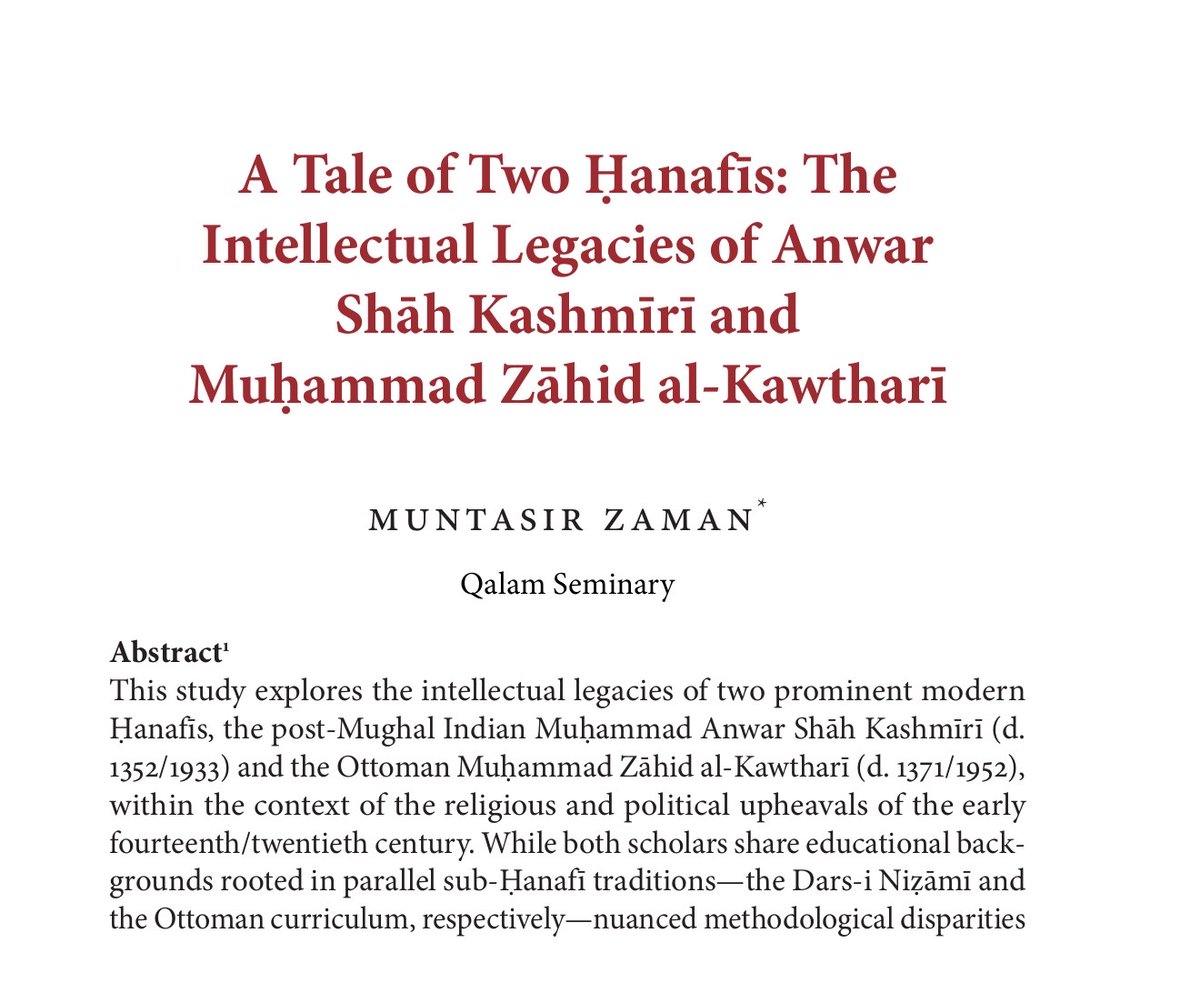
My paper examining the intellectual legacies of Anwarshāh Kashmīrī and Zāhid al-Kawtharī, two towering 20th-century Ḥanafī scholars, is now available for download.
https://t.co/x8BIbl4gV4
I prepared a map and timeline of Imam al-Bukhārī’s life and intellectual career.
His extensive travels are not easily captured on a static image. When read alongside the timeline, the overall trajectory becomes much clearer.
https://t.co/seAT40dAJ8
@SasanianShah We importated a blank map and designed it on PowerPoint. I initially thought to remove modern names, but kept them in a smaller and lighter font for reference.
@TheMuslimTheist Agreed. I say "touch on briefly" to avoid over promising, but in reality the whole book is meant to deal with some of the core issues.
My latest paper, which reconstructs a lost recension of Ṣaḥīḥ al-Bukhārī, has just been published in the Journal of Islamic Studies (Oxford University Press). It is available here:
https://t.co/e0AtNJv4zA
To streamline the material I share here and across other platforms, it was suggested that I pivot to Telegram for more frequent updates. For those interested, the channel can be joined with this link:
https://t.co/Hfdm7S2SMU
I still plan to post here occasionally - insha-Allah.
There are many intriguing methodological traits of Ṣaḥīḥ al-Bukhārī that continue to fascinate me but most prominent are (1) Bukhārī's subtle critique of hadith by way of omission and (2) his presentation of defective hadith.
[Below: hadith on the Mahdī and Walīd’s flogging]