@TheTNHoller@Limefield If Trump gets paid a whopping $10B because his tax paying history (or lack thereof - we all knew it anyway) was made public, think how much should be paid to the Epstein victims whose names his incompetent DOJ revealed despite the fact that it was explicity prohibited by EFTA.
@dstigovza Hey DSTI are you sure about this?
SA holds 80% of the world's manganese reserves and 56% of the world's Platinum Group Metal reserves. Manganese is used in the cathodes of EV batteries and is one of the cheaper components. Platinum isn't used for EV battery production.
She lost her mother to cancer after a misdiagnosis. At 16, she built an AI system to prevent the same thing from happening to others.
Melek Öztürk was 16 when her mother was first misdiagnosed with pancreatic cancer, then correctly identified with adrenal gland cancer. The delays and confusion during treatment showed her firsthand how much damage a wrong diagnosis can do. Her mother didn't survive. Instead of letting that grief consume her, Melek channeled it into something that could help others.
Working through her school's math club "Matrix" in Izmir, Turkey, she developed an AI system called ONCOMathRIX that uses topological and differential analysis to detect kidney cell carcinoma from pathological images in seconds. It was tested on 537 open-source datasets and achieved a 97% accuracy rate. A professor at Ege University's medical faculty initially saw it as a student hobby project, then realized the system was filling a real gap in the literature.
The project has passed the first round of TEKNOFEST, Turkey's largest technology competition, and is currently in the patent process. She is 16 years old.
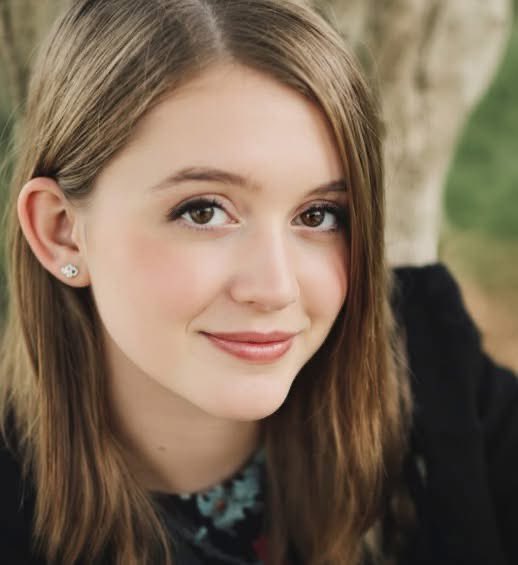
South African teenager Bohlale Mphahlele developed an innovative personal safety device designed to look like a simple piece of jewelry.
Known as the Alerting Earpiece, the device is built to resemble a regular earring while discreetly containing a small camera and emergency alert system.
When activated, the earpiece can capture images and send a distress signal to selected contacts. The alert can also include the wearer’s live GPS location, helping trusted individuals or emergency responders locate the person quickly.
The idea behind the design is to provide a discreet safety tool that can be used in situations where reaching for a phone or drawing attention may not be possible.
Mphahlele presented the concept at the Eskom Expo for Young Scientists, where the project received recognition from judges and education officials.
Her invention highlights how young innovators are using technology to address real-world challenges, particularly around personal safety and rapid emergency communication.
The 10,000 ton Canadian Steam Merchant Ship S.S. Point Pleasant Park was the last ship to be sunk by a U-boat in South African waters during World War Two.
The S.S. Point Pleasant Park sailed from Montreal in Canada on 05 December 1943, bound for Cape Town but stopped over in Halifax for some minor engine repairs to be carried out. The ship left Halifax in a convoy on 09 December 1943, stopping at New York City and then Port of Spain, Trinidad where she refueled and continued in convoy.
Off the coast of Brazil, she was detached from the convoy to sail alone to Cape Town arriving in early February 1944. The ship then called on Port Elizabeth, East London, Durban, and Beira in Moçambique before returning to Cape Town with a cargo of sugar.
The S.S. Point Pleasant then sailed to Lagos in Nigeria and collected a cargo of palm oil, peanuts and cocoa for Montreal where she arrived on 19 June 1944. Most of her crew re-enlisted for her second voyage and she left Montreal in Canada on 03 July 1944 repeating a similar voyage in convoy as far as Brazil and then unescorted to Cape Town, East London and Durban before loading a cargo of manganese ore from Takoradi in the Gold Coast (Ghana) which she delivered to Philadelphia and arrived in Saint John, New Brunswick on 18 December 1944.
On 23 February 1945, while sailing 300km off the Coast of South West Africa en-route from Montreal in Canada for Cape Town, the S.S. Point Pleasant Park was struck by a torpedo fired from U-510 (Kapitänleutnant Alfred Eick) and sank with the loss on nine crewmen who were killed instantly in the explosion.
The torpedo blast also destroyed the ship's radio antenna so no distress call could be sent out. The two lifeboats with the remaining survivors, plotted a course for the South West African Coast but soon lost sight of each other. In one boat 21 sailors were crowded into space made for 11 or 12. Daily rations were 2 ounces of water per man, two spoons of pemmican (hard grain mixed with fat), two biscuits and a small piece of chocolate.
The overcrowded boats endured blistering sun and survived a significant storm. The survivors were comforted when the Southern Cross Constellation appeared in clear skies every night and confirmed they were on course. Captain Owens and 19 crew members made landfall at Mercury Island on the South West African Skeleton Coast on 02 March 1945. The fishing vessel F.V. Boy Russell found them, picked them up and landed them safely at Lüderitz in South West Africa.
On 04 March 1945, the South African Navy Minesweeping Trawler HMSAS Africana (T01) located the other lifeboat North of Spencer Bay and safely landed the 29 crew members, many of them injured, at Walvis Bay. After recovery in hospital, the survivors were all sent by rail to Cape Town and eventually made their way back to Canada via the United States.
She ate lunch alone for 730 days straight. What this 16-year-old built from that pain now protects millions of kids worldwide.
Seventh grade. Natalie Hampton carried her tray through a packed cafeteria and felt it — that specific, suffocating dread of not knowing where to go.
She'd already learned what happened when you approached the wrong table. The silence. The turned backs. The whispered laughter that followed you all the way to the empty table by the wall.
The one everyone could see.
The one that said: nobody wants her.
For two full years — 730 consecutive lunches — that table was hers. Alone.
The bullying went further than whispers. She was shoved into lockers. Four physical attacks in two weeks. She came home with scratches and bruises. When she finally reported it, school administrators sent her to counseling — to find out what she was doing wrong.
The isolation grew so heavy she was hospitalized for anxiety.
Then ninth grade came. A new school. And almost overnight — everything changed. Students welcomed her. She made friends within weeks. She finally knew what safe felt like.
But she couldn't stop thinking about the kids still sitting at the wall table. Right now. Today.
She remembered what she'd needed most during all those lunches. Not a teacher. Not a pamphlet. Just one person saying: "You can sit with us."
So at 16 — with zero coding experience and "a lot of enthusiasm," as she put it — Natalie built exactly that.
She called it Sit With Us.
The idea was simple and genius: students sign up as "ambassadors," keeping their table open. Other kids privately browse available tables on their phones before ever walking into the cafeteria — and show up knowing they're already welcome.
No public rejection. No moment of judgment. Just a guaranteed seat.
Within 7 days of launching: 10,000 downloads.
Then the world found her. NPR. The Washington Post. CBS News. Messages from Morocco, Australia, the Philippines, France — kids who'd been eating alone for years, finally finding a place to belong.
Sit With Us now operates in 30 countries.
"Even if it helps one person," Natalie said quietly, "it was worth building."
She turned 730 lunches of loneliness into a lifeline for millions.
That's not just survival. That's transformation.
For 25 years, Carl Allamby spent his days under car hoods in Cleveland, running an auto repair shop, fixing engines, paying bills, and supporting a family. Medicine was a childhood dream, but like many dreams, it was shelved early — replaced by responsibility, practicality, and survival.
Then, in his mid-40s, he made a decision most people quietly talk themselves out of. Carl went back to college. While still working and managing his business, he took pre-med classes, volunteered in hospitals, and studied alongside students young enough to be his children. There was no fast track and no inspirational shortcut — just long nights, financial strain, and the uncomfortable reality of starting over from the bottom.
He wasn’t chasing status or a title. He was finishing something he never closed. Carl entered medical school and graduated at age 47. After that came residency — one of the most demanding stretches in medicine. Years later, at 51, he reached the goal he had carried since childhood, becoming an emergency medicine physician with the Cleveland Clinic system.
In interviews with major outlets, Carl has said growing up with economic hardship shaped how he treats patients — especially in the emergency room, where fear, pain, and uncertainty arrive long before answers do. The life he lived before medicine didn’t disappear. It followed him into every exam room.
Friends, this isn’t a story about late success. It’s about refusing to let practicality permanently silence a calling.
Some dreams don’t fade. They wait until you’re finally willing to return to them.
Credit: Family and Cleveland Clinic Photography, Carl Allamby / Instagram
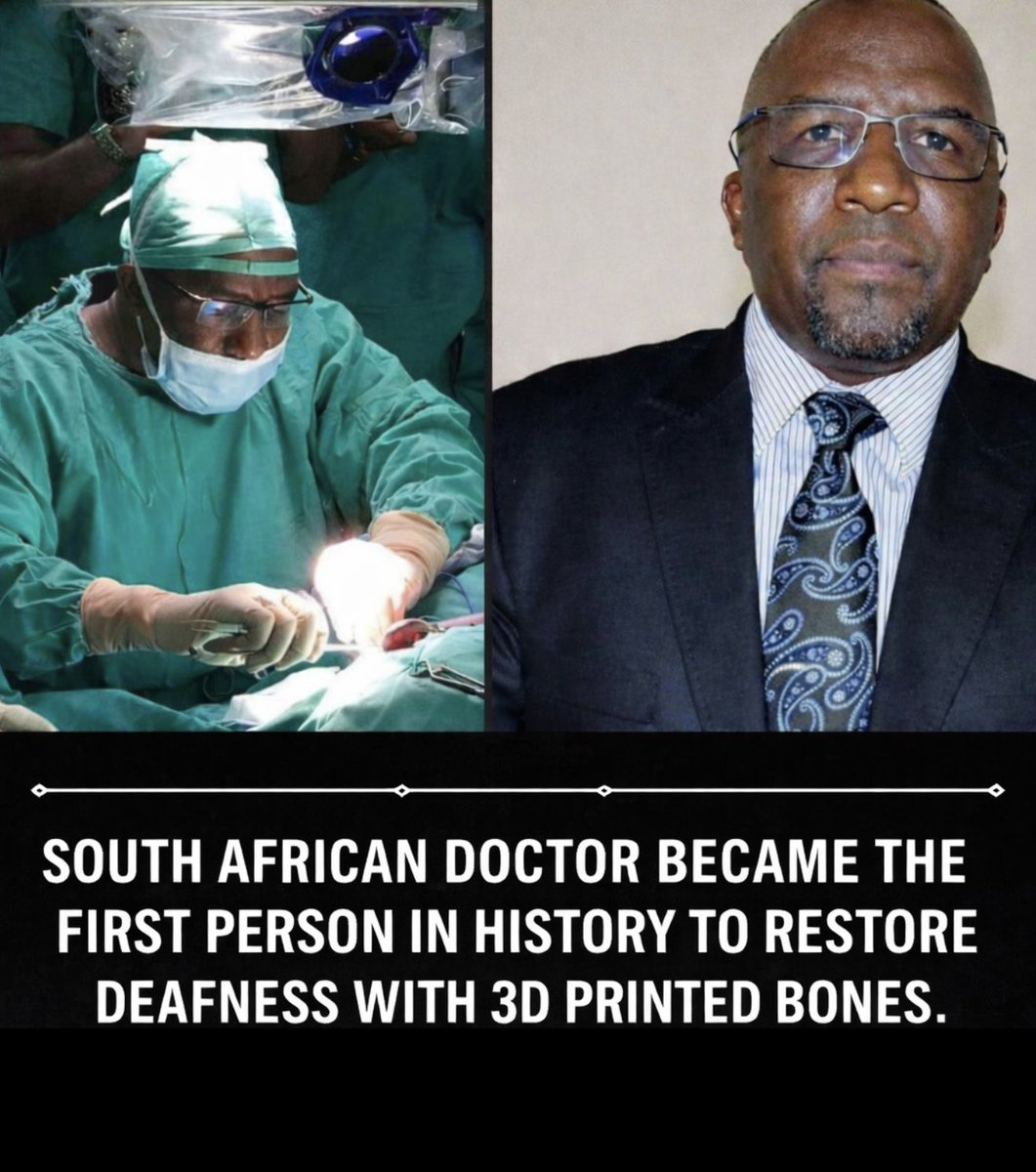
In 2019, South African ENT surgeon Mashudu Tshifularo led the world’s first successful middle-ear transplant using custom 3D-printed ossicles (the tiny bones that transmit sound).
The procedure restored hearing in patients with conductive hearing loss caused by damaged or missing middle-ear bones. While this was a major medical breakthrough, it does not cure all forms of deafness, it only applies to specific cases where hearing loss is due to middle-ear bone problems, not inner-ear or nerve damage.
The most valuable gold mine in American history wasn't found in the mountains of California, but inside a single 24-year-old man who had no idea he was a walking miracle.
In 1970, John Harrison was a routine blood donor in Australia. He lived a quiet life, never suspecting that his veins carried a biological anomaly so rare it defied medical logic.
During a standard screening, doctors noticed something impossible: Harrison’s blood contained a specialized, high-concentration antibody that could neutralize Rhesus (Rh) disease—a condition that causes a mother’s immune system to treat her own fetus as a foreign invader, leading to brain damage or death for the baby.
At the time, Rh disease was a silent killer, claiming thousands of infants every year. There was no cure, only grief. When researchers saw Harrison’s results, they realized they weren't looking at a patient; they were looking at a living factory for a world-changing vaccine.
For the next 60 years, John Harrison became the "Man with the Golden Arm." Every few weeks, like clockwork, he sat in a donation chair. He never asked for fame, and he never sold his secret to the highest bidder.
By the time he retired in 2018, Harrison had donated blood over 1,170 times. Scientists used his plasma to develop the Anti-D injection, a treatment that has since been administered to millions of mothers.
The statistical impact is staggering: John Harrison is directly credited with saving the lives of over 2.4 million babies. He walked the streets as an ordinary man, while inside him, a tiny protein was rewriting the fate of entire generations. He didn't find gold in the earth; he carried it in his heart, and he gave it away for free.
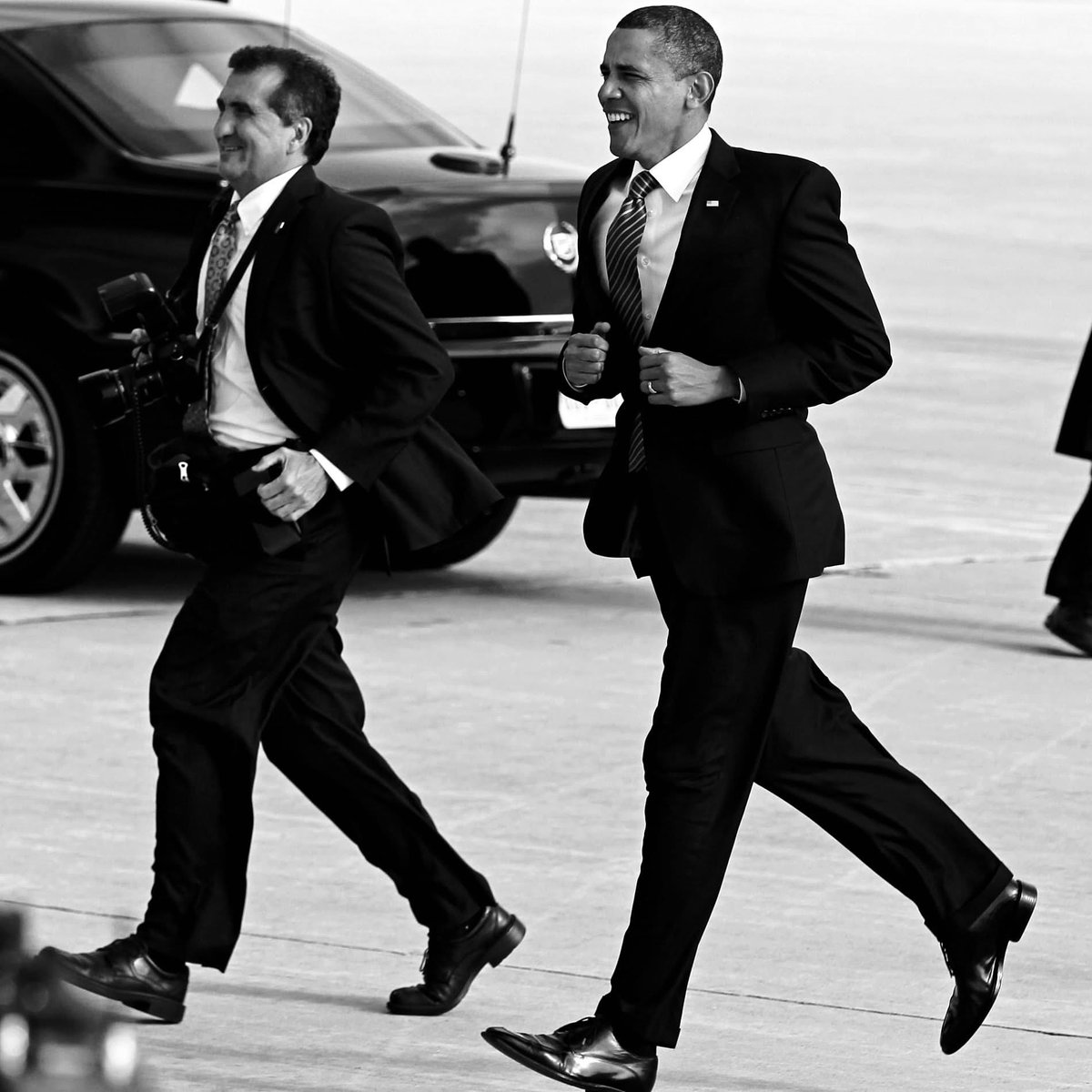
The history books quietly bypassed is that Barack Obama, during the most pressure-saturated nights of his presidency, would retreat alone to the Treaty Room on the second floor of the White House residence — not to strategize, not to take calls, but to handwrite personal letters to ten ordinary American citizens every single night, a practice he maintained with almost monastic devotion across all eight years, selecting the letters himself from the 40,000 that arrived daily at the White House, and his longtime correspondence director Fiona Reese confirmed that Obama would often weep privately while reading certain letters, folding them carefully before writing responses so personally detailed and emotionally present that recipients frequently described the experience of receiving them as the most significant moment of their lives, with one Ohio steelworker writing back to say that Obama's letter had physically stopped him from making a decision that would have permanently altered his family's future. What makes this practice almost unbearably moving is the detail that surfaced later — Obama never used a computer for these letters, always a black felt-tip pen, always legal yellow paper first as a draft, always rewritten onto White House stationery by hand a second time, because he believed, as he told historian Doris Kearns Goodwin in a rare private conversation later recounted in her 2018 work, that the physical act of pressing pen to paper forced a quality of attention that typing simply could not replicate, a philosophy rooted in his years as a constitutional law professor at the University of Chicago from 1992 to 2004 where he developed the conviction that democracy only functions when its leaders remain genuinely, uncomfortably close to the specific gravity of individual human suffering rather than processing it from behind the insulating distance of institutions and screens."
Good Morning, Beautiful Friends ☕️🌻🩵
I hope you’ll take a few minutes to enjoy these young guys.
They’re Puttin On the Ritz. 🎶🎧🎶
And they’re awesome!
Have a great day. ☁️🙋🏼♀️☕️🌻🩵🥰