Here we go again.
Today's retail sales numbers, as reported by the US Census Bureau, are divorced from the reality of what happened.
The Census is reporting the numbers as being flat. This is based on a month-over-month calculation on seasonally adjusted numbers.
This is an inaccurate and misleading way to measure. No retailer calculates sales on a month-over-month basis. And no one in any industry seasonally adjusts their sales: they report what they actually took.
The proper way to analyze is to look at the same Census Bureau numbers on a non-seasonally adjusted year-over-year basis.
When that's done the whole picture changes. Total retail sales were not flat, they actually grew by 4.0%.
Now sure, there are lots of points to make about that growth: it includes inflation, it came off the back of a weak prior year number, it benefitted from higher tax refunds, and so forth. However, that's the reality of what happened.
The proper numbers are shown below in the chart.
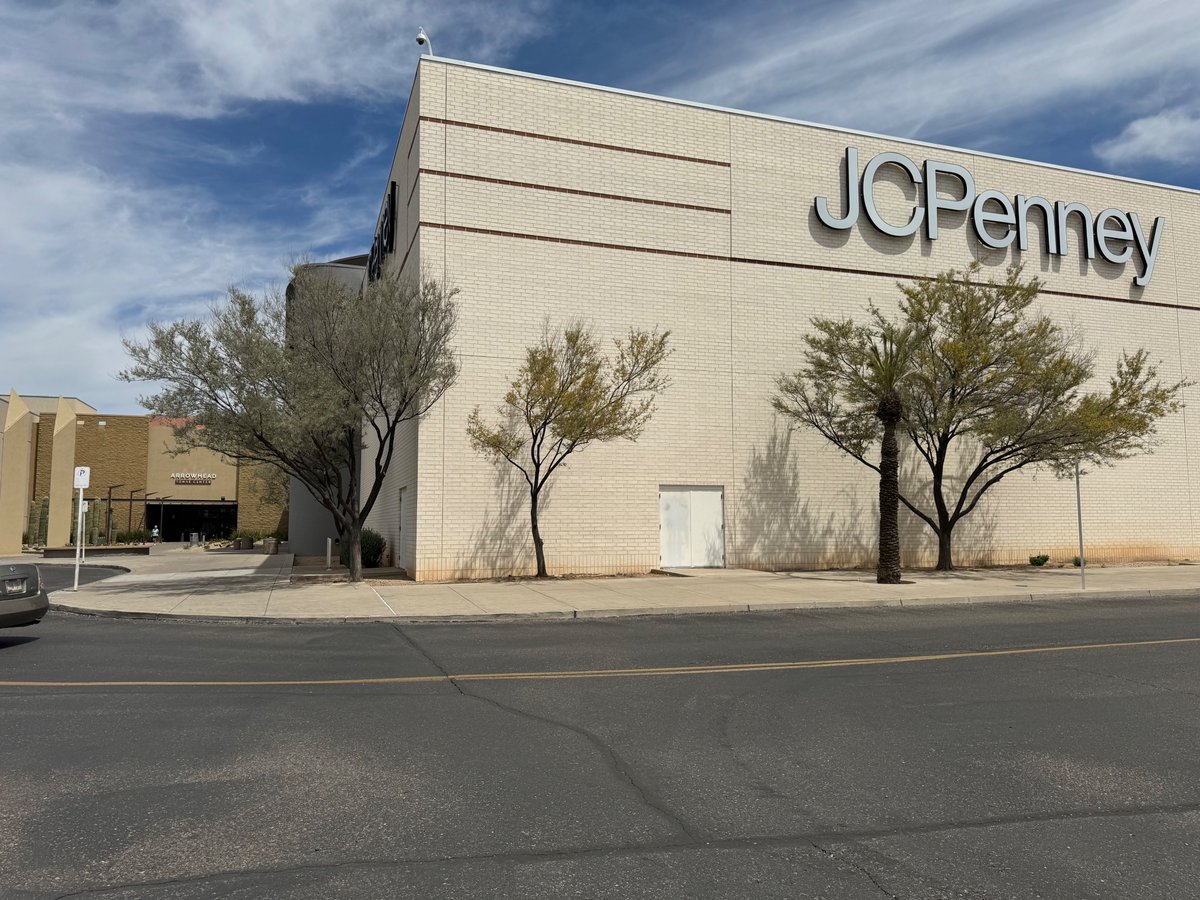
Last week I met with JCPenney CEO, Marc Rosen, and some of his team including Chief Merchandising Officer, Michelle Wlazlo. We walked one of the stores JCPenney has refreshed as part of its $1 billion turnaround program. 🧵
@ThredUp's annual resale report has become a State of the Union for the thrifting market. The twelfth edition has just been released.
Here are some of the key findings:
💵 The global secondhand apparel market is projected to reach $350 billion by 2028, growing at a compound annual growth rate (CAGR) of 12%.
🇺🇸 The US secondhand apparel market grew 7 times faster than the broader retail clothing market in 2023. It’s expected to reach $73 billion by 2028.
��Online resale is expected to more than double in the next 5 years, reaching $40 billion by 2028 and growing at a CAGR of 17%.
👖60% of consumers say shopping secondhand apparel gives them the most bang for their buck.
♻️ 87% of retail executives who offer resale say it’s advanced their sustainability goals.
👩🏽⚖️ 42% of consumers say the government should take legislative action to help promote sustainable fashion.
Our team at @globaldataplc have loved working on this report with thredUP for many years. The growth and development of the resale market has been phenomenal!
Link to full report in the next post...
Great point from Robbie Brenner of Mattel Films - the toy category isn’t just about products, it’s about stories and creating stickiness around that story. That then sells toys. Story first: a lot of retailers could learn from this! #Shoptalk
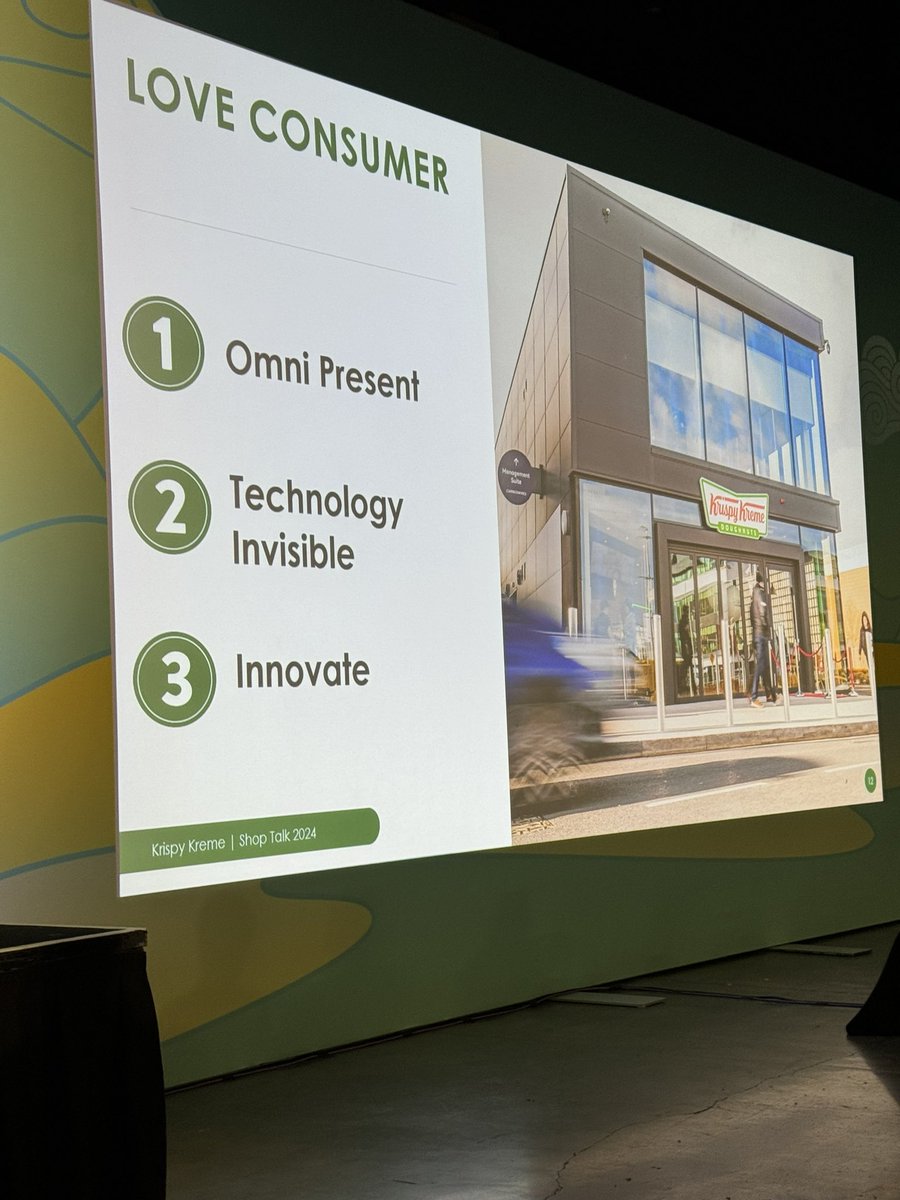
Great point from Krispy Kreme - technology should be invisible (and just work). Customers do not get excited about technology for the sake of it. They want tech that helps them accomplish what they need to do. This should be embraced emphasized over and over… #Shoptalk
Love this point from Christopher Thomas-Moore, Chief Digital Officer of Domino’s: when you meet someone for the second time, your conversation is deeper and different from the first time you meet them. And that’s the way you have to think about personalization in digital - you leverage what you already know to create a richer and more meaningful experience for the customer.
#Shoptalk
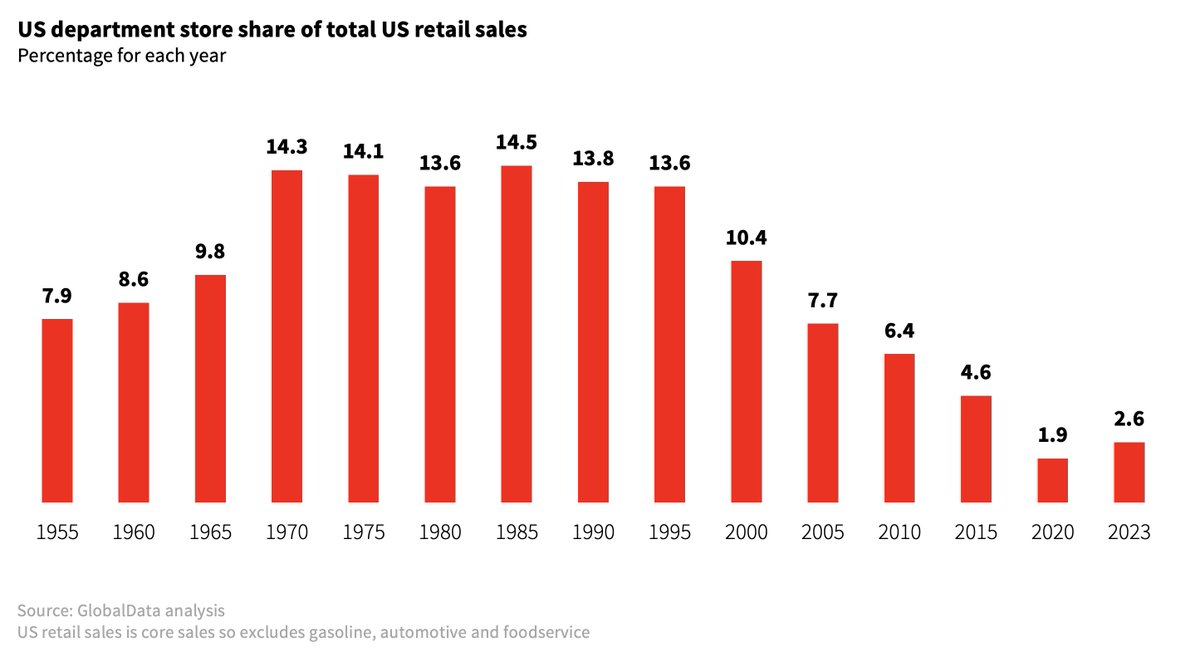
Macy's decision to shut 150 of its shops has brought department stores back into the spotlight. Their decline has been dramatic. Many factors have played a role - but the biggest one is their own neglect. They largely did this to themselves.
I will be speaking at Shoptalk 2024 in Las Vegas, exploring how DTC players can optimize distribution strategies between traditional direct to consumer channels and wholesale. Hope to catch up with old friends and meet many new ones.
See you at #Shoptalk!
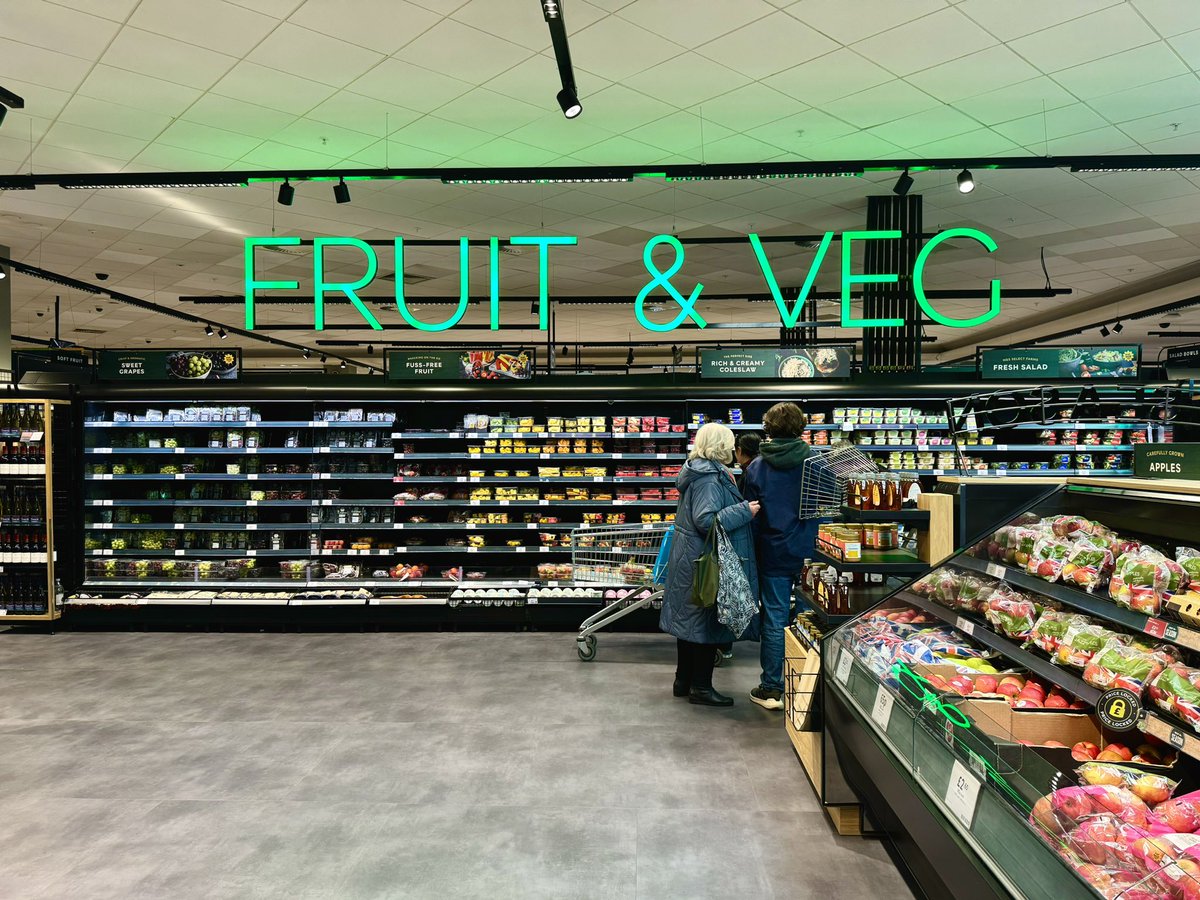
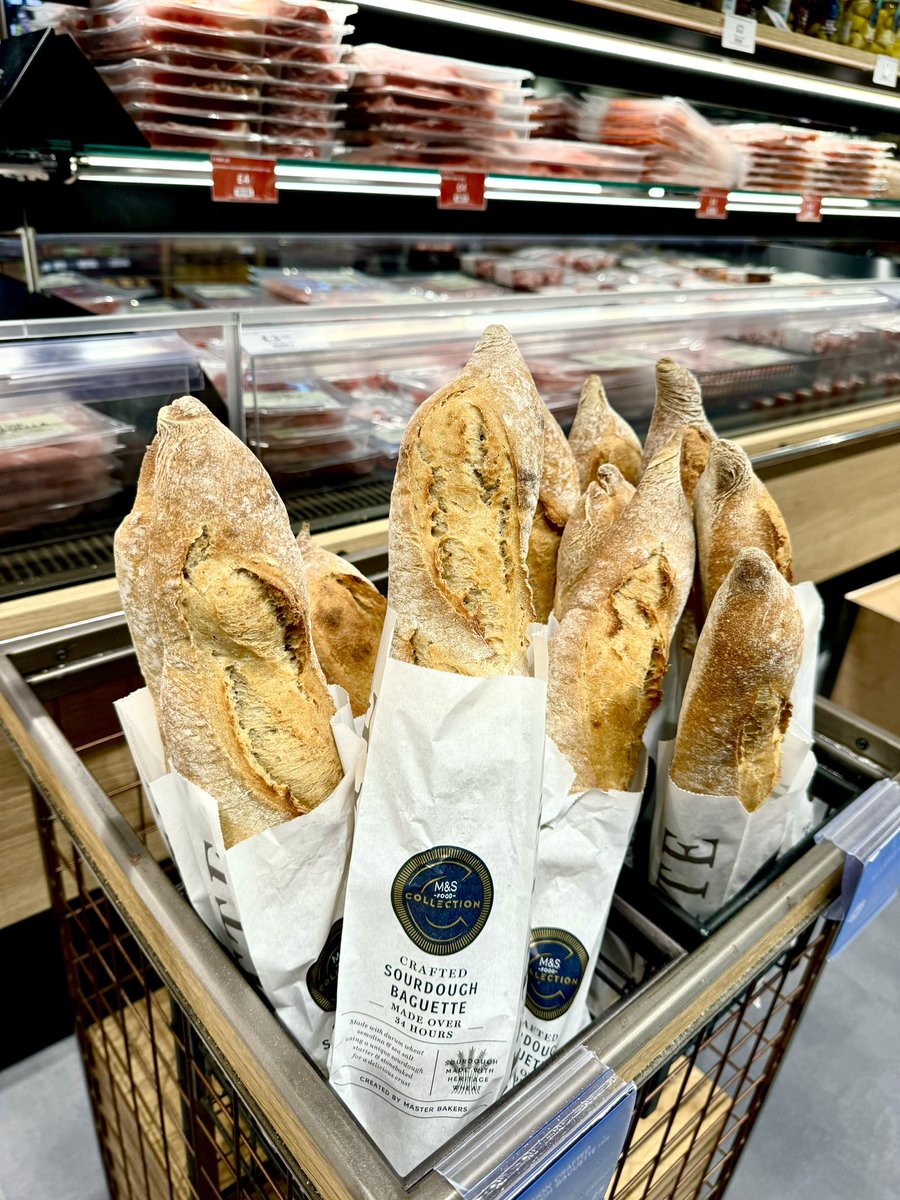
M&S’s success is so well deserved. A food hall packed with thoughtful innovation and incredibly tasty food. I’d give my eyeteeth to have a grocery store as good as this in the US! World class retail. #MandS
A bit late, but I watched the first episode of Mr Bates v The Post Office today. I don’t think I’ve ever been so angry watching television. All those poor, poor people. Quite how Paula Vennells still has her CBE is beyond me.
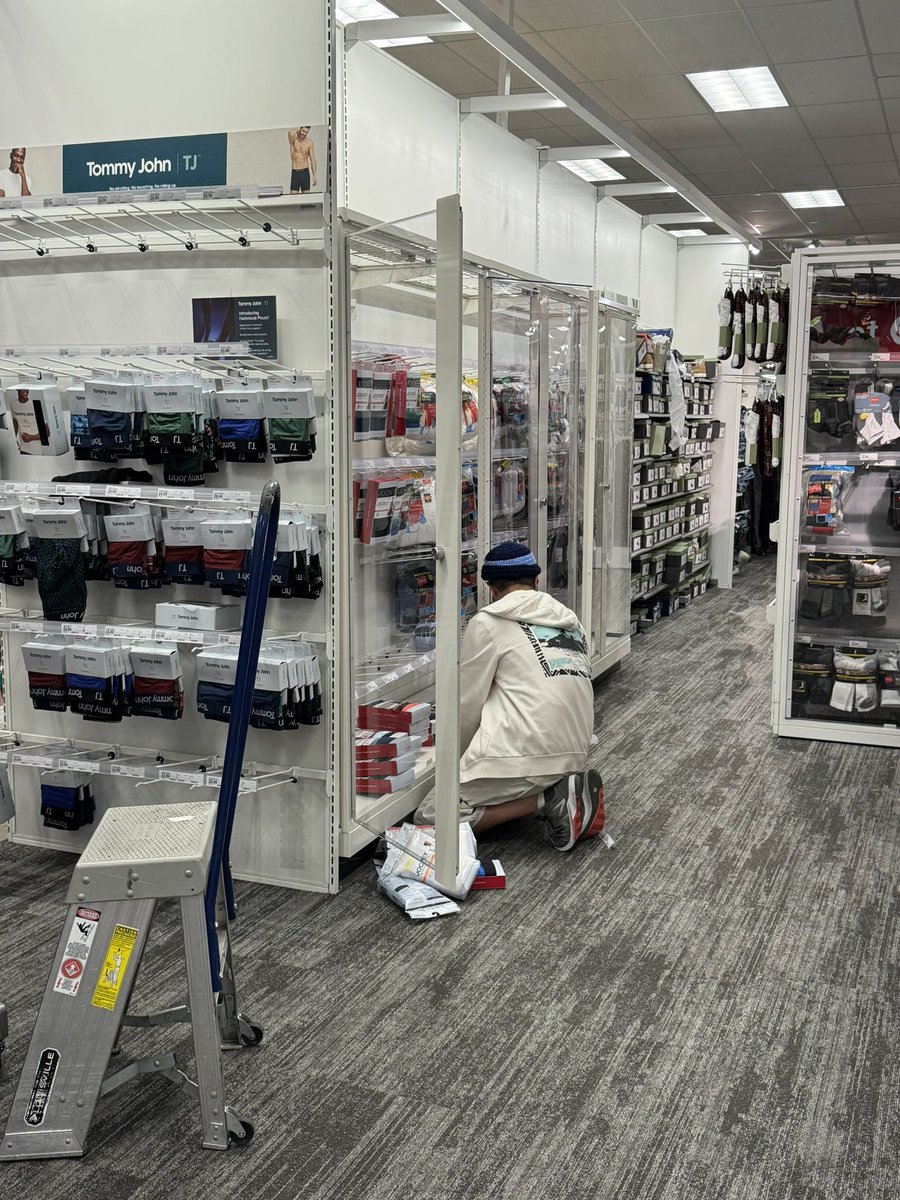
Target installing locked cabinets for all men’s underwear and socks … even basic lines like its own Goodfellow & Co. brand and Hanes. No matter what the reason, this is an atrocious way to run a store. Lost sales incoming… #Target
Today's results from Macy's are poor.
Overall sales are down by 8.4%, a decline that is much worse than overall retail spending.
Since the same period in 2019, Macy’s sales are down by 7.5%. Over this time, non-food retail spending in the US has increased by around 32.1%.
This shows that Macy’s is not only running in the opposite direction to most other retailers, but that it has lost a very significant amount of market share.
This isn't new. It's the continuation of a trend that has been in play for years. Management puts out warm platitudes and speaks of grand plans, but this does not change the fact that Macy’s is a retailer in decline.
Nor does it remedy the essential issue which is that Macy's has an incredibly sloppy attitude to retail. There is a lack of care in merchandise selection and a complete breakdown in how that product is displayed in store. What all too often greets the customer is a hot mess.
This dissuades customers from buying and it eventually deters some from visiting. This in turn makes weakens the productivity of stores. Ultimately, this makes it much harder to invest in improving shops.
This vicious cycle is one management needs to break if it wants to avoid the same fate as a long list of defunct department stores.
A change of CEO is coming early next year. There is still a chance to turn things around. But first, Macy's must at least admit and own its mistakes: something management has been poor at doing.
---
These are pictures of the main entrance to a Macy's store taken on Saturday, August 19th. This is the very first thing the customer sees. Spartan displays with no product. Unfortunately, it set the tone for the rest of the store: a dismal experience that did nothing to entice or excite. Little wonder sales are down so sharply.
Reports of the death of physical retail have always been greatly exaggerated.
Not so long ago, thanks to the temporary pandemic-fueled spike in online sales, some were predicting the demise of physical retail.
More recently we had the absurd prediction that we’d all be shopping in the metaverse.
These prognostications were nonsense, as time has proven.
Today CNN reports that malls are making a comeback with traffic up and vacancy rates down.
And the WSJ reports that retail is a bright spot in commercial real estate with retailers set to open more stores than they are closing across the course of this year.
Physical retail will always be around and will continue to account for the vast majority of spending for the foreseeable future.
There are many reasons why but, foremost among them, is people like shopping in person: we are social beings who want to interact with others and the world around us. This point is often missed or underestimated.
And then of course, there’s the role that physical retail plays in supporting online: as a place of collection or fulfilment or for research before buying digitally.
Of course, none of this means that stores won’t change.
Nor does it mean that life will be easy for physical retail.
How we shop, the type of stores we need, how those stores work financially, and how they link to online commerce will continue to shift.
That requires retailers to think differently and to evolve the format of their stores.
Many are doing this, just as they have always done.
https://t.co/TIe9fFZjP4
From 2010 to 2019, US retail sales grew at an average of 3.1% a year. This is considered normal, healthy growth.
In 2020 the pandemic hit. Initially everyone was worried that retail spending would collapse.
Only it didn’t. It surged. Massively. Here are the annual retail sales growth rates for the past few years:
* 2020: 5.7%
* 2021: 14.6%
* 2022: 6.8%
Notice something? Yes, growth is way, way above the average. In 2021 not just a bit, but absurdly so. We were spending like crazy.
Over those three years combined, Americans spent $1.1 trillion more on retail than they spent in 2019.
How did this happen?
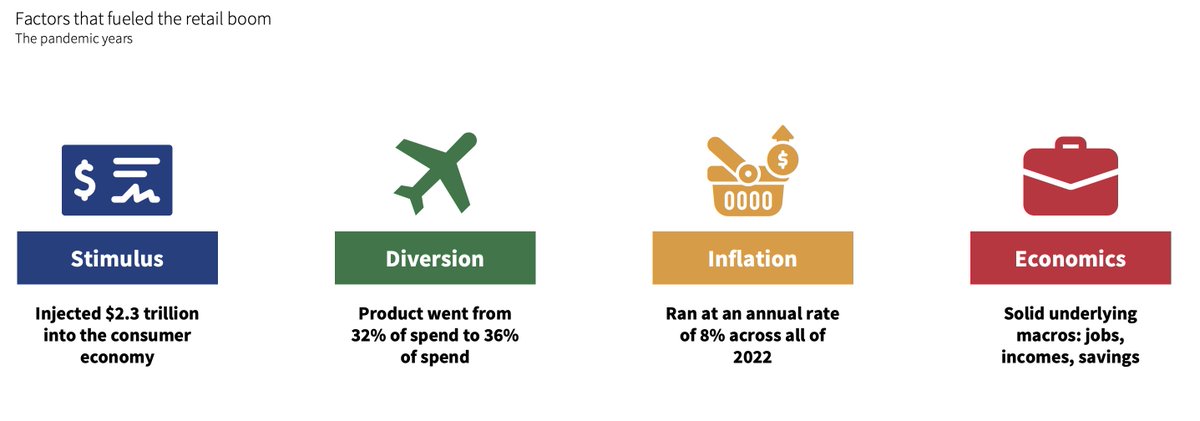
There are three main factors:
1. Stimulus: this is the biggie - from all sources, it injected about $2.3 trillion into the consumer economy; people spent it on all kinds of things, but a lot found its way into retail.
2. Diversion: typically, households spend about 32% of their budgets on products – or traditional retail; in the pandemic years this rose to 36% as people curtailed activities like travel and diverted the money to buying new things. Doesn’t sound like a lot but each of those percentage points is worth about $89 billion.
3. Inflation: it ran at an annual rate of 8% over the course of 2022. Inflation flatters retail sales. Volumes may fall, but if inflation is hefty then sales rise.
Now, some of the stimulus money and savings from not travelling and such found their way into savings. That’s why the savings rate and deposits soared.
These savings have continued to be helpful to retail this year. Not as much as during the pandemic. That was like a big shot in the arm. Savings are more of an IV: a drip, drip that quietly funds spending.
Unfortunately, the drip is running dry. The Federal Reserve Bank of San Francisco estimates that Covid-related savings are now at around $190 billion. That sounds like a lot, but it’s down from a $2.1 trillion peak in August of 2021.
They claim that the pandemic savings pot will virtually run dry in September.
It doesn’t take a financial wizard to work out what impact that might have on future retail sales growth!
Amazon is not a monopoly. Amazon poses no risk to consumers. In fact, Amazon has benefitted consumers, helped to advance retail, and given smaller sellers a platform and audience they could previously only dream of. The FTC should stop its ideological crusade against Amazon.
DTC firm Allbirds is all about sustainability. That's how the company differentiates and markets itself. Today it has debuted the design of the world's first zero-carbon shoe called "M0.0NSHOT". And, true to its name, it looks very space age.
Now, this is all very worthy and there is no doubt that sustainability has become more of a concern for consumers. But how much does it drive purchasing decisions in footwear? From our data, the blunt answer is not much.
The primary shoe buying considerations for consumers are price, style, comfort, fit, functionality, and brand. Sustainability is way down the batting order and is something of a secondary factor - even among those who buy Allbirds.
Interestingly the one thing many Allbirds consumers rave about is comfort. Perhaps that, and not sustainability, should be the key area of focus to drive sales.
https://t.co/K7mdHFttU6
We are launching a best in class look at the future of the US and Global Cannabis market. Learn about the opportunities, challenges and implications for your industry.
Email (address on flyer) for more info. Or drop your details here:
https://t.co/97ADjVFbAM
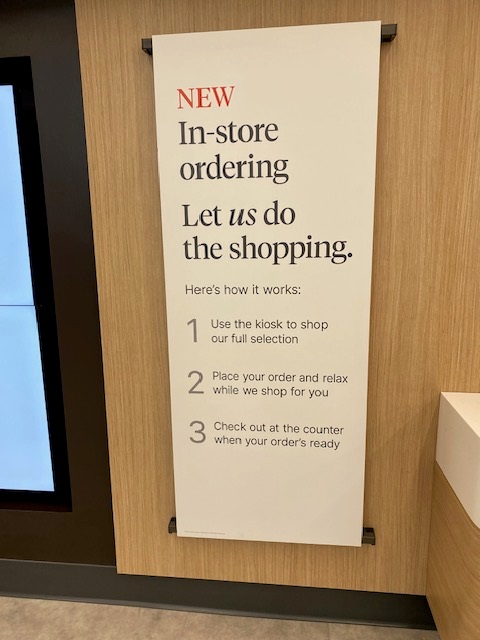
Some photos of Walgreens' new concept in Chicago where you order most products via a kiosk and pick them up at the counter. The biggest question is: what problem is this solving for the customer? The honest answer is: none. It's likely solving a problem for Walgreens - theft.