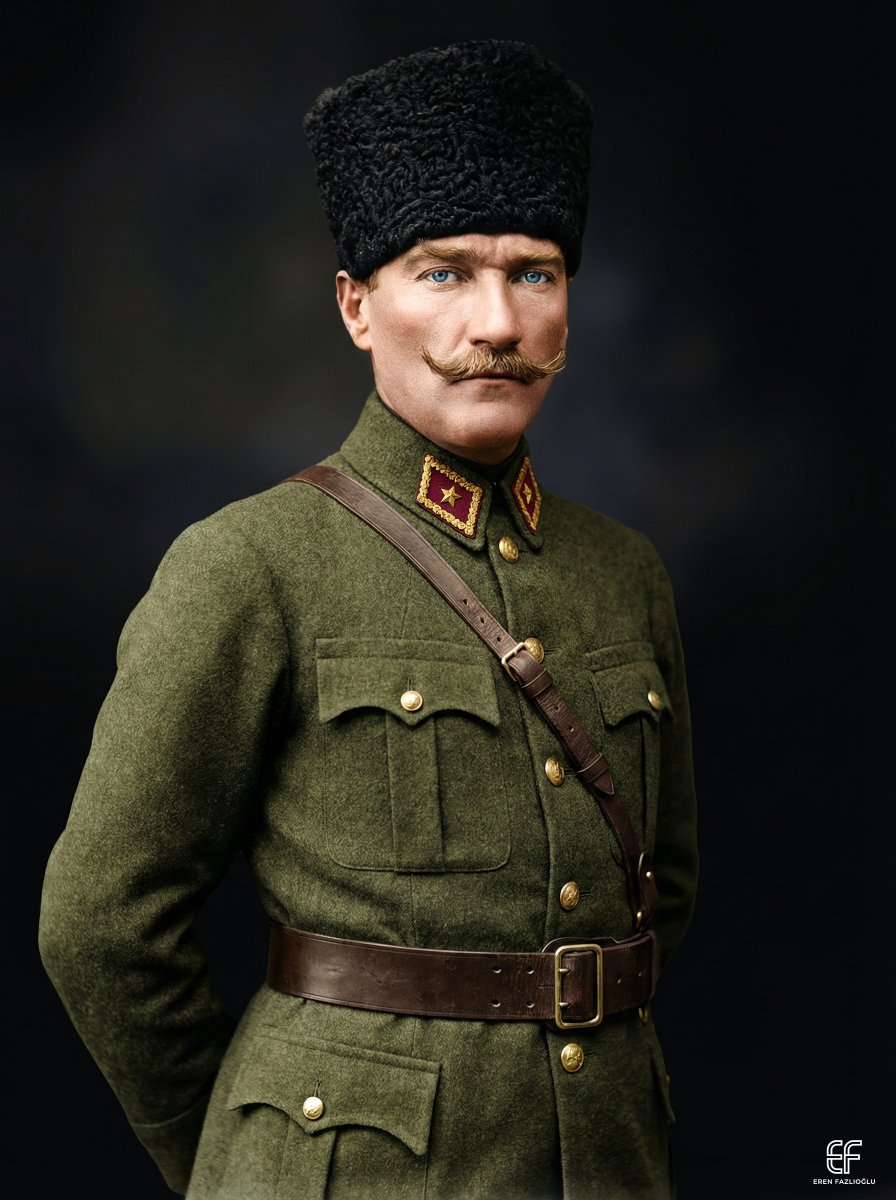
My great-uncle served in the Italian 🇮🇹 expeditionary force that landed in Antalya in 1919. They supplied weapons and ammunition to Mustafa Kemal’s forces and trained his troops.
I doubt the Italian government ever intended to stay in Antalya long-term. It was furious with the British 🇬🇧 at the time.
Most Italians felt cheated by their allies after the First World War. Italy had entered the war in 1915 on the promise of substantial territorial gains, only to receive far less at the peace conferences. The phrase “vittoria mutilata” – “mutilated victory” – became common currency.
In that context, the Italian presence in southern Anatolia was a diplomatic and geopolitical move. By cultivating relations with Turkish nationalists, Rome undermined the Greek 🇬🇷 forces – strongly backed by David Lloyd George – while frustrating British plans in the eastern Mediterranean.
Unlike the Greeks, who pursued annexation of territories with large Greek populations, the Italians had neither a substantial settled population in the region nor a convincing long-term claim to Antalya.
The Allied Powers had thrown Antalya to the Italians like owners tossing a bone to a noisy dog. Italy sought Dalmatia to make the Adriatic an Italian lake, plus a share of the German colonial empire, instead.
The occupation became a bargaining chip rather than a genuine colonial project. Supporting Mustafa Kemal offered Italy a cheap way to weaken its rivals, gain influence with a rising power, and remind London and Paris of their betrayals.
In the end, Rome backed the winning side. As the Turkish National Movement strengthened, the Italians withdrew quietly, leaving their remaining supplies for the Kemalists – a legacy often forgotten today: among the Allied powers, Italy was arguably the most sympathetic to the Turkish nationalists and the first to recognise that Kemal’s movement would prevail.