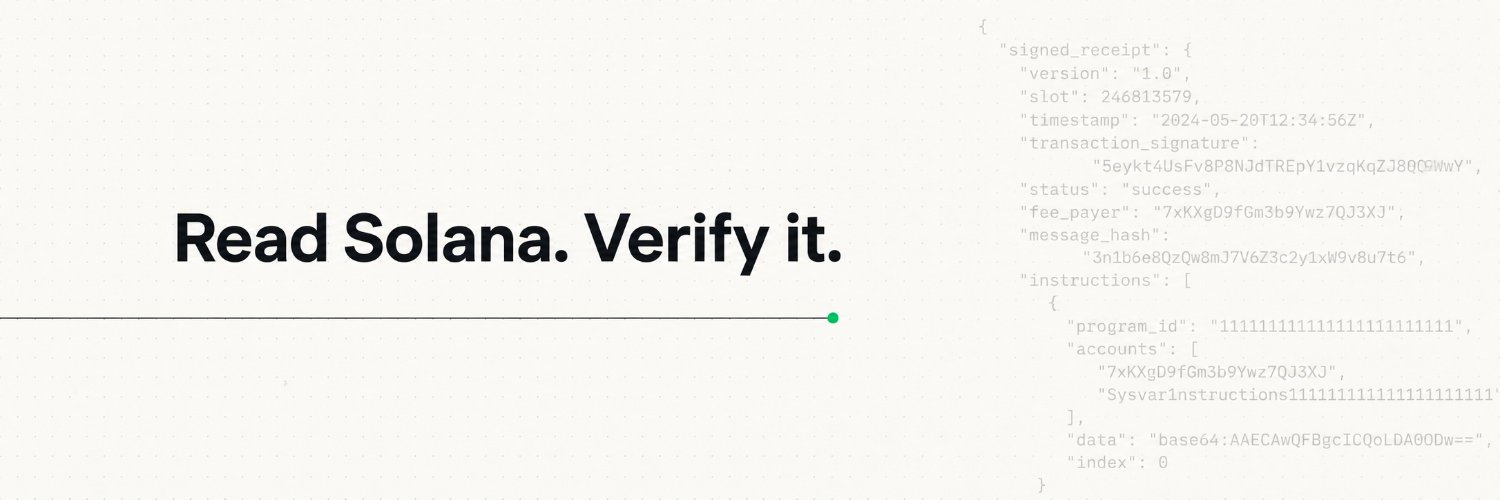
The read layer Solana should have had.
App and explorer: https://t.co/jVmKBNGgIz
Docs: https://t.co/gcNJQS9B9N
Generate API keys in the dashboard.
Read Solana. Verify it.
https://t.co/jVmKBNGgIz
Wallet flow graphs are live in the explorer.
See where the funds actually go. Every transfer drawn as a network you can read, and the answer still ships with a signed receipt.
https://t.co/UGCTpT18ex
Free test queries are open. No login.
Hit the live endpoint, check latency against a real node, and verify the receipt in your own browser before you commit to anything.
https://t.co/jVmKBNGgIz
API keys are live in the dashboard.
Sign in, generate a key, and your reads get higher limits with per-key usage you can watch. The free tier still works with no key at all.
https://t.co/LramEOnUnF
The SDK is live on @npmjs
npm i hallmark-sdk
One call reads, one call verifies:
const { result, receipt } = await hallmark.getBalance(addr)
await hallmark.verify(receipt)
https://t.co/gcNJQS9B9N
$HALLMARK is the access layer, not a sticker on the side.
Free: no token.
Holder: hold to lift your limits.
Pro and Enterprise: higher tiers still.
Higher tier, higher limits. Full details at launch.
Launching soon on @solana
https://t.co/jVmKBNGgIz
Solana can do 65k TPS. Reading it still means trusting whatever RPC answers you.
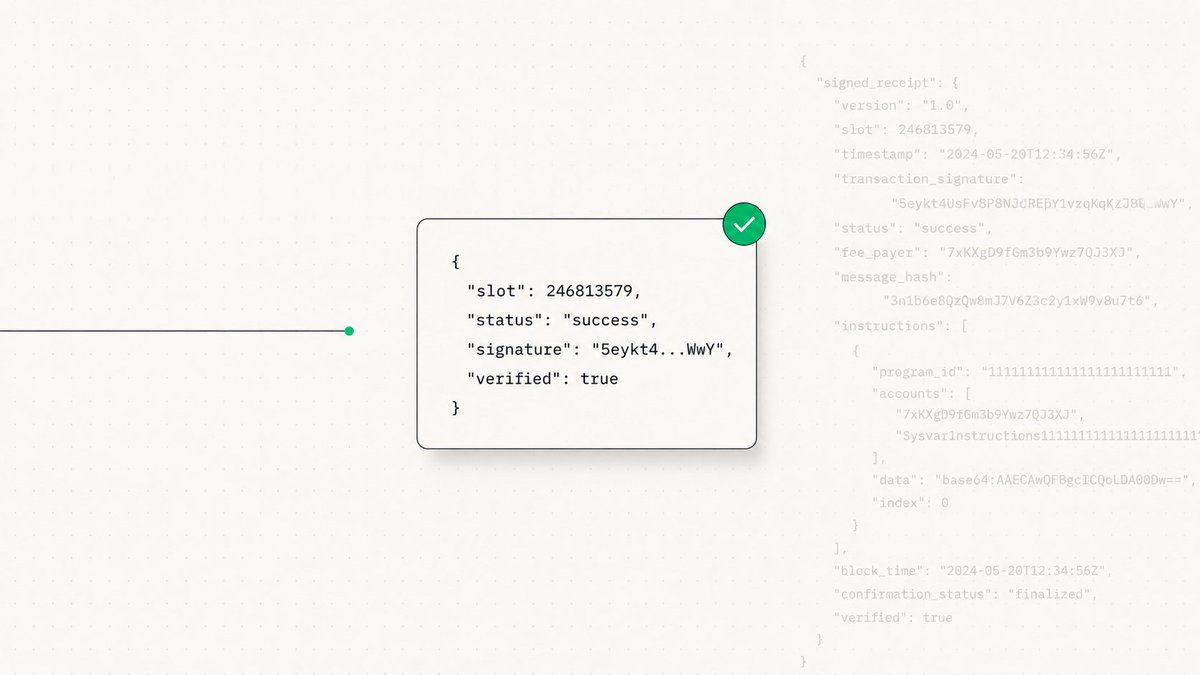
Hallmark is the read layer that fixes that. Query any account, transaction, or slot and get back a cryptographically signed receipt that proves the data is real.
https://t.co/jVmKBNGgIz
For builders:
- REST API, drop-in
- hallmark-sdk on npm, verify() built in
- Free tier with no login, API keys for higher limits
- Docs and a quickstart in about two minutes
Point your backend at Hallmark and your reads come back provable by default.
https://t.co/gcNJQS9B9N