‘Mr. Beast Islam’ is one of the main aesthetic and ideological variants of Islam today. It represents the development Islamic forms have undertaken in the wealthy Arab Gulf and so, downstream of that, will be the form that Islam takes in many places in hypermodernity
“I’m the judge assigned to you as an expert roadman-ologist. What happened?”
“Wagwan say less dem pagans getting me vexed bare malis on opps mans shook bare xooged dem mandem rah nah fam that’s peak man chinged dem yout”
“I see. So mans on a mad ting?”
“Brap brap you dun know”
HOW SOCIAL TRUST IS ERODED - A VISIT TO INDIA 🇮🇳
🧵 A few years ago now I spent some time in India. One of the more lasting impressions I have from that period was the degree to which the low trust environment there (of a kind) wore me down mentally and transformed my attitude towards public spaces from a by disposition fairly ‘high trust’ person to being much more cynical and constantly on guard - ie being ‘low trust’. Over the space of the first month or so, because of the environment, experiencing real psychogenic anguish at the mental transition from being basically well meaning and otherwise liberal to irritable, combative and developing (experience-informed) prejudices.
My assumptions about how easily you can sustain ‘high levels of social trust’ were shredded. Many people take for granted that high levels of social trust can be upheld without excessive coercion on a sort of naive libertarian basis of most people naturally being ‘fairly decent’ and so behaving ‘fairly decently’. Though I’d encountered this ‘low trust’ behaviour in a many other countries it was in india, because of how common and obtrusive it was, that it became impossible to avoid internalising that a lot of people are not in fact ‘fairly decent’ and that if enough not ‘fairly decent’ people get together they can easily despoil social environments.
Let me give you some examples of the kinds of behaviours you would encounter in India and then explain how prolonged exposure to those behaviours changes you. Granted you are a ‘Mleccha’, a ‘Gora’, (Foreigner, White Man) so qualifier you are treated differently but you still encounter these attitudes appreciably more than you would in many other countries. They do not of course represent the attitude of every Indian (I am an amateur Indologist I love India don’t @ me) but it evidences a certain ‘dog eat dog’ ‘tragedy of the commons’ mindset on the part of a part of the population that results in very appreciable low society wide social trust, at least over certain behaviours. (Others may be more policed eg social roles.) (Incidentally I think this mentality is one of the principal causes for many of India’s systemic problems but that is a separate topic.)
• Take a tuk-tuk or taxi. Driver pretends his meter is broken, quotes price ten times more than actual price. Doesn’t have any change, doesn’t have a card machine. Starts arguing with you when you say you are not giving them more money they should have the change. Sometimes will plead for large tip even if you pay them more than the actual price too. To combat this you have to be prepared to argue with the driver every time you take a taxi (start ‘fights’) and bring small change with you everywhere
• Taking the Mumbai Metro with a woman (naively), metro is incredibly crowded. Man uses crowd as an excuse to press himself up against the woman, starts masturbating. Woman screams, starts to have panic attack - but crowd doesn’t really react. She runs out crying at next metro stop
• Walking around on streets - lots of beggars approach you, often old women, young children, people with some kind of disfigurement, hijra etc. Sometimes they aggressively grab your wrist, your clothes, tug at your shirt and refuse to let go. Often will follow you for a while even if you tell them to go away
[1/2]
Bhutan and Sikkim are two culturally and historically similar Himalayan Mountain Kingdoms that both experienced large influxes of Nepalese migrants but which met with very different fates. In Sikkim, Nepalese migration was so great that eventually the Nepalese migrants were able to successfully lobby for the dissolution the country. In Bhutan, the King ordered the Nepalese migrants to be deported after open conflict broke out between the Bhutanese and Nepalese guerillas. Sikkim was absorbed into India. Bhutan still exists as an independent country today.
My thread on Bhutan’s 20th Century Demographic Crisis is linked in the tweet below:
Competent historian here, we all know Great Men of History don’t exist. I always point to my personal area of study - the famous French ‘Purely Socio-Economic Factors’ Wars of the early 19th Century - as a good example of Socio-Economic Factors being the sole driver of history
PICTURE THREAD TOUR OF LUTON, UK 🇬🇧
I recently visited Luton - a working class town near London infamously home to both the Tate Brothers and Tommy Robinson and one of the towns in Britain most transformed by immigration - to see what it looks like today 🧵
One of the greatest aspects of Western culture has been tolerance for eccentricity. You don’t get a bizarre man like Isaac Newton without this allowance. Einstein was weird too. Wittgenstein was bizarre. Beethoven couldn’t get along with people. Bach is an outlier as pretty normal. You identify the brilliant people and give them space.
The Asian system of mass conformity - beating the individuality out of kids through rote memorization (which has its place, but shouldn’t be exaggerated) and totally controlled time and space, all day, every day - does not give you a Scientific Revolution which puts Europe far ahead of China. There is a reason China hunkered down and Europeans transformed entire continents - building the modern world we all enjoy.
So the guys who want to recreate American culture along Tiger Mom systems might consider that their own education was just sucking up the achievements of what people not subjected to their childhood slavery developed. They scored great on tests, got into schools, made some dough. But following this model of 12 hours a day as a society will lead to stagnation and deep unhappiness.
AMERICAN MEDICAL STUDENT IN HAITI DESCRIBES WORKING WITH HAITIANS - A Thread 🧵
Haitians have been making the news yet again - A Short Thread once more re-sharing the Infamous Blog Post of a Medical Student’s Experience in Haiti about ‘How Haitians Think’ 🇭🇹
Trying to board a bus in London in 2024. Goes without saying that social niceties like queueing that are a part of high trust societies will disappear as Third Worldification continues. They say that British people love to queue - not anymore apparently
Suddenly I gained another 500 followers, so for their sake, I'll briefly summarize what the game is all about here. It seems we're going to rewrite the first few chapters of human history.
What started as "let's figure out how the unfinished obelisk in Aswan was made" has evolved in a direction where we can now confidently say the past didn't happen the way we thought.
Our ancestors were apparently capable of chemically altering stones, dissolving them, and then reassembling them. The evidence for this is that countless others besides me have done this, and it works, and it’s not even hard to do.
Unfortunately, there's no need for UFOs or ancient advanced civilizations to transport stone blocks of, say, 20-25 tons, or God forbid, 1000 tons. They weren’t hauling the stone blocks around, but just the raw material. In buckets.
The megalithic structures are masonry works, just that the mortar is a completely different material than what we use today. What could it be?
First Act
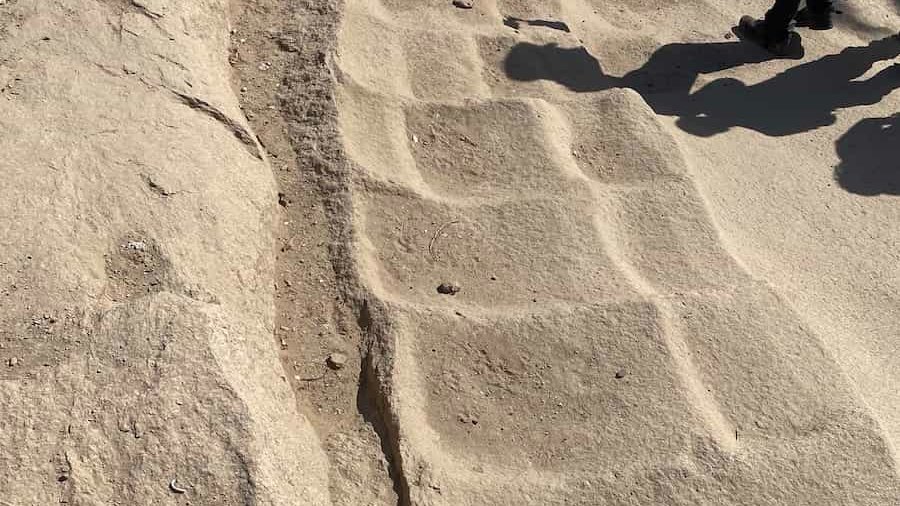
When I started to decipher the secret of the Aswan unfinished obelisk, I naturally had no intention of rewriting the early history of humanity. This realization came later. The mystery of the unfinished obelisk lies in the mysterious scoop marks, approximately 50x50 cm indentations, which look as though someone gouged out the granite with a giant ice cream scoop.
The official explanation is completely wrong, I won’t even go into that, it’s nonsense.
However, my umpteenth experiment was successful, and indeed, I was able to etch the supposedly indestructible granite with simple tools in my own backyard. All it took was a grill chimney starter, some charcoal, and - natron.
As it turned out, modern humanity of course knows that molten natron dissolves granite, or more accurately quartz, and this is used in several industrial processes, from pottery (cracking glazes) to recycling rare metals (liberating metals from circuit boards).
It's just that archaeologists didn’t know.
Which I have no problem with, other than the fact that they know now but still ignore the facts.
Second Act
Now that we've successfully etched the granite, let's see what material is produced in the chemical reaction, because maybe our ancestors could use it for something, considering they didn’t know the concept of waste. What could this white stone foam be good for?
As it turns out, the white stone foam is nothing but waterglass, Na2SiO3. This is fascinating because waterglass is one of the main components of modern geopolymers.
What do our ancestors do if they get their hands on a material with which they can make stone? They make stone with it! And here we reach the point of rewriting history. All those civilizations that were able to produce waterglass were obviously capable of casting new stones from waterglass.
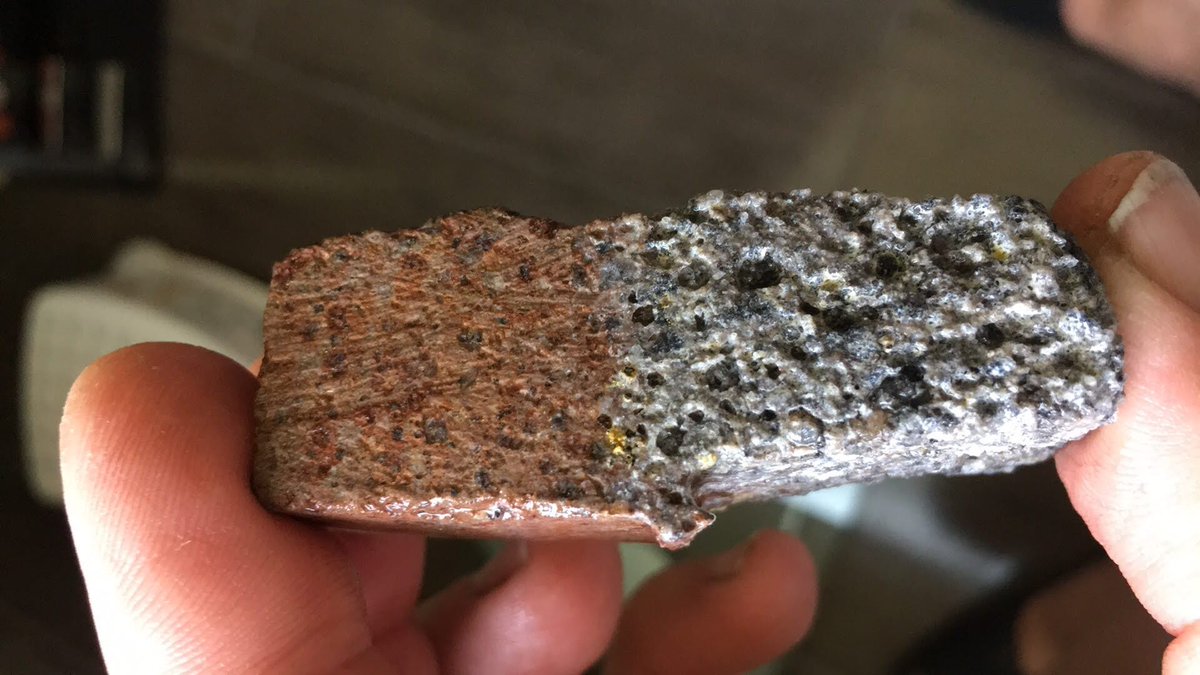
The simplest form of this, when ash is mixed into the waterglass, results in a beautiful black, Inca stone.
The source of the ash matters, it needs to have a significant aluminum content. Such sources include pine trees, tobacco, cannabis, etc. In short, there’s a way to make those ancient, ugly black and gray stones, and of course, many have already tried and succeeded.
The giant stone blocks of Inca walls fit so precisely together that not even a piece of paper can be slipped between them because they were simply cast next to each other, directly into the wall.
Third Act
Where did the Incas get their natron for all this? The place is called Salinas de Maras, a mountainous salt evaporation site where locals have been performing salt evaporation for millennia. Not surprisingly, Salinas de Maras is at the epicenter of all megalithic Inca construction sites. From there, they transported the natron in all directions.
An interesting question is, if the Incas figured this out, did other peoples come to the same realization?
And the answer is yes. I have mapped out and found worldwide that where there are gigantic stone works, whether carving a mountain or a huge structure made from a single piece of stone (Petra, Jordan or a bunch of rock temples in India), there’s always an unlimited source of natron nearby, without exception.
Eventually, I began searching for natron sources next to megalithic structures with the casual confidence of Neo dodging bullets in the Matrix, because I could see everything even with my eyes closed.
I even made a custom Google map showing these connections.
Fourth Act
What makes this all the more interesting is that if a more advanced civilization encountered the same relationship (waterglass + ash = stone), like the Egyptians, they might try to create prettier, not just black stones. They just need to find a material similar to ash but with a high aluminum content, in powdered form.
Modern geopolymer manufacturers use metakaolin for this purpose, which is nothing but burnt (calcinated) clay.
What a coincidence, this material is also found in Egypt, right next to Aswan in the desert! And only there!
Is it conceivable that the Egyptians tried to use burnt kaolinite for stone formation? This is not only conceivable but it would be offensive to the ancient Egyptians if we did not assume this about them. So, they tried it.
And what did they get? Artificial granite.
Or more accurately, a stone eerily similar to granite, but based on aluminum silicate instead of quartz, which is extremely difficult to distinguish from granite without very expensive instruments.
I admit, artificial granite has not yet been created in my lab. However, since this possibility fits seamlessly into the already proven story, and additionally explains a lot of unexplainable ancient achievements, it's probably true.
So here we are. I’m currently working on creating artificial granite, or more accurately, a hard stone that looks like granite, using purely ancient methods. And once that’s done, we can start rewriting the history books!
Here you can find the whole story unfolding:
https://t.co/anM3du9Sv6
Enjoy!
Immigration from India to Australia is now at record levels, and the City of Ryde has had to put up signs asking people not to shit in the public parks.
One of these days, we'll come to realize that we ruined the greatest source of information ever invented because we allowed subcontinentals publish SEOslop to earn a few rupees off of Amazon affiliate links.
AFRICAN LANGUAGES
Academic Gedaliah Braun on the lack of Abstraction in African Languages:
“In a conversation with students in Nigeria I asked how you would say that a coconut is about halfway up the tree in their language. “You can’t say that,” they explained. “All you can say is that it is ‘up’.” “How about right at the top?” “Nope; just ‘up’.” In other words, there appeared to be no way to express gradations.
In Nairobi, I learned something else about African languages when two women expressed surprise at my English dictionary. “Isn’t English your language?” they asked. “Yes,” I said. “It’s my only language.” “Then why do you need a dictionary?”
They were puzzled that I needed a dictionary, and I was puzzled by their puzzlement. I explained that there are times when you hear a word you’re not sure about and so you look it up. “But if English is your language,” they asked, “how can there be words you don’t know?” “What?” I said. “No one knows all the words of his language.”
“But we know all the words of Kikuyu; every Kikuyu does,” they replied. I was even more surprised, but gradually it dawned on me that since their language is entirely oral, it exists only in the minds of Kikuyu speakers. Since there is a limit to what the human brain can retain, the overall size of the language remains more or less constant. A written language, on the other hand, existing as it does partly in the millions of pages of the written word, grows far beyond the capacity of anyone to know it in its entirety. But if the size of a language is limited, it follows that the number of concepts it contains will also be limited and that both language and thinking will be impoverished.
African languages are impoverished only by contrast to Western languages and in an Africa trying to emulate the West. While numerous dictionaries have been compiled between European and African languages, there are few dictionaries within a single African language, precisely because native speakers have no need for them. I did find a Zulu-Zulu dictionary, but it was a small paperback of 252 pages.
My queries into Zulu began when I rang the African Language Department at a University in Johannesburg and spoke to a white guy. Did “precision” exist in the Zulu language prior to European contact? “Oh,” he said, “that’s a very Eurocentric question!” and simply wouldn’t answer. I rang again, spoke to another white guy, and got a virtually identical response.
I called a larger university in Pretoria, and spoke to a young black guy. As has so often been my experience in Africa, we hit it off from the start. He understood my interest in Zulu and found my questions of great interest. He explained that the Zulu word for “precision” means “to make like a straight line.” Was this part of indigenous Zulu? No; this was added by the compilers of the dictionary.
But, he assured me, it was otherwise for “promise.” I was skeptical. How about “obligation?” We both had the same dictionary (English-Zulu, Zulu-English), and looked it up. The Zulu entry means “as if to bind one’s feet.” He said that was not indigenous but was added by the compilers. But if Zulu didn’t have the concept of obligation, how could it have the concept of a promise, since a promise is simply the oral undertaking of an obligation? I was interested in this, I said, because Africans often failed to keep promises and never apologized - as if this didn’t warrant an apology.
A light bulb seemed to go on in his mind. Yes, he said; in fact the Zulu word for promise — isithembiso — is not the correct word. When a black person “promises” he means “maybe I will and maybe I won’t.” But, I said, this makes nonsense of promising, the very purpose of which is to bind one to a course of action. When one is not sure he can do something he may say “I will try but I can’t promise.” He said he’d heard whites say that and had never understood it till now. As a friend summed it up, when a black person “promises” he means “I’ll try.””







![kunley_drukpa's tweet photo. HOW SOCIAL TRUST IS ERODED - A VISIT TO INDIA 🇮🇳
🧵 A few years ago now I spent some time in India. One of the more lasting impressions I have from that period was the degree to which the low trust environment there (of a kind) wore me down mentally and transformed my attitude towards public spaces from a by disposition fairly ‘high trust’ person to being much more cynical and constantly on guard - ie being ‘low trust’. Over the space of the first month or so, because of the environment, experiencing real psychogenic anguish at the mental transition from being basically well meaning and otherwise liberal to irritable, combative and developing (experience-informed) prejudices.
My assumptions about how easily you can sustain ‘high levels of social trust’ were shredded. Many people take for granted that high levels of social trust can be upheld without excessive coercion on a sort of naive libertarian basis of most people naturally being ‘fairly decent’ and so behaving ‘fairly decently’. Though I’d encountered this ‘low trust’ behaviour in a many other countries it was in india, because of how common and obtrusive it was, that it became impossible to avoid internalising that a lot of people are not in fact ‘fairly decent’ and that if enough not ‘fairly decent’ people get together they can easily despoil social environments.
Let me give you some examples of the kinds of behaviours you would encounter in India and then explain how prolonged exposure to those behaviours changes you. Granted you are a ‘Mleccha’, a ‘Gora’, (Foreigner, White Man) so qualifier you are treated differently but you still encounter these attitudes appreciably more than you would in many other countries. They do not of course represent the attitude of every Indian (I am an amateur Indologist I love India don’t @ me) but it evidences a certain ‘dog eat dog’ ‘tragedy of the commons’ mindset on the part of a part of the population that results in very appreciable low society wide social trust, at least over certain behaviours. (Others may be more policed eg social roles.) (Incidentally I think this mentality is one of the principal causes for many of India’s systemic problems but that is a separate topic.)
• Take a tuk-tuk or taxi. Driver pretends his meter is broken, quotes price ten times more than actual price. Doesn’t have any change, doesn’t have a card machine. Starts arguing with you when you say you are not giving them more money they should have the change. Sometimes will plead for large tip even if you pay them more than the actual price too. To combat this you have to be prepared to argue with the driver every time you take a taxi (start ‘fights’) and bring small change with you everywhere
• Taking the Mumbai Metro with a woman (naively), metro is incredibly crowded. Man uses crowd as an excuse to press himself up against the woman, starts masturbating. Woman screams, starts to have panic attack - but crowd doesn’t really react. She runs out crying at next metro stop
• Walking around on streets - lots of beggars approach you, often old women, young children, people with some kind of disfigurement, hijra etc. Sometimes they aggressively grab your wrist, your clothes, tug at your shirt and refuse to let go. Often will follow you for a while even if you tell them to go away
[1/2]](https://pbs.twimg.com/media/Gld7faLW8AA9Op-.jpg)