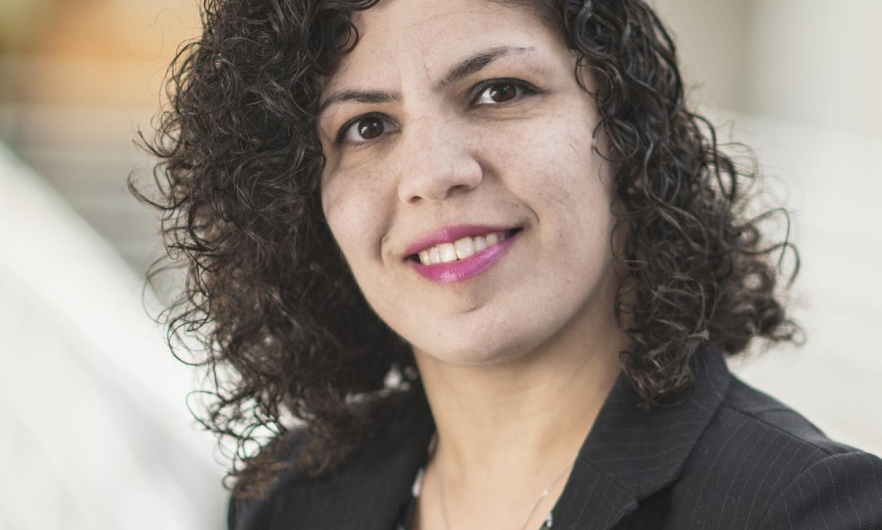
Bloomberg Associate Professor of American Health @JohnsHopkinsSPH , Former (and Founding) Director of @_CTEDD Active Transportation and Smart Growth Advocate
KUDOS to @hamidi_shima who will serve as the director and principal investigator for the new Center for Climate-Focused Transportation Solutions. The $10 million award will fund research and translation on equitable and sustainable transportation solutions.
The JHU Climate Change Summit will cover the most pressing climate change issues by all disciplines including transportation and urban planning. Join at https://t.co/TNSaQVvrjO @The_ACSP@APA_Planning@apatpd@FTA_DOT@AmericanHealth
JHU faculty & staff from all disciplines are invited to our #ClimateChange summit!
https://t.co/BNA4M7MIc5
- Learn about our upcoming $200K in research grants
- Form new multi-disciplianry collaborations
- Hear from clean energy entrepreneur Jigar Shah of Generate Capital!
"We found that people are more cautious about the threat in dense areas and are more likely to have protective behaviors," says @Hamidi_Shima. https://t.co/nUuqOVXLn0
Americans strongly reduced their visits to grocery stores, pharmacies, and transit stations following stay-at-home orders earlier this year, but did not reduce their visits to parks and beaches, according to a study co-authored by @Hamidi_Shima. https://t.co/82zSpSYn03
In a Bloomberg Radio interview, @hamidi_shima explains [26:26–32:55] the crucial difference b/w urban density & crowding—as seen in bars, schools, sports events, beaches, airports, supermarkets; can occur even in low density areas—as relates to #COVID19. https://t.co/FBmZIocq0C
These findings suggest that urban planners should continue to practice and advocate for compact places rather than sprawling ones, due to the myriad well-established benefits of the former, including health benefits," says study lead author @Hamidi_Shima. https://t.co/kXAfPd1kIb
Excited to share this article written by @JohnsHopkinsSPH@AmericanHealth faculty @hamidi_shima and me that was just published in the July magazine of the @APA_Planning. Great resource for planners and cities! "How Cities Are Taking Action on COVID-19" https://t.co/aJwnXiMkVW
NEW research finds that density is not linked to rates of COVID-19 infections and that death rates are lower in denser countries and higher in less dense ones.
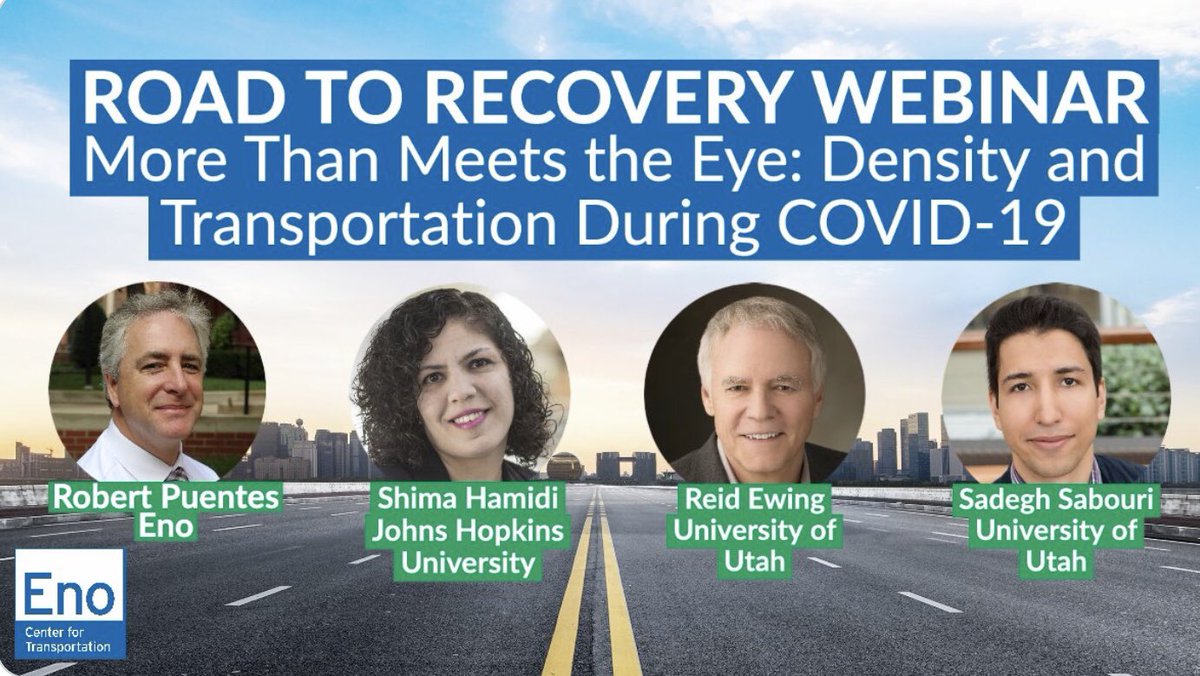
Join @EnoTrans for the latest FREE webinar in our Road to Recovery series:
https://t.co/3SOVkUJApq
Our next webinar is THIS WEDNESDAY at 1:15pm ET! Sign up now to discuss COVID-19, density, and transportation with @hamidi_shima of @JohnsHopkinsSPH, Reid Ewing and Sadegh Sabouri of @UofUPlanning, and Eno's @rpuentes. ⬇️
https://t.co/SFt2PNPkJU
@NickWaranoff@dillonliam@TinaG_SD Please understand that any research has limitations. Four top experts already judged the paper and its limitations in four rounds of review and voted that the findings are not incorrect because of the limitations. We included the limitations so future studies could build on this
@NickWaranoff@dillonliam@TinaG_SD The peer review process is blind (neither of us know each other). We communicate through the editor. The topper the journal is, the tougher the reviewers will be. JAPA is one of the toughest journals to publish and invites the most knowledgable experts in the topic as reviewers
@NickWaranoff@dillonliam@TinaG_SD Yes, it did. Some of the limitations even arose during the peer review process, but the paper passed it and got published. This applies to any publication and JAPA (this journal) is one of the most well-known and hardest to get published.