A New Article - *[Campaign URL]*
Early Wild Rye has a place in plantings for wildlife habitat, livestock forage, landscaping, and restoration. Here, we share our thoughts on each.
DID U KNOW 5,000 sq/ft (that’s about 1/10th of a football field) of flowers support a beehive filled with 40,000-50,000 industrious honey bees? Planting native wildflowers will make your land the buzz of the neighborhood with dozens of bees, butterflies & other great pollinators
Indian Paintbrush (Castilleja coccinea), among other wildflowers such as Wood Betony (Pedicularis canadensis), Wild Hyacinth (Camassia scilloides), and Columbine (Aquilegia candensis), is blooming.
The wildflowers of spring are beginning to show up in profusion, especially the shade lovers. Jacob’s Ladder (Polemonium reptans) is one of those early, shade loving beauties. If it likes the site, it spreads easily by seed.
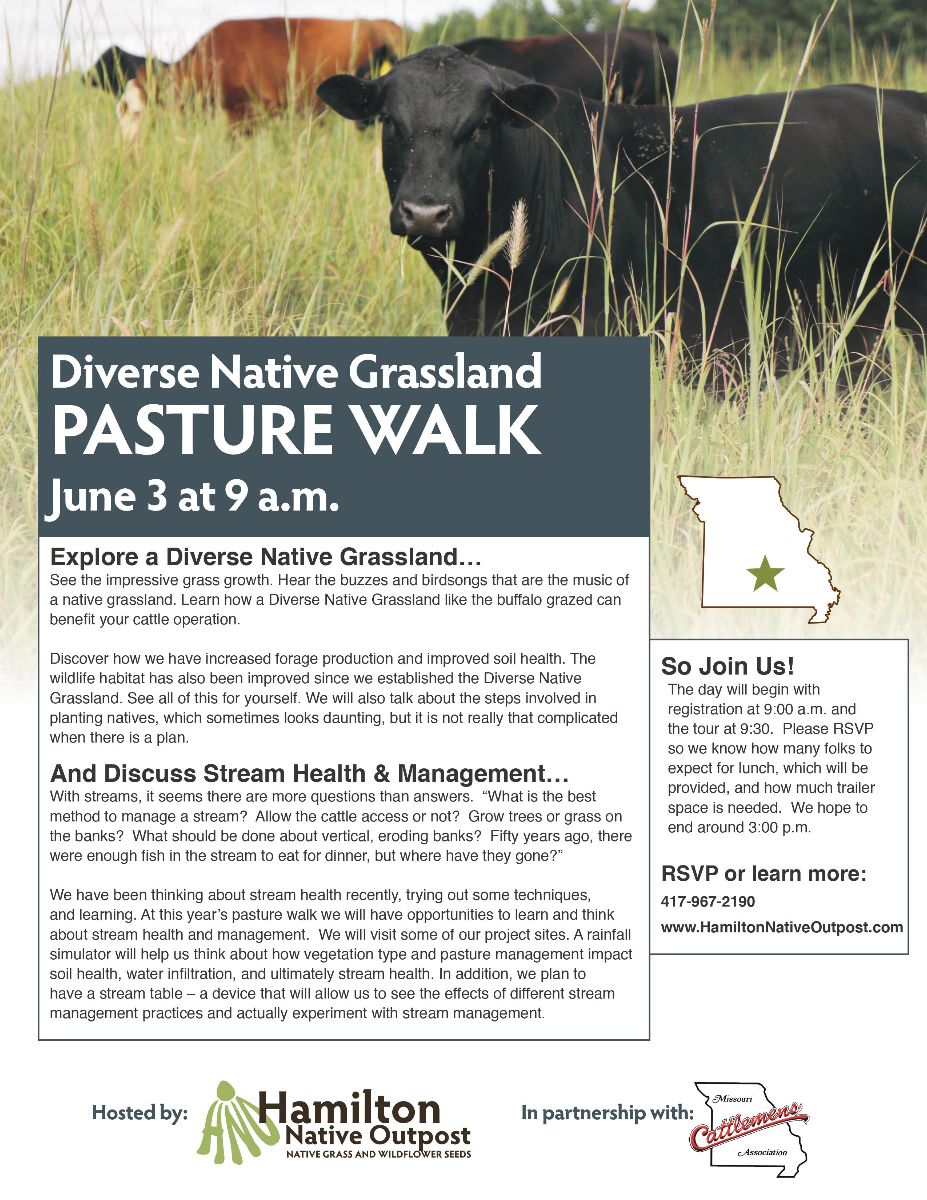
What grows in summer, can be tall as man on horseback, makes excellent quality forage? Native warm season grasses such as Big Bluestem, Indiangrass, Switchgrass, Eastern Gama Grass. Learn more about using these grasses in a grazing system, join us for a pasture walk on June 3rd.
While the turkeys are gobbling in our Ozark hollers, the Dwarf Larkspurs (Delphinium tricorne) are beginning to bloom. This striking early spring wildflower is pollinated by long-tongued bees.
Looking at a distance like a rocket shooting out of a grassland, Wild Hyacinths (Camassia scilloides) are blooming. This plant loves a dry site and is found in both glades and prairies.
Wanting in-depth training on the flora of the Ozarks or tallgrass prairie? The Institute of Botanical Training is hosting multi-day classes on both in May. This is a great opportunity to learn from excellent botanists. More details on their webpage https://t.co/vwzchHGRTP
Want more quail? Watch our new 3-video series on bobwhite quail and learn the surprising insights that the largest and latest quail research project in Missouri has revealed on what quail need for habitat. https://t.co/GTgZ2fmyOp




![HamiltonNatives's tweet photo. A New Article - *[Campaign URL]*
Early Wild Rye has a place in plantings for wildlife habitat, livestock forage, landscaping, and restoration. Here, we share our thoughts on each. https://t.co/nzkGOLSvFJ](https://pbs.twimg.com/media/FIQ4_yrWYAgfuS5.jpg)