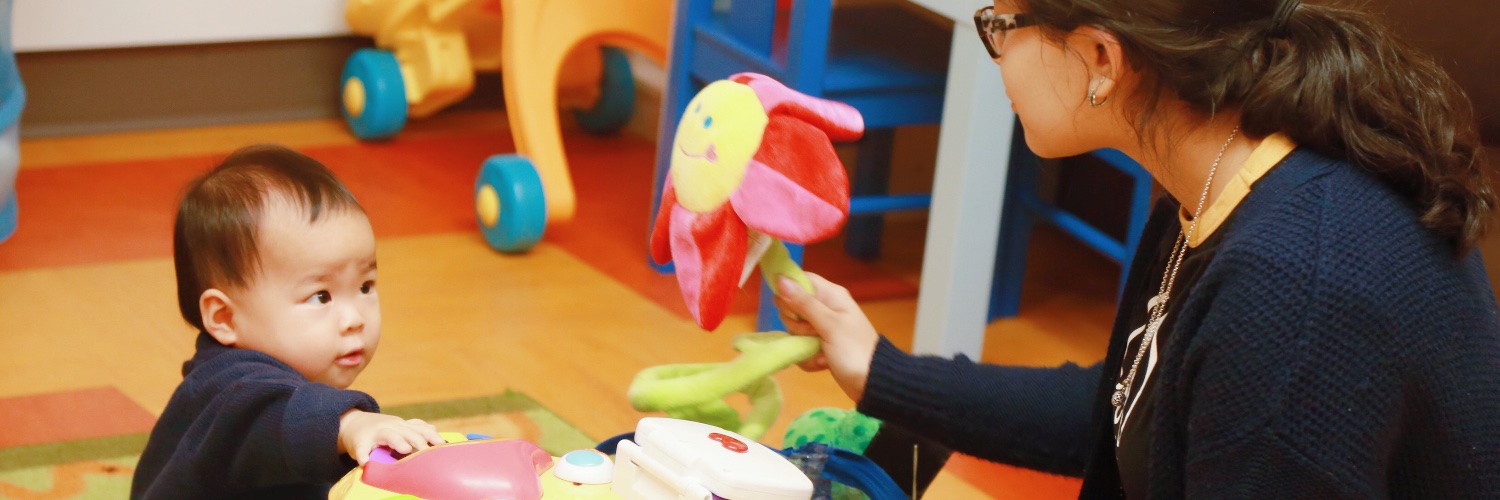
@JKileyHamlin's social moral developmental research lab @UBC! The CIC explores the origins of social and moral thought from a developmental perspective.
👋Research Ethics disclaimer👋 by liking, following, and interacting with our page, your social media profile will be visible on our social media platform and associated with our centre.
Interested in learning more about potential careers in #infantstudies? Join us Mar 31 to learn more!
Register now to participate!
More info - https://t.co/x49zP0Ksnz
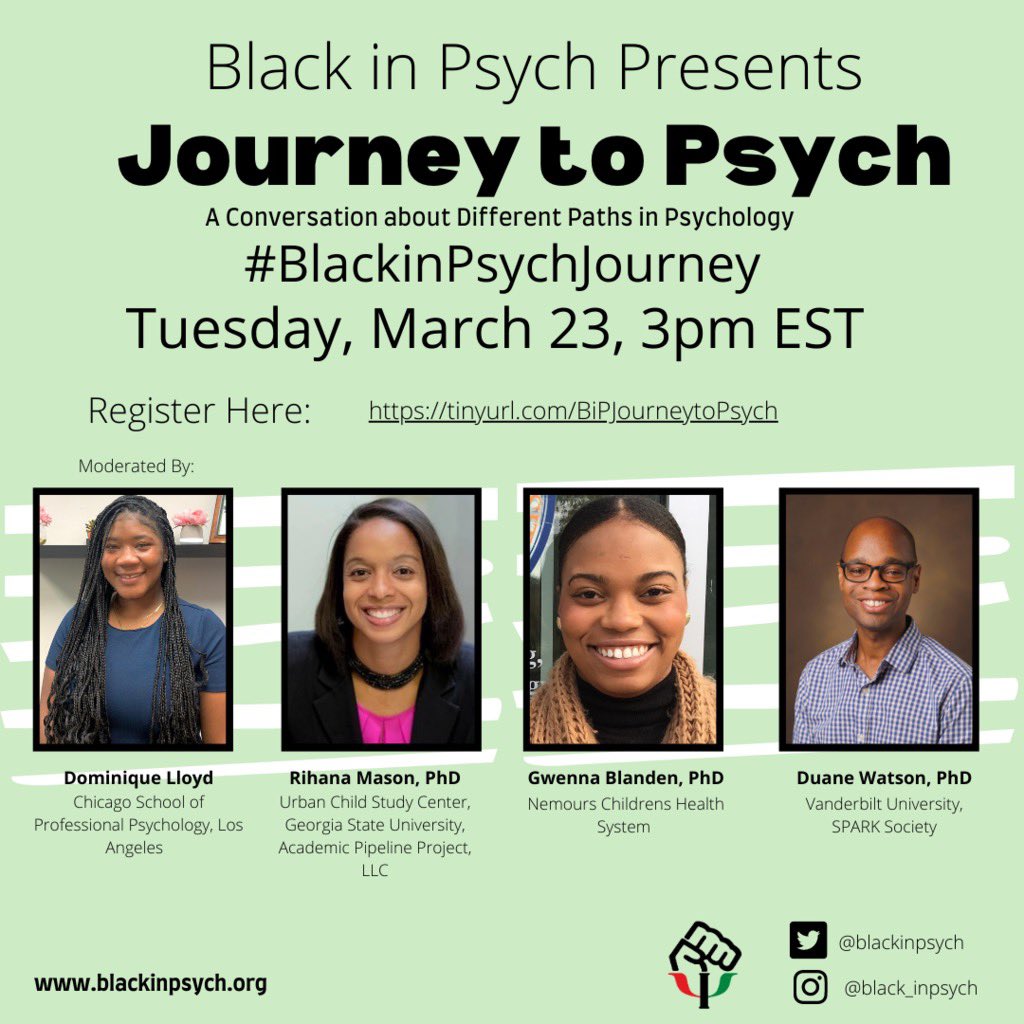
Today is day 1 for #BlackinPsychWeek. We'd love to see some of our members joining in under the #blackinpsychrollcall where people are sharing their field and area of research.
We're launching a Diversity Mentorship Program to prepare and mentor undergraduate students from diverse, under-resourced, underrepresented, and/or marginalized backgrounds for graduate admissions in psychology. https://t.co/jG9krhHmJk
On Feb 20, join Dr. @JKileyHamlin for a virtual talk on ‘How do babies evaluate people?’ Wonder Kids is a new series of virtual talks hosted by #UBC's Early Development Research Group. RSVP: https://t.co/ikvRE21rFc
Face masks and language development from experts and @infantstudies members Henny Yeung, @suz_l_curtin, and Janet Werker.
TL;DR: plasticity probably means we needn't worry, but we should continue to provide rich language learning environments for kids.
Thank you for taking part in our research. What an adorable infant scientist! If you have a baby and want to join a study, visit: https://t.co/9zByQvy2n9
Research on infant stereoscopic vision has concentrated on sensitivity to horizontal binocular disparity. Kavšek shows that 7 mo are able to extract spatial information even from monocular regions (half-occlusions) in a binocular display #infancypapers https://t.co/lEkdEj9cmZ
Geraci provides evidence for toddlers' ability to understand and evaluate the defensive actions of others. Results show that 20-month-olds prefer and reward a defensive puppet over a non-defensive one. #infancypapers https://t.co/Y0Wgr6Kb6N
New preprint @PsyArXiv from Miriam Weaverdyck, me, and @DianaTamir! Across three fMRI studies, we find that the brain represents mental states similarly regardless of who is experiencing them (self/close/far/generic other), or how they are presented (text scenarios vs. images).
@drewhabney, Suanda, Smith and @Chen_Yu_CY documented distributions of coordinated attention bouts during play. Bouts with infant object looking and parent triadic gaze were frequent and associated with future vocabulary size. #infancypapers https://t.co/TO1TUIXAzu
Northrup & Iverson's research suggests infants & mothers use vocalizations to direct and respond to one another’s gaze during play. This type of coordination is likely important for infant language development. #infancypapers https://t.co/9RxqLSfnJ8
This is SO interesting. And, yes, a deep dive into something as seemingly simple as holes reveals the richness of the mind. For more, see https://t.co/FoVBJF48lk
Arterberry, Hespos, Walsh, & Daniels addresses 2-year-olds�� difficulty integrating perceptual and cognitive information with their actions. They found that arm weights helped in some tasks but not others. #infancypapers https://t.co/aZKGZudkQp
From #ChildDevelopment Journal (2020): "The Homogeneity and Heterogeneity of Moral Functioning in Preschool," by Enda Tan, Amori Y. Mikami, Anastasiya Luzhanska, and @JKileyHamlin from @ubc. https://t.co/cvNcOPnI2p