@Lubnanix @AibnM2 You just agreed with the brother’s statement who mentioned that Allah had Lordship before there was anything in creation to preside over. Do you see how that is contrary to what you just mentioned?
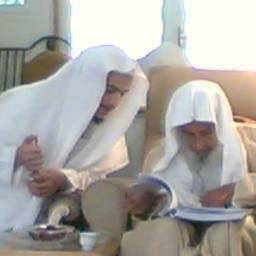
In the first photo, Shaykh ul-Hanābilah ‘Abdullah ibn 'Aqīl sits next to his beloved teacher, Shaykh Abdul-Rahmān al-Sa’dī رحمه الله
In the second photo, our Shaykh 'Āmir Bahjat sits with his beloved teacher, Shaykh 'Abdullah ibn 'Aqīl رحمه الله
The beauty of our tradition.
@ibn_aadam1 In foundational principles, yes. The Shaykh, however, would not restrict himself to the school when it came to certain issues, as noted in his manual, Minhaj al-sālikīn.
@DrShadeeElmasry I don't think anyone reads this verse and deems themselves indestructible because of it. Though it was clearly revealed to address matters of legal culpability, the verse served to ease the hearts of the Companions above all else. This statement seems to try to do the opposite.
@DrShadeeElmasry The way this is worded, you would think one of us "spiritually dry Wahhābīs" wrote it. Your original question seems to conflate virtues like patience with (i.e. perseverance through trials) with unrealistic expectations of imperviousness.
@abusome1x Understood. To your point though, the common Muslim likely hasn’t read the Qur’an in its entirety either. It would be foolish to bring scholarly refutations to the minbar for the avg uncle to then go regurgitate with absolutely zero context. Unfortunately, this often happens.
@abusome1x Today's laymen may have more access to information, but that does nothing to qualify them as being more insightful or knowledgable.
If anything, this ease of access has devalued our understanding of 'ilm in many ways. Twitter is a perfect example of this.
“Wellbeing can be broken into ten parts, and all ten parts pertain to overlooking the faults and mistakes of others.”
— Imam Ahmad ibn Hanbal رحمه الله
[كتاب الفروع 413/8]
It is permitted in the Hanbalī madhhab for a woman to pray to the right of a man, granted that they do not touch.
This applies for those who are non-mahram as well.
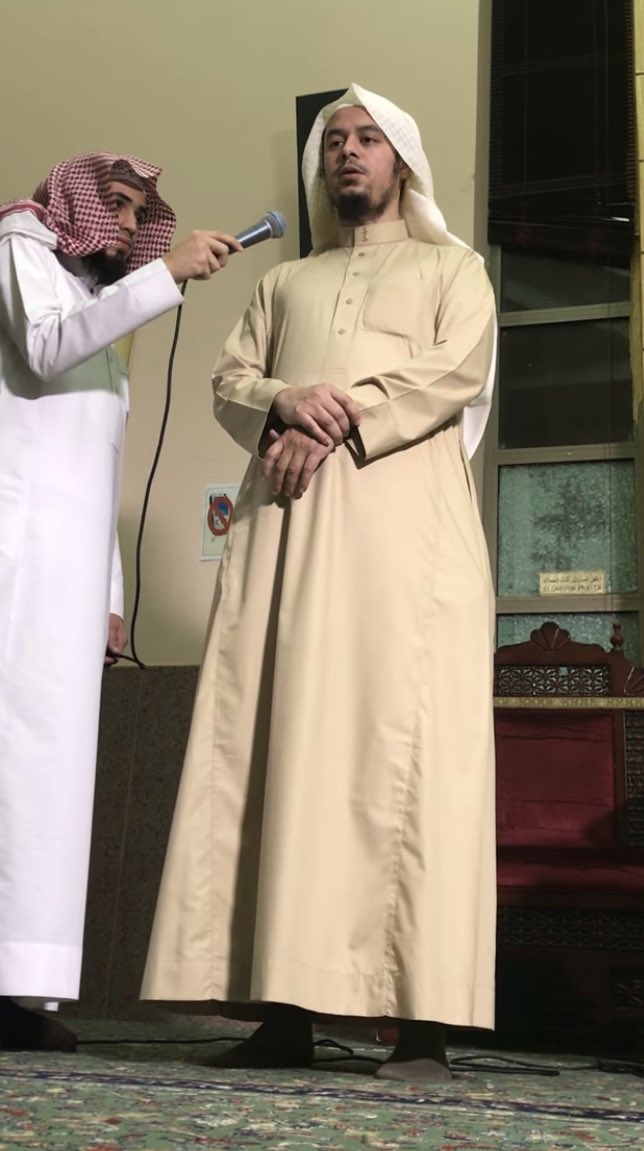
Our beloved Shaykh ‘Āmir Bahjat حفظه الله demonstrating the preferred placement of the hands during prayer, according to the Hanbali madhhab.
That is for the hands to be grasped and placed below the navel.