In 1980, an entire species had one mother. Her name was Old Blue.
The Chatham Island black robin had been reduced to just 5 individuals, and Old Blue, identified by the blue band on her leg, was the only breeding female left alive. Introduced rats and cats had wiped the species from most of its range on the remote Chatham Islands, 500 miles east of New Zealand, and habitat loss had finished much of the damage.
By the time Don Merton and his New Zealand Wildlife Service team began intensive management, there was almost nothing left to save.
Merton realized that if Old Blue's eggs were removed and placed in the nests of Chatham Island tomtits, she would lay replacement clutches. The foster parents raised the first broods while Old Blue produced more eggs.
Against all odds, the population began to grow. Old Blue was last seen in December 1983. By then, she had produced enough descendants to give the species a future. Every Chatham Island black robin alive today traces its ancestry back to her.
Don Merton went on to apply similar techniques to endangered birds around the world before his death in 2011. The black robin remains one of conservation's most extraordinary success stories.
Old Blue never knew how close her species came to disappearing forever. But she lived long enough to ensure that it didn't.
Catch of the day: Lego hauled out of the sea west of the Isles of Scilly by Belgian fisherman Chris Meyers who sent us this picture today. Although we’ve seen these large green Lego bricks before, we can’t recall ever having seen one of those black fences, even though 43,200 of them were lost overboard from the Tokio Express back in 1997. Just 43,199 black Lego fences still to find, then.
For anyone who needs reminding that Scotland really is a fantastic, magical place, here are some singing seals I saw - and recorded 🎤!!! - on the island of Mingulay today 🦭🏴🎶
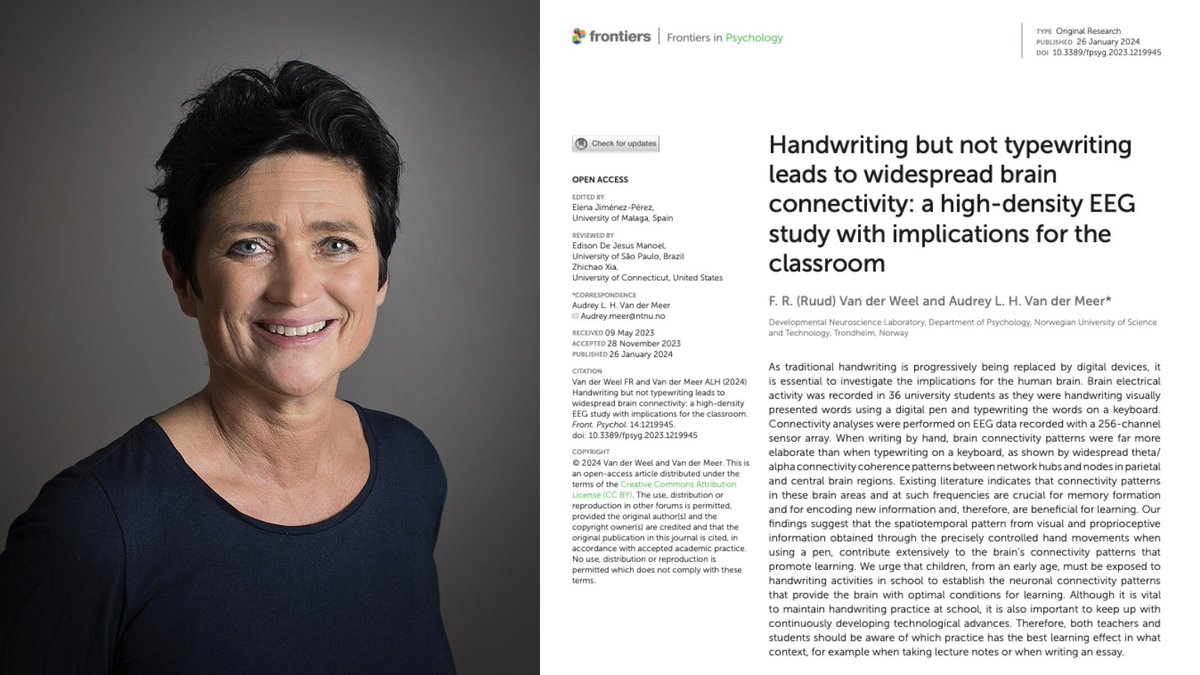
A Norwegian neuroscientist spent 20 years proving that the act of writing by hand changes the human brain in ways typing physically cannot, and almost nobody outside her field has read the paper.
Her name is Audrey van der Meer.
She runs a brain research lab in Trondheim, and the paper that closed the argument was published in 2024 in a journal called Frontiers in Psychology. The finding is brutal enough that it should have changed every classroom on Earth.
The experiment was simple. She recruited 36 university students and put each one in a cap with 256 sensors pressed against their scalp to record brain activity. Words flashed on a screen one at a time.
Sometimes the students wrote the word by hand on a touchscreen using a digital pen, and sometimes they typed the same word on a keyboard. Every neural response was recorded for the full five seconds the word stayed on screen.
Then her team looked at the part of the data most researchers had ignored for years, which is how different parts of the brain were communicating with each other during the task.
When the students wrote by hand, the brain lit up everywhere at once.
The regions responsible for memory, sensory integration, and the encoding of new information were all firing together in a coordinated pattern that spread across the entire cortex. The whole network was awake and connected.
When the same students typed the same word, that pattern collapsed almost completely.
Most of the brain went quiet, and the connections between regions that had been alive seconds earlier were nowhere to be found on the EEG.
Same word, same brain, same person, and two completely different neurological events.
The reason turned out to be something nobody had really paid attention to before her work. Writing by hand is not one motion but a sequence of thousands of tiny micro-movements coordinated with your eyes in real time, where each letter is a different shape that requires the brain to solve a slightly different spatial problem.
Your fingers, wrist, vision, and the parts of your brain that track position in space are all working together to produce one letter, then the next, then the next.
Typing throws all of that away. Every key on a keyboard requires the exact same finger motion regardless of which letter you are pressing, which means the brain has almost nothing to integrate and almost no problem to solve.
Van der Meer said it plainly in her interviews.
Pressing the same key with the same finger over and over does not stimulate the brain in any meaningful way, and she pointed out something that should scare every parent who handed their kid an iPad.
Children who learn to read and write on tablets often cannot tell letters like b and d apart, because they have never physically felt with their bodies what it takes to actually produce those letters on a page.
A decade before her, two researchers at Princeton ran the same fight using a completely different method and ended up at the same answer. Pam Mueller and Daniel Oppenheimer tested 327 students across three experiments, where half took notes on laptops with the internet disabled and half took notes by hand, before testing everyone on what they actually understood from the lectures they had watched.
The handwriting group won by a wide margin on every question that required real understanding rather than surface recall.
The reason was hiding in the transcripts of what the two groups had actually written down.
The laptop students typed almost word for word, capturing more total content but processing almost none of it as they went, while the handwriting students physically could not write fast enough to transcribe a lecture in real time, which forced them to listen carefully, decide what actually mattered, and put it in their own words on the page.
That single act of choosing what to keep was the learning itself, and the keyboard had quietly skipped the choosing and skipped the learning along with it.
Two studies. Two countries. Same answer.
Handwriting makes the brain work. Typing lets it coast.
Every note you have ever typed instead of written went into your brain through a thinner pipe. Every meeting, every book highlight, every idea you captured on your phone instead of on paper was processed at half depth.
You did not forget those things because your memory is bad. You forgot them because typing never woke the part of the brain that would have made them stick.
The fix is the thing your grandmother already knew.
Pick up a pen. Write the thing down. The slower road is the faster one.
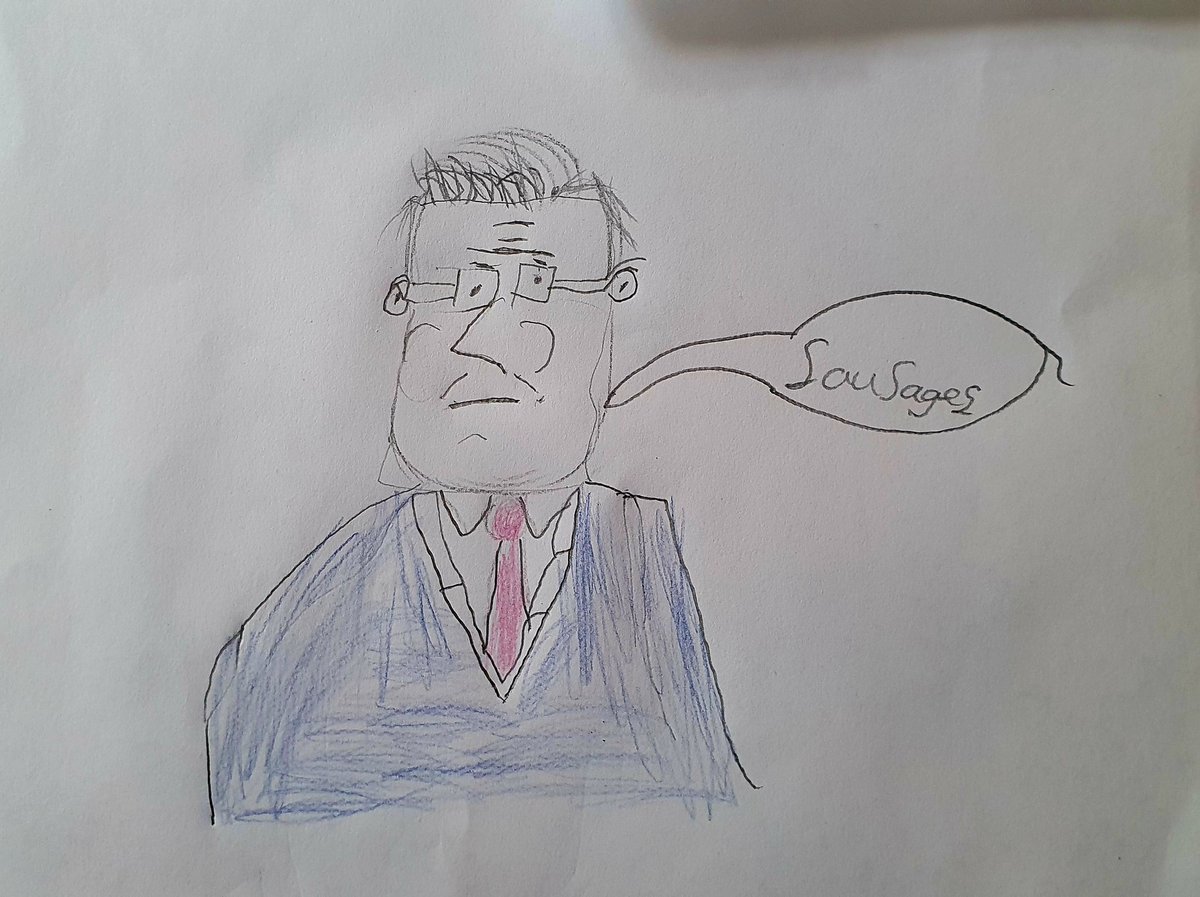
I don't know what the conventions are on sharing children's work, but when you're a cartoonist and your 6yo's homework is to draw the PM, and he comes up with this cracking image, it feels like there's an obligation.
It’s another wet and windy morning and the moss is green and deep on the ancient pathways. Amazing stuff, moss: able to absorb 20 times its own weight in water and yet has no roots. Was widely used for dressing wounds in WW1 due to its high absorbency and antiseptic properties.
This from @Geoffrey_Cox was titanic - a truly beautiful speech.
He outshone those sat opposite. They could only watch. And nervously laugh.
This should be seen by every new MP to understand what they do, & every new barrister to understand what we do.
When I received a copy of this years ago I was ecstatic. It was recently released and I felt lucky to have it.
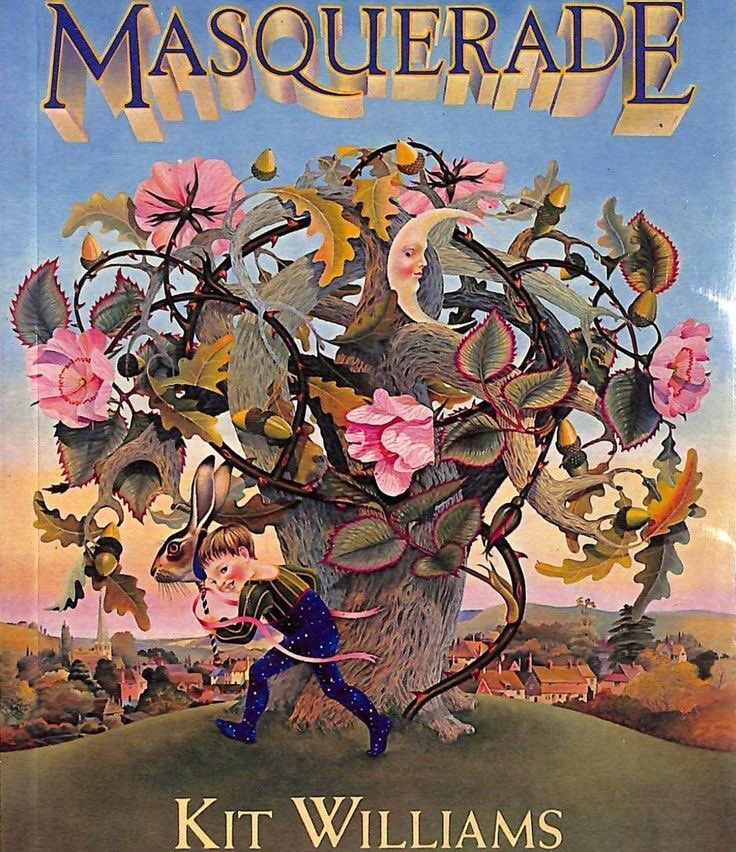
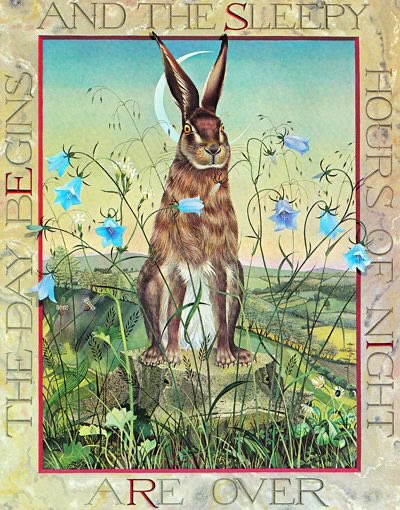
Kit Williams wrote and illustrated the book 1979. All the pages were clues to guide the reader on a quest to search for an 18carat golden hare. Delicate paintings
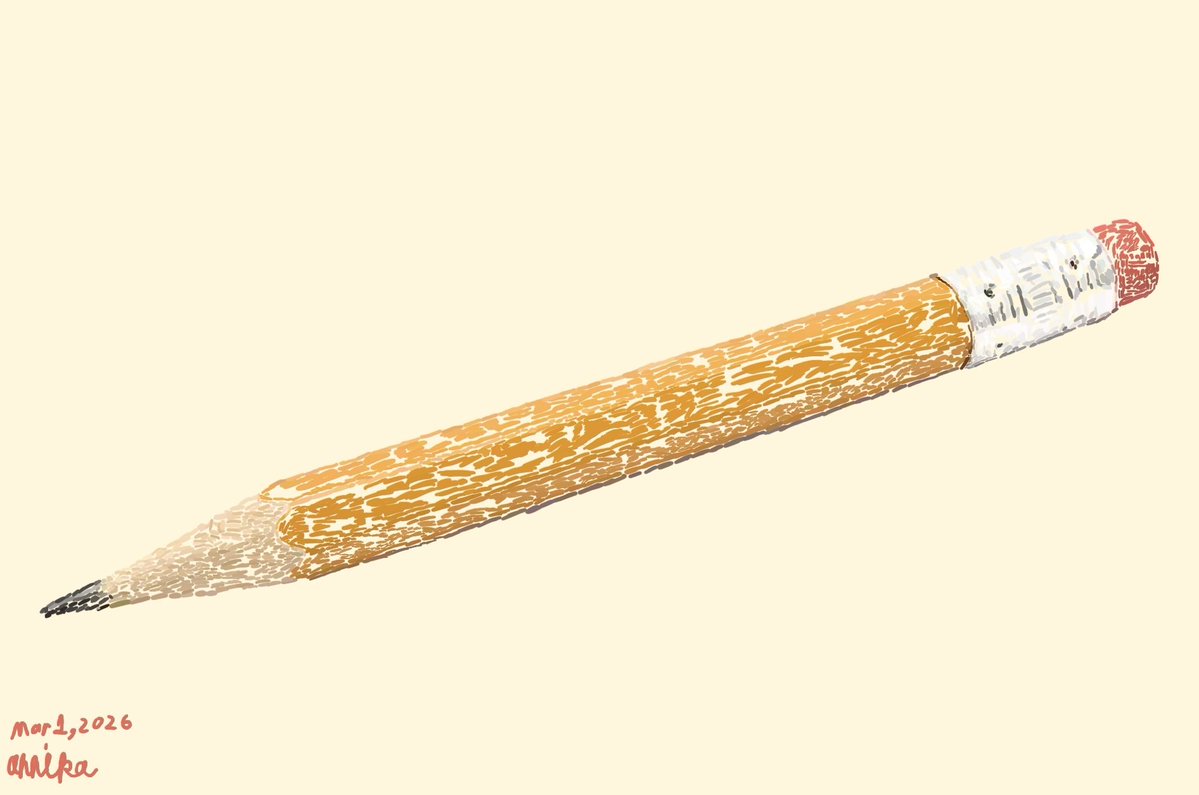
My angelic, autistic 12 year old daughter Annika drew this pencil and asked me to share it with you. She gets giddy when her content does better than mine, which makes me happy.
Please share it far and wide to keep her fire for art going. We've just barely gotten it rekindled.
Written English has barely changed in 300 years. If you can read Harry Potter, you can read Robinson Crusoe (1719).
The Spelling of our Tongue was in the main ſettled ere the eighteenth Century, & the Grammar has ſuffer'd but little Alteration ſince. Yet before this happy Settlement, things were exceeding ſtrange.
In Shakeſpeares dayes, ſpelling was much more variable, & you ſhall finde notable differences in the grammar: "thou" could bee intimate or inſulting, depending vpon whom you ſayd it to; to chooſe amiſse had conſequences.
Wende we now tuo hundred ȝeer bifore, to Chauceres tyme. It seemeth ȝit as Englisshe, but it nis nat esy to reden withouten greet connynge.
Yet tuo hundred wintre er, sone after þat the Normans comen to þis londe, is Englisch on muchel wandlunge. Þe tunges work is tobroken, Frensce wordes comeþ in, and þe writunge is al totwemed.
Þy furðor þu underbæc færst, þy gelicor biþ Englisc gesewen þære Deniscan spræce. Englisce bec þæs m. geare ne mæg nan mann rædan buton he sundorlice geleornad sy.