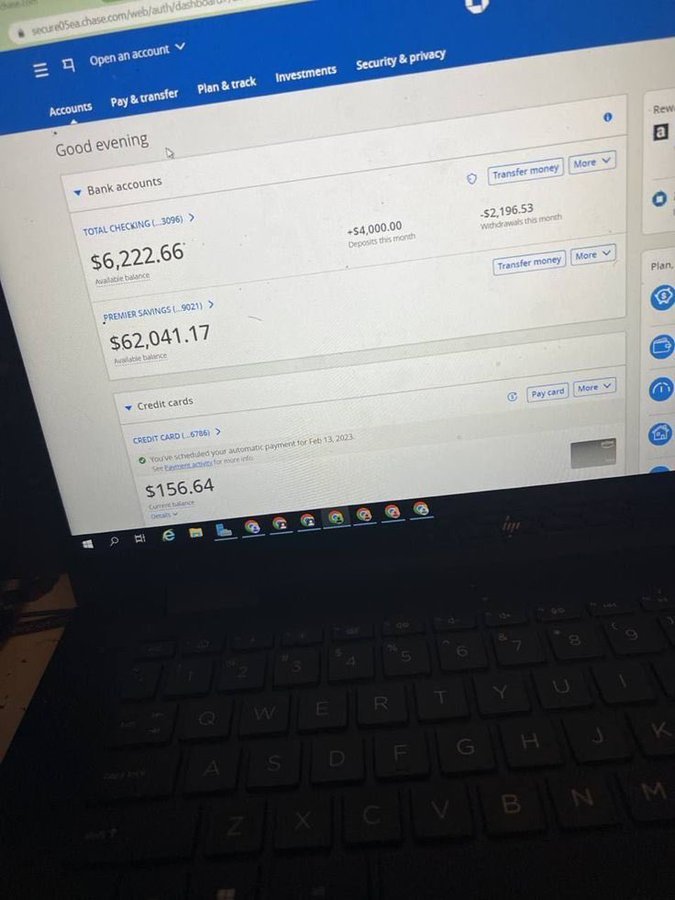
Earns $40 per hour by reading books.
I've created a guide with 20 methods to help you earn $500 daily.
Normally $199, but today, it's free.
To get it:
Like this post & RT Comment 'Book'
I'll DM it to you (Must be following me).
Closed mouths don’t get opportunities.
I’m actively pursuing a role as a Sports Analyst in TV/Radio, bringing strong analytical skills and engaging on-air commentary.
A repost could help connect me with the right opportunity. 🤩❤️
@Mrshawnkellz@Coachayere I've been here for 8 years and I can tell you
No one looks at you
No one helps
Only if you have a community it could be an easy ride...
Pray for one clean break
I hope you know what I mean
Then you dig in
So you are thinking of investing in football. But you are thinking of approaching it by giving a club or an Academy money to buy a player, and then when they sell him at a later time for a higher price, you get a piece of the transfer fee.
Let me tell you, according to the regulations of FIFA, it’s wrong, unethical and illegal. As an “investor”, you can’t just own players like they are stocks or crypto coins.
Here's something that sounds insane but actually happened: In 2006, Carlos Tevez and Javier Mascherano signed for West Ham United. On paper, they were West Ham players. But in reality? Their economic rights were owned by multiple companies controlled by football agent Kia Joorabchian. West Ham didn't own them. They were just... borrowing them.
When Tevez scored the goal that kept West Ham in the Premier League (at Sheffield United's expense), the fallout was catastrophic.
West Ham was eventually fined £5.5 million and had to pay Sheffield United a £30 million out-of-court settlement. Gordon Taylor, chief executive of the Professional Footballers' Association, called the practice "trading in human beings." Tevez’s case was an issue because Tevez's economic rights were not fully owned by Corinthians; instead, they were held by offshore companies linked to agent Kia Joorabchian and his firm Media Sports Investments (MSI), plus Just Sports Inc. (both British Virgin Islands entities).
That practice was called Third Party Ownership (TPO). And FIFA banned it in 2015 for one simple reason: it threatened the entire integrity of football.
What Is Third Party Ownership (TPO)?
Third Party Ownership is when an external investor buys a percentage of a player's economic rights. In return for upfront cash, the investor gets a share of the player's future transfer fees.
Example: A club wants to sign a talented 19-year-old striker for €5 million but doesn't have the money. An investment fund steps in, pays €3 million, and owns 60% of the player's future transfer value. Two years later, the player is worth €20 million. The club sells him. The fund takes €12 million. The club gets €8 million.
Sounds like a win-win, right? Wrong. The problem is influence. And influence in football is like a leak in a boat. It looks mall at first, until you're sinking.
What Is Third Party Influence (TPI)?
Third Party Influence (TPI) is when a contract allows another club or any third party to influence a club's independence, policies, or team performance. This includes veto rights over transfers, mandatory fielding clauses, or penalties for making independent decisions.
Example: An investor owns 50% of a player's economic rights and inserts a clause that says "the club must play this player in at least 20 matches per season, or pay a €500,000 penalty."
Suddenly, the club isn't making sporting decisions anymore. The investor is. And that investor doesn't care about winning trophies. They care about maximizing the player's transfer value so they can cash out.
Imagine trying to win the league while some guy in Malta who bought 40% of your striker is texting your manager: "Play him or pay me €500k." Can you see how absurd that is?
Why Did FIFA Ban It?
In September 2014, UEFA announced they were going to tackle the issue. Later that month, FIFA announced they would ban the practice. The ban took effect on May 1, 2015.
FIFA's reasoning was simple: TPO and TPI created conflicts of interest that undermined club autonomy, competitive balance, and sporting integrity. Jerome Valcke, FIFA General Secretary at the time, said: "The only way to fight against third party-ownership is to ban it."
RFC Seraing vs. FIFA
In 2015, RFC Seraing was found to have violated FIFA's prohibition of TPO, owing to agreements with Maltese investment company Doyen Sports. FIFA sanctioned RFC Seraing with a two-year player registration ban and a CHF 150,000 fine.
Seraing appealed to CAS, then the Swiss Federal Supreme Court, then Belgian courts, and eventually to the Court of Justice of the European Union (CJEU). On August 1, 2025, the CJEU handed down its judgment in C-600/23. Jobs In Football The CJEU ruled that while CAS is legitimate, its awards must be subject to judicial review by EU national courts when EU law is at stake.
The judgment didn't overturn FIFA's TPO ban. It confirmed it. But it established that clubs can challenge CAS decisions in EU courts.
The Takeaway
FIFA's prohibition on TPO and TPI has curbed speculative external control and reinforced clubs' autonomy. While it limits some financing creativity (particularly for smaller clubs), the rules promote transparency, stability, and fair competition.
The RFC Seraing case shows the fight isn't over. But one thing is clear: football's governing bodies have decided that the beautiful game should be driven by sporting merit, not hidden financial strings.
And after seeing what happened with Tevez, Mascherano, West Ham, and Sheffield United? That's probably for the best.
My name is Ajoje and I am a FIFA Licensed Agent and International Sports Lawyer. I talk about the Law and Business of Football, a lot. Follow me if you want to read more posts like this.
We are seeking volunteers for our social media accounts. If you are living within Abak LGA please apply within. Social media in view Tiktok Twitter Facebook Instagram and YouTube.